Given record profit margins and valuations, there is little upside, especially if inflation remains problematic. Throw stagflation into the formula, and the outlook is bleak.
Look forward to moderating inflation, 2% to 3% growth and full employment in 2022, according to Ben Bernanke.
With so many life-changing liquidity events on the horizon, charitably minded advisors would be well served to follow the same tax guidance they provide their clients and set up a DAF prior to the sale of their firm.
What do you do with an intractable advisor?
Excerpts from Cerulli Associates' report on asset owner and manager perspectives when it comes to promoting diversity & inclusion.
We have entered the phase when the body politic and public opinion are aware that Facebook is disturbing our society. This is very important to us as investors, because the big tech companies make up a disproportionately large part of the S&P 500 Index.
Demand is so strong for green bonds, or debt that funds environmentally friendly projects, that investors are accepting lower yields for securities that are harder to trade, according to Barclays Plc.
Here are five steps to adjust your professional networking skills for a post-pandemic world.
Leaving an established firm to go out on your own might solve some of your problems, but they will be replaced by a new host of obstacles and challenges.
We have announced our Venerated Voices™ awards for commentaries published in Q3 2021.
Following the social unrest of 2020, the conversation around the importance of diversity, equity and inclusion (DE&I) in the workplace has become more prominent than ever.
The best-conceived marketing plans will be derailed if you allow yourself to be victimized by these two misconceptions.
Many mutual funds will distribute capital gains every year—no matter what the market does. As 2021 comes to a close, advisors can begin to prepare their clients for the impact of those distributions and take steps to minimize the tax bite going forward.
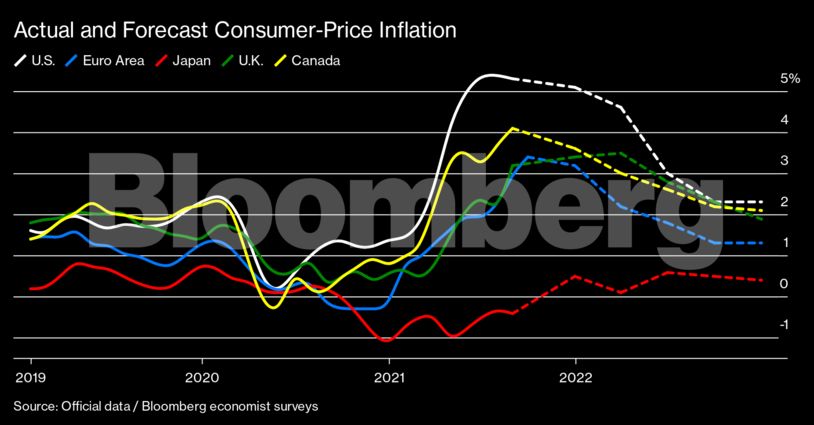
Inflation debates have been dominated by fallout from the pandemic and economic reopening, most of which has been viewed as transitory: lumber and used car prices in the first half of the year, the cost of ocean freight more recently.
The strong economic and market trends of the first half of 2021 wavered during the third quarter. The coronavirus delta variant caught up with the US at the height of the summer, just as vaccinations slowed and concerns grew that inflation might flare and persist.
Are inflation forecasts reliable enough to shape policy?
There are a dozen activities that permanently increase our personal happiness equation.
Just because pandemic inflation is transitory doesn’t mean it’s going away anytime soon.
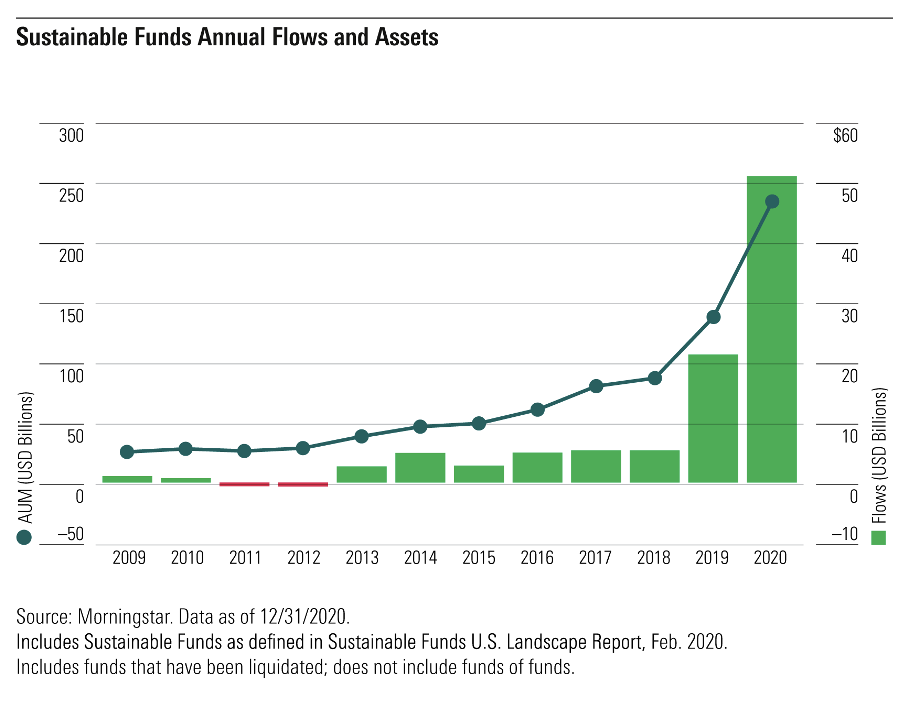
Fund managers have long been eager to satisfy global investors’ appetite for assets that meet “environmental, social and governance” standards.
New research shows that mutual funds and ETFs with an ESG mandate failed to live up to their promises. Those funds, for example, had worse track records for compliance with labor and environmental laws and were less likely to voluntarily disclose emissions data than non-ESG investments.
Investors need to understand the differences between Chinese capitalism and Western capitalism in order to properly assess the opportunities in China. Meanwhile, norms in India more closely resemble those in the United States— but India has dramatically larger headroom for growth.
Given the demise of pension plans, and the potential for annuities to serve as a core source of retirement income certainty, I composed the following poem to mix a bit of levity with a purposeful message.
The greatest economic challenge of the second half of the 20th century was over how to fight the crippling inflation of the 1970s. It pitted the monetarist Milton Friedman against the Keynesian Paul Samuelson, and the debate between the two shaped economic thinking and policymaking to this day.
There is a cost to waiting for interest rates to rise—you may be missing out on higher coupon rates and yields elsewhere. Rather than waiting on the sidelines for yields to rise, investors should consider short-term corporate bonds today—specifically those with fixed coupon rates.
To sound different, you must be different in a way that is obvious to your prospects. How can you position yourself to be incomparable from your competition? Let’s look at seven ways.
With potential tax increases on the horizon, advisors can take steps now to minimize the impact of any changes in tax policy.
Robust engagement with company management can be key in sparking catalysts that unlock shareholder value and potentially lead to better returns over the longer term, according to Franklin Mutual Series Environmental, Social and Governance (ESG) Ambassador Tim Rankin.
Inflationary pressures are mounting, based on evidence from the recent earnings season. The question for investors is, which companies can pass on those costs to help protect profit margins?
If the U.S. and other countries sit idly by, we may look back at today as a turning point in global economic affairs. The U.S. does not have to cede economic growth. But it must readapt capitalistic logic, which, ironically, China is slowly grasping.
We’re upgrading the Staples sector, but only incrementally. Here’s why.
Wealth has risen excessively in recent years and, now, inflation has started to rise as well. Why those two stories are two sides of the same coin, and why much of the growth in wealth must be confiscated again is what this month’s Absolute Return Letter is about.
A three-party coalition could soon govern Germany for the first time in the country’s history following recent elections. Matthias Hoppe, senior vice president and portfolio manager, Franklin Templeton Investment Solutions, believes uncertainty caused by coalition talks is likely to increase volatility in Europe’s financial markets, but changing a conservative attitude to public spending is the real challenge for a new government as Germany wrestles with the reality of increasing macro-economic imbalances and a stated aim to achieve carbon neutrality by 2045.
Social Security’s shortfall grew by a record 18% in the last year. That $3 trillion increase means that it is more likely beneficiaries will face reduced benefits in the future, and the longer we wait the harder it will be to solve the problem.
We have become famous (or infamous) regarding our views that there is a bubble in long-duration assets. In this report, we investigate what’s causing such widespread bubbles, their potential effects on the overall economy, and the interesting investment opportunities resulting from the bubble’s misallocation of capital.
Alumni of the Massachusetts Institute of Technology are the graduates best positioned to find a job as the global economy roars back and employers look to fill open positions.
When AC Milan host Atletico de Madrid in the Champions League on Tuesday evening, it will be a clash between Italy’s most successful team in Europe’s elite soccer competition and last year’s Spanish title winner.
The analytic framework for providing retirement income planning advice must use marginal tax rates and not tax brackets.
I understand the need for refreshing marketing, but the quote we received (for $40,000.00) is outrageous.
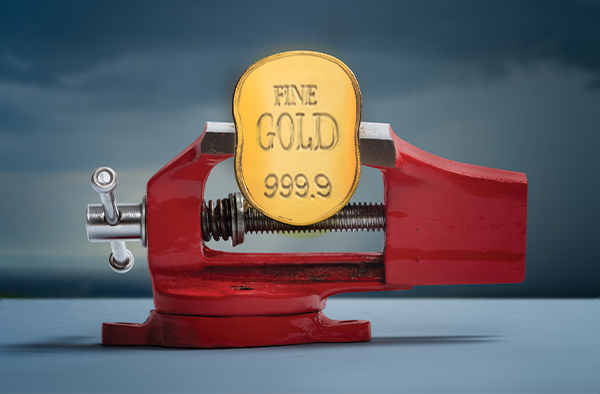
Against the backdrop of a potential Evergrande failure, gold and Bitcoin look very attractive as stores of value, and both happen to be on sale right now.
Today, I want to show you how richly valued the market is and then review some of the top risks that could force it downward. Like those sandpiles I talk about, we don’t know exactly what will trigger a collapse. We know something will do it. Sandpiles don’t grow to infinity.
Senior Sovereign Analyst Bo Zhuang shares his perspective on China's Evergrande situation and how the government may respond.
Prior to today, the S&P 500 index was down four days in a row, and many market observers are blaming China, specifically the recent news about Evergrande, a major Chinese real estate company that looks to be heading to default on its loans.
Understanding inflation beyond the headlines helps us answer the all-important question: How transitory is transitory? From there, we can assess potential Fed and market reactions.
It was 35 years ago this month that I began my career on Wall Street. In thinking about those three-and-a-half decades, I decided to shift tack with today’s report and ask readers to indulge me as I ruminate about what I’ve learned during these decades.
India’s second COVID wave subsided in June and continues to remain at the lower level and Indian equities were a bright spot for the region, significantly outperforming Asia and broader emerging markets in August.
We have a relatively sanguine view on the likelihood of inflation becoming ingrained in the system (much as it pains us to agree with the Fed). However, the dark arts of macroeconomics are notoriously tricky, and we have often talked of the need to build robust (as opposed to optimal) portfolios – effectively, portfolios that can withstand multiple outcomes.
There’s a fallacy among advisors that selecting a platform partner is an either/or proposition: a TAMP or an open-architecture solution. There is a middle ground. Some describe it as a “full-service portfolio management platform.” The team at SEI calls it a TechstodianSM.
Some analysts and investors breathed a big sigh of relief on inflation when it was reported last week that the Consumer Price Index rose 0.3% in August versus a consensus expected 0.4%. But we think any sense of relief is premature.
Emergency unemployment benefits in the U.S. expired two weeks ago, but employers who expected an increase in job applications are still largely waiting for them to roll in.
Review the latest Weekly Headings by CIO Larry Adam.