The market for washing machines offers lessons for future trade actions.
While planning for a CMA (Capital Market Assumptions) at the close of the year—and in the wake of an unexpected U.S. election result—it’s tempting to adopt a short-term perspective, focusing on the uncertainties and anxieties generated by President-elect Trump’s policies and their potentially disruptive impact on the economy and the market.
When it comes to degrees of difficulty, this week’s Federal Reserve meeting is shaping up as a walk in the park compared to what awaits policymakers down the road.
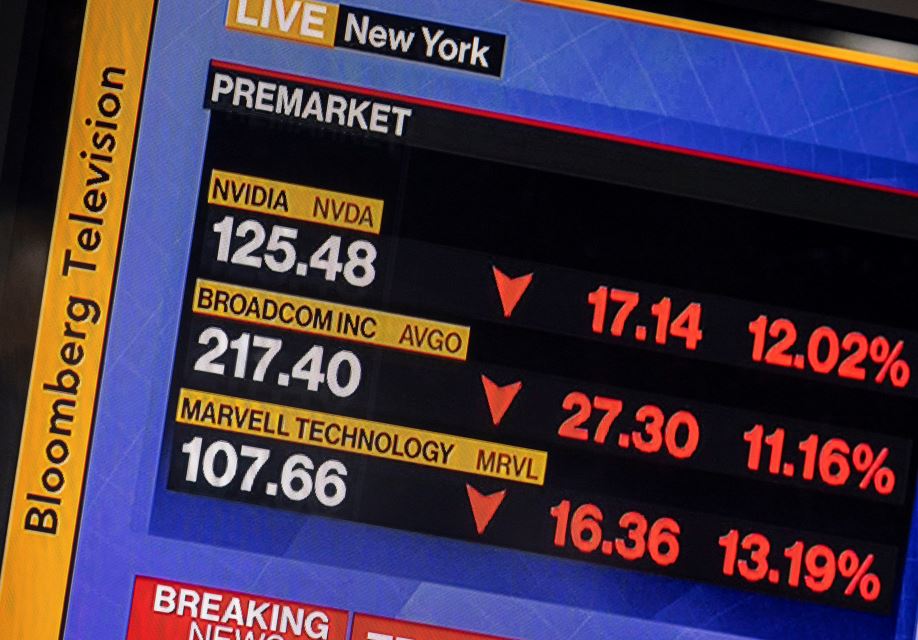
The S&P 500 Index plummeted as much as 2.3% on Monday over DeepSeek, a Chinese artificial intelligence startup that developed a model competitive with the US’s very best — and, supposedly, on the cheap.
As the Federal Reserve’s two-day meeting begins, investors have accepted that the central bank probably won’t be cutting interest rates this time.
As 2025 begins, the core narrative of global resilience (built throughout 2024) faces fresh uncertainties. Gradual rate cuts, a continued slide in inflation, and steady – if modest – economic growth could set the tone for constructive market performance.
Retail investors are the most optimistic about higher stock prices in 2025 by the most on record. Unsurprisingly, that sentiment resulted in the psychological rush to overpay for assets, pushing forward 1-year valuations sharply higher.
We still believe the odds of a recession are higher than most investors think. Monetary policy tightening started back in 2022 and inflation remains above the Federal Reserve’s 2.0% target, which means the Fed will be reluctant to get loose anytime soon.
Donald Trump’s second term as president came with a flurry of executive orders and his policies are rippling across the global markets.
We explore how evolving priorities under the new U.S. administration may influence markets and investor outlooks.
Next week we will have the first Federal Open Market Committee (FOMC) meeting decision on interest rates of the year, where Federal Reserve (Fed) officials are expected to leave the federal funds rate unchanged.
High expected fixed income returns imply many non-profit investors could de-risk while still expecting to achieve their stated return objective.
I recently read three very different books which were published in the last three years, all of them speaking to the problems created by the neoliberal order that has been in the ascendancy since the late ’70s but has faltered of late. The solutions that these books offer are, respectively: tweaking; evolution; and revolution.
Let's discuss the recent strong correlation between the appreciating dollar and rising yields, and the reasons for the relationship.
Treasuries rallied on Monday as investors flocked to the safety of US government bonds after equities slumped in a selloff driven by technology shares.
Three factors heavily influenced the financial landscape over the last 12 months — AI-focused technological optimism, hoped-for leveling up, and higher government bond yields.
The Second Trump Era has begun. If you are confident about what it will bring (either good or bad), I would like to gently suggest you reconsider. None of us should be sure what is coming.
Markets have responded with gusto since November’s presidential election, especially in a few key—and perhaps expected—industries. The biggest winner so far is the automobile industry...
What’s in store for stocks after two years of strong returns? Fundamental Equities Global CIO Tony DeSpirito assesses the prospects for another positive year and offers his year-ahead outlook through the lens of an active stock picker.
As we kick off 2025, the landscape is rich with competing narratives and evolving dynamics.
Four strategies for navigating crosswinds in the municipal bond market.
Bonds look attractive again after the most recent rise in interest rates. Markets are likely to continue to overreact to every new employment report and inflation reading, keeping interest rate volatility elevated as yields dance up and down with each data point.
The fourth quarter of 2024 was not just a period of optimism and recovery but also one of reflection and recalibration.
In December, most strategists predicted positive returns for the S&P 500 in 2025. The range of reasonable outcomes for stocks is wide.
The Northern Trust Economics team shares its outlook for key APAC markets.
For stocks, Christmas came with a 'Santa Clause' rally soon after the election. Since then, there's been a correction in US markets.
Investor appetite for growth really is something to behold.
This article provides the Beaumont Capital Management Q4 2024 Market and Strategy Commentary - Decathlon Strategies.
Sales of previously owned homes in the US rose for the third straight month in December, entering 2025 with some momentum after the worst year in nearly three decades.
As growth extends to more regions, we see expanding opportunities across countries and assets.
While every new year arrives with its own unique set of opportunities and challenges for institutional investors, we believe 2025 could offer more than the typical share.
When investors have been looking to allocate funds within the U.S. fixed income markets, credit has seemingly been viewed as being perhaps too “rich,” or expensive, in relative terms.
Senior Investment Strategist Tracey Manzi notes that the Federal Reserve's ongoing easing cycle should benefit short to intermediate maturities.
A few months ago, the Census Bureau released its annual report on household income data for 2023. During 2023, the median (middle) average household income rose 8.0% to $80,730. Let's take a closer look at the quintile averages, which dates from 1967, along with the statistics for the top 5%.
Investors, many of whom were worried about stock valuations before the election, have much to consider heading into 2025. There seems reason for some exuberance—but a rational exuberance, based upon a plausible foundation of corporate and economic health.
As we welcome a new year and its many possibilities, it’s important to reflect on where the markets and investor psychology sit on the pendulum of greed and despair.
From the start of December to their recent peaks, 10-year yields have gained 68 basis points in the U.K., 60 basis points in the U.S., 55 basis points in Germany and 48 basis points in Canada.
Some soft data metrics have started to rebound sharply and catch back up to relatively resilient hard data, but it's too soon to say whether the gap is definitively closing.
JPMorgan Chase & Co.’s dealmakers are spending their time in the Swiss Alps huddling with ebullient clients, but the boss of the biggest US bank is striking a more cautious tone.
Bridgewater Associates founder Ray Dalio has a new book to promote. So while I am loath to fuel the sales campaign, his latest bomb in an interview with the Financial Times — warning of a “death spiral” for Britain’s sovereign debt — requires a riposte.
Markets vigorously adjusted expectations for a new regulatory, economic, and geopolitical landscape driven by U.S. politics.
As economists and financial market forecasters, we are constantly amazed at how so many people analyze, forecast, research, and discuss important topics without ever addressing the elephant(s) in the room.
In last week’s discussion with Thoughtful Money, I noted that we are becoming more “tactically bearish” as we progress into 2025. While we have remained primarily bullish in equity positioning over the last two years, several risks are now worth considering.
This past week brought promising news for the markets and the broader economy. Inflation data came in at or below expectations, while economic indicators, including housing starts and retail sales, demonstrated surprising resilience.
Stock market stoicism isn’t just philosophy – it’s a practical approach to investing where we focus on what we can control (research quality, disciplined decisions, and our reactions) while accepting what we can’t (market whims and short-term sentiment shifts).
Since the start of the new year, the bond market has been urging Congress to come to terms with America’s spiraling budget problems. Soon it might be demanding immediate action.
US government bond yields approached their lowest levels of the year after President Donald Trump refrained from immediately implementing tariffs and oil prices declined, easing inflation concerns.
President Donald Trump launched a sweeping overhaul of US energy policy hours after taking office Monday, putting the weight of the federal government behind fossil-fuel production and pulling back from the fight against climate change.
Donald Trump opened his second term as US president with a market-jolting recalibration of his tariff policies, in a sign of turbulence ahead for investors and corporate executives.
At the start of every year, we publish our popular Periodic Table of Commodity Returns, an interactive infographic of the gains and losses across the commodities market.