The market spent the week digesting a modestly hotter PPI print, a pullback in NVIDIA after earnings, and a move in the 10-year Treasury yield below 4 percent.
It’s no secret for financial advisors today that cracking the millennial client base is a key part of their work. Every day, U.S. millennials inherit major sums of money and are unsure of how to steward their new assets.
The bulk of “Everybody Loses” sends the reader on a lurid journey through the sportsbook ecosystem. Funt is a talented investigative reporter with a velvet prose hand, but “Everybody Loses” features some key omissions. These oversights, however, are minor, and perhaps even necessary in such a tightly focused, powerful work.
In this episode of ETF of the Week, Chuck Jaffe and Todd Rosenbluth (Head of Research at VettaFi) break down the Capital Group Dividend Value ETF (CGDV). While many dividend funds focus solely on high yield, CGDV takes a different approach by focusing on high-quality companies with the potential to pay and grow dividends. With a perfect five-star rating from both Morningstar and Lipper, this fund has rapidly grown to $30 billion in assets by consistently landing in the top 10% of its peer group.
The recent rotation from growth to value is well documented. While the return divergences between technology stocks and materials or industrials stocks are significant, they do not tell the whole story. There are also extreme return differentials between broad industries and their sub-industries. In this article, we address the divergence of the broad technology sector and the software-as-a-service (SaaS) sub-industry.
Economic growth metrics for the United States have recently shown surprising resilience; however, consumers’ economic sentiment has not. According to the Bureau of Economic Analysis’s advance estimate, real Gross Domestic Product expanded at an annualized rate of just 1.4%.
In investing and life, spending your time on critical variables and what is really important directionally pays dividends. AI can legitimately reduce “task time” in the investment business, but it does not replace experience and judgement. Not having double-digit bodies running around also helps one focus.
After underperforming for much of the last decade, emerging-market (EM) equities rebounded nicely in 2025. Is it too late to invest? We don’t think so. With valuations still attractive and earnings growth forecasts looking up, this could be the right time to give the developing world a closer look.
Nvidia Corp.’s latest sales forecast drew a lukewarm response from investors, signaling that concerns over a potential bubble continue to weigh on the dominant maker of artificial intelligence processors.
Let’s develop a scenario to explain the importance of foreign exchange (FX) markets and specifically, the dominance of the U.S. dollar. Say, for example, Thailand, one of the world’s major rice exporters, engages in trade with Brazil, the second‑largest cotton exporter.
After peaking above 114 in September 2022, the dollar index has spent the last several years drifting lower, touching 96 a few weeks ago before stabilizing at 97.68 as we write. Much of that move has stemmed from weakness relative to the euro specifically.
The U.S. Supreme Court on Friday invalidated tariffs that President Donald Trump had imposed under the 1977 International Emergency Economic Powers Act (IEEPA). Most of the administration’s 2025 tariffs will therefore be rolled back, and importers should eventually receive refunds.
2026 may already be more than a month in, but advisors and investors are still quite keen to navigate the complex geopolitical market in order to find the most opportune investment opportunities.
Money – everybody wants it, but few actually have it. As shown in recent financial statistics, the “wealth gap” in America continues to grow between the “haves” and the “have-nots.”
On Friday, the Supreme Court struck down most of the tariffs the Trump administration had imposed over the past year. The question before the court was not whether the tariffs themselves were illegal, but whether the mechanism by which they were enacted was legal.
To stay at the forefront of lifecycle investing, fiduciaries must continually evolving to meet the changing realities of markets, participants, and longevity.
Raymond James Chief Economist Eugenio J. Alemán discusses current economic conditions
Get ready each week with high-conviction insights that go beyond media headlines.
As we expected, the Supreme Court struck down most of the new tariffs President Trump had imposed since taking office thirteen months ago.
Given the divergence between the calm market surface and the volatility of its underlying stocks' returns, let's get a better grip on the market’s undercurrent and decipher what it may be trying to tell us.
The central theme of 2025 was the disconnect between market sentiment and economic reality. The year began with widespread apprehension regarding aggressive tariffs and forecasts of a recession.
It’s been a busy start to the midterm election year in Washington, marked by a second government shutdown, rising geopolitical tensions - including Iran and Venezuela – and continued uncertainty around tariffs.
To love a bubble but hate a crash is to misunderstand the market. A bubble is a crash on its way to becoming. A crash is a bull market on its way to becoming. All we can do is to accept, and as difficult as it may be – embrace – whatever form we have in the present moment, so we can do our best with each of them.
AI has evolved from concentrated innovation to increased adoption across industries, which has led to a considerable (and somewhat swift) shift in stock market leadership.
All three major stock indices finished in the red last week as AI disruption fears continued to grow. The S&P 500, an index of large US companies, returned -1.3 percent for the week, making the index flat year to date.
The article from the Wall Street Journal titled “Why My Generation Is Turning to Financial Nihilism” by Kyla Scanlon argues that Gen Z is embracing high-risk financial behavior out of despair and detachment, but the data shows something very different.
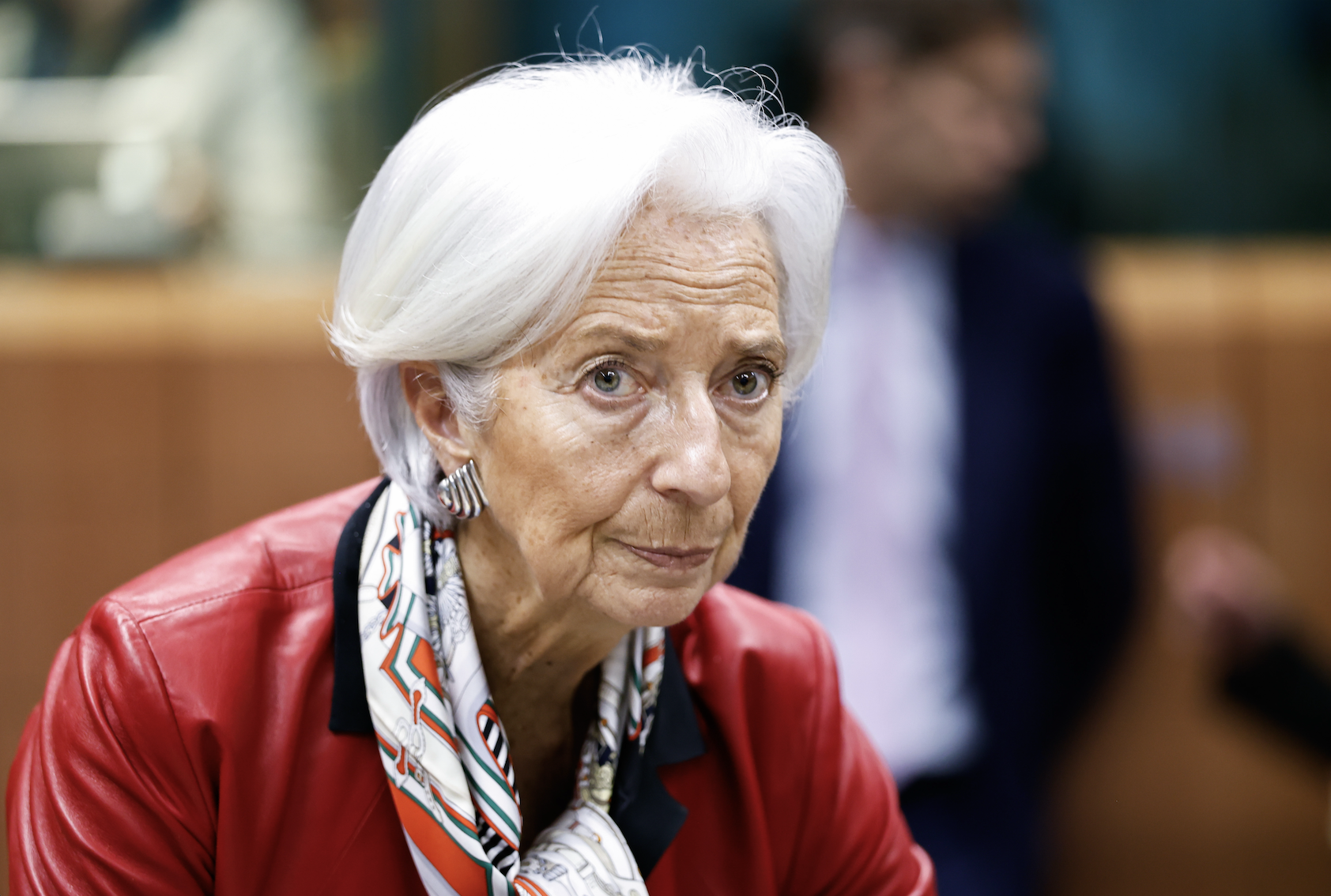
An early departure by Christine Lagarde could narrow the field of candidates vying to succeed her as European Central Bank president.
Four months ago, digital assets underwent what I believe was the most consequential liquidation event in their history. On October 10, 2025, over $19 billion in leveraged positions were wiped out within hours. Bitcoin plummeted from roughly $122,000 to $105,000. More than 1.6 million trader accounts were liquidated.
For families navigating public benefits, long-term care planning, and lifetime financial sustainability, this change represents both an opportunity and a planning strategy worth considering. While ABLE accounts can be powerful tools, they are most effective when coordinated thoughtfully with benefits, trusts, and broader financial strategies.
When uncertainty rises, volatility usually follows as the market has a tendency of pricing in worst-case scenarios quickly. AI’s evolution has accelerated rapidly, shifting from novelty use cases to broad, productivity‑enhancing applications across industries.
The performance of digital assets in recent months, especially bitcoin, has been testing investor conviction in both the category’s near-term growth potential as well as bitcoin’s standing as a gold-like store of value and a key character in the debasement trade story.
Emerging-market assets were little changed on Tuesday as traders weighed the recent optimism toward the asset class against a firmer US dollar and thinner trading volumes due to holidays in major markets.
The silver market is projected to run its sixth straight structural supply deficit in 2026 as investment demand remains high.
Private credit has been in the news lately. That’s nothing new. For years, investors have read about the potential opportunities the asset class offers and how it works. Let’s dig a little deeper into what private credit is, what it isn’t and how it can fit into a diversified investment portfolio.
Despite having little expertise when it comes to the subject of happiness, I’m fascinated by the subject of money and happiness. In this article, I discuss my own failed experience, review research on money and happiness, and offer my hypothesis on investing and happiness.
To make alternative investments appear attractive, promoters often claim that their products are only weakly correlated — or even uncorrelated — with traditional investments, while still offering competitive returns.
Move over, Taylor and Travis. This Valentine’s Day, the real power couple financial advisors should be swooning over is the one between their wealth practice and the retirement market.
Artificial intelligence has made a lot of noise in the stock market lately, with bots from Alphabet Inc. and startups Anthropic and Altruist disrupting businesses from software to financial services.
Income investors face a promising landscape today. But we think income investing should be more than simply combining the highest yielders in each asset class, which could create unintended risks. In our view, an efficient multi-asset approach can help find the right balance between income, growth and diversification.
Global equity markets posted modest gains to start the year, driven by selective strength in technology and cyclical areas as leadership rotated. Beneath the surface, performance diverged across companies, sectors, and regions. While macro uncertainty continues to unsettle markets, outcomes are increasingly shaped by company fundamentals.
The ex-Credit Suisse bankers behind Global Infrastructure Partners are best-known for building one of the world’s largest investment firms. Now they’re also forging something else: family offices.
Sell first, ask questions later. That was the stock market’s response to last week’s new artificial-intelligence tools that challenge the software, legal data and media industries. But bargain hunters seeking victims of indiscriminate selling may need patience waiting for a recovery.
Whether these diversified firms can maintain their positions indefinitely is an open question, but market history suggests the competition always catches up.
I often offer this advice on dealing with difficult people. We fight hard to change them, but if they don’t want to be changed the only person getting exhausted from the fight is us. Stop resisting and find another way to deal with his behavior.
Market pros increasingly think the punishment of software stocks over the past few weeks went too far, creating new bargains in shares that were beaten down in an indiscriminate selloff.
LPL Research highlights five reasons emerging markets look attractive in 2026, from dollar weakness to accelerating earnings, and AI-driven growth.
Weakening global ties may lead to economic disruption and lasting investment implications. Here's what investors should know about navigating the changing landscape.
The market got off to a strong start in 2026, with investors chasing industrials, materials, and commodity-related stocks as the reflation narrative gained traction. The “reflation narrative” is the belief that a range of policies will boost the rate of economic growth in the U.S. without triggering inflation.
In our latest “Alternative Allocations” episode, Matt Katz of Fiduciary Trust International explores the unique structural advantages of the middle market and shares tactical insights on using secondaries and due diligence to navigate today's evolving private equity landscape.
Money decisions are rooted in the emotional learning we carry out of childhood. Unhealed childhood trauma quietly drives the way people save, spend, and relate to money.