The global economy is in a mid-cycle expansion, following peaks in policy support and growth, and what is likely a transitory spike in inflation. We expect global growth to moderate to a still above-trend pace in 2022.
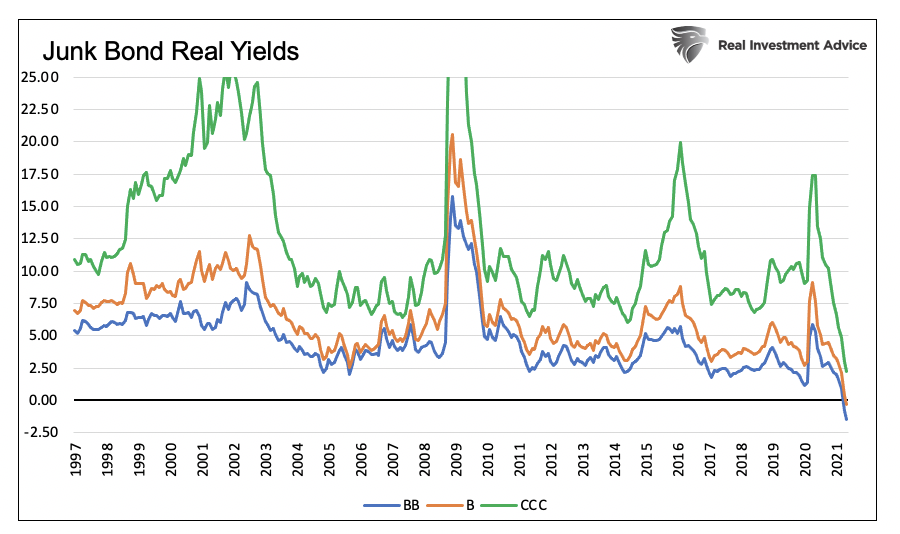
Forcing the price of money to absurdly low or even negative rates is slowly but constantly detracting from economic progress and ripping the social fabric of our nation.
Be forewarned – we are going to empty the quote bin this quarter.
For years, David Horowitz at Agilon Capital was a rare breed in the bond market: a quant in a notoriously old-school business where prices were a call rather than a click away.
These are the four outcomes you should strive to achieve while considering if, when, and with whom to make what will be the most important decision of your career.
Correction fears are overdone – amidst all the chatter about stocks being expensive and due for a correction, Brent’s team dissected price data going back to 1950 and found that corrections and bear markets are rarer than commonly perceived.
Gold notched its third straight week of higher prices as the yield on the 10-year Treasury dipped below 1.3% for the first time since February. The highly transmissible Delta variant was also ruled the most dominant strain of coronavirus in the U.S., threatening economic growth and raising uncertainty about the next interest rate hike.
The pristine surface of a lake on a perfectly calm and sunny day is easy on the eyes. Yet it usually offers no insight as to what lies beneath.
The reflation trade that hammered bonds, drove stock gauges to repeated records and re-energized long dormant value shares this year is in rapid retreat.
This article is about an exception to a rule – an exception that, I believe, has ceased to be. And so the rule has become stronger, and there is a little less joy in the investing world.
Financial theory predicts that stocks of “green” or climate-friendly companies should underperform brown ones, but empirical evidence demonstrates that has not been the case. New research explains that paradox, showing that green stocks have had a temporary benefit from adverse climate-related news.
There may be many reasons why people spread misinformation about Bitcoin. Much of the misinformation may originate from Ripple, which is currently under investigation by the Securities and Exchange Commission (SEC). The fintech firm is believed to employ a great number of bots on Twitter and other social media platforms with the intent of tearing Bitcoin down in favor of its own XRP coin.
Here are several ways you can make yourself a household name in your area, and they don’t involve throwing thousands of dollars at an advertising budget.
As predicted by theory, increased investor demand has resulted in higher returns for public stocks with good environmental, social and governance (ESG) characteristics. Unfortunately, that means future returns will be lower for those stocks. New research confirms that this is also the case for private “impact” investments.
Legendary global investor John Templeton once said that the best time to buy was when there was “maximum pessimism,” and the best time to sell was when there was “maximum optimism.”
The global economic reopening remains on track as COVID-19 vaccination rates climb.
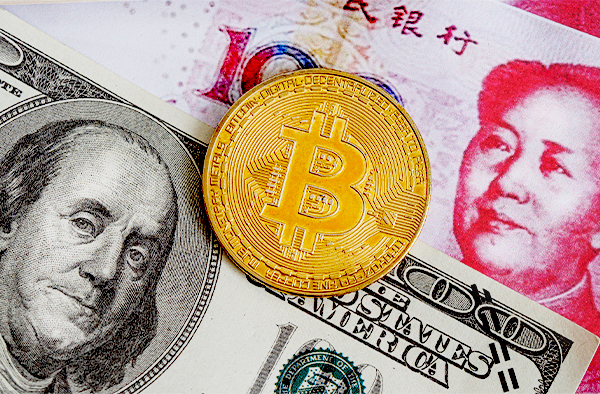
Bitcoin erased its 2021 gains last week as China ramped up its crackdown on mining of the cryptocurrency, a move that’s expected to help shift the industry’s center of gravity from Asia to North America.
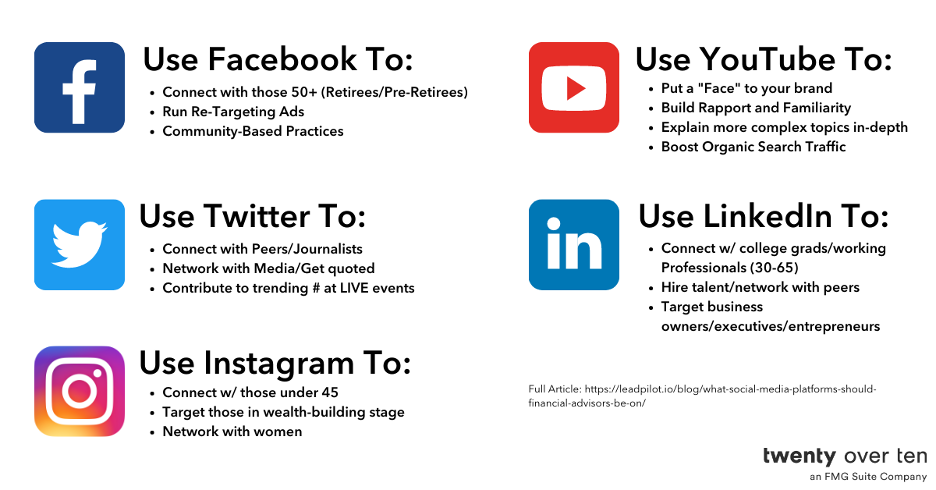
There is a significant difference among the members of social media platforms. If you’ve seen little ROI from social media, you are spending too much time or money on the wrong platform.
If we could travel back in time to the beginning of 2020, many of us would be surprised at how good things were.
Bitcoin erased its 2021 gains this week as China ramped up its crackdown on mining of the cryptocurrency, a move that’s expected to help shift the industry’s center of gravity from Asia to North America.
Growth stocks have lagged cyclicals so far in 2021, but we remain steadfast in our belief that secular growth is the key to generating long-term returns. In this piece, we discuss how we find attractive opportunities in the small cap universe.
Sir John Templeton famously said that “this time is different” are the four most dangerous words for investors.
Through the first half of 2021, fixed-income investors have been faced with their greatest fear: inflation.
Here are the top five reasons to convert to a referral-only practice.
The inflation scare that’s become a major theme in markets is getting fresh momentum from the climate-change battle and the huge economic transformation underway.
The Fed now acknowledges inflation risks are to the upside.
Why consider volatility as a separate asset class? Because it is endemic.
Six competing vendors rate how companies perform along ESG standards. But because those ratings differ widely across vendors, investors cannot reliably construct portfolios that meet their personal criteria.
Domestic business travel is well on its way to recovery. Forty percent of poll respondents said that business travel within the country where their firm is based has already resumed, while a third said that their company has either decided on a start date or is working toward a date.
As the economic recovery continues to broaden out, how do you see the emerging markets?
Japanese equities have long been overlooked by many global investors.
As Europe’s economy continues to recover from COVID-19, it appears the central bank will remain accommodative, but for how long?
Market watchers have heard the warnings over and over. Stocks are expensive. Growth is set to slow. Higher taxes and hawkish monetary policy loom as threats. Yet there’s a mighty force pushing back against all the bearish voices: buyers who keep on buying.
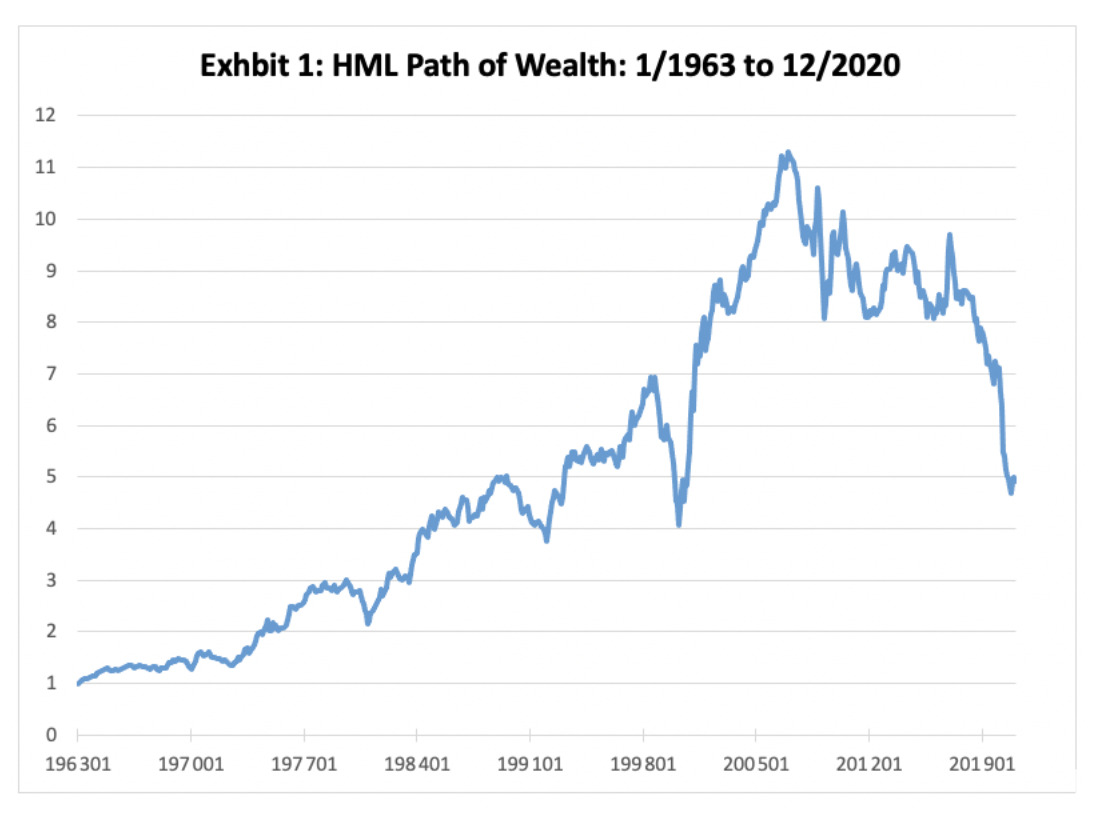
The demise of the value premium in the last 12 years has led to doubts regarding the efficacy of this approach and efforts to adjust the accounting ratios to make them more robust. Those efforts are misguided. Value investing amounts to comparing estimates of fundamental value with price and that accounting ratios, however tweaked, are not a reasonable way to estimate value – it requires a full-blown DCF analysis.
The Rorschach inkblot test was created in 1921 to analyze how individuals who view the exact same picture perceive and interpret external reality.
Coherent thinking is interested in how things are related; where they come from, where they go, and the mechanisms by which they affect each other.
Federal Reserve Chairman Jerome Powell and his colleagues appear to be winning over investors with the argument that the current surge in consumer prices won’t last.
Coming out of lockdown, you have an opportunity to modernize your workflow, communication tools, and advising strategies to work smarter and create more client value.
Commodities prices have been moving higher this spring amid rising demand and rising inflation expectations globally as economies emerge from the pandemic.
I spoke with Staley Cates, the vice chairman of Southeastern Asset Management, on the value opportunities he sees in the U.S. and abroad, and why his firm’s process has generated superior returns for its partners/investors.
To get the facts, sometimes you need to look beneath the surface.
The interplay between governments and businesses impacts your investments. So does the interplay of governments with other governments. Thus the drive to create an international corporate tax. So you can’t escape politics… but you can try to analyze it calmly, without partisan histrionics.
An unexpected jump in U.S. wages has given financial markets a new reason to worry that higher inflation may be here to stay.
After idling for decades, electric vehicles (EVs) are finally ready to charge ahead. Changes in the regulatory landscape, decreasing costs, and a substantially wider range of buying options have transformed the industry and created a powerful secular growth trend. One little known electronics supplier, Aptiv PLC, is particularly well-positioned to take advantage of the opportunity.
With only a few brief downturns in an otherwise upward trend in the U.S. equity market since the Global Financial Crisis, declining interest rates have pulled forward the net present value of distant earnings and propelled growth stocks (and the market as a whole) higher.
The economist who helped change the way the Federal Reserve assesses long-run inflation expectations says their current level means the central bank needs to start laying the groundwork for shrinking its massive bond-buying program.
New research shows that bonds from carbon-emitting (“brown”) companies have underperformed those of green companies during last 13 years, but, contrary to theory, they are riskier. Indeed, brown bonds may outperform in the future, as the temporary effect from increased investor demand subsides.
Bear markets matter, and they matter much more than you think.
May was another good month, albeit one with some ups and downs.
Transitory is defined as being of brief duration, tending to pass away and not persistent