For decades, the tech sector wasn’t viewed as a prime source of equity income. But that’s changed for the better in recent years, and that positive evolution is ongoing.
The U.S. stock market has done so well that many investors may have forgotten about the rest of the world. Emerging markets, however, have a case to get back into investors’ portfolios.
With interest-rate cuts off the table for now, the US Federal Reserve will focus on a different topic at next week’s policy-making meeting: when and how to slow quantitative tightening, the process of reducing the vast securities portfolio amassed in previous efforts to support economic activity.
Among the many too-good-to-be-true financial stories is the Alpha Architect 1-3 Month Box ETF, known by its ticker BOXX, that offers Treasury bill yields taxed at capital gains rates.
Less than a year ago, investors were gaming out what would happen when billions of dollars of bonds reached maturity dates, leaving borrowers potentially crushed by costly refinancings. Now, those fears are fizzling away, with companies rushing to sell debt to a buoyant market.
Underlying US inflation topped forecasts for a second month in February as prices jumped for used cars, air travel and clothes, reinforcing the Federal Reserve’s cautious approach to cutting interest rates.
Bond traders have plenty on their plates the next couple days, even after they absorb a crucial US inflation reading that stands to shape expectations for Federal Reserve policy for months to come.
We monitor battery prices, elections and market attention on climate resilience for their impact on transition-related investment opportunities and risks. U.S. stocks were mostly flat last week, while 10-year U.S. Treasury yields fell further. Markets still expect the first Federal Reserve rate cut around mid-2024.
Although markets expect both the Fed and the ECB to cut rates in June, macro developments could change that forecast.
Taking advantage of yields now before the Federal Reserve loosens monetary policy has caused investors to scramble for bond exposure amid record issuance in 2024. Prospective investors looking to add core exposure to their portfolios can consider a pair of ETFs from Vanguard.
Good managers are drowning the superior performance potential of their best ideas in a sea of bad ones.
This week, the US bond market faces its own Super Tuesday of sorts: the release of fresh inflation data investors will use to predict when the Federal Reserve will start cutting interest rates.
The potential for a soft landing continues to grow as the Fed indicates rate cuts later this year. A soft landing could cause further tightening in credit spreads, while a divergence from market expectations could lead to sudden widening.
In a move aimed at offering voters a pre-election giveaway, UK Chancellor Jeremy Hunt cut national insurance contributions by 2 percentage points in his spring budget. He had previously cut national insurance contributions by 2 percentage points in the autumn budget less than four months ago.
The idea that “market expectations” tell us anything about the economy’s future is – or should be – in serious doubt. That’s not to say the market is wrong. It just changes its mind so often as to be useless. And most of the time, it changes its mind after the fact.
Super Tuesday was, if I may, super obvious. Former President Donald Trump clinched nearly every delegate that was up for grabs, forcing his Republican challenger, Nikki Haley, out of the race, which all but guarantees his nomination.
The US jobless rate climbed to a two-year high in February even as hiring remained healthy, pointing to a cooler yet resilient labor market.
Record issuance in bonds to start 2024 is now showing up in the sales numbers. In the case of corporate bonds, record issuance in January was met with record sales in February as the scramble to lock in yields is spurring bond buyers to act.
Risks are building for bond traders who’ve spent the last couple of weeks adding to bets on Federal Reserve interest-rate cuts this year.
Recessions are part of the economic cycle. No one looks forward to a recession because of the pain it can impose on investors or worse, job security.
Although a strong economy has changed expectations about the timing and magnitude of interest rate cuts, we still see room for the Federal Reserve to cut by three-quarters of a point this year.
Noble Prize winners and “Modern Portfolio Theory” pioneers Harry Markowitz and William Sharpe developed what we know today as the 60-40 portfolio. This strategy consisted of a hypothetical 60 percent allocation to equities and a 40 percent allocation to fixed income.
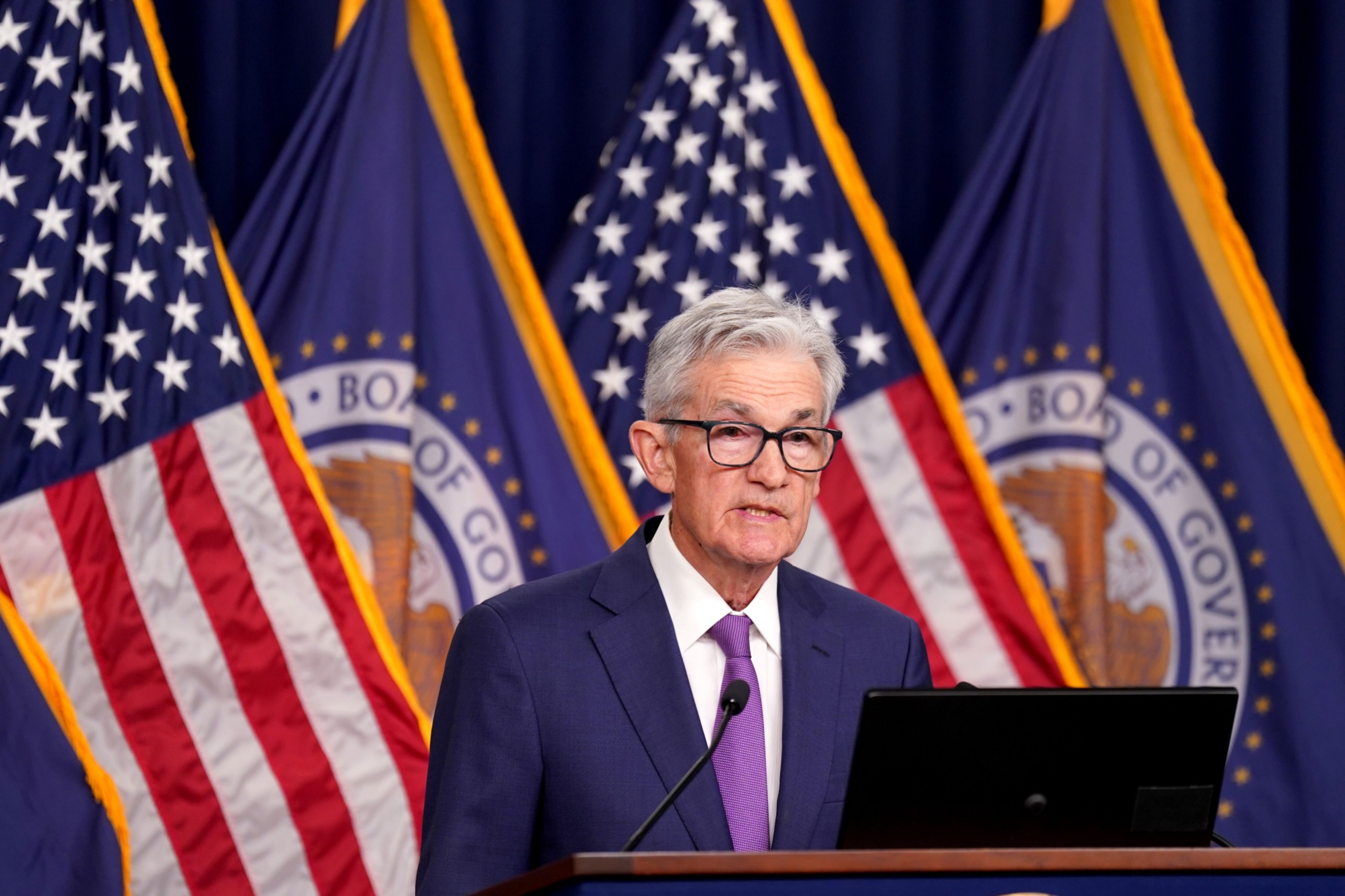
Federal Reserve Chair Jerome Powell reiterated to lawmakers that the US central bank is in no rush to cut interest rates until policymakers are convinced they have won their battle over inflation.
We get granular as the environment for risk-taking is supportive for now. That’s why we like euro area high yield credit, emerging market debt and U.S. stocks.
The average expected return on asset (EROA) assumption for the largest U.S.-listed pension plan sponsors increased to 6.70% in 2023—the first time a year-over-year increase has been observed in 19 years of records.
The Fed is talking about cutting rates and reducing QT. The only rationale for it in such an environment is a concern with liquidity problems.
Treasuries held modest gains ahead of remarks from Federal Reserve Chair Jerome Powell and key labor-market data, which are set to test bond investors’ conviction about interest-rate cuts in the US.
Investor sentiment and stock market valuations are getting increasingly stretched as indexes trek higher, but solid underlying breadth has been a positive offset for now.
This PIMCO Perspectives assesses how the term premium’s 40-year downturn could start to reverse.
A curious thing has happened in the US market discourse: In the absence of major concerns about jobs and growth, commentators have started to worry that the economy is too good to keep inflation contained.
America’s public pension funds have gotten themselves into a bind. They’re responsible for paying trillions of dollars in future retirement benefits to teachers, firefighters, police, and other state and local employees, but their assets fall far short of what’s needed to fulfill those promises.
The sharp rally in US stocks this year has left strategists at JPMorgan Chase & Co. and Goldman Sachs Group Inc. divided about whether a market bubble is forming.
Why are we prone to irrational behavior as investors? Why do we too often sell when we should buy and buy when we should sell? Market history is replete with examples of this behavioral dynamic.
Traders surprised by this year’s painful rise in bond yields are still looking to snap up US debt given their ongoing assumption the US economy will eventually slow in 2024.
Ed Perks, Chief Investment Officer of Franklin Income Investors, explores the impact of these changes on the fixed income and equity markets and offers insights regarding opportunities in different asset classes.
Equity investors didn't mind the extra day this February as both domestic large-cap stocks and small-to-mid-cap stocks saw steady gains through the month, bringing both groups into positive territory year-to-date, though the latter continues to lag.
Bitcoin and gold were both top of mind at this past week’s 2024 Investment U Conference in Ojai, California, which I had the privilege of presenting at.
Pacific Investment Management Co. is warning that US fiscal profligacy threatens to drag the Treasury market back to 1980s, a time when bond vigilantes demanded far higher compensation to own longer-dated bonds.
One of the hottest products for retail investors the last couple of years is the single-stock option-income exchange-traded fund. While the basic idea is similar to the old and respectable covered-call writing strategy, the modern versions grabbing attention and dollars are supercharged, promising income yields of 100% or more.
Thanks to artificial intelligence (AI) and investors still holding out hope that rate cuts will happen at some point, global equities are marching higher. That rally could eventually spill over into other assets like international bonds.
Adding real assets to a stock and bond portfolio can help boost returns and smooth volatility when inflation runs above 2%.
After a decade in the wilderness, value investing roared back to life in 2022, led by long-forsaken sectors such as energy, industrials and even certain retailers. Many portfolios had either intentionally or unintentionally migrated heavily towards “growth at any price” exposures and were caught wrong-footed that year.
In this article, Russ Koesterich discusses the reason behind the recent resiliency of stocks, despite rising rates.
On the lookout for some new ETFs? Active ETFs had a great year in 2023 and are off to a hot start in 2024. The question, then, is how to choose from a growing list of strategies. One powerful heuristic for assessing ETFs — tech analysis — can help.
The article explores potential parallels between 1968 and 2024, specifically in the context of the stock market and economic trends. It delves into the concept of secular trends, emphasizing the importance of considering inflation-adjusted stock prices to comprehend the potential impact on portfolios.
Over the past year and counting, money managers have ramped up exposure to a handful of Big Tech companies – swelling market valuations along the way.
What was supposed to be the darling trade of 2024 has unraveled, thanks to the Federal Reserve upending predictions over how fast it would lower interest rates.
We see Japan stocks climbing higher on robust earnings, corporate reforms and a Bank of Japan likely worried about returning to a chronic deflationary mindset.
Investors in US Treasury debt are bracing for another auction, after sales of two- and five-year notes drew only middling demand — despite yields near the highest levels of the year.
Every day this week, investors will get data on the economy. New home sales today, then capital investment, GDP, consumer incomes and spending, manufacturing, and auto sales are on the list. All of this will feed into the outlook for what the Federal Reserve might do with interest rates this year.