If your marketing stank this year, follow these simple instructions and make 2022 better.
The COVID-19 crisis spurs cohesion, but fresh challenges await.
Equity investors focused on a low-carbon strategy needn’t compromise on company fundamentals. When quality and compelling valuations are equally considered, joining the global fight against climate change and generating strong return potential can work hand in glove.
Investor participation and interest in private equity continues to grow. Investors are attracted to private equity for different reasons, including access to the significant investable opportunity set that exists across the universe of private companies, along with lower volatility when compared to public equities.
Last year, Jeremy Siegel correctly predicted the bull market in stocks, the rise in inflation and interest rates and soaring home prices. In this year’s interview, he predicts another year of good performance for U.S. stocks – and identifies the risks investors will face.
The last 20 months have taught us to question everything. What is the future of work? Can American democracy survive? Will Baby Boomers keep consuming more than their fair share? And what comes after “trillion”? Howard Marks’s latest memo examines paradigm shifts that could reshape the economy, markets and the world for many years to come.
In this video, I will be comparing the investment merit of Bank of America Corp. versus Citigroup Inc. I will be comparing these two money center banks and evaluating them based on income, growth, and total return potential.
In this latest survey, 53 leading bond and currency managers considered valuations, expectations and outlooks for the coming months. With the economic recovery undeniably ramping up, we asked managers for their thoughts on valuations in the markets.
Private capital will continue to be the financing source of choice for tech-driven unicorns for the foreseeable future.
Current low yields and tight spreads in the municipal bond market have made it difficult for investors to find opportunities to earn attractive interest income on their investments. We expect that to change in 2022.
In some simplistic economic theories, shortages never happen. Supply and demand for any particular good are always perfectly balanced in a given time and place. If you can’t get what you demand at that moment, you pay a higher price or you demand something else.
With major central banks likely to exercise patience in the face of price pressures, inflation-linked assets may be attractive allocations.
Laden with giant companies, the S&P 500 may end up being a haven from wage pressures that have begun to sow anxiety among investors, research shows.
Renewed impetus behind China’s goal of “common prosperity” has raised concerns that Beijing plans a redistribution of wealth that could hurt growth and investment. The reality, however, is more nuanced—and a good deal more positive for China’s long-term growth ambitions.
October inflation figures were higher than expected. More troublesome, the range of items with higher inflation, relatively narrow in the spring, appears to be widening. Inflation expectations for the next five years have risen. Higher inflation is dampening consumer sentiment.
There is no shortage of vocal advisors and observers ready and willing to dive into any conversation about how you should set your fees.
As investors and financial advisors approach the end of 2021 and consider their annual recalibration of portfolio mix for the coming year, they would be prudent to factor in some difficult economic realities that can no longer be ignored–that will alter stock and bond performance into and well past 2022.
The receding pandemic should continue to provide a tailwind. However, as economies begin to normalize, expectations for the future path of monetary and fiscal policies are shifting. And as markets adapt to a post-Covid economy, we expect increased volatility, more rotational markets, and leadership changes. The risk of a policy error has also increased at the margin, with future Federal Reserve leadership and policy more uncertain today than a month ago.
New research shows that aggressively easy monetary policy has driven asset flows to high-yield corporate bonds. Those bonds now offer poor risk-adjusted returns and have made certain interval funds more attractive.
This article is relevant to financial professionals who are considering offering Model Portfolios to their clients.
The bonds that held market expectations and central bank policies closely together during the COVID-era are starting to break. BlackRock's quant bond experts discuss the latest developments in inflation dynamics, liquidity in the financial system, and changes in China's policy reaction.
Liz Ann Sonders shares her perspective on the U.S. stock market and economy in this monthly Market Snapshot video.
Soaring energy prices highlight the challenges of shifting toward renewable power sources. The continuing need for oil and gas during the transitional phase raises complex questions about balancing environmental needs and social concerns on the journey to a net-zero world.
This year marks our seventh annual ESG manager survey. Our survey of active managers assesses the integration of ESG considerations in investment processes among equity, fixed income and private market managers and spotlights firmwide policies, use of data, engagement and integration.
If you’re struggling to attract new clients, it’s because prospects have a difficult time differentiating you. Prospective clients face four realities that will overwhelm their decision-making process.
Achieving “net zero” by 2050 will require a shift in the global energy mix, from both a supply and consumption perspective. This has implications for portfolio allocations and alpha generation but there are diverse perspectives on the emergent risks and opportunities related to this shift.
When the Federal Reserve released its semiannual financial stability report in May, I wrote that the central bank came as close as it could to saying “bubble.” So imagine what it could have said in its latest update, which was released on Monday.
While an individual is working, taxes are primarily determined by their salary with only minor control by an advisor. However, once they transition into retirement, their advisor becomes a tax conductor, orchestrating timing and sourcing of cash flows and disbursals to maximize their safe, post-tax spending.
New research documents a case where a U.K.-based investor engaged with companies and got them to respond to environmental, social and governance (ESG) issues, thereby reducing the risks associated with those stocks.
In the second half of 2020, Alphabet began buying back C shares, which caused C to regularly trade at a slight premium to A, a reversal of the historical norm. In actual dollars, this meant the C shares traded at $2,511 while the A shares were $2,402.
The Federal Open Market Committee (FOMC) announced the start of balance sheet tapering at a pace of $15 billion per month ($10 billion of Treasuries and $5 billion of mortgage-backed securities). They made no change to the fed funds rate, which remains near the zero bound.
There is no one-size-fits-all approach to dealing with COVID-19.
In this interview, Kevin Knowles and Nick Zylkowski discuss Russell Investments’ Personalized Managed Accounts (PMA) program, a suite of advisor-sold customized SMAs that support tax-loss harvesting and ESG mandates.
Michael Glachun shares why he thinks this cycle has three distinctive features that could propel a faster pace and greater magnitude of Fed tightening than the market seems to expect.
The doing-well-by-doing-good conviction driving ESG investors around the world is nothing more than an illusion of their own making, according to a controversial new study.
Signs are growing that inflation may be more tenacious than originally expected. We don’t believe a return to 1970s-style inflation is likely, but there is a worrisome scenario in which persistently sharp increases in prices could be a factor to reckon with—and if history is any guide, they could have an impact on sector performance.
Breckinridge Capital Advisors, a $47 billion, Boston-based asset manager, just released its 2021 Issuer Engagement report. It focused on climate change risk as a unifying theme. The report cited climate change as a risk multiplier for corporate, municipal, and securitized bonds. Climate change is an integral factor in Breckinridge’s approach to environmental, social and governance (ESG) risk assessment.
Is the Fed’s aggressive policy, which purposely goes against its mandate, hiding something?
Performance highlights from the third quarter of 2021, plus manager expectations for the final months of the year.
Today’s atmosphere is one that we rarely see as investors. This is not like junk bonds in the 1980’s or the run up in Valeant Pharmaceuticals and the other generic drug companies in the 2010’s. There is not a narrow way of looking at today. It is broad.
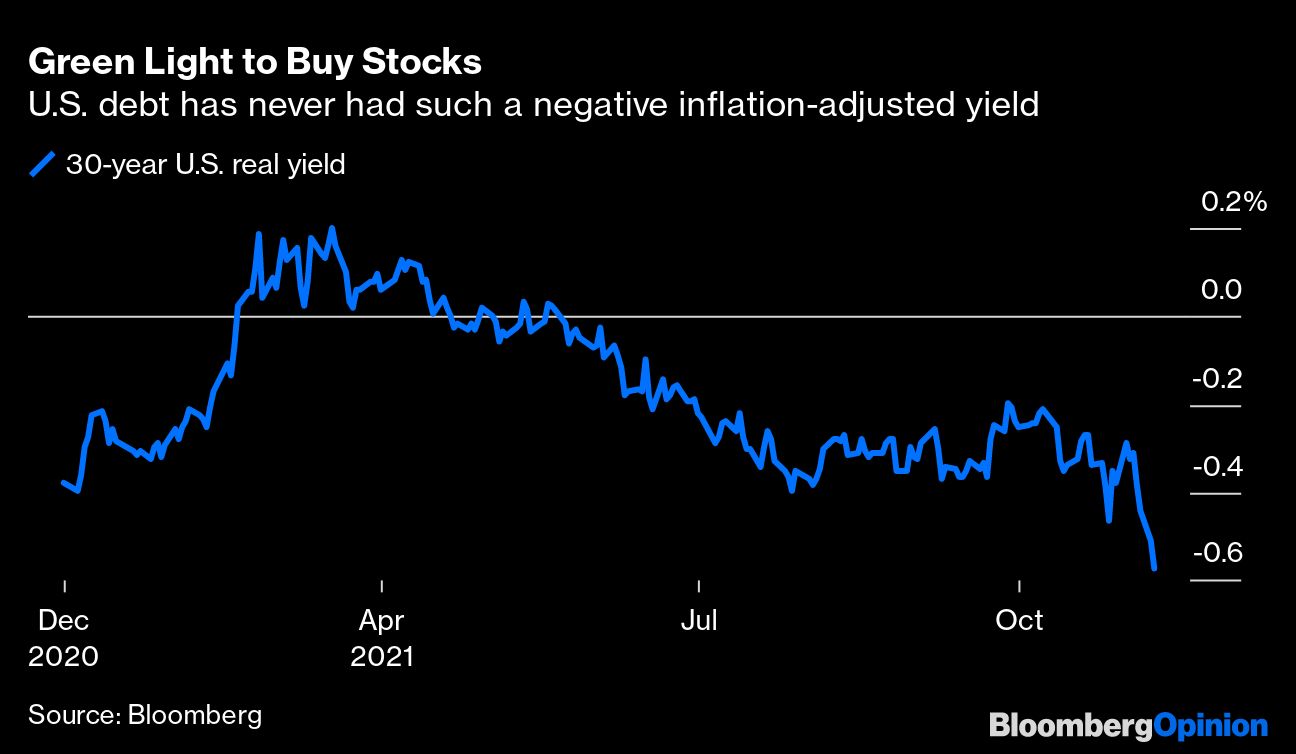
By now investors are quite aware of the consequences of financial repression via negative real interest rate policies. Since interest rates on “risk free” government debt are too low to even compensate for inflation, it pushes investors out the risk spectrum in an effort to achieve a positive rate of return after inflation.
The first car I ever owned was electric. I had driven many regular rentals up to that point. But having lived most of my life in London and then New York, owning never appealed; both cities offered cheaper forms of masochism (I’m told).
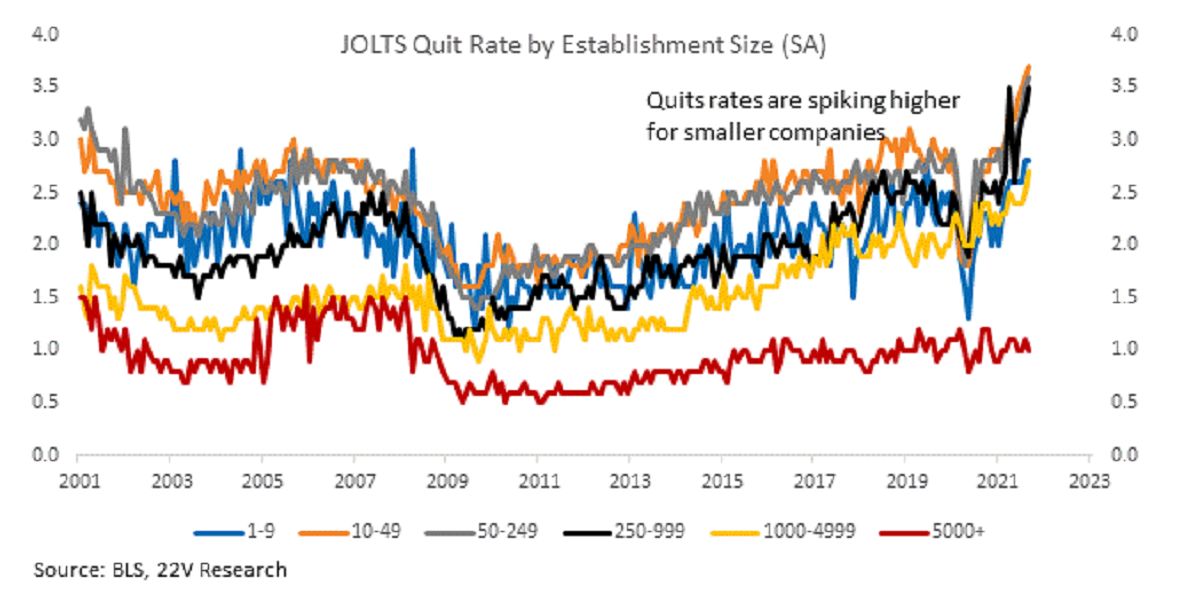
It’s being called the Great Resignation. Quits are at their highest rate in 20 years and no one seems to understand why. One thing is for sure: the labor market has gone weird.
It’s been a while, but it’s time for another COVID update. Compared with a month ago, the medical situation continues to improve, which is good news, although there are reasons to be concerned over the next month or two.
John Vail, Chief Global Strategist at Nikko Asset Management, takes a deep dive into the firm’s 12-month outlook for the global economic recovery, and explains where he is finding the greatest investment opportunities.
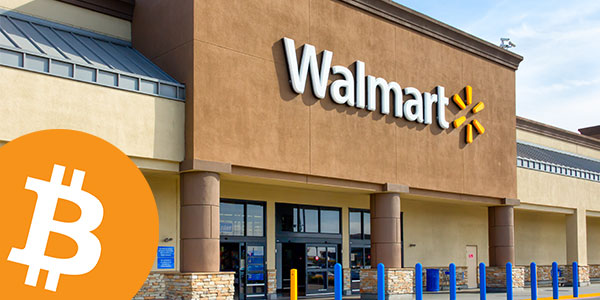
Now nearly anyone will be able to convert their loose change into Bitcoin at their neighborhood Walmart. This week, it was being reported that Walmart quietly began installing special Coinstar machines at select locations that give customers the option to buy Bitcoin.
Today’s letter will be the first of at least two parts. Next week I’ll describe where I think this is heading, and how we still have a chance to save the recovery if certain people/institutions make the right choices. But first, I want to establish three important points. They are foundational to my outlook. Here they are, summarized in one sentence.
Concerns about inflation and a looming Fed taper weighed on markets during the third quarter, but in our view the post-pandemic economy is well-positioned for extended cycle of capital investment, providing the impetus for broadening economic growth and job creation.
Given record profit margins and valuations, there is little upside, especially if inflation remains problematic. Throw stagflation into the formula, and the outlook is bleak.
In a society with a weak social safety net, homelessness is the inevitable result of exuberant real estate prices. Those living on the street are the indirect victims of loose monetary policy and low interest rates that foster high property and rental prices.