Why did the bond market make its latest swerve? In the current febrile environment, data that are generally regarded as distinctly second-tier can have a big impact.
The end of Boris Johnson’s run as prime minister may ease the sense of political chaos, but it won’t fix any of issues depressing UK markets.
The client experience—from both an advisor/firm and advisor/client perspective—is a differentiating factor in an independent advisor’s success. In Focus on the Experience, the second white paper in a four-part series with Cerulli Associates, you’ll learn how partner firms can support advisors and why choosing the right firm partner will allow you to create the optimal client experience to build strong, lasting relationships.
This is an environment in which it is hard to argue for silver linings, especially when so many analysts are warning that additional losses may be ahead in both public and private markets. Yet three are already evident.
New research shows that the significant outperformance of ESG-driven investing over the last decade was due to a sharp increase in concern among investors for climate-related issues. Whether that outperformance continues will depend on even more heightened concerns over the environment.
Last Thursday, Elizabeth Warren expressed skepticism about the Fed tightening monetary policy, saying it would make people poor.
The Northern Trust Economics team shares its outlook for key markets in the month ahead.
Since healthcare costs are the number one fear in retirement for Americans, this article will focus on which states are the least expensive to retire in based on healthcare costs.
We examine key themes from our review of advisor fixed income portfolios over the past year.
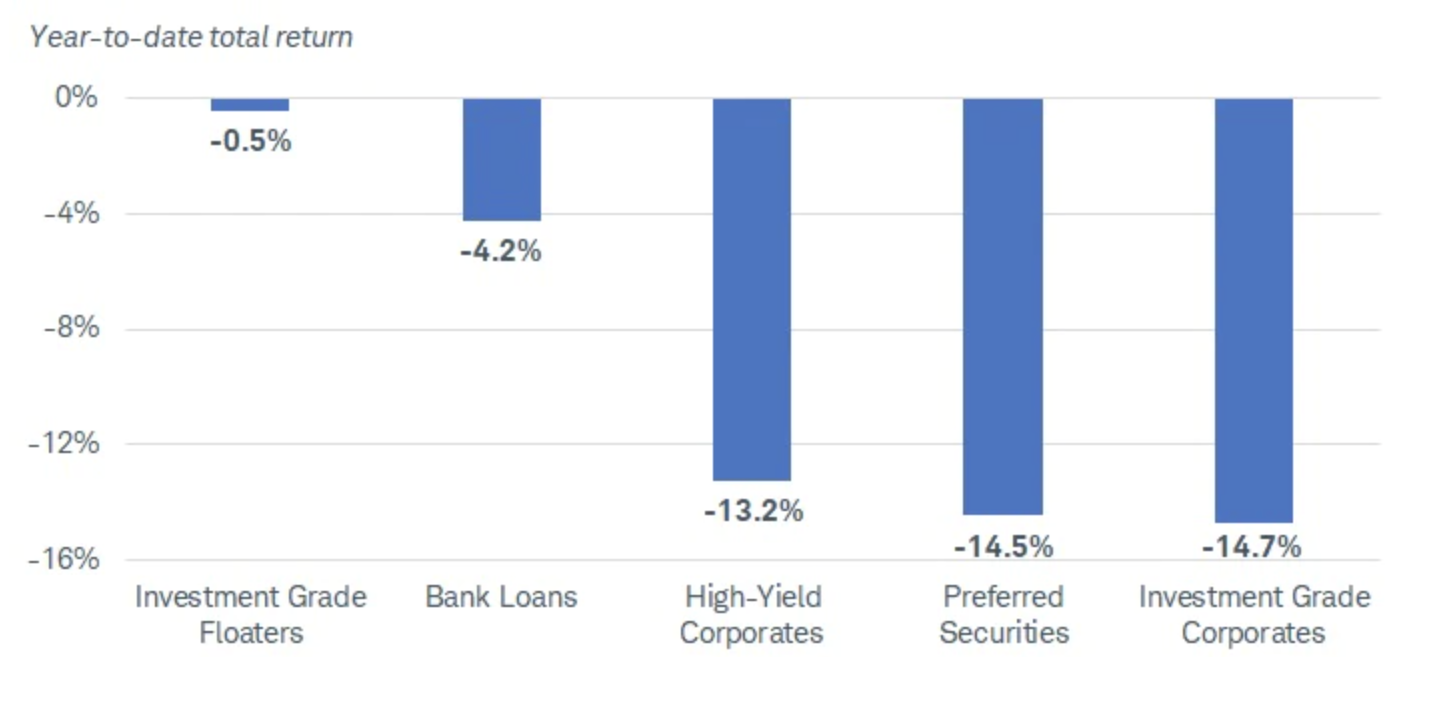
After the steep drop in prices during the first half of this year, yields on many corporate bond investments are at or near 12-year highs.
We've told people to watch the M2 measure of money in order to understand whether inflation will cool down or heat up.
Our mid-March meeting’s “unenthusiastic” stance on global equities and negative stance on global bonds was a respectable decision, as was the overall macro theme “Stagflation Lite with GDP somewhat worse than consensus, but skirting recession.”
It came as a surprise when I found the annual report of the New Zealand SuperFund. While no one could fault it for sticking with passive investments, it chose a different path, with stunning results.
Interest rates aren’t simply the price of borrowing money. They are also information, providing signals telling economic players what to do. Interest rates are in fact the price of time. Low interest rates don’t value time very much. Bad signals produce bad outcomes… and that’s where we are now.
Commodities will get intense scrutiny for the rest of 2022 after a first-half dominated by the supply turmoil and inflationary shocks unleashed by Russia’s attack on Ukraine. Here, we look at what the rest of the year holds for raw materials from crude oil and natural gas to grains, gold, and iron ore.
If finance could be distilled into one idea, it likely would be that there should be a tradeoff between risk and reward: an investment with low risk should have a low expected return, while one that could make you rich should also be one that could lose you a lot of money. The Overnight Effect flies in the face of this core tenet.
NFIB signals a recession is coming…again.
Lifetime income solutions are high on the wish lists of defined contribution (DC) plan participants, with the certainty of a guaranteed lifetime income stream ranking as the top feature in our surveys over the past decade.
I am not implying that brokerage firms that pay their advisors via a “payout” are lying, but there is no shortage of misleading when it comes to payouts.
Since the start of 2019, investors have plowed more than $300 billion into environmental, social and governance (ESG)-themed exchange traded funds.
We hit a milestone just recently, although it’s certainly not one we wanted to hit.
The Stochastic Oscillator (Stochastics) is one of the commonly used technical indicators by market participants.
As proxy season comes to a close, investors and advisors have grappled with company stewardship on a wide variety of issues. But what’s the best way to get a company to listen? Is divestment the way to go? Or must you engage with a company? And how do investors in ETFs and mutual funds make sure their voices are heard at the asset managers they invest with?
Engine No. 1 focuses on engaging with companies constructively to make sure they are taking the costs they impose on society and other stakeholders into account. It operates on the belief that climate and social concerns are economic issues and companies that fail to address them will underperform for the long term.
The global trade in the cheapest foods is grinding to a halt.
There’s no way of knowing for certain whether a recession is imminent, but for many Americans, it’s sure starting to feel that way. According to Google, more people in the U.S. searched for the term “recession” than at any other time in the past two years.
Howard Marks’s latest memo explores recurring investment themes to contextualize the current market correction and the bull market that preceded it. He discusses the role played by financial innovations like SPACs and cryptocurrencies and why he believes psychology, not fundamentals, primarily drives investment cycles – and likely always will.
Academics argue that there are three proven factors of investing: Value, quality and momentum.
Most everyone knows that Bitcoin had a stellar two years when the pandemic broke out. But just about all of the coin’s gains since then have happened while US markets are closed.
On the latest edition of Market Week in Review, Director of Investment Strategies, Shailesh Kshatriya, and Director of Institutional Investment Solutions, Greg Coffey, discussed the recent PMI (purchasing managers’ index) readings from China and the U.S.
New research quantifies the implicit cost that investors incur when index funds, such as those tracking the S&P 500, are rebalanced. Those costs may be avoidable by adopting trading strategies that introduce the possibility of tracking error.
Homeowners should take a total-balance-sheet view when evaluating options for their mortgage.
In January Goldman Sachs projected that the FOMC would increase the federal funds rate at every other meeting (each meeting is 6 weeks apart) starting with the March meeting.
One of the most difficult challenges in finance is how to price crypto assets. Bonds pay interest. Stocks pay dividends. What exactly do crypto assets pay?
It will cost more than the gross domestic product of the entire world to rewire the global economy to run on clean energy.
We’re here to talk about misconceived notions that advisors have about millennial investors. While it is often reported that millennials are rejecting financial advisors, my guest says this is not the case. The biggest issue that he sees is that financial advisors have minimums that make it difficult to serve millennials at the tail-end of the age bracket (those born between 1990-1996, or age 26 to 32). That cohort typically has not accumulated enough money to meet the minimum requirement needed to work with fee-based advisors.
Last week’s rising stock prices suggested that many investors are still wishing the Federal Reserve will step in to counter downward pressures on the market. Hopes for this “Fed put,” however, may be confusing the Fed’s willingness to act with its ability to do so.
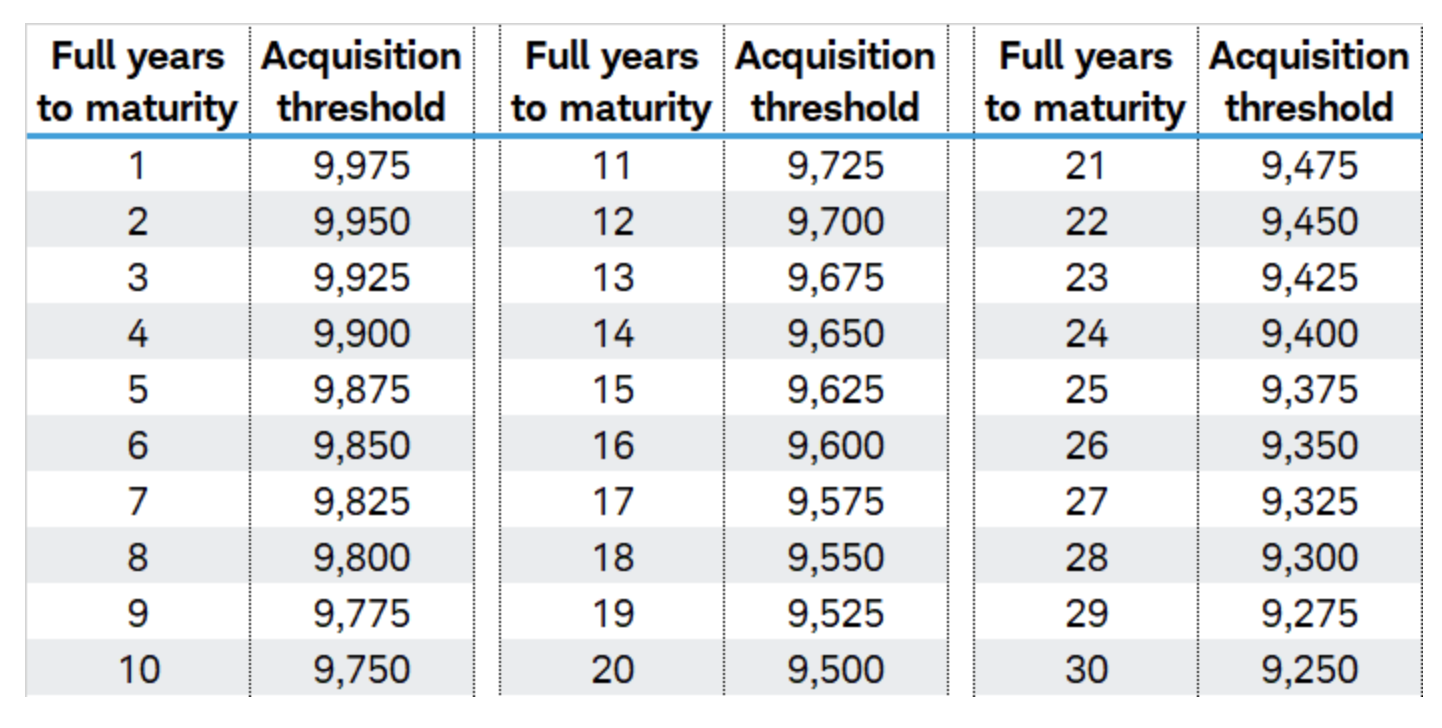
Municipal bonds acquired at too deep a discount could be subject to an additional tax, known as the de minimis tax, which would take a bite out of the after-tax return.
For the year ending December 31, 2021, passive mutual funds and ETFs reported estimated net inflows totaling $958.43 billion, compared to estimated net inflows totaling $249.91 billion for actively managed funds.
There are costs to living a virtuous life; It requires going without.
The US Securities and Exchange Commission is concerned that retail investors are being duped by “greenwashing.”
Despite the massive selloff in equities this year and persistently high inflation, Dawn Fitzpatrick isn’t worried about a recession in the immediate future.
How can you put the “know, like, trust” element of relationship marketing to work for your business at scale?
How are advisors coping with the new Department of Labor (DOL) rollover rules? Here are a dozen observations.
The price of foods, fuels and other essential items are spiraling ever upward as Russia’s war on Ukraine compounds supply-chain woes stemming from the pandemic. Central banks may be in the driving seat when it comes to tackling inflation, but it’s governments that face the fallout and so are compelled to act.
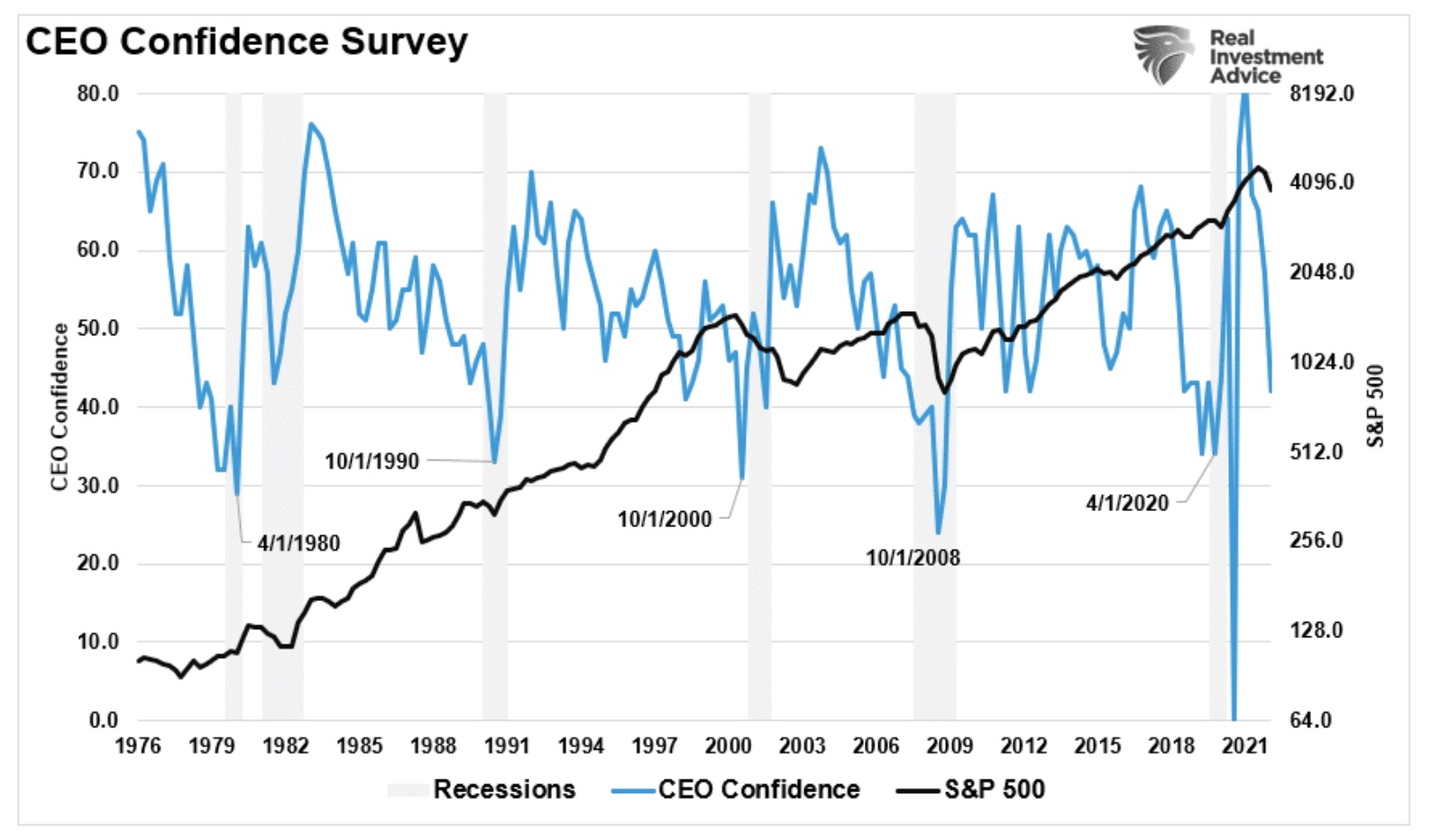
Recent warnings from corporate executives and rapidly declining regional manufacturing surveys make me wonder if a recession has already started.
Russia’s blockade of Ukraine’s ports is a “declaration of war” that threatens to trigger mass migration and a global food crisis, a United Nations official said, adding to the dire warnings on the opening day of the World Economic Forum in Davos.
With economies scrambling for alternatives to Russian fossil fuels, Dina Ting, our Head of Global Index Portfolio Management, offers perspective on single-country portfolio exposure to other world oil producers.
While conventional wisdom says that rising interest rates are bad for stocks, it’s more accurate to say that rising rates tend to be bad for certain types of stocks.
Shiller’s CAPE ratio is the most-cited predictor of long-term equity returns. But new research shows that the “Buffett” indicator does a good job of forecasting, and both ratios predict subdued, long-term returns for stocks.
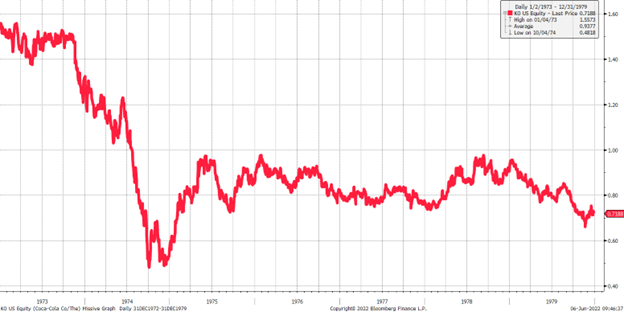
The U.S. was experiencing some of the highest inflation in its history.