As 2025 nears its final 100 calendar days, market focus is already beginning to turn forward and attempt to reconcile what market drivers could remain in place, and what could change in the first year of the new half-decade. While not an exhaustive list, here’s some of our early keys to 2026.
The gains were erased after Federal Reserve officials hinted they were hesitant to cut rates, leading to broad market losses. This challenging environment reinforces the long-term need for investors to seek global diversification outside of the overvalued U.S. dollar and domestic assets.
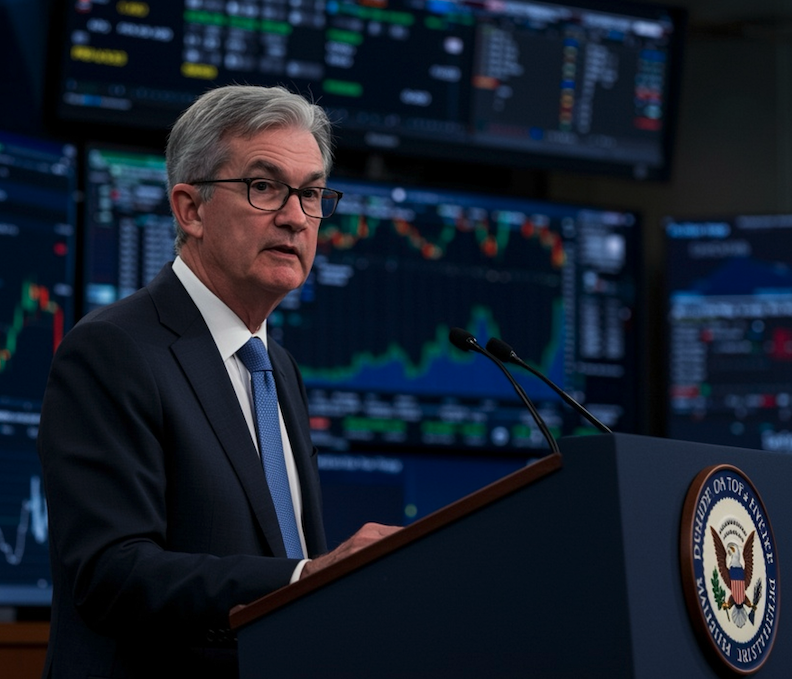
Stocks started the week with strong gains following the government reopening agreement, but the momentum was quickly erased by concerns over Federal Reserve policy. Hesitancy from Fed Chairman Powell to cut rates pushed down the odds of a December cut, causing the Dow to drop significantly from its record level.
The growing list of US credit busts, from subprime auto lender Tricolor Holdings to Broadband Telecom Inc., raises a troubling question: If such “cockroaches” proliferate — if many more enterprises collapse under the weight of excessive debt — who will ultimately bear the losses?
In the end, it does not matter if you are “bullish” or “bearish.” However, what is grossly important in achieving long-term investment success is not necessarily being “right” during the first half of the cycle, but by not being “wrong” during the second half.
Monetary cycles define eras of opportunity. For years, we lived under quantitative tightening. Liquidity was withdrawn, balance sheets were reduced, and capital became expensive.
Closing the books on fiscal year 2025, the U.S. ran a deficit of $1.77 trillion, a slight improvement from $1.83 trillion in 2024. But a peacetime deficit exceeding 6% of gross domestic product (GDP) is still cause for worry.
In this episode of the Money Metals Midweek Memo, host Mike Maharrey leans on Greg Weldon’s “debt black hole” metaphor to explain how towering obligations now warp policy, markets, and household finances.
Clearly, policies which boost individual freedom, not government engineering, work best. And as usual, the arguments of one political party are often designed to hide the fact that their policies are the very thing they claim to detest in the other.
If you’d told me twenty years ago that we’d soon see rockets launching into orbit every day-and-a-half, I’d have smiled politely and changed the subject. Yet here we are: in the first half of 2025, a new launch hit the sky every 28 hours—six hours ahead of last year’s record pace.
n the report, Global Head of Credit Research Mike Talaga, Portfolio Manager Nicholas Ware, and Credit Analyst James Donahue discuss how new issuance by tech companies to fund capital spending on artificial intelligence (AI) projects may be reshaping the technical picture for credit.
The boom in artificial-intelligence investment is undoubtedly boosting both the US stock market and the broader economy right now. But what about the longer term? Will AI be a big net positive, delivering prosperity and solving the nation’s fiscal problems?
As someone who’s been involved in capital markets his entire adult life, I can safely say that gold investors haven’t seen a period like this in decades. The third quarter of 2025 was nothing short of historic, and in many ways, I believe we’re witnessing the beginning of a new era for the yellow metal.
Markets wobbled as Washington’s shutdown drama ended, but I don’t view last week’s pullback as the start of a bear market. The Dow just printed fresh highs, breadth rotated toward quality and defensive stocks, and the weakness centered on AI-linked capex stories repricing risks associated with the capex buildouts.
The government shutdown came to an end last night after 43 days, making it the longest shutdown in history. We will leave it to the political commentators to pass judgment on what it means for the decision-makers in Washington.
While stock and bond markets wait for U.S. federal data to become available again, private-sector reports suggest lukewarm overall economic growth.
Capital controls can be used to keep investors at home. Bank reserve and liquidity requirements can also be employed for this purpose: U.S. banks hold $2 trillion more in government debt than they did six years ago.
Retirement planning shouldn’t be defined by “needs” but by the lifestyle you want to sustain. This piece reframes retirement as a phase for living fully—balancing taxes, inflation, and income sources to enable abundance.
The future is now: 5G, fiber optics, power grids, and digital networks. Brock Campbell, CFA of BNY Investments reveals how BKGI (the BNY Mellon Global Infrastructure Income ETF) delivers inflation protection, steady income, and exposure to essential growth assets.
To invest or not to invest in alternatives; that is the question for anyone involved in the business of retirement planning. FAs can help clients navigate the brave new world of customized alternatives, but this is easier said than done.
The “EM-ification” of developed markets has rewritten the investment playbook. Emerging markets are not the weak link in global equities — they may in fact be the stronger foundation. For long-term investors, it is time to reassess.
While consensus remains cautious, there is a case, however tenuous, for economic reacceleration. This isn’t about ignoring risks. It’s about acknowledging that conditions aligning could drive a shift from stagnation to renewed growth.
As happened in the previous era, several forces are combining to keep inflation alive. Today I want to review what’s happening. This won’t be a fun letter to read, but it’s important. You need to prepare for what could be coming.
We were in the camp that the Federal Reserve (Fed) should have reduced interest rates during the first half of the year, taking advantage of the underlying disinflationary path during that period.
As global labor arbitrage becomes less viable and access to cheap labor in emerging markets continues to narrow, businesses are increasingly turning to AI as a domestic solution for cost control and productivity gains.
As the final quarter of 2025 begins, it's a critical moment to look back at the preceding three quarters. Each year carries its own narrative, and 2025 was no exception. Markets trended downward early in the year owing to trade-talk-driven uncertainty, reaching a crescendo in volatility following the unexpected announcement of significant tariffs in April.
Consumers are in a sour mood over inflation and jobs as major retailers prepare to report earnings and offer their outlooks for the holiday shopping period.
Now that government workers are back in the office, the data flood is coming. Here are the four reports we’re most excited for, why they matter, and what we last heard from them.
Though we are getting limited amounts of economic data during the federal government shutdown, the official and private sector data we are receiving generally paints a positive picture for U.S. economic activity.
Many may look at a headline performance figure like “the bond market is up 7%” and understandably feel encouraged. On paper, that appears to be a solid result. But nominal returns alone rarely tell the full story.
When evaluating the integration of gold and bitcoin into their investment strategy, investors should carefully examine both their similar properties and fundamental differences. These assets are frequently positioned as alternative value repositories, particularly valuable during periods of macroeconomic volatility and uncertainty.
Blackstone Inc. has appointed former Morgan Stanley rainmaker Franck Petitgas to a top role in Europe as it prepares to invest $500 billion there over the next 10 years.
Looking ahead, markets are likely to remain on edge as investors weigh the fallout from the shutdown, mounting layoffs, and signs of waning consumer confidence against hopes for continued monetary policy support.
Doug Drabik discusses fixed income market conditions and offers insight for bond investors.
US equities dropped at the open, poised to snap a four-session winning streak, as investors continue to grapple with a lack of US economic data despite the end of the government shutdown.
When we look at broader multi-asset portfolios that tap into real assets, including digital assets, as well as inflation fighters like income securities and real return strategies, we find that they have delivered strong results to the debasement-trade crowd.
Last week’s economic data sent mixed signals. Consumer sentiment plummeted to a near-record low on economic anxiety, and the manufacturing sector continued its long contraction.
The Federal Reserve cut its Fed Funds rate by 25 bps, the 10-year Treasury yield went up 10 bps, and the S&P 500 ended the month of October up over 2%. Let’s unpack those results.
Following a 9-month hiatus in its rate-cutting cycle, the Federal Reserve (Fed) recently resumed monetary easing, with cuts in September and October 2025 in response to signs of a softening labor market.
Nashville’s airport authority plans to sell $1.3 billion of debt in January to meet unprecedented growth — an offering that also bodes well for the broader market to see large deals next year.
Investors have poured into gold – but they may also see compelling benefits from a broad-based commodity allocation.
It’s been one year since President Trump secured his second term, and we’re taking stock of how the economy and financial markets have performed during that time, highlighting both the wins and the challenges.
Investors are increasingly viewing bonds from large corporations like Microsoft and Siemens as safer than the sovereign debt of their home governments, a conclusion driven by a sharp contrast in fiscal management.
The prime-age labor force participation rate of 84.6% in January 1999 is still a record high. But the pace of hiring distinguishes the two eras. In the 1990s, anyone with marginal tech skills could readily find work. Information sector employment grew over 27% from 1995 to 2000, while total nonfarm employment gained 12%.
While we wait for federal data to come back online, private sector gauges continue to underscore still-weak manufacturing, resilient services, and mediocre job growth.
Looking back to the 1990s need not be just a matter of nostalgia. Those too young to have lived it envy the fortunes made as technology firms grew. Seasoned investors who worked through the cycle can warn us of the pain of a correction. Along the way, the cycle taught useful lessons.
For decades, these institutional allocators took roughly the same approach to managing the vast piles of cash under their control: They diversified by divvying up the money across asset classes — for example 40% in stocks, 40% bonds and 20% alternatives — then stuck with it by rebalancing now and again when things got out of whack.
Although the stability of the consumer depends on its ability to generate labor income, i.e., wages and salaries, households’ financial conditions are very important in supporting the stability of consumption.
he dollar is regaining its crown as one of the world’s most appealing assets, defying talk of a “Sell America” trade that had raised troubling questions about the outlook for the global reserve currency.
The math on forward return expectations, given current valuation levels, does not hold up. The assumption that valuations can fall without the price of the markets being negatively impacted is also grossly flawed.