Our election 2020 coverage begins with fiscal policy, security risks that are slowing foreign investment, and legislative standstills.
Launched in September 2020, the CFO Principles for Integrated SDG Investments and Finance are designed to help create a market for corporate SDG (Sustainable Development Goal) investments.
This “exodus,” as some are already calling it, may end up being among the biggest in U.S. history, or at least the biggest since the 1950s and 60s. A record 27.4 percent of homebuyers sought to move out of their metro areas in the second quarter, according to Redfin data.
The facilities will bring products closer to customers, making shopping online about as fast as a quick run to the store.
Market crashes, such as we experienced in March at the onset of the pandemic, drive assets to the safe haven of government bonds. But our research shows this flight to safety mindset did not translate to an increase in demand for annuities.
One of our favorite natural resource companies, Ivanhoe has returned more than 146 percent in the past six months alone as investors anticipate the start of production at the Kakula Mine, which has the potential to become the world’s second-largest copper mining complex, with annual output projected to be 800,000 metric tonnes a year.
The snarky comments about financial engineering practically write themselves: An exchange-traded fund investing in collateralized loan obligations? What could go wrong?
Seven reasons Americans are “nowhere near as alienated from their democratic system” as Germans in the 1920s.
Evaluating the unusual characteristics of the profitability factor
In a low-yield environment, advisors need to use financial planning tools like no-commission annuities to improve after-tax, after-advisory fee bond returns.
Research based on Morningstar’s “globe” ratings, which measure a fund’s adherence to ESG standards, shows that most conventional funds indeed prioritize sustainability in their mandates, and that highly rated, five-globe funds don’t perform any better than one-globe funds.
Supply is getting tight. Helium is notoriously difficult and expensive to store, for the very good reason that it escapes every known container over time.
My learning goal each year is to read at least 40 business-related, non-fiction books – the “stay at home order" has allowed me to read 63. So here is my eighth annual compilation of the ones I’ve read from September 2019 through August 2020.
Five companies now comprise 26% of the market capitalization of the S&P 500® Index, making for the most concentrated U.S. equity market in the last 40 years. What are the potential dangers of this for investors?
While listening to Rob Arnott on a recent Morningstar podcast, I became enamored with something that Arnott was emphatic about. He pointed out that the structural advantage of being a contrarian isn’t being smarter. Every winning purchase in the stock market comes as an opportunity cost to the seller.
The new subscription program is dubbed Walmart+.
Its 800 members have raised their cash holdings to 19% of their total assets on concerns over the economic consequences of the covid pandemic in the U.S.
Investors flock to municipals to meet safety, income and after-tax return goals. But investors should consider how they gain exposure to the asset class.
This November’s US presidential election pits Donald Trump against Democratic nominee Joe Biden, a longtime politician who represents a more progressive policy approach. Our Head of European Fixed Income David Zahn breaks down the implications of the US election for Europe, and why many of Biden’s policies line up more closely with European views.
Although many suggest that wealth inequality is attributable to globalization and technological advancements, what they miss is the role of speculative finance and the complicity of the central bank in driving this process.
The number of Americans filing for initial jobless claims this week spiked above 1 million, while the number of deaths attributed to COVID-19 remains above 1,000 a day. But there was much else to celebrate.
We believe the global economy appears to be working its way out of a deep recession. Read on for a visual snapshot of GDP growth around the globe.
The massive pullback in business travel is apt to inflict the deepest economic pain, but there's also a growing risk that older travelers, a mainstay of tourism, will hunker down for years to come.
For the week, airlines stocks increased 9 percent, its best weekly performance since early June. Wheels up!
As the global economy continues to grapple with the COVID-19 pandemic, there are still opportunities for investors, says Franklin Equity Group Portfolio Manager Don Huber. He has an eye on international companies able to navigate the crisis period—particularly those in regions where recovery is happening faster.
Any advisor who refuses to clearly present fees on their website cannot claim to be operating a transparent practice.
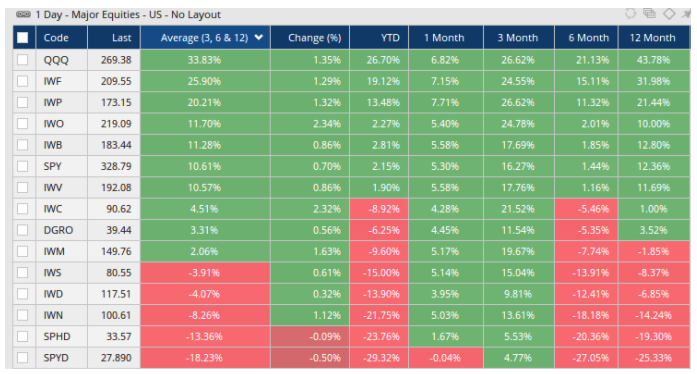
Despite the drumbeat of narratives about the reversal of the growth trade and even some advocating for outperformance on the part of small cap value, the bigger picture trends have not changed.
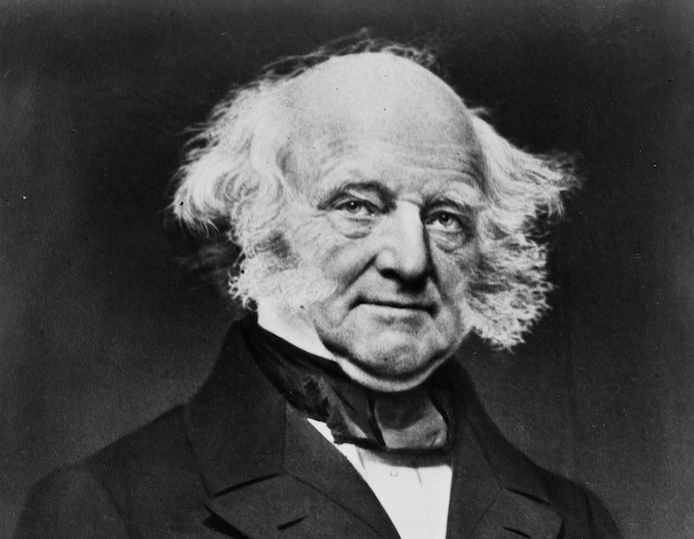
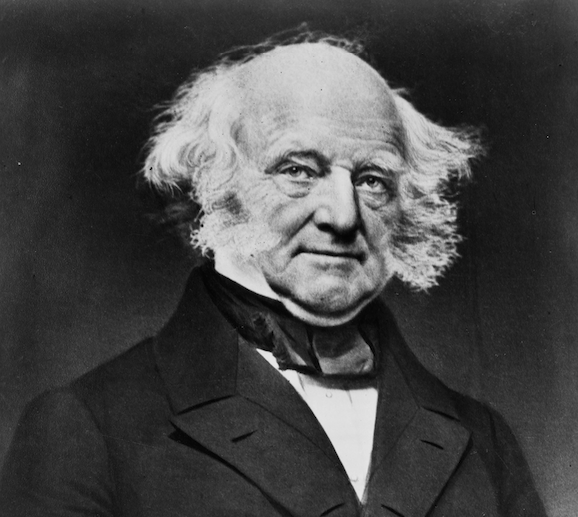
In 1832, Martin Van Buren helped Andrew Jackson decide precisely when he would end the charter for the Second Bank of the United States – the only American central bank of issue before the establishment of the Federal Reserve.
Two companies in the metals and mining space I’m looking forward to hearing from are Ivanhoe Mines and Franco-Nevada. Both are scheduled to report next week.
About two-thirds of this month’s comment is about COVID-19 and the risk of a second wave. This is not only for the sake of public health, which would be enough, and not only to contribute to a better understanding of the epidemic.
A true goals-based wealth management (GBWM) approach can help you control for behavioral biases — both yours and your clients’ — and deliver desired financial outcomes for your clients. Coaching clients throughout your relationship can help combat emotional decision-making and maximize the likelihood of achieving success. Join SEI and Capital Group® for this session which will:
John, J., and Chris will be available to answer your questions following the presentation.
The pandemic creates a good opportunity to make Social Security more sustainable.
Anyone still expecting the fixed interest payments from Treasuries, or even high-quality corporate bonds, to outpace inflation in the coming years is just setting themselves up for disappointment.
The odds of a stagflation environment are continuing to rise in our opinion. Over the past few weeks/months we have made this view clear by looking at both sides of the coin, growth and inflation. Over that time, the evidence continued to mount in favor of our view.
Markets rebounded during the second quarter, aided by monumental support from the Fed. We expect the economy to continue improving, but given the recent wave of Covid cases we also expect some bumps along the way.
We all know that past performance is no guarantee of future results, but you can see in the chart below that the white metal could possibly be setting up for another epic run-up. At this stage of the bull market, silver’s current price appreciation is ahead of any previous rally.
The U.S. and EU deliberate how to disburse aid, China’s recovery carries risks, and U.S. mortgage rates find a floor.
Both gold and silver have been on a tear this week, with the yellow metal touching a nine-year high of $1,897 in intraday trading on Thursday. Silver was trading above $22.70, up 94 percent from its 52-week low on March 18.
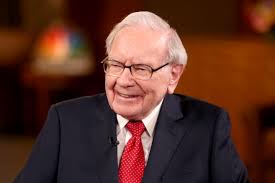
How would Buffett be viewed if, instead of being the chairman of Berkshire Hathaway, he ran an open-end mutual fund by the same name?
The economic calendar is light with a focus on home sales. Unemployment claims data remains an especially important indicator. Second quarter earnings reports will be more important than the economic data, but I do not expect much fresh information on COVID-19 and earnings outlook.
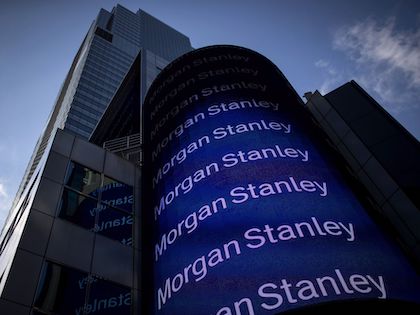
Morgan Stanley will begin reporting the carbon emissions resulting from its lending and investments, providing greater clarity than any of its major American peers on how the bank contributes to climate change.
This part two of a series of discussions about how the issues of banking, taxation and slavery became intertwined and how the debate over the national currency and the national debt that the Civil War produced would shape what we think of as an entirely modern idea - a central reserve bank.
Care to guess how well the monthly CAPE predicted future 10-year returns between January 1995 and May 2020?
Weeks before the S&P 500 bottomed, many millennial Robinhood investors began picking up coronavirus-impacted airline stocks. The buying spree continued even after Warren Buffett announced that he’d dumped his holdings.
Politicians love saying small businesses are important to the economy. In this case, it isn’t just rhetoric. The millions of little companies with a handful of workers are, collectively, more important than the few hundred large enterprises we see in the news.
In a prospecting article from May, we looked at the relative performance of active and passively-managed funds during the volatile months of March and April, a period that theoretically should have favored active managers. With two quarters of 2020 officially behind us, we thought this would be an opportune time to take a look at the longer-term relative performance of these strategies.
In this week’s “Technically Speaking,” the “Golden Cross” arrives, but are the bulls safe? As noted two weeks ago, is the 50/200 dma crossover is historically bullish for equities. However, with markets facing one of the worst earnings declines on record, could overly exuberant investors be walking into a trap?
At LPL Research, we know the stock market is forward-looking: It focuses on what’s happening today and what it sees on the path ahead. Much of the real-time economic data we follow—such as transportation activity, home sales, and jobless claims—is showing tangible evidence that economic activity—while still depressed—has begun to make a comeback.
Next time you see a client’s resolve to stay invested waver, ask them two questions…
The value of this year’s annual hedge fund performance survey was turned on its head when a pandemic shut down the global economy and sent securities plummeting. But a deeper look at consistently performing funds revealed managers that as a group have largely been able to weather the storm better than the market and their peers.