Prediction markets will not replace traditional financial products. That is not their purpose. They do, however, influence client behavior in ways firms cannot ignore.
Precious metals, cryptocurrency, and currency speculation appeal to fear-driven parts of us that want certainty, protection, or a shortcut to wealth. Unfortunately, for most investors, that promise is never fulfilled.
Since ChatGPT burst onto the scene in 2022, artificial intelligence (AI) has moved from science-fiction to reality. For many, AI has become a necessity. The transformation has been swift. Nearly every company now wants to integrate generative AI into their business model, while governments are scrambling to develop sovereign AI infrastructure.
January reinforced our key theme for 2026 – returns must be earned. Markets moved beyond the mag 7 as solid economic growth, a more patient Federal Reserve, and widening market leadership rewarded disciplined diversification. Gold’s parabolic rally and violent reversal showed what happens when discipline breaks down.
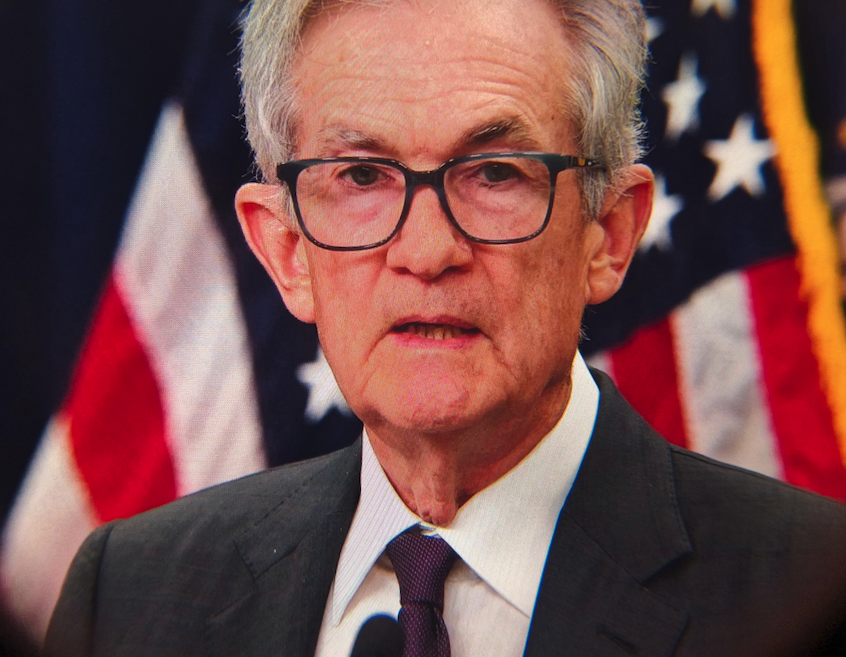
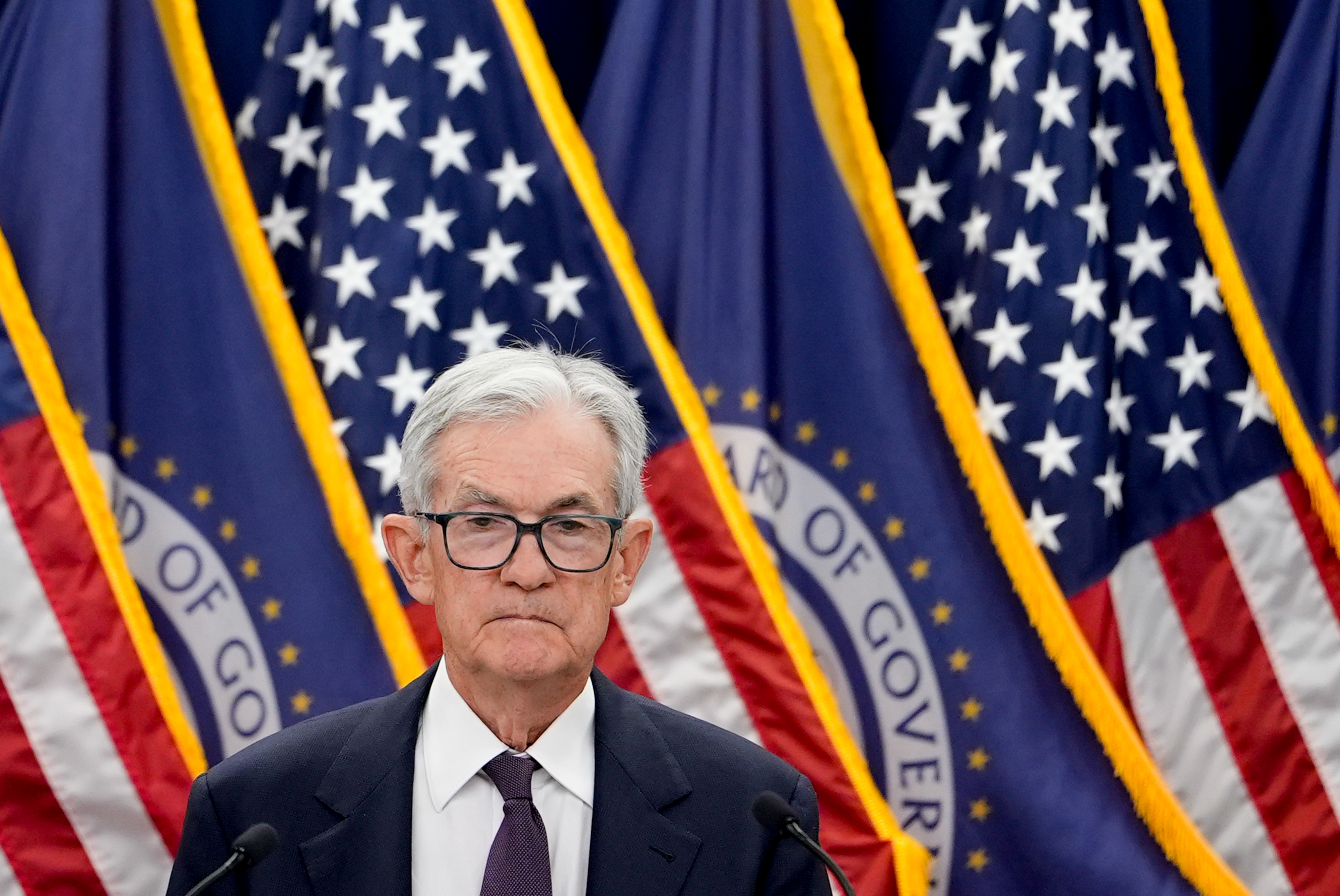
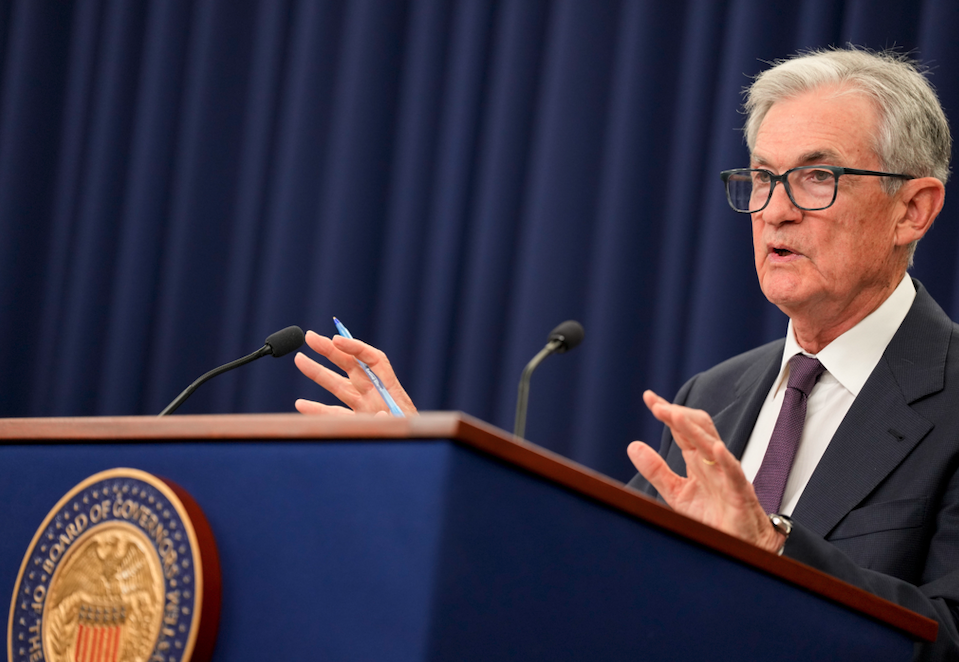
This week’s press conference by Federal Reserve Chair Jerome Powell was one of the most consequential of his tenure at the helm of the Federal Reserve (Fed).
President Trump finally made his pick for Fed Chair and it is Kevin Warsh. A Wall Street Journal editorial said Warsh has been “the leading voice in public life for reforming the Fed.”
The concepts underlying our suggestions are straightforward, grounded in basic portfolio theory, and eminently practical. Most importantly, they align the committee’s focus with the endowment’s true objective: maximizing the sustainable resources available to beneficiaries over the long run.
US stocks advanced on Monday after stronger-than-expected manufacturing data outweighed lingering questions about the interest-rate outlook following President Donald Trump’s decision to pick Kevin Warsh as the next Federal Reserve chair.
Money managers at BlackRock Inc., Bridgewater Associates and Pacific Investment Management Co. are shoring up their portfolios against a fresh bout of inflation.
Reality has a way of catching up with theory eventually, and now it has for Japan, whose long-term bond yields are rising as the yen is depreciating. The Japanese experience, it turns out, is not an excuse to run up lots of debt. It is a cautionary tale.
Mainstream expectations, those from Wall Street, economists, and corporate strategists, have congealed around a bullish economic outlook for 2026. Most forecasts project stronger economic growth, with contained inflation, and continued investment in technology and capital expenditure.
Today we’re going to explore this “affordability” issue, looking at economic facts, survey data and simple intuition. As you’ll see, it’s not as simple as some people think. I also make a quick comment about the appointment of Kevin Warsh as Fed chair at the end.
At its January meeting, the U.S. Federal Reserve (Fed) voted to pause its rate-cutting cycle, a move that aligns with recent signs of stabilizing labor markets and easing inflation pressures.
Investing in common stocks is rarely a smooth experience. Stock prices fluctuate daily, sometimes dramatically, driven by market sentiment, economic data, and short-term news. Even company earnings, while more stable than prices, can experience cycles and periods of volatility.
Municipal credit remains strong in 2026 with high reserves and sector resilience. Still, policy changes and economic pressures ahead warrant attention.
The final week of January saw a stark divergence between official policy and the American consumer's outlook. While the Federal Reserve maintained a "solid" view of economic growth, the public’s mood plummeted to a decade-low as sticky amid sticky wholesale inflation.
A sharp productivity jump shows firms doing more with fewer workers. But the upside surprise also highlights growing risks about how these gains affect the workforce.
In our view, 2025 reinforced a familiar conclusion that tax management remains as relevant as ever, even though tax policy may no longer be a moving target.
As political pressure on the Federal Reserve intensifies and markets ponder the nomination of a new Chair, understanding this chain of risk is increasingly important for investors. Equity valuations are heavily affected by expectations for long-term cash flows, along with the interest rates and risk-premiums that drive how much investors are willing to pay for those future dollars.
At GMO, we have always defined a bubble as a two-standard deviation divergence of the price of any asset class above its long-term real price trend. The U.S. stock market has now been in bubble territory for a prolonged period. Sooner or later, the bubble will burst and the price will return to its historic level.
U.S. stocks finished a volatile week with mixed performance, extending a second consecutive week of modest declines for major indices. Despite the pullback, markets remain close to record levels.
Private credit has grown from a small niche market to a major slice of the financial asset pie. Not many people outside of institutional finance talked about it twenty years ago.
As was widely expected, the Federal Open Market Committee decided to pause their rate cuts at the January meeting, keeping the fed funds trading range at 3.50%–3.75%. For those keeping track, the Fed had lowered ‘the funds rate’ by 75 basis points (bps) during the final three FOMC meetings of 2025.
Doug Drabik discusses fixed income market conditions and offers insight for bond investors.
The Federal Reserve held rates unchanged at the first meeting of 2026, while it waits to see what direction inflation, employment, and other policies take in the months ahead.
In this article, we look both back and forward, first at the 2025 capital markets to analyze not just what happened but also how it fits in the historical context and what we believe it means for 2026 and beyond. We then pivot to our return expectations for major asset classes in the next decade.
The federal funds rate will remain 3.5% to 3.75%. While the market still expects two rate cuts late this year, the Fed is likely to tread cautiously given the economic backdrop.
Amid a rush of domestic and foreign policy developments that have rattled markets – including the potential for another U.S. government shutdown – the Federal Reserve held steady on U.S. monetary policy.
If you play it safe and the fund doesn’t generate sufficient returns, it will require more contributions, often from taxpayers. But if you take too much risk, it could also go wrong and leave the fund without enough money. The task requires balancing risk and reward.
Jerome Powell has two more opportunities to adjust interest rates before his term as Federal Reserve chair ends — and he may not need them.
Coming into 2026, investors face a landscape shaped by persistent inflation, evolving US monetary policy and global uncertainty. At Parametric, our systematic and customized approach is designed to help clients navigate these complexities while preserving after-tax returns.
In our 2026 Outlook, we examine three themes that we believe will shape the economy in the coming year and impact the U.S. and global markets. Theme 1: Everyday Impacts of an Uneven Recovery. Theme 2: AI From Hype to Real-World Results. Theme 3: Adding Private Income and Diversification
Federal Reserve officials left interest rates unchanged and pointed to improvements in the US economy as they signaled a more cautious approach to potential future adjustments.
Theoretically, the two foundational drivers of long‑run economic growth are population growth, which expands the labor force, and productivity, which determines how efficiently that labor can transform inputs into outputs.
Another blockbuster year for bond ETFs is in the books. After two straight years of record net inflows, taxable fixed income ETF assets have nearly doubled since 2020 – crossing the $2 trillion mark. But the big story in 2026 will be rising pressure to move out of money market funds.
In our latest "Alternative Allocations" podcast episode, we sit down with Paul Jodice, Co-Head of Morgan Stanley's GIMA team, to explore crucial shifts they’ve adopted to meet the needs of advisors and the strategies advisors are seeking today.
The AI boom has pushed technology stocks to new highs, but it has also masked headwinds in other sectors of the economy.
LPL Research examines how rising productivity, AI adoption, and structural shifts toward services are supporting U.S. economic growth in 2026.
As geopolitical tensions reshape global trade, capital flows and investor risk appetite, gold is once again surfacing as an important component of asset allocation. Some investors and central banks are arguably viewing gold as a risk hedge, supplanting US Treasuries as a safe-haven asset.
The Federal Reserve is widely expected to halt its interest-rate-cutting cycle this week, as a steadier jobs market restores a degree of consensus at the central bank after months of growing division.
There is always uncertainty about the most likely path forward for the economy and markets — and now is no different. We will continue to watch the headlines and data to see the ultimate impact on the consensus view.
Former Federal Open Market Committee Chairman Alan Greenspan famously observed that forecasting foreign exchange was like flipping a coin. Last year proved him right. What happened, and what lessons can it teach us about the dollar in 2026?
Last week in our latest Cyclical Outlook, “Compounding Opportunity,” we argued that beneath the economy’s broad resilience lies a stark divergence. U.S. policy pivots combined with the surge in adoption of AI technology have created winners and losers.
Concerns over accelerating inflation persisted throughout 2025. However, these anxieties were unwarranted as wage and price increases slowed in response to eight influential factors that also suggest that last year’s disinflation will persist in 2026.
The Fed meets on Wednesday to discuss the direction of monetary policy. With the futures market pricing the odds of “no change in rates” at 97.2%, no one should expect a rate cut at this meeting…or, we think, anytime soon.
Recently, stock market numbness closes the trading day. No wholesale crash, just a little wobbling for now with positive numbers for half of January. But I have a sense it’s in need of a cane to steady its momentum.
Markets, interestingly enough, felt their own version of a “deep freeze” this week. Geopolitical flare-ups, fresh tariff threats and a mini-meltdown in Japan’s bond market briefly rattled investors and pushed volatility sharply higher.
The key point is that nothing in the incoming data since December has undermined the Fed’s prior message. The economy remains strong, jobless claims are hovering near 200,000, and recession fears continue to recede.
Investors selling the dollar to buy emerging-market currencies are off to a lucrative start to 2026, with strategists at top banks expecting such strategies to build further on last year’s 18% rally.
By asking New York traders to confirm the price of the Japanese yen against the dollar on Friday, US authorities handed investors yet another reason to sell the greenback.