In October, I discuss how the “2nd Derivative Effect” would mute the impact of future stimulus programs. With the passage of the $900 billion stimulus package, we can update the estimates for the economic impact heading into 2021.
December 21st marked the first trading day with Tesla TSLA being included in the S&P 500 Index SPX, as it replaced Apartment Investment & Management Co. AIV. At a market capitalization of over $624 billion, TSLA is the largest company to ever join the S&P 500.
Rick Rieder and team describe how revolutionary changes taking place in corporate business models will impact investing for years.
Templeton Global Macro CIO Michael Hasenstab offers the team’s 2021 outlook.
There is strong demand for steady income. However, most investment products and strategies fail dismally in this regard.
In 2019, we wrote about how corporate share repurchases, or “stock buybacks,” had accounted for nearly all buying in the market. A year later, that significant support for asset prices has reversed.
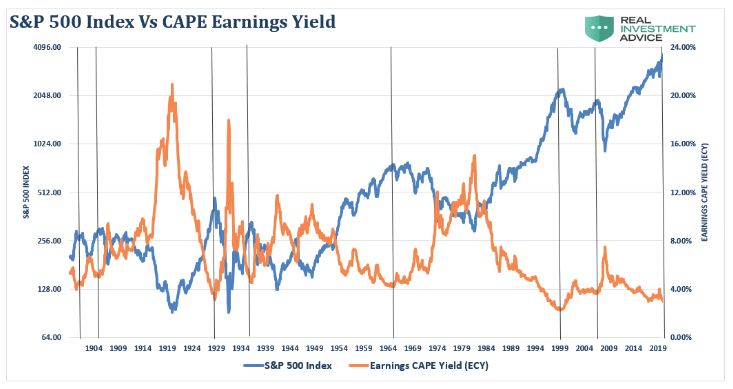
There is much to debate about the current level of interest rates and future stock market returns. However, what is clear is the 40-year decline in rates did not mitigate two extremely nasty bear markets since 1998, just as falling rates did not mitigate the crash in 1929 and the subsequent depression.
We hope you enjoy the December NewsLetter from Harold Evensky.
Promising developments surrounding vaccination give us hope that 2021 will be a better than year than the one that is about to end.
On December 21, Tesla will be the largest company ever to enter the S&P 500 Index. Tesla’s skyhigh valuation, which meets our real-time definition of a bubble, conforms to the observation that market-cap-weighted indices buy high and sell low—the antithesis of prudent investing.
Investors should brace for a deflationary shock that will drive 10-year Treasury yields to zero or below, according to Albert Edwards.
The news on vaccines has boosted optimism for the economy for 2021. In contrast, near-term developments have been unfavorable. COVID-19 cases have surged and in all likelihood will rise further in upcoming weeks.
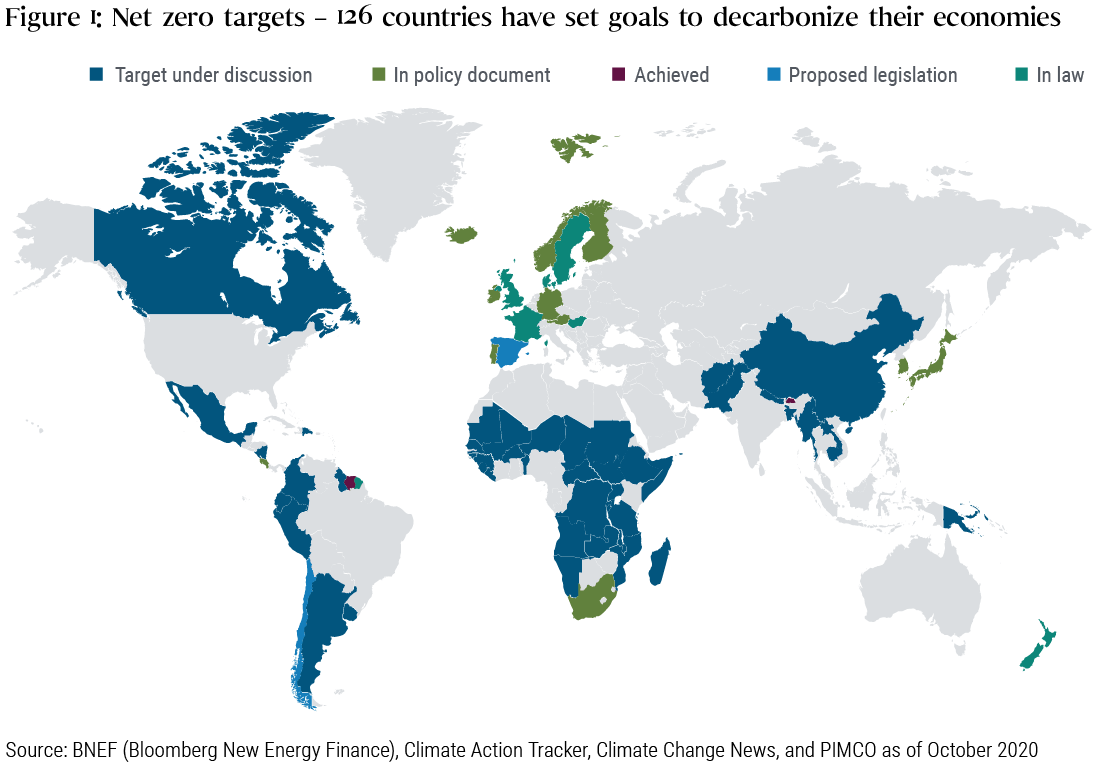
Some of the world’s leading countries have recently announced major sustainability targets. These moves, aimed at making economic recovery faster and more sustainable, will create investment opportunities as well.
It’s that time of year when Wall Street analysts started trotting out the predictions for earnings growth and stock market targets for the coming year. Unfortunately, each year these overly optimistic estimates are ground down as the year progresses. Next year will be no different as earnings growth will disappoint in 2021.
Industrial metals are well on their way to being among the top performers of 2020, supported by red hot demand from China and global supply concerns.
The November Employment Reports was a bit disappointing. Nonfarm payrolls rose by 245,000 (vs. a median forecast of 485,000). The increase was held back by the loss of 93,000 temporary census workers.
Some changes unfold over time and it’s possible to see them coming. There are demographic changes coming in the next decade that will change the direction of the U.S., since the Silent generation and the Baby Boomers hold a different view of government than Gen Z’s and Millennials.
The year 2020 will be remembered for any number of things, including how wrong so many were about so much. From the pandemic to the election, and from the economy to financial markets, prognosticators did a horrible job.
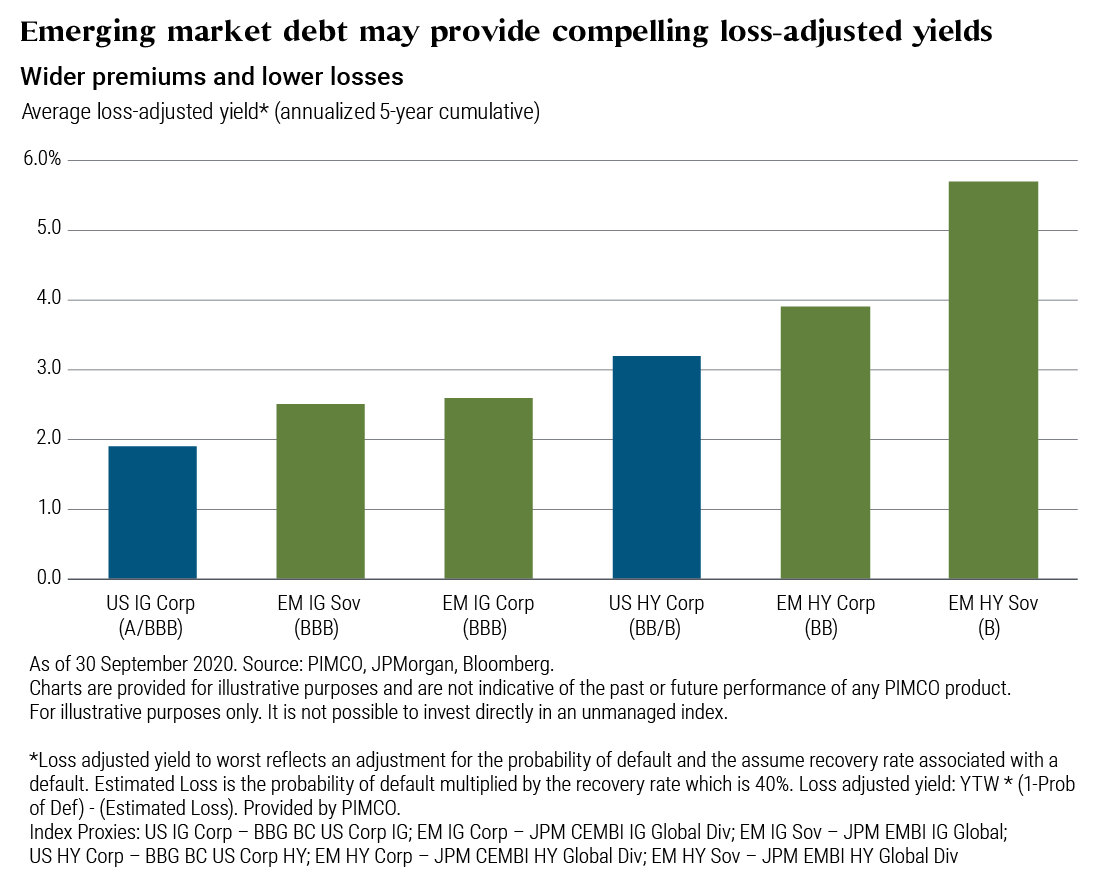
Debt of many emerging market countries can offer robust yields and enhance portfolio diversification, provided the asset manager has the resources and sophistication to avoid potential pitfalls.
Recently, Ed Yardeni discussed his view of why another “Roaring 20’s” may lie ahead. However, while I certainly can appreciate his always “bullish optimism,” there is a significant fundamental problem with his view.
Greed is driving the U.S. stock market to new highs. Fear will replace greed. I provide nine reasons to be fearful.
“Dr. Copper,” so named for the metal’s ubiquitous use in many different applications, has been ripping higher since its 52-week low in March, thanks to a number of factors including promising economic data.
Some changes unfold over time and it’s possible to see them coming. There are demographic changes coming in the next decade that will change the direction of the U.S. since the Silent Generation and the Baby Boomers hold a different view of government than Gen Z’s and Millennials.
So far this year, shares of HIVE Blockchain Technologies have soared an incredible 715%, well past Ethereum’s gain of 273%. 2020 has been marked by healthy expansion in mining capacity, the most recent example being HIVE’s acquisition of additional access to low-cost green energy.
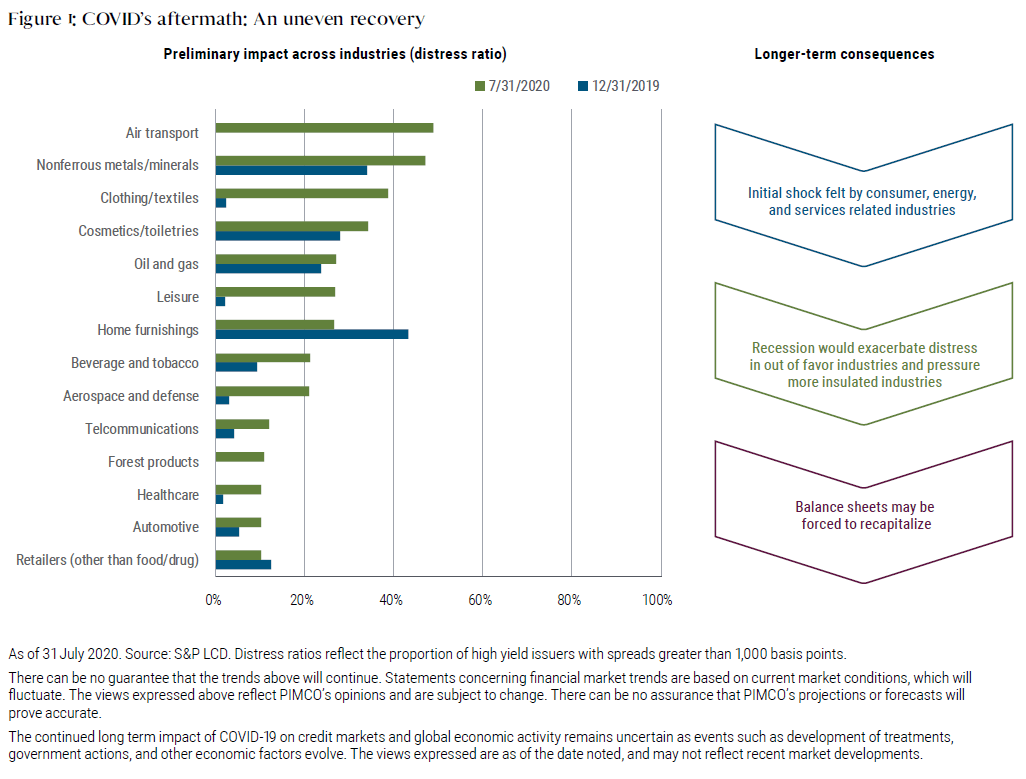
Liquidity issues and other business risks could prompt a wave of defaults and restructurings, in turn creating fertile ground for opportunistic investing in distressed credit.
Today I’m going to blend a few thoughts about The Great Reset with some other historical analysis I recently discovered. It adds up to a disturbing outlook, even if (as seems likely, given the latest vaccine news) we’re past the pandemic by late next year. We’ll find different challenges on the other side.
In calling the current market the third “Real McCoy” bubble of recent decades, Jeremy Grantham described, in his own words, what I call the Iron Law of Valuation: a security is nothing more than a claim on some set of future cash flows that investors expect to be delivered into their hands over time. The higher the price an investor pays today for some amount of cash in the future, the lower the long-term return the investor can expect on that investment.
Ten-year Treasury bond yields may rise as high as 1.6% in 2021, reflecting prospects for faster economic growth.
The economic calendar remains less interesting than politics, market gyrations, and the coronavirus. Those will be the media topics. A bigger challenge is finding a way to identify what is important and to determine the causal relationships.
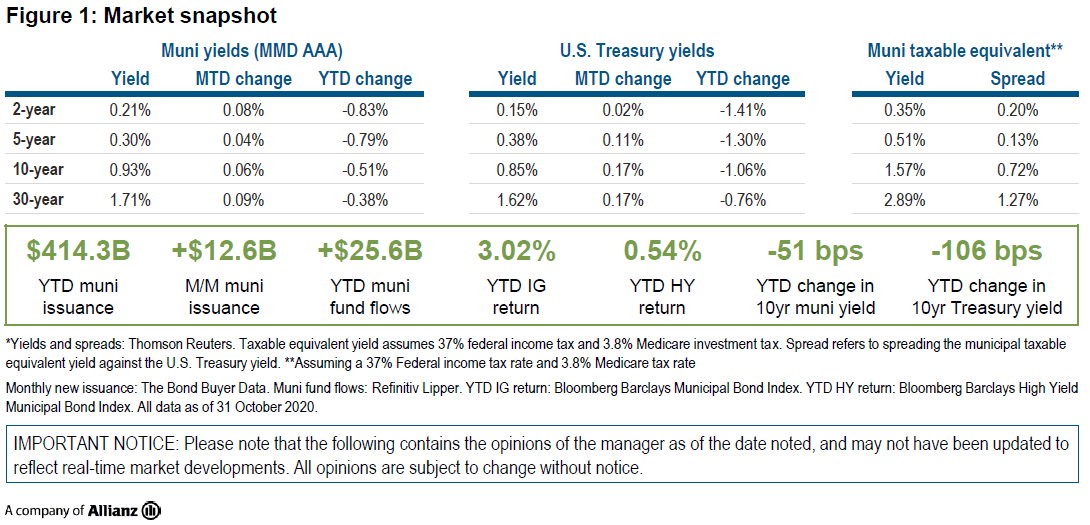
A brief monthly update on what's happening in the municipal bond market.
In coming years, US Congress and the Biden administration could implement spending programs and tax reforms at the national level that trickle down into state and local government policies too. Our Katie Klingensmith joined Muni Bond Team Research Director Jennifer Johnston to discuss the potential implications for the municipal bond market, against a backdrop of COVID-19.
This short article investigates the rebalancing premium that investors may expect from risk-parity portfolios.
“The stock market is not the economy.” Such has been the “Siren’s Song” of investors over the last couple of years as valuation expansion has been the sole driver of the market’s performance. However, given that corporations derive their revenue from economic activity, the “Buffett Indicator” suggests investors may be walking into a trap.
America, and the world, received a huge shot of hope this week. The $210 billion drugmaker Pfizer announced on Monday that its coronavirus vaccine is 90% effective at preventing COVID-19.
Actual third-quarter earnings may be less important than what business leaders say about their expectations.
We’ve seen aggressive government and central bank support to stimulate economies sickened from COVID-19 slowdowns, but will the global economy right itself in 2021?
Stock market performance during the transition period between outgoing and incoming U.S. presidents tends to be more dependent on the economic cycle than the election results.
On Saturday, Joe Biden was named president-elect. In hindsight, the market clearly predicted this outcome.
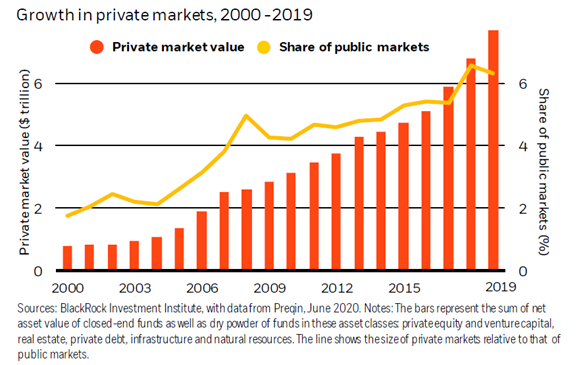
Amid the ongoing COVID-19 crisis, we believe that investing in private markets may offer a raft of potential opportunities. Here's why.
Businesses love Congressional gridlock. Tech stocks had been trending down for days before the election as they faced antitrust scrutiny, but now that it appears certain Congress will remain divided, they’ve recovered most of their losses. The tech-heavy Nasdaq 100 jumped close to 10% for the week.
Investors likely have many questions about the 2020 election. Votes were still being counted late Wednesday, but here are answers to some of the most frequently asked questions we’re hearing.
There are many major policy decisions that will influence the outlook—trade, energy, taxes and budget deficits, and pandemic relief. However, it’s difficult to assess how these issues will be addressed post-election, and even more unpredictable how the market will react.
I present data and observations highlighting how dividends can protect investors from inflation and market volatility. While this is relevant to other applications, I focus on retirement income.
Want to hear something really scary? Inflation, the scourge of the modern economy, may be running much faster than we’re led to believe.
The primary goal of this article is to explain what makes dividends different. Dividends provide investors with a growing stream of income that is largely independent of market volatility. On balance, dividends are a powerful financial planning tool many retirement models seem to neglect.
Here at U.S. Global Investors, we’re very bullish on commodities, particularly industrial and precious metals.
We are in a debt trap. Our political process can’t reduce spending and/or raise taxes enough to balance the budget, so the debt grows and grows. As it does, paying the interest plus the accumulated debt load pulls more capital away from more productive uses. This depresses economic growth, thereby generating even more spending and debt.
In his latest memo, Howard Marks walks readers through the unusual characteristics of this year’s economy; the impact of Covid-related monetary and fiscal policy actions, including low interest rates, on today’s markets; and the possible ramifications of the Fed/Treasury’s rescue efforts. What does it all mean for investors who face an environment marked by some of the lowest prospective returns in history?
There is currently much hope for another fiscal stimulus package to be delivered to the economy from Congress. While President Trump recently doused hopes of a quick passage, there a demand for more stimulus by both parties. While most hope more stimulus will cure the economy’s ills, it will likely disappoint due to the “2nd derivative effect.”