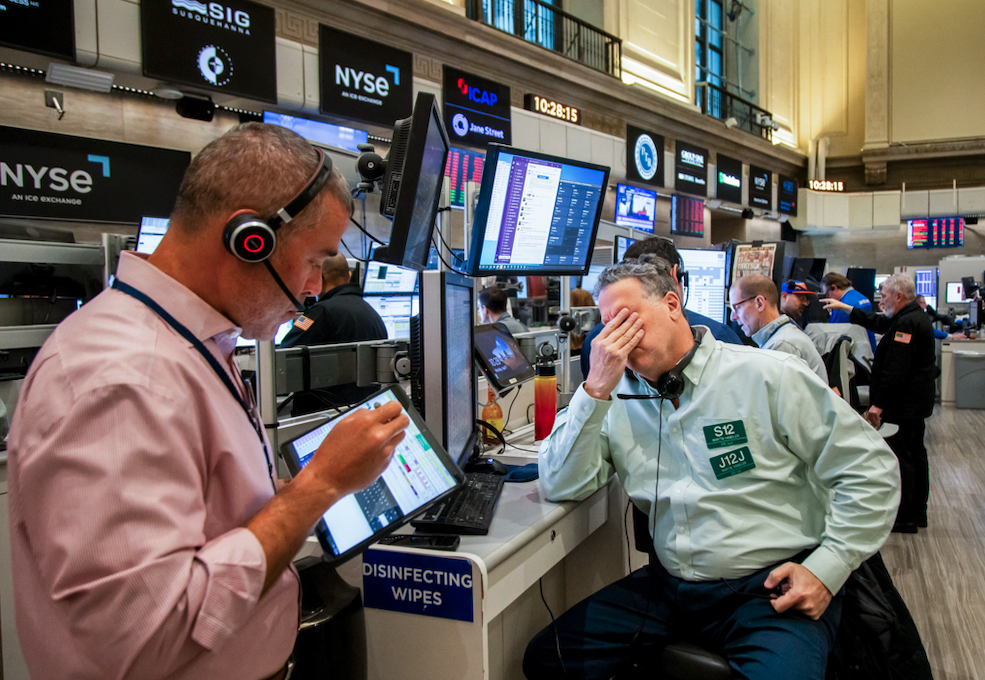
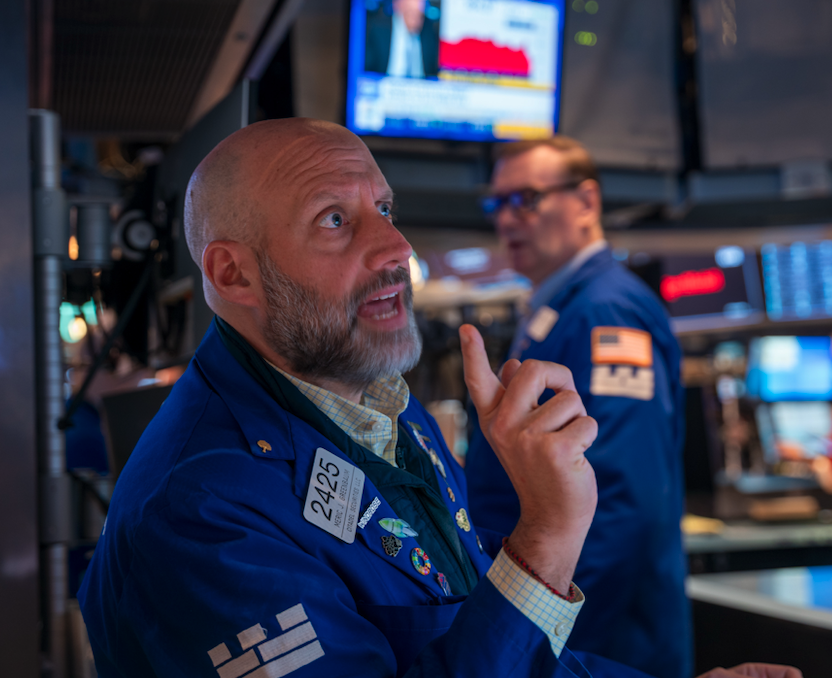
Investors dumped US stocks Wednesday afternoon following a disappointing Treasury auction that sent bond yields surging past levels seen during April’s market rout.
Tariffs, inflation, geopolitical tensions, and other factors continue to feed into market uncertainty for even safe haven assets like Treasuries. As such, investors could be giving riskier emerging market (EM) bonds a second look.
Innovative ETFs are making waves as investors look for fresh ways to navigate a market marked by rapid growth and ongoing volatility.
Last week I talked about the upward sloping Treasury yield curve, a welcome change from the inverted yield curve that lingered for years. The upward sloping curve means that investors are rewarded more for taking on duration.
As investors, we need to step back and examine the history of previous debt downgrades and their outcomes for the stock and bond markets. Let’s start with what Moody’s rating agency stated about its rating change.
Moody’s Ratings has followed S&P Global Ratings and Fitch Ratings in stripping the US of its top-notch credit score, lowering it one level to Aa1.
Tidal’s Mike Venuto discusses the latest in ETF innovation, from 351 conversions and the ETF share class structure to options-based strategies and leveraged products. VettaFi’s Kirsten Chang offers a tour around the world of fixed income ETFs, highlighting recent flows, new launches, and under-the-radar success stories.
If there were ever a time for more funnel cake — oops, I mean municipal bonds—that time may be now.
Moody’s Friday downgrade of the U.S. credit rating may not seem particularly earthshaking, given that Fitch and Standard & Poor’s had gotten there quite a while ago.
President Donald Trump’s first overseas trip since returning to the White House is turning heads across the aerospace & defense and semiconductor industries.
Head of U.S. Fixed Income Greg Wilensky and John Lloyd, Lead, Multi-Sector Credit Strategies, discuss Moody’s rating downgrade of the U.S. and what the implications may be for the Treasury market, the Federal Reserve (Fed), and fixed income investors.
Recent revisions to the IMF’s World Economic Outlook reflect a sobering message: the world economy is entering a more volatile and fragmented era.
Stocks have rebounded since the White House delayed steep tariffs that were announced in early April, but trade policy remains a potential driver of volatility.
While April brought further welcome news on the inflation front, underlying consumer fundamentals painted a more concerning picture.
A recent Gallup poll shows gold just passed stocks as Americans’ favorite long-term investment. We explore why it might deserve the top spot.
Major gauges of investment-grade corporate bonds were stung by the April bout of volatility that permeated the bond market.
Technology and trends have made individual investors an important part of the private market.
Global funds are pouring money back into India, driving billion-dollar corporate financing deals and sending stocks prices to near a seven-month high, as investors bet that Asia’s third-largest economy can emerge as a winner in President Donald Trump’s trade war.
The 90-day reduction on tariffs between the US and China is a positive development, but some questions remain.
We maintain a focus on resiliency as elevated yields within high quality fixed income continue to offer attractive opportunities.
The selloff in Japan’s long-dated bonds is drawing international investors, who expect the securities to rebound as global trade turmoil abates.
Gold steadied as investors pulled away from risky assets and waited for more clues on the Federal Reserve’s rate path.
Our overarching theme for U.S. fixed income has been, and will continue to be, based on the premise that interest rates will stay at more historically “normal” levels, but that, within this backdrop, investors will face heightened volatility.
By the end of April, the S&P 500 rallied its way back, recovering nearly all the declines notched in the opening days of the month when President Trump's "Liberation Day" tariff plans tipped markets towards bear territory.
Certificates of deposit (CDs) and Treasuries both can offer steady, predictable investment income—but how to decide between them? Here are five factors to help you choose.
Flows of gold into Asian ETFs exploded in April, driving global ETF gold holdings higher for the fifth straight month.
Assessing a bear market rally proves challenging when you experience it firsthand. It is only in hindsight that the complete picture reveals itself to investors. Of course, after a bear market rally, investors tend to review their investments and speculate on what they should have done differently.
The more duration risk taken, the more reward or yield demanded by investors. This is why, historically, the yield curve provides incrementally more yield for longer-maturity bonds.
In the report, Portfolio Managers John Kerschner, Nick Childs, and Thomas Polus highlight three reasons why agency mortgage-backed securities (MBS) look attractive in the present environment.
The early-April announcement of a broad new round of tariffs against virtually all U.S. trading partners—followed by a pause for many of them—has triggered a tidal shift in the global economy. Uncertainty created by tariff negotiations, as well as burgeoning federal debt levels and other ongoing concerns, has far-reaching economic implications, leading us to reassess our 2025 outlook.
Tariff talk has been at a fever pitch for the past three months. Its dominance of the news cycle has crowded out discussion of other important economic issues, such as the sustainability of America’s national debt.
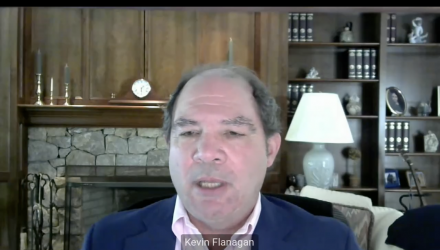
Kevin Flanagan, head of fixed income at WisdomTree, joined a VettaFi panel to break down the most attractive fixed income strategies.
The US and China will temporarily lower tariffs on each other’s products in a dramatic ratcheting down of trade tensions that buys the world’s two largest economies three months to work toward a broader agreement.
I’ve been writing about tariffs for a couple of months now, focusing mostly on the macroeconomic harm and the costs they impose on small businesses. Today I want to consider something else: the new risks they are adding to the financial system alongside the old risks.
Bonds and stocks falling together stirs painful memories of the 2022 inflation surge. This time, trade and tariff uncertainty is to blame, along with a dose of questioning the Fed’s independence.
Last week featured a light economic calendar, with the Fed holding its benchmark interest rate steady for the third consecutive meeting.
At Wednesday’s press conference, Chair Jay Powell signaled a wait-and-see approach, as the Fed keeps a close eye on inflation pressures and the job market.
Fed officials remain patient, likely awaiting hard evidence of a weaker U.S. labor market before considering rate cuts.
I hate to be the one to break it to you, but the economy and the markets are not working efficiently. It’s been that way for at least all of my adult life (2008), and maybe a handful of years before that.
When I was much younger, I worked as a bond salesman for a small regional bank in the southwest. I sold some short-term T-bills to yield 17% and some ten-year T-bonds to yield 14%. Paul Volcker, the Fed chairman at the time, had reduced inflation dramatically but the bond market had not yet accepted that new reality and kept interest rates very high for a while after Volker achieved his lower level of inflation.
Private equity transaction volumes remain limited despite predictions for a boom in 2025. With interest rates remaining elevated and the economic backdrop increasingly uncertain, executing acquisitions and IPOs is proving a challenge, leading financial sponsors to hold portfolio companies for longer.
Roughly a month on from Liberation Day one thing is clear: While actual tariff numbers may not be set, markets have certainly been liberated from complacency. S
Vanguard’s David Sharp marks the firm’s 50th anniversary, explores recent investor behavior, and highlights several new fixed income ETFs. VettaFi’s Stacey Morris analyzes the rollercoaster year for energy ETFs.
For investors looking to add bonds, muni bonds remain an attractive option for an ideal blend of yield and stability.
One of the advantages of individual bonds is the ability to custom-select bonds that fit individual needs and/or goals
US markets struggled in the first half of April due to tariff-related worries. The second half saw rallies amid policy reversal.
Shockingly, given that I thought most readers would find interest rate swaps dull or wonky, we have received a few emails asking for more information. Given the importance of liquidity to all markets and how interest rate swap spreads are a good liquidity barometer, it's worth giving you that “coming article” now.
Last week's economic data arrived against the backdrop of a buoyant stock market enjoying a nine-day winning streak — its longest since 2004.a
US job growth was robust in April and the unemployment rate held steady, suggesting uncertainty over President Donald Trump’s trade policy has yet to have a material impact on hiring plans.
Uncertainty reigned through April and likely will continue to do so, at least in the near term. Markets have reacted, both negatively and positively, to every headline coming out of Washington.