Q4 company earnings offered a lot to cheer at the start of the year, even as U.S. stocks contended with bouts of volatility.
Euro-area bond yields inevitably leapt like a salmon as Germany unleashed a fiscal bazooka, but compared to previous fixed-income tantrums, it’s not the stuff of all-night summits.
One of the most referenced valuation measures is Dr. Robert Shiller’s Cyclically Adjusted Price-Earnings Ratio, known as CAPE.
As daily headlines drive volatility, the market has avoided overreacting thus far.
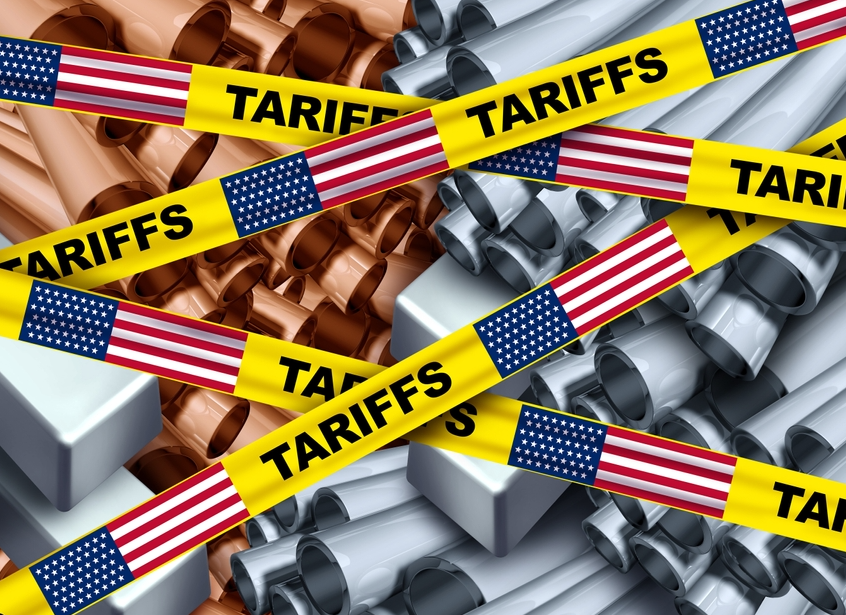
With U.S. tariffs on Mexican and Canadian imports now in effect, yesterday’s risk-off market mood continued today. Both Canadian and U.S. equities modestly sold off.
We view quarterly earnings season as a critical checkup on how markets are handling current challenges.
Imagine having a reliable, automated system that consistently brings high-quality leads to you – without the need for constant hustle.
Understanding copyright compliance rules can help you protect your business and confidently share content that aligns with both legal and ethical standards. Let’s clear up some common myths to keep your financial marketing on the right track.
Germany’s extraordinary spending plans are shaking up the region’s markets, powering European equities past US peers this year and reviving the euro from the brink of parity with the dollar.
Unlike most of the rest of the world, I will attempt to minimize all there is to say about the beginning of the next 4 years, as the persistent yack and what to make of it reverberates in all corners of the financial globe.
A holistic approach may help insurance investors navigate an expansive opportunity set.
In this primer we define small cap growth funds, provide practical suggestions on how to invest in them, and explain why we believe they are a strategically important asset class.
Heightened economic uncertainty—propelled mainly by trade policy—has unearthed weakness in the equity market, with most pain felt under the market's surface.
Many major stocks connected to artificial intelligence have lost their luster of late, but perhaps none more so than Microsoft Corp.
We wrote in last month's letter that the U.S. stock market had to meet lofty earnings expectations to maintain its strong performance relative to global benchmarks, while the latter had a lower bar because of considerably cheaper valuation multiples and higher dividend yields.
Just recently, S&P Global released its 2026 earnings estimates, which, for lack of a better word, have gone parabolic. Such should not be surprising given the ongoing exuberance on Wall Street. Unsurprisingly, rationalizations justify illogic when too much money is chasing too few assets.
The central question we want to address in this note is how to quantify how “price sensitive” insurance buyers should be, and in the context of insurance, what is the “price” they should be sensitive to?
By acknowledging that we are not always rational and are subject to cognitive biases, we can better understand market anomalies and develop strategies to mitigate – and even take advantage of – their impact.
Today we are going to revisit that matrix updated through 2024. We will see what we got right and wrong, what further inferences we can now make and why I think it confirms my general shift in market strategy over the past few years.
More than a century ago, then-Representative William McKinley pursued an aggressive tariff strategy that sought to protect American industry and reduce reliance on foreign imports. The McKinley Tariff Act of 1890 raised import duties to an average of 50%, one of the highest levels in U.S. history.
Many independent firms and Registered Investment Advisors aspire to move upmarket, targeting wealthier clients who demand more sophisticated financial solutions.
Tencent Holdings Ltd. became the latest tech company to unveil or enhance an AI model intended to eclipse DeepSeek, joining a spate of rollouts since the startup’s emergence energized the US-China technology race.
Emerging markets were swept up in the global equities storm Friday, with Asian stocks taking the heaviest beating after President Donald Trump’s latest tariff threats.
A week-long rout in Bitcoin deepened amid the recent broader retreat from risky assets in the wake of US President Donald Trump’s tariff threats and crypto sector turmoil, marking a dramatic reality check for one of the most popular Trump trades.
Investors hoping that Nvidia Corp.’s earnings would rejuvenate the artificial intelligence trade didn’t exactly get the report they wanted.
Nvidia Corp., the chipmaker at the center of an AI spending boom, delivered good-but-not-great quarterly numbers on Wednesday, drawing a muted response from investors accustomed to blowout results.
If Trump tariffs Chinese, European, or Canadian products, those countries tend to enact counter-balancing tariffs on U.S. products. Such slows demand for goods and services between all parties, again a deflationary process.
We recently sat down with Justin Owens, our senior director and co-head of strategic asset allocation, to discuss the next phase of liability-driven investing (LDI) and the key trends driving this evolution. Below is a recap of our conversation.
Nvidia, the biggest AI chip firm, reports Wednesday with investors watching sales of Nvidia's newest chips and worried about cheaper competition from systems like DeepSeek.
We explore drivers that may contribute to continued outperformance of European stocks since the bull market began in October 2022.
Are European equities poised for a sustained recovery relative to U.S. equities? We outline five reasons why, as long-term investors, we continue to favor U.S. equities over European equities.
When constructing a target-date fund (TDF) glide path, providers have many decisions to make, such as what asset classes to include, when to include them, and how much to allocate to each.
With our most reliable valuation measures more extreme than both the 1929 and 2000 market peaks, we continue to believe that the stock market is tracing out the extended peak of the third great speculative bubble in U.S. history.
None of us outside Trump’s inner circle know what the real goals are. What looks like needless chaos might lead to benefits that outweigh the costs. One potential benefit is revenue. Could the tariffs produce significant tax revenue that would help reduce the federal debt? The president seems to think so.
This week has been both intense and inspiring as I attended the YPO Edge event in Barcelona, Spain. I had the privilege of experiencing numerous thought-provoking presentations, from the transformative impact of AI and disruptive technologies on businesses, to the vital role of health and wellbeing in fostering a learning-driven workforce.
For two years in a row now, the smallest endowments have significantly outperformed their much larger peers. This is causing some to question if the typical endowment model is still working.
The European stock market’s rally to record highs has caught many strategists by surprise, leaving them racing to catch up and cautious on further gains.
Europe has real risks and real bargaining tools in a trade confrontation.
At some point in time, the top brass that manage your organization’s investments will no longer be with the organization, whether that’s through retirement, a job change, or a change in personal circumstances. Then what?
Alacrity Solutions found itself in a tough spot. The Indiana-based company helps property and auto insurers manage customer claims by taking calls, sending adjusters into the field and reviewing files.
Efforts to secure supply chains and energy sources are creating powerful and enduring themes for equity investors—even in these turbulent times.
If the current slate of proposed U.S. tariffs is implemented, our model estimates a 60-to-80 bps increase in cost structures across most sectors of the global economy.
This article introduces GARP – growth at a reasonable price. As we will detail, by introducing earnings growth expectations into traditional valuation equations, some value stocks may not be quite the gems investors think. Likewise, some growth stocks may be value stocks.
A hedge fund startup that uses artificial intelligence to do work typically handled by analysts has outperformed the global stock market in its first six months while slashing research costs.
As we enter Valentine’s Day weekend, financial infidelity isn’t exactly a topic that exudes romance. But lovebirds who don’t make the discussion a foundational piece of their relationship risk adding avoidable strain on their union.
The January Employment Situation Report reaffirmed the resilience of the U.S. labor market, with nonfarm payrolls rising by 143,000 and the unemployment rate ticking down to 4.0%.
2025 is beginning in much the same manner as 2024, with investors focused on whether the Chinese government is going to implement new stimulus measures.
You’ve set your 2025 budgets, and now you’re working with them – but is your marketing budget supporting the firm’s growth goal?
We explore why extreme market concentration is unsustainable, how competition and innovation drive broader market performance, and why diversification is key as volatility rises. Don’t let market extremes catch you off guard.
Tariff policies have been announced and then subsequently rescinded or delayed–but not yet resolved. They may still hold the potential for market volatility.