Republicans have lashed out at the Inflation Reduction Act (IRA), a landmark package of incentives for clean energy, since it was passed two years ago.
Our outlook on the 11 S&P 500 equity sectors.
Riverfront's stock selection team performs analysis on individual equities that provides useful insights into how we position our portfolios.
Effective listening can help convert more prospects into clients. Your ability to listen effectively can be the deciding factor in whether they choose to work with you.
The U.S. economy and stock market are entering 2025 from a position of strength, but risks of volatility—especially pertaining to policy—are much higher compared to last year.
Waiting until 67 or 70 may not feel like the best choice in the moment. Yet the extra income could mean more freedom from financial stress and more ability to enjoy your later years with peace of mind.
Last week we processed robust economic data and growing clarity on Federal Reserve policy, instilling a consensus view for a strong market that is now well reflected in positioning.
Amid concerns about the impact of rising deficits on U.S. Treasuries, it helps to differentiate bond investments by maturity, credit rating, and global relative value.
Five of Franklin Templeton’s specialist investment managers provide their annual outlooks for the global economy and key asset classes, including global equities; global fixed income; global infrastructure; the macro fixed income environment; municipal bond market; high yield bond market; small cap equities; U.S. dollar; U.S. economy; and U.S. equities.
Hedge fund executive Cliff Asness says artificial intelligence is becoming “annoyingly better” at doing parts of his job.
The bond market is caught between the Federal Reserve's plans to cut interest rates and the risk of higher inflation and federal debt levels.
While the economy helped President Trump win a second term, it also created expectations that could prove difficult to meet.
We are all familiar with this SEC-required warning that “past performance does not predict future performance.”
At the 2018 Berkshire Annual Meeting, Buffett noted that “multiple times in my life, people have felt the country was more divided than ever.
The S&P 500 earnings growth rate will likely come in just below the 6% mark for the third quarter.
The Fed could be ‘slower to lower,' while the Trend continues to rise, with an overly optimistic Crowd due to seasonality and post-election trends.
It’s hard to keep track of all the theories about inflation. Remember policymakers and analysts blaming the surge in inflation in 2021-22 on supply-chain disruptions, too much government spending, and Putin invading Ukraine? Now some are saying that tariffs and deportations are going to cause a second surge in inflation.
Investors are scrambling to decide if Donald Trump’s impending return to the White House will sustain or derail the rally in emerging-market bonds witnessed under Joe Biden.
VettaFi spoke recently with Nate Williams, a vice president and ETF specialist with Franklin Templeton, about the growth of its ETF business.
Treasury Secretary Janet Yellen came under fire this year from economists such as Nouriel “Dr. Doom” Roubini for stepping up the issuance of short-term Treasury bills.
Not everyone is ready to give thanks for moderating food prices.
For most of the last fifty years, fixed income investing has been characterized by owning some combination of Municipals, Corporates, Treasuries and Agency Mortgage-Backed Securities.
As we look through our financial lens and reflect upon everything that has transpired in 2024, we have compiled a list of the top ten economic and market-oriented things that we are most grateful for this year.
The headlines regarding Trump's proposed tariffs and their inflationary consequences are undoubtedly worrying, but will they prove correct?
With the re-election of President Donald Trump, the worries about tariffs and pro-business policies sparked concerns of “Trumpflation.” Inflation has been a top concern for policymakers, businesses, and everyday consumers, especially following the sharp price increases experienced over the past few years.
Sticky underlying price pressures could prevent a faster return to neutral monetary policy.
Vanguard has a pair of bond options if fixed income investors are looking to get active with their portfolio.
In Europe, the ECB stimulates a sluggish economy while in the UK, the problem is inflation. In contrast, the US responds to stronger growth.
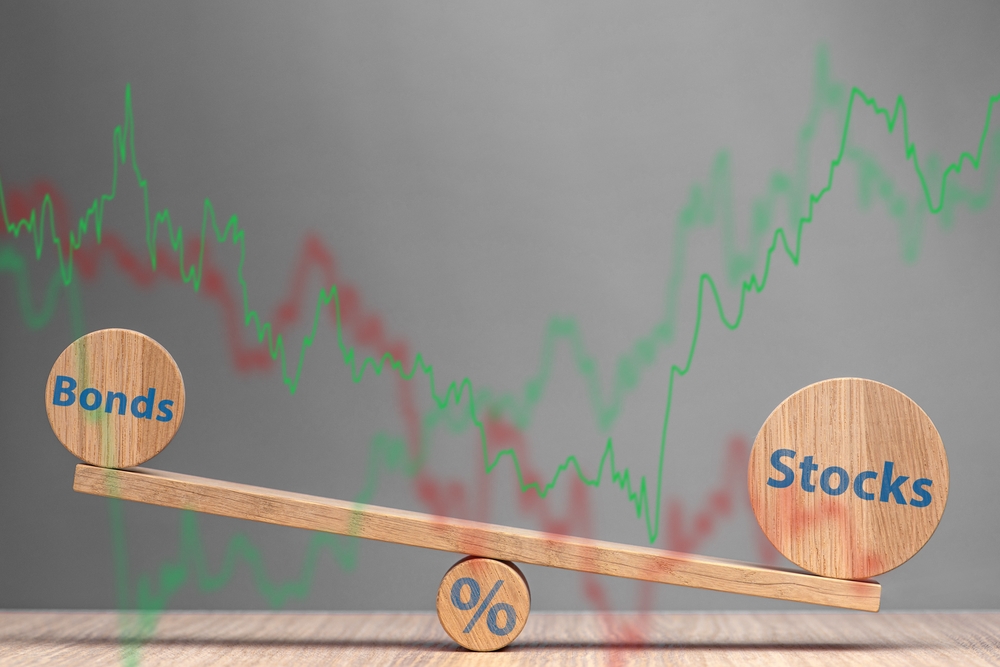
The inverse correlation between bonds and stocks has returned, broadening potential for risk-adjusted returns in multi-asset portfolios.
Is inflation tamed? It's a key question that got lost in election coverage. It looms more than a new administration does over portfolios.
The 2024 Global Survey of Financial Advisors from Natixis revealed the ongoing hesitance of investors to move out of cash and into bonds.
For most of the last fifty years, fixed income investing has been characterized by owning some combination of Municipals, Corporates, Treasuries and Agency Mortgage-Backed Securities which has worked well with periods of secular disinflation.
We take an early look at how a new policy platform could factor into the US deficit and debt.
The current global expansion has been characterized as one of US exceptionalism. Despite many developed market economies outperforming low expectations, the robustness of the US expansion has stood out. We believe this can continue based on differences between the US and European economies.
The period from the 1960s to the 1990s defined by record-setting inflation and big swings in GDP bears a striking resemblance to the current environment.
From stock picking to benchmark selection, the construction of an active thematic equity portfolio will play a crucial role in its ability to deliver on a theme’s return potential.
The Q3 earnings season is coming to a close in its usual fashion, with a word from retailers. With 93% of S&P 500 companies reporting at this point, YoY S&P 500 EPS growth has settled around 5.4%, while revenue growth increased 5.5% for the quarter.
In our lifetimes, the best comparison for Trump’s election win is Ronald Reagan’s in 1980. That election, like this one, pitted big spenders and champions of government against tax cutters and critics of government.
With President-elect Donald Trump set to assume office in January, the U.S. military and cybersecurity sectors could experience sweeping changes, creating opportunities for investors who recognize the long-term growth potential in defense and technology.
US producer prices picked up in October, fueled in part by gains in portfolio management costs and other categories that feed into the Federal Reserve’s preferred inflation gauge.
In many ways it didn’t matter what those answers were, just that they were out of the way and investors and US companies could begin to plan accordingly for Q4, 2025 and beyond.
Recent data, early results, and a relatively firm economy point toward possible improvement in Q3 retail earnings as Walmart, Target, and other big-box stores prepare to report.
The housing market inderwent huge transformations in recent decades with the aftermath of the Global Financial Crisis & the COVID-19 pandemic.
In addition to better appreciating why gold is surging, our analysis will help you recognize that market narratives explaining asset price movements can be wrong, no matter how reasonable they may seem at first blush.
Accumulating inconsistencies in the prevailing paradigm then trigger a crisis, leading to the emergence of new theories and ideas, resulting in a paradigm shift where the old framework is rapidly replaced by a new one.
Maslow’s hierarchy of needs was a groundbreaking concept when it appeared in 1943. American psychologist Abraham Maslow argued that certain basic needs—food, water, shelter, etc.—must be met before a person can move on to higher levels of self-worth and fulfillment.
Investors have embraced U.S. midcap equity ETFs in 2024, with the investment style gathering $19 billion of new money as of early November.
Explore how these two investment types compare.
While the primary focus for the financial markets has been on the continued resilient U.S. economy and what the current Fed rate cut cycle will ultimately look like, there has been another topic that has been making the rounds in the bond arena: the budget deficit.
Commodities broadly declined on prospects that a stronger dollar and potential trade disputes under a Donald Trump presidency will weaken the appeal of raw materials in global markets.