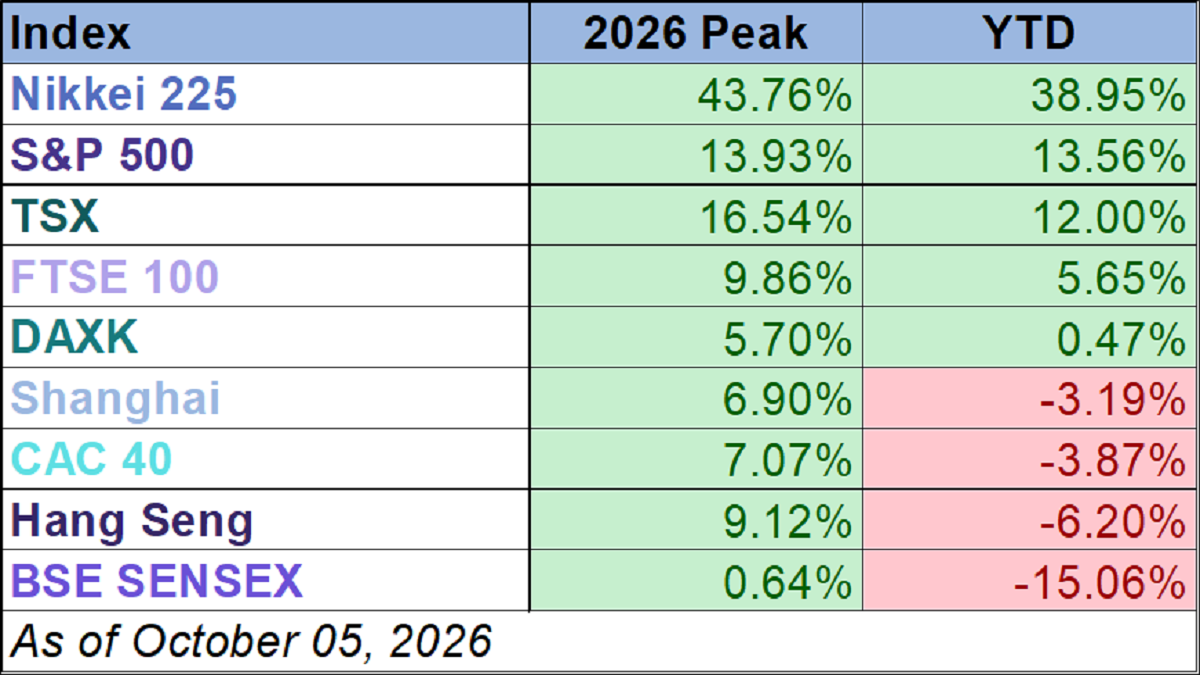
Five of the nine indexes on our world markets watch list posted year-to-date gains through October 5, 2026.
Join VettaFi and Procure ETFs for an educational webcast with insights on how to evaluate companies driving this growth — and how to position space in client portfolios.
How much one needs for retirement is both a mathematical and emotional equation to solve. For both my clients and myself, enough is never enough because we fear a stock market plunge, inflation, or both (stagflation). But these four practical uses of TIPS provide near certainty of having enough to enjoy the rest of one’s life. Rarely do math and emotion each arrive at the same solution.
Wall Street has spent weeks trying to make peace with the great bond selloff. Friday offered some short-lived relief — along with a warning about the damage from stubbornly high yields across investment strategies of all stripes.
The dollar neared its strongest levels this year as fiscal strains and renewed political uncertainty in Europe boosted its haven appeal, even as its run of gains stoked concerns the rally is becoming overstretched.
Larger asset managers including Goldman Sachs Group Inc. have been looking to snap up CLO management businesses as they hunt for lucrative fee streams in the $1 trillion US market.
Oil fluctuated in jittery trading, as Saudi Arabia cut prices of its benchmark grade to Asia, the kingdom’s state producer warned about the risk of low stockpiles and as fighting in Yemen intensified.
VettaFi has experienced strong growth as a differentiated index provider in 2026. This momentum continues with today’s acquisition of The SPADE® Defense Index. The deal adds a popular, high-conviction thematic sector strategy to a global platform. More than $260 billion in index-based assets is tied to VettaFi.
The bond market took center stage through September with inflation, oil supply chains and the Federal Reserve performing as an ensemble.
T. Rowe Price has announced the launch of the T. Rowe Price Dynamic Emerging Markets Bond ETF (TDEM) on the Nasdaq today, the company said.
Few investors would naturally put artificial intelligence data centers and US shale oil in the same frame. One is built on advanced semiconductors and software; the other on rock, steel and drilling rigs. But the economic pattern is familiar. A breakthrough changes what is possible, demand outruns supply, attractive profit pools emerge and capital floods in.
Investors who have owned securities for many years can accumulate significant unrealized gains. Selling those investments to reposition a portfolio can trigger capital gains taxes.
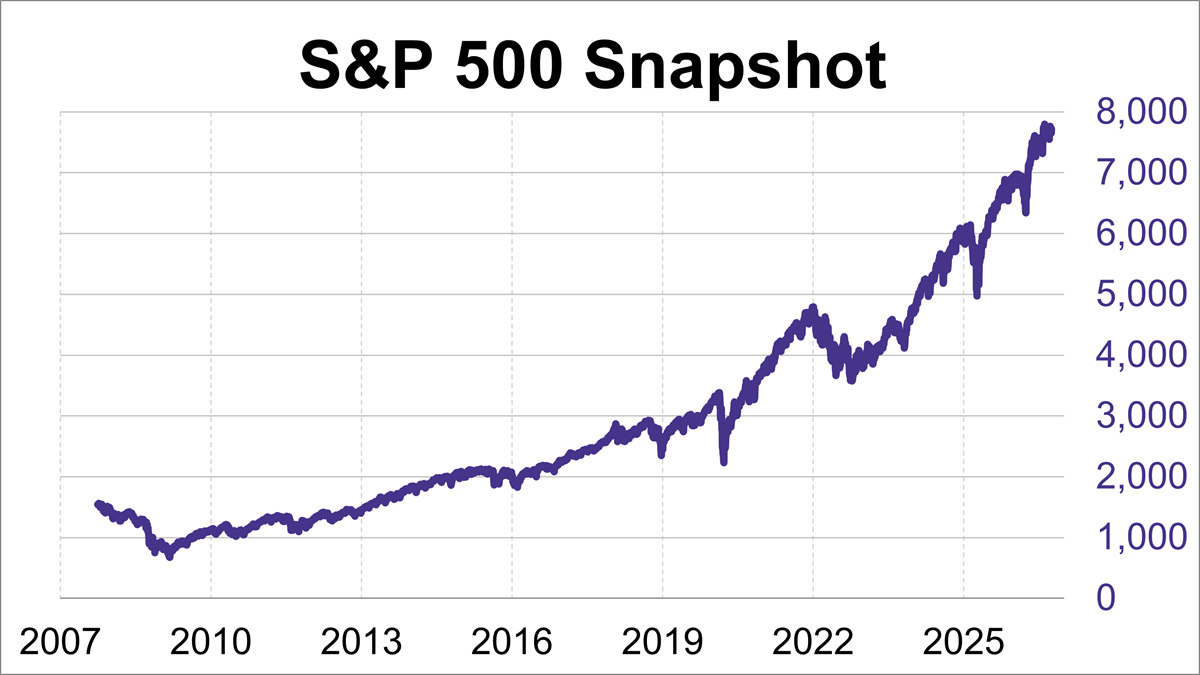
The S&P 500 wrapped up the week with a fractional loss of 0.3%, following a Jobs Friday rally.
In September, Vanguard ETFs overall recorded a mix of steady market performance, some volatility, and significant dividend distributions, with investors pouring substantial capital into its funds.
Head over to Polymarket’s US website and you’ll be greeted with a panoply of crystal-ball trades on everything from the midterm elections to the likelihood of a fully reopened Strait of Hormuz. Try that in France, where I live, and you’ll see something very different.
Chuck Carnevale explains the Rule of 72 and shows how earnings growth can compound over time. Using FAST Graphs and real stock examples, he explores how growth and valuation affect long-term returns.
Midterm elections are increasingly taking over the headlines, and that includes coverage of markets. While inflation, rates, and geopolitics probably have more outright impact on portfolios, investors and market watchers still look to midterm elections as a major event.
The sell-off in U.S. Treasury (UST) yields has continued pretty much in an unabated fashion In fact, multi-year high watermarks are being achieved throughout the fixed coupon maturity curve. The most widely followed development was the UST 10-year yield rising to its highest level since 2007.
The takeaway from Q3 isn't that the IPO recovery is dead, it's that it has entered a far more tactical phase. The appetite to register is undeniably present, but the window to price comfortably has narrowed. For big names like OpenAI and Oura, taking extra time to clear safety, governance, or market noise is a luxury of strength, not desperation.
Yesterday’s cooler-than-expected PCE print finally gave the bond market a breather, pulling Treasury yields down from their brief 5.3% peak. For financial advisors, this recent whiplash brings fixed income duration conversations back to center stage — specifically, balancing the hunt for long-term yield with the safety of ultra-short cash alternatives.
Munis can fund local power, grid, water and wastewater infrastructure; most AI campus capital will be financed in non-municipal markets.
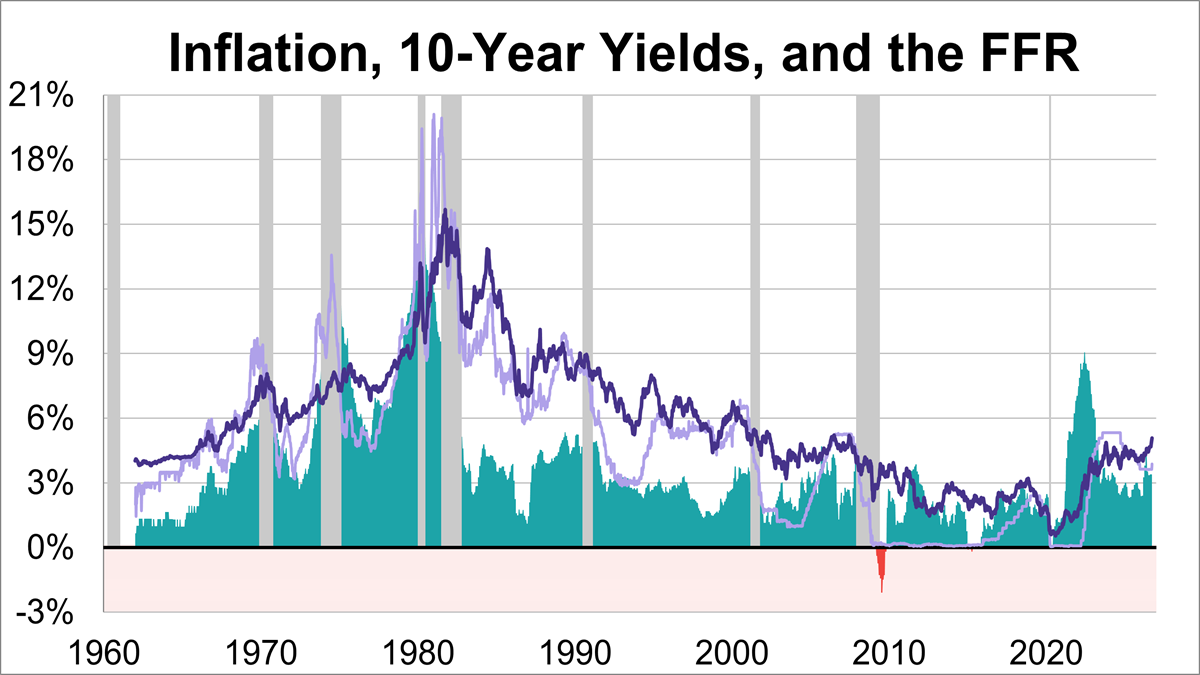
The 10-year Treasury yield has experienced dramatic fluctuations, ranging from a peak of 15.68% in October 1981, during the height of the Volcker era, to a historic low of 0.55% in August 2020, amidst the economic uncertainty of the pandemic. At the end of September 2026, the weekly average stood at 5.08%, the highest level since July 2007.
Explore how muni bond ETFs and targeted state funds can provide tax-efficient yields and strategic flexibility heading into 2027.
All eyes are on the macro economy. A significant market correction in late July triggered the abrupt collapse of Situational Awareness, L.P., a $45 billion, highly leveraged, AI-focused hedge fund. The collapse forced selling of many technology hardware stocks that were winners in the first half of 2026.
Blackstone Inc. is investing $1 billion to form a defense-technology company as the US and its allies face growing threats from inexpensive drones and other weapons that can be broadly deployed.
The Yorkville financial group was once little known on Wall Street. Now though, it is harder to miss: its affiliates help manage Donald Trump’s Truth Social-branded ETFs, have taken over the MAGA and YALL funds, and recently hired retail-investor favorite Dan Ives to co-build an investment-banking arm.
Assessing the wall of worry. Here, we assess the market's growing wall of worry, explain why these worries warrant attention, and justify our continued constructive intermediate-to-long-term stock market outlook.
It’s a complicated economic environment to retire in, with high costs and significant geopolitical and policy uncertainty. Still, people want and often may need to retire. However, thanks to innovation in the asset management world, investors have an increasing array of options.
Given that the Federal Reserve raised interest rates earlier in September, inflation data that was already crucial has taken on a new meaning. These reports could now serve as a barometer for what is to come from the central bank.
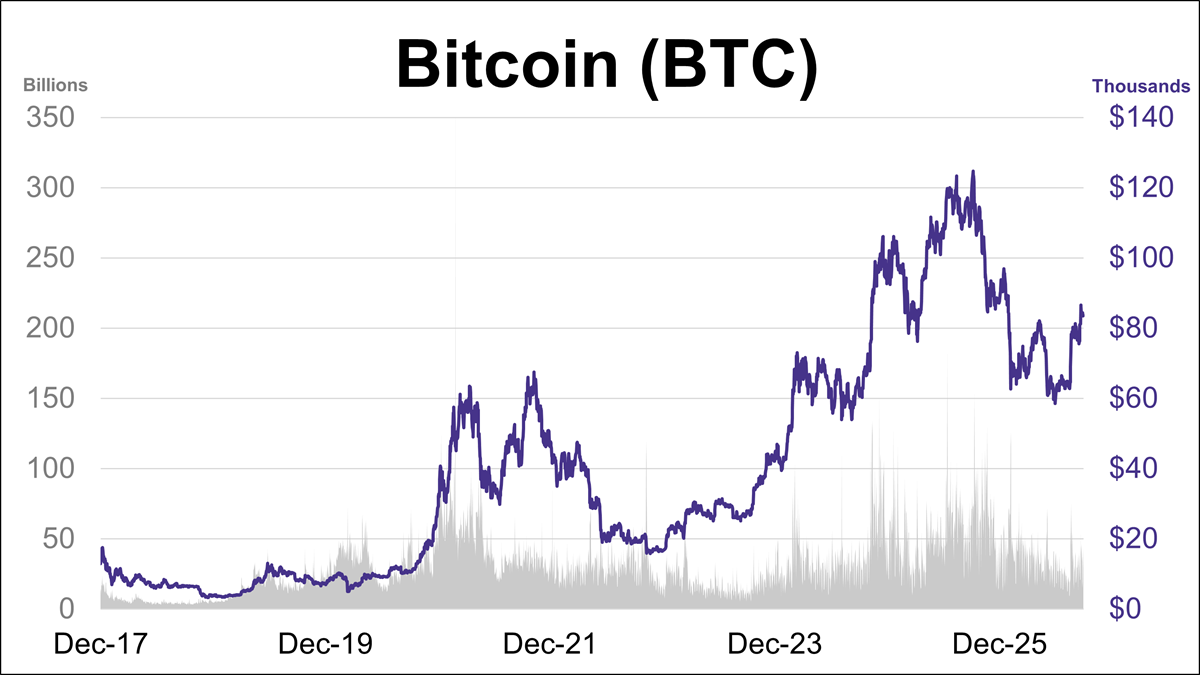
Bitcoin's closing price was down 3.0% this week. BTC is currently down approximately 4% year-to-date and sits about 33% below its October 2025 record high.
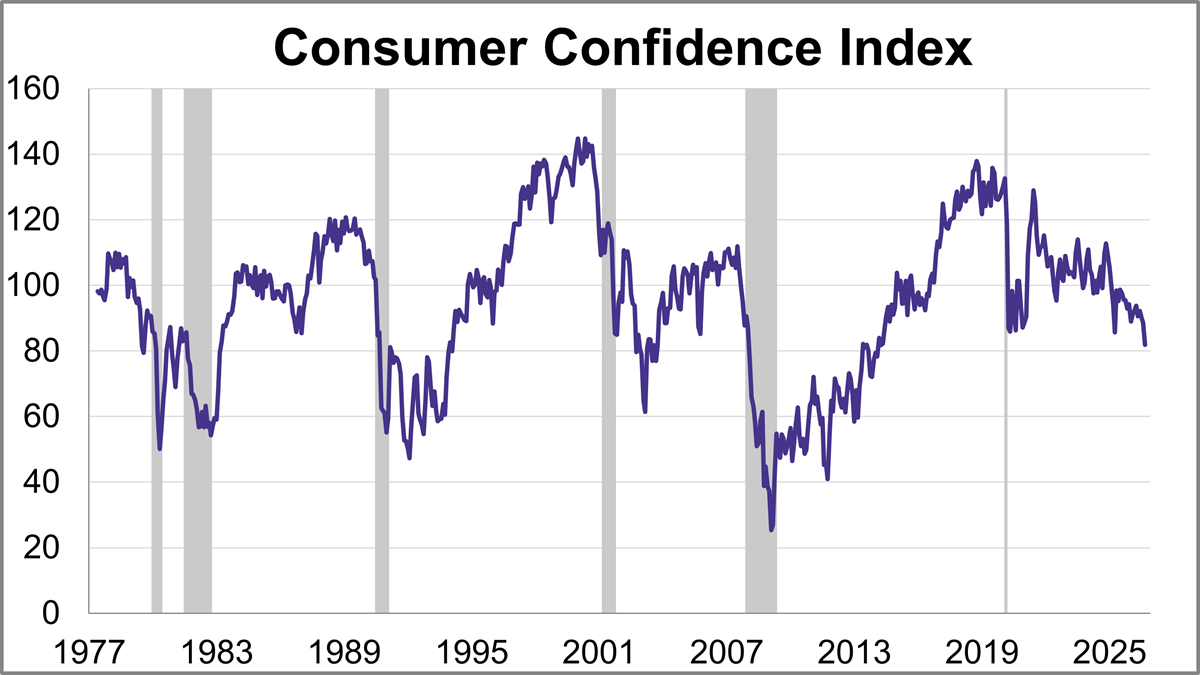
The Conference Board's Consumer Confidence Index® fell significantly more than expected in September, falling 6.7 points to 81.9. The index was far below the forecast of 89.2.
Compared to a decade ago, midstream operators boast improved fundamentals, lower leverage, and robust free cash flow generation. Coupled with surging natural gas demand and a constructive production outlook in response to global geopolitical shifts, these fee-based business models offer compelling yields and a remarkably defensive posture.
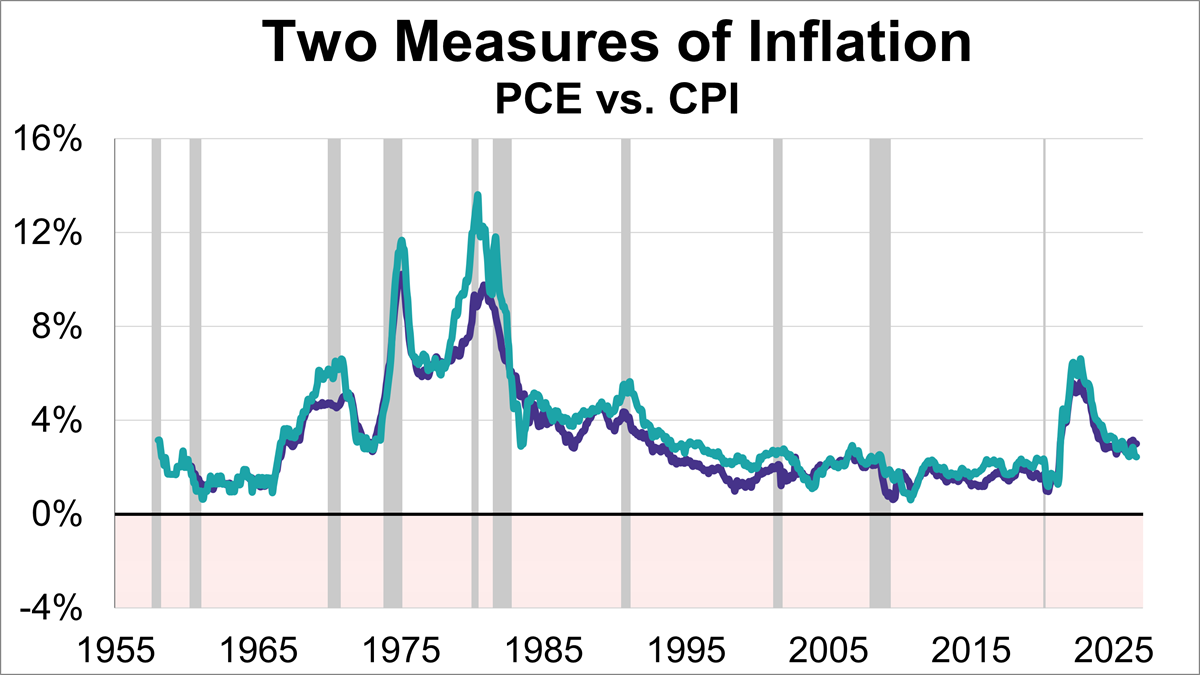
Inflation remains a hot topic, directly impacting everything from your grocery bill to interest rates. As of the latest data, two key inflation gauges — the Personal Consumption Expenditures (PCE) Price Index and the Consumer Price Index (CPI) — show that prices are still above the Federal Reserve's 2% target, with the core PCE at 3% and core CPI at 2.5%.
Valid until the market close on October 31, 2026
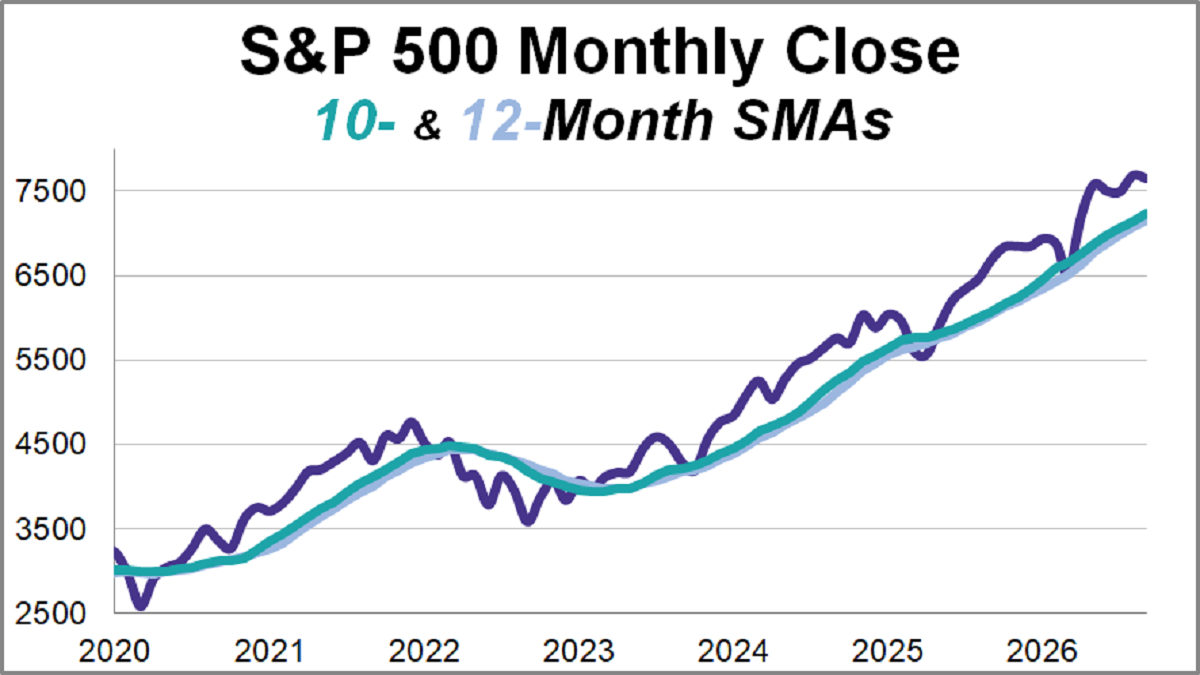
This article provides an update on the monthly moving averages we track for the S&P 500 and the Ivy Portfolio after the close of the last business day of the month.
Has the stock market bubble quietly burst already? Even though the S&P 500 Index has mostly treaded water for the past four months, Wall Street analysts have continued to boost their earnings estimates.
AI-related borrowers have accounted for nearly a quarter of nonfinancial U.S. dollar (USD) supply year-to-date, yet spreads for non-AI issuers have not widened meaningfully. Instead, hyperscaler spreads have widened, suggesting the market is absorbing the AI supply shock at its source.
On September 23, Invesco launched the Invesco Nasdaq International Innovators 100 ETF (QQI), a fund that seeks to track the performance of the Nasdaq International Innovators 100 Index.
Retail investors buy corporate bond ETFs expecting steady coupons and ballast against stock market volatility. Traditionally, fixed-income portfolios were anchored by defensive issuers like banks, industrials and utilities.
A recent VettaFi webcast explored advice on navigating retirees' behavioral tendencies in decumulating assets in retirement.
Join Fidelity for a product due diligence session exploring how the Fidelity Yield Enhanced Equity ETF (FYEE) captures derivative opportunities in today’s unique market environment.
Morgan Stanley has set up a Digital Asset Lab to test technologies including stablecoins, tokenization and decentralized finance applications as the Wall Street bank explores how blockchain-based systems could be used across its business.
Chris Galipeau discusses high-conviction insights that go beyond media headlines.
In the first quarter of this year, as the Strait of Hormuz closed and oil prices exploded, Berkshire Hathaway made a couple of moves that might have flown under people’s radars.It cut its stake in Chevron by roughly a third. Then it bought an airline.
Understanding why investor optimism wins over a full market cycle is one of the most underrated edges an investor can own, and it has almost nothing to do with waving pom-poms.
I’m talking about the cash I have sitting here that I desperately want to get into the market. Earlier this year, I got a chunk of money from selling a house. I have no desire to own another home (that’s a story for another time.) Instead, I used some of the money to pay off some debt. The rest is just sitting in my savings account earning absolutely nothing.
Before evaluating whether a long-short strategy belongs in a portfolio, we think it helps to understand what's actually happening under the hood. Let's start at the beginning.
The BlackRock Model Portfolio Solutions team made significant allocation shifts during the week ended September 24, 2026. The team recently managed over $300 billion and often causes shockwaves in the ETF industry.
"Funflation" is on the rise, and it could bode quite well for the retail sector if the trend remains persistent.
Northern Trust Asset Management will move six mutual funds with $33 billion in assets into ETFs in early 2027, its first such conversions.
Japan can thank its high debt loads and aging demographics for the inflation restraint. But the cost paid in stagnant growth and diminished prosperity for its citizens has been dear. We do not fear an inflationary spike in the U.S.; instead, we are concerned that the economic doldrum that has infected Japan for over 25 years will slowly work its way here.