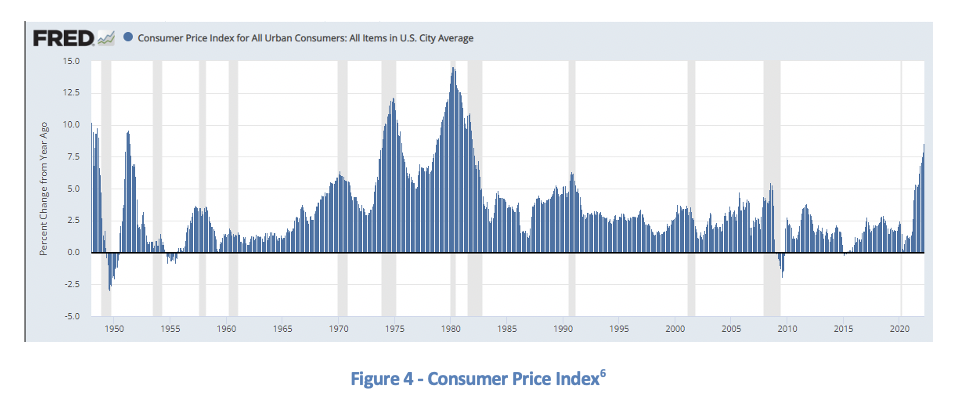
Surging inflation showed little sign of abating last month, indicating that grocery bills will keep going up, markets will remain volatile and investors will continue to feel pain in their 401(k)s.
An unfriendly macro and market landscape is making life harder for investors today, with traditional core bonds coming up short on income. In our view, focusing on generating efficient income is an effective approach to tackling the challenge of mixing the key building blocks of rates, credit and growth.
The geopolitical crisis in Ukraine creates a stagflationary shock for global economies. The plan to fight inflation just got far more complicated for global central banks.
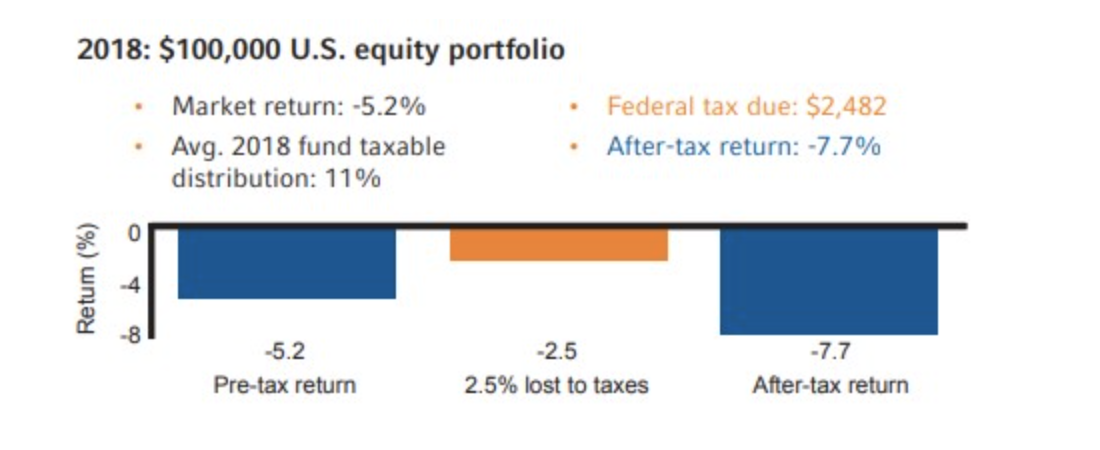
Tax Day has come and gone.
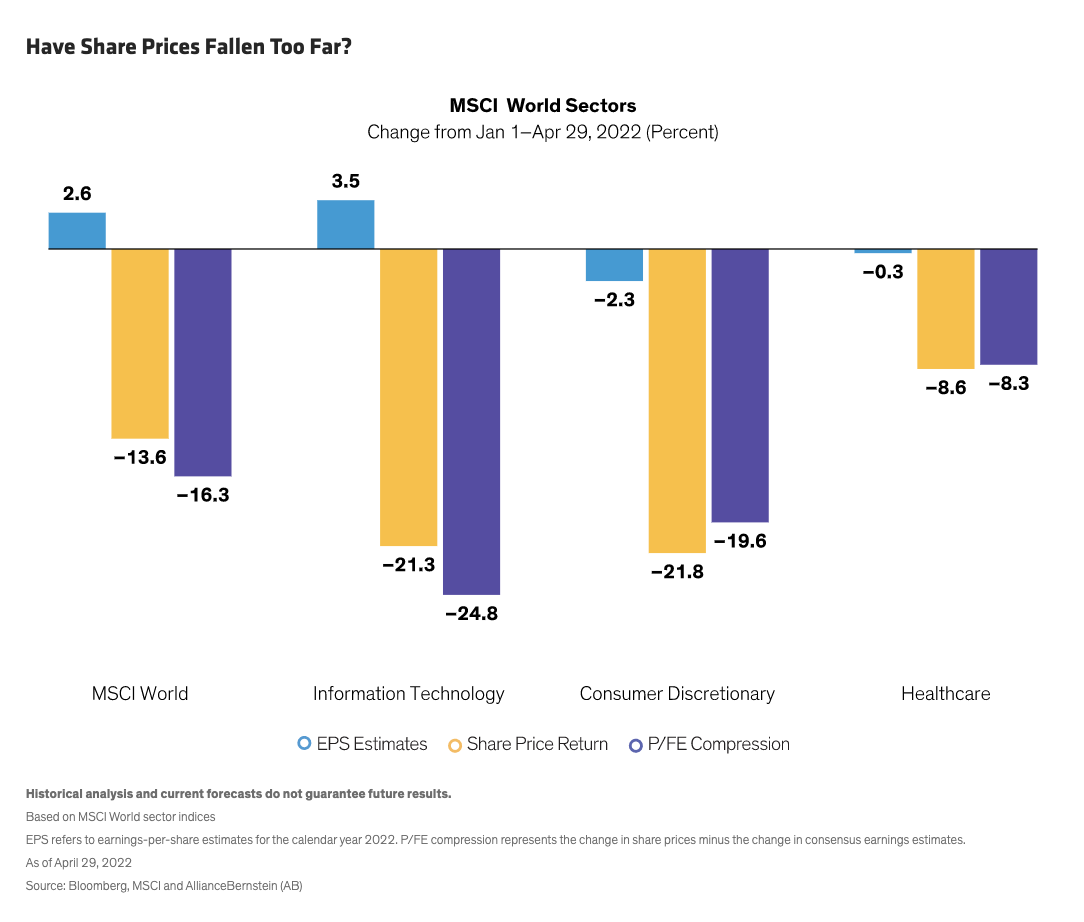
With the world facing inflationary and geopolitical hurdles, economic growth is poised to slow. In this environment, investors in growth stocks must identify companies with the right features to overcome headwinds to earnings.
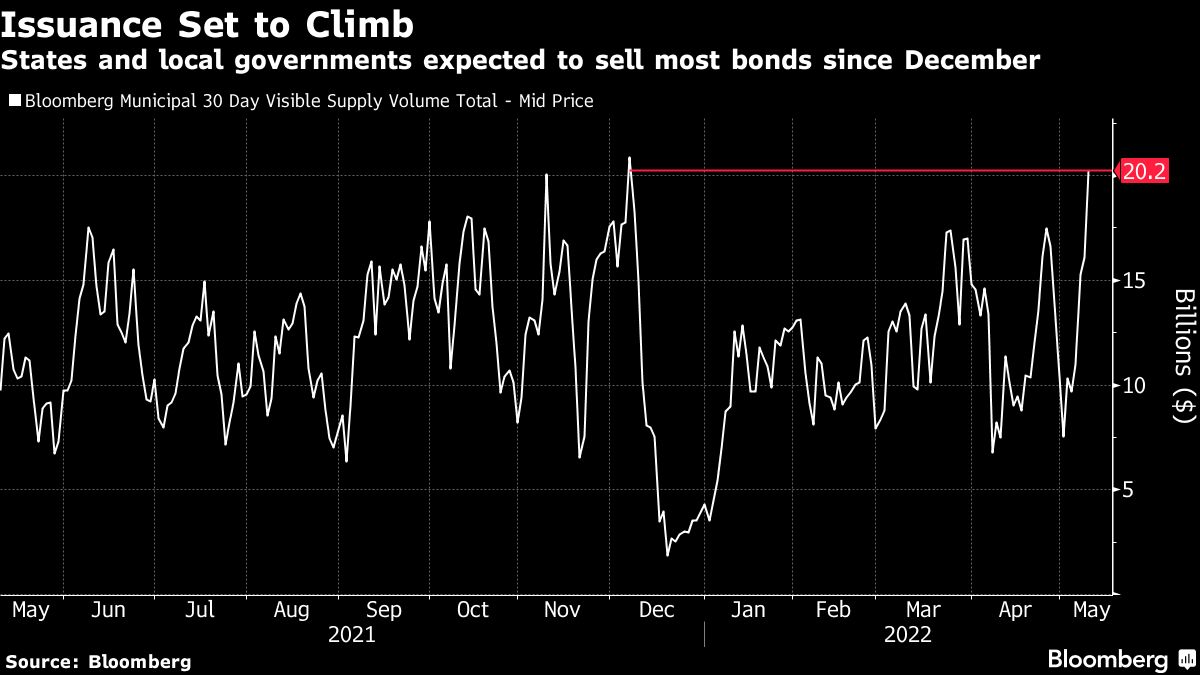
The nation’s local governments are expected to sell $20.2 billion of debt over the next month, the most since early December, according to a Bloomberg index that tracks municipal bond sales announced for the next 30 days. The gauge doesn’t represent the full tally of what actually hits the market, as many deals come with less than a month’s notice.
Since President Joe Biden was elected, millions of Americans with student loan debt have waited for him to fulfill a campaign promise of forgiving at least $10,000 per borrower. While Biden recently extended the payment moratorium for the loans until Aug. 31, pressure is mounting on the administration as the midterm elections approach.
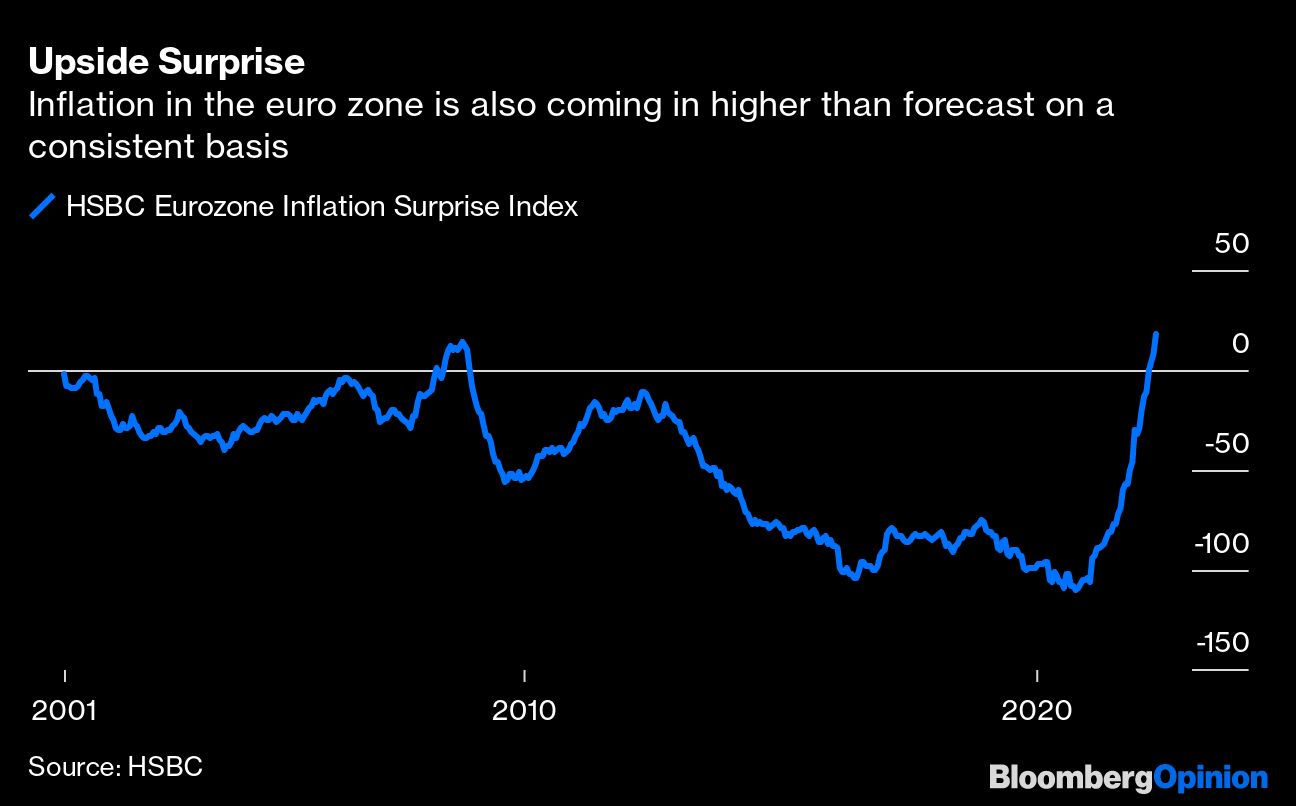
There was a time, some 12 years ago, when I bowed to no one in my enthusiasm for bonds. Longer-dated government debt yields had surged after the global financial crisis. Yet for various reasons, inflation was likely to remain subdued, I argued. US Treasuries and even German bunds yielded about 3.5% at the time. Although headline inflation waxed and waned, it consistently came in below forecasts for the next 10 years.
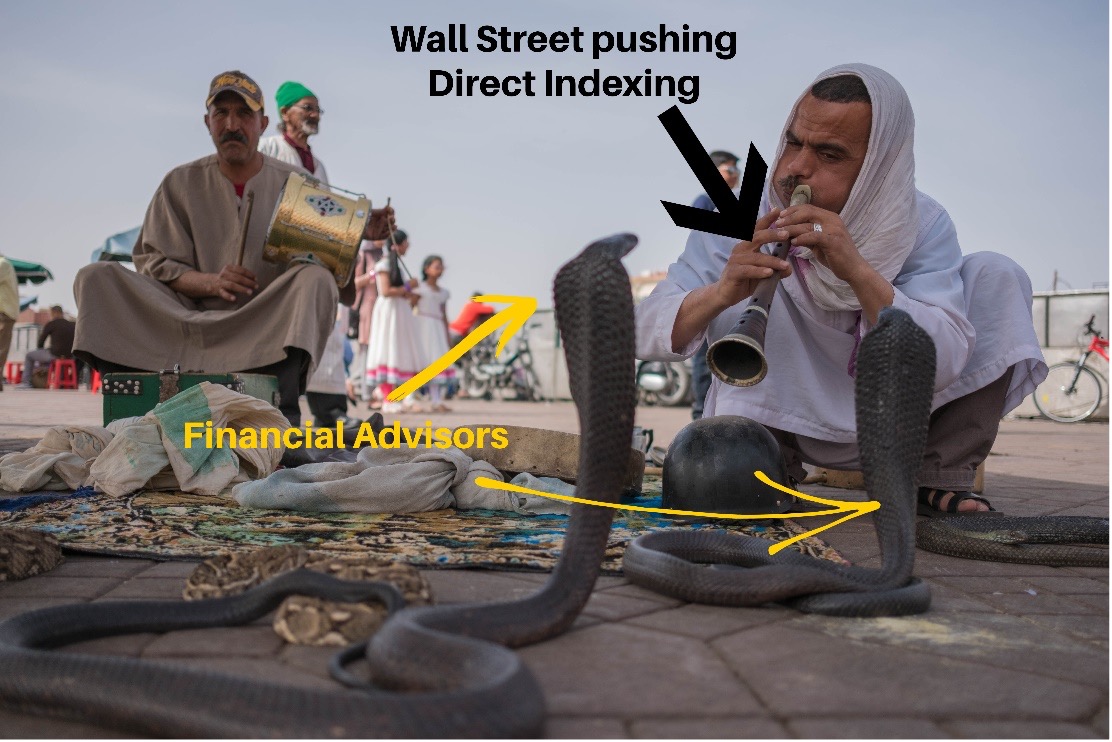
I don’t care how many PhDs are going to argue against me; direct indexing is Wall Street’s attempt at squeezing more fees out of the America public using advisors as the pawns.
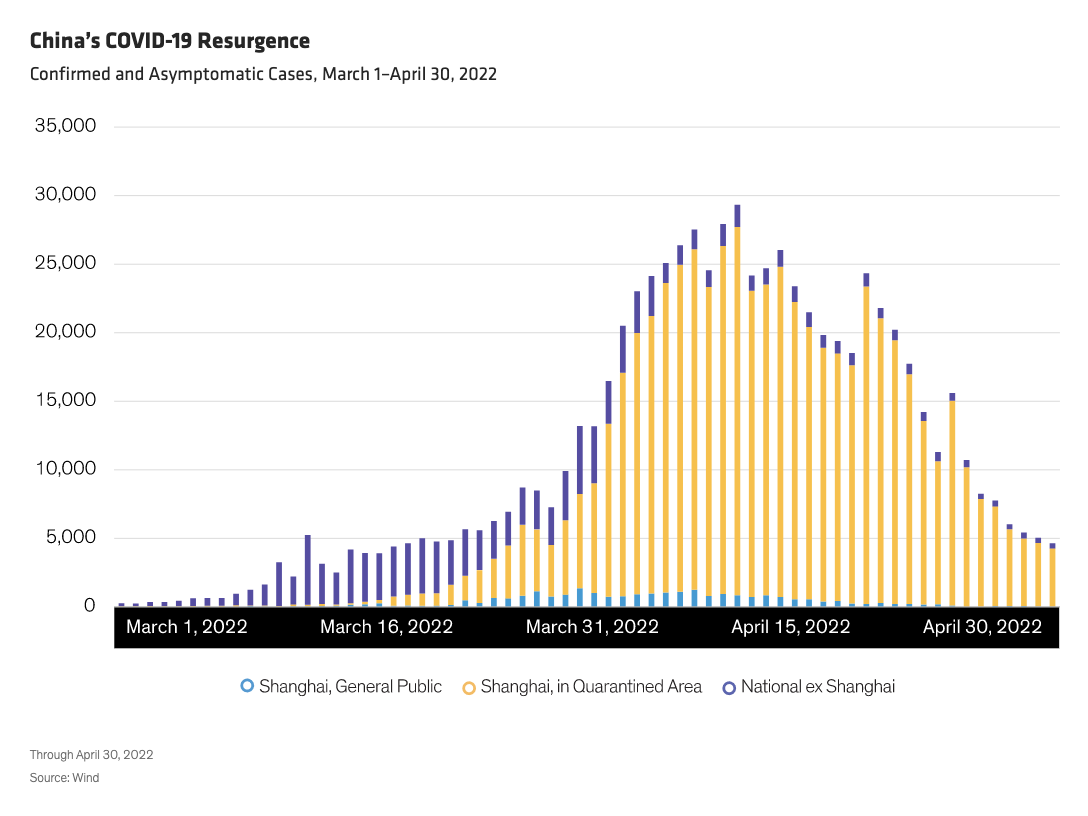
COVID-19’s resurgence in China has cast doubt over the government’s ability to meet its 2022 growth target of around 5.5%, which officials affirmed in March, before the scale of the latest outbreak became clear.
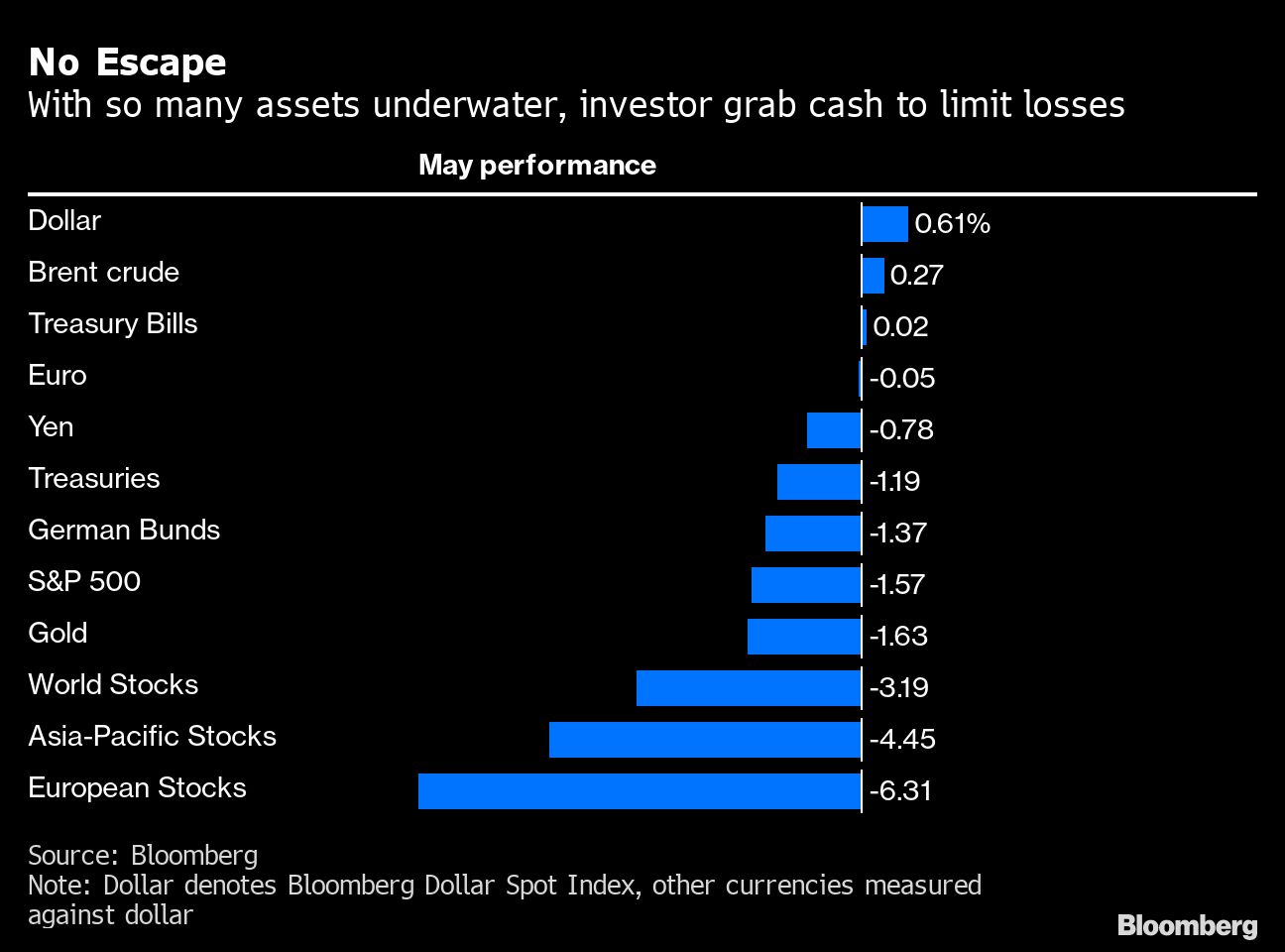
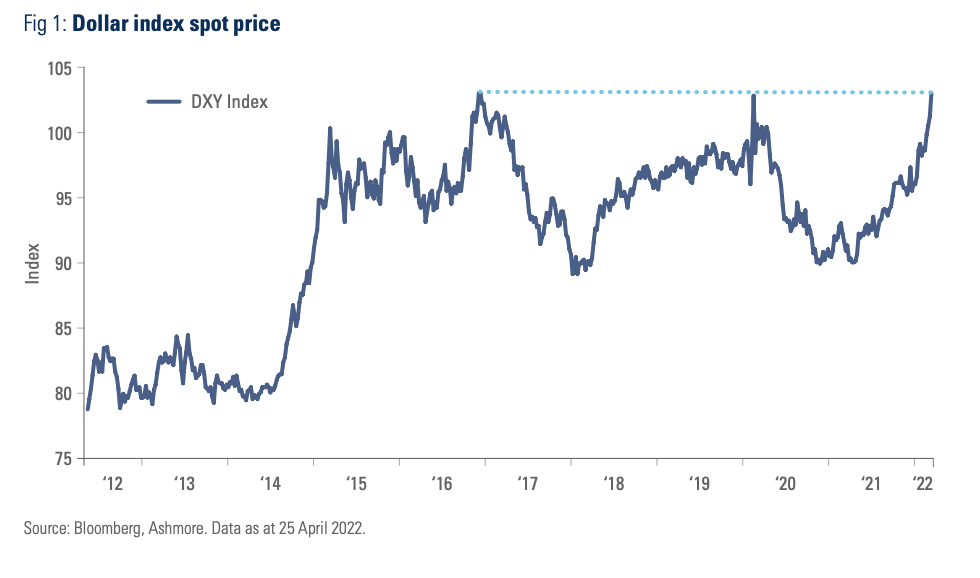
The Bloomberg Dollar Spot Index has trumped all other assets this month, notching a 0.6% advance at a time when stocks and bonds are tumbling. Investors have poured cash into an exchange-traded fund tracking Treasury bills for five weeks, clocking up the biggest inflows since 2020.
With the average U.S. mortgage rate above 5% and home prices at record highs, homeownership feels increasingly out of reach, particularly for young, first-time buyers. To make it work, some are renting out rooms or basements and using the extra income to help offset their costs.
Investors often look for ways to enhance income, lower a portfolio’s overall expected volatility or even help manage taxable gains.
Unless RIAs modify their communications strategies, the failure to address the need for retirement income communications will be felt for years.
Investors have had an unpleasant 2022, to put it mildly. Both stocks and bonds have dropped by more than 10%. On top of that, inflation rates at around 8.5% are the highest in four decades, reducing the purchasing power of whatever remains investors’ portfolios and promising big increases in interest rates by the Federal Reserve that threaten future investment returns.
When stocks are plunging, checking your investment accounts is risky business. The market turbulence is jarring for younger investors, who had gotten used to the idea that stocks always go up. And for those with a bit more experience, watching hard-earned money suddenly disappear is a terrible experience.
The Fed is on a single-minded mission to fight inflation, according to Jim Bianco. To do that, it will crush stock prices and home values.
The major market indices finished mixed this week. The Dow Jones Industrial Average lost 0.63%. The S&P 500 Stock Index rose 0.40%, while the Nasdaq Composite fell 1.02%. The Russell 2000 small capitalization index lost 0.28% this week.
I borrowed this letter’s “Soft Now, Hard Later” headline from Dave Rosenberg. It was the title of his leadoff SIC presentation, for reasons I’ll explain.
The nature of the economy is that there are always causes for concern in strong markets, just as there are reasons for optimism in weaker ones.
April was a hard month for the markets.
In this webcast, Scott Kefer, CFA, Senior Portfolio Manager at VictoryShares and Solutions will discuss alternative income strategies and their ability to offer the trifecta of benefits many investors seek: attractive income, low correlation to both stocks and bonds, and a level of volatility similar to traditional bonds.
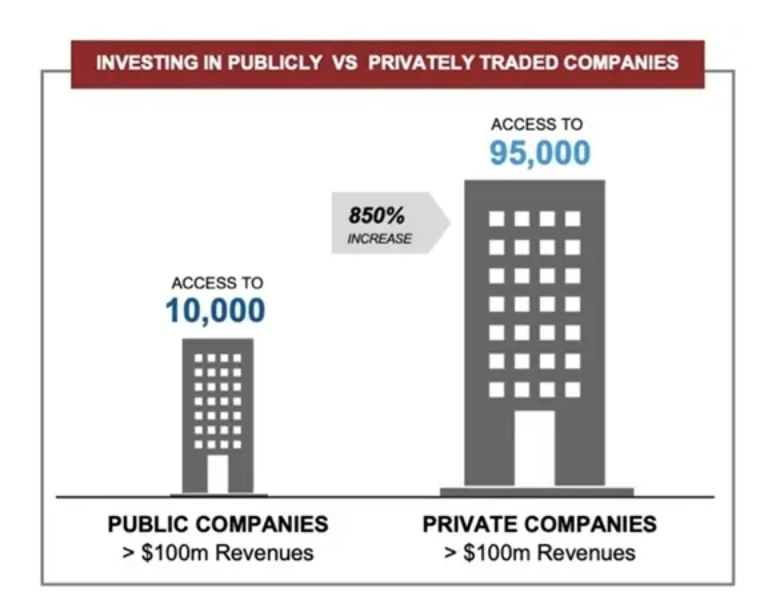
Investor interest and participation in private markets continues to grow.
As expected, the Federal Open Market Committee (FOMC) raised the fed funds rate by 50 basis points, to a range of 0.75% to 1.0%.
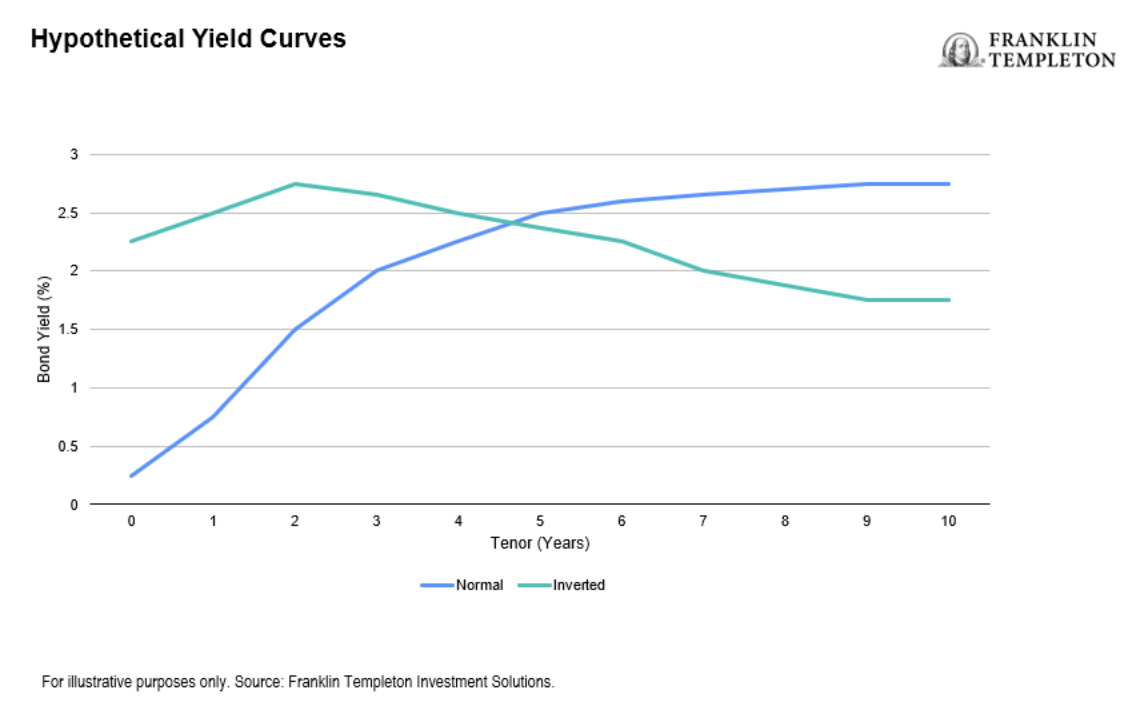
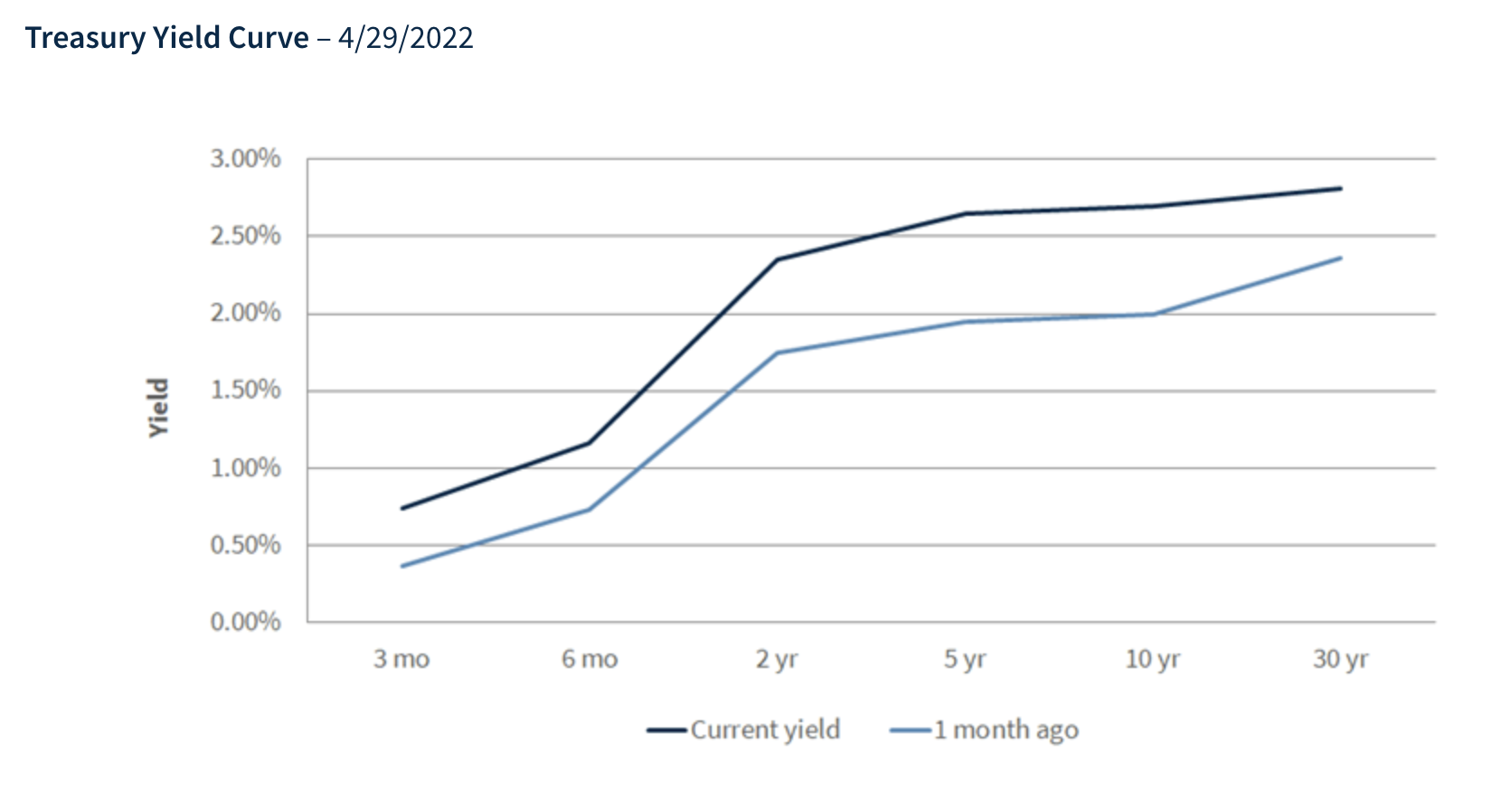
The US Treasury yield curve momentarily inverted.
Economic policy seems especially susceptible to a certain dynamic. Ideas get fixed too firmly and for too long, so when they’re forced to change, the shift is violent. Narratives drive decisions, and stories shape events, rather than the other way round. The new account of inflation is an arresting example.
We assess risks and potential opportunities for multi-asset portfolios amid late-cycle dynamics, higher inflation, rising interest rates, and geopolitical uncertainty.
In the first quarter of 2022, financial markets abruptly reversed course and volatility increased significantly.
The Milken Institute Global Conference continues in Beverly Hills, California, bringing together investors, dealmakers, power brokers and celebrities to discuss markets and megatrends. Academics, sports stars, entrepreneurs and politicians among the thousands coming to the Beverly Hilton for the event, which runs through Wednesday.
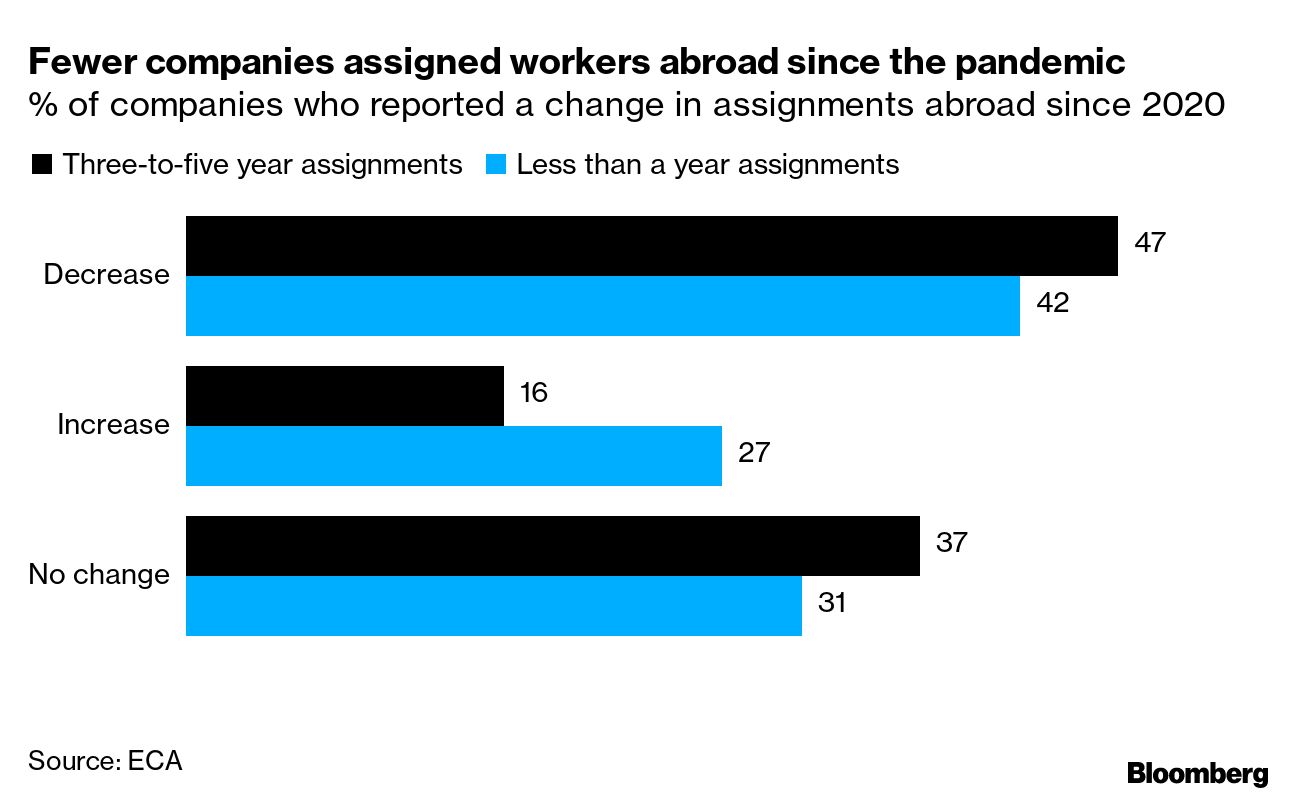
Whether it’s because of tight Covid restrictions, separation from family or the frustration of closed borders, a growing number of people living abroad have made the choice to move closer to home. In the process, they’re facing the reality of inflation and pandemic-related transportation snags, not to mention the possibility of lower-paying jobs and higher taxes in their new location.
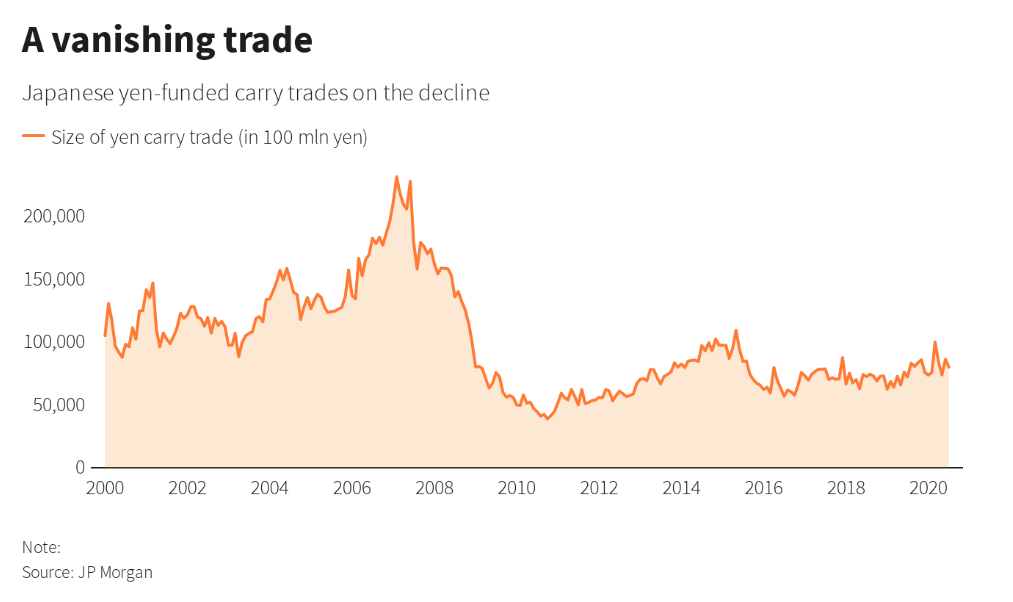
The BOJ is trapped. It is conducting unlimited QE to keep rates low and weaken the yen, which promotes inflation.
Did "capitalists" cash in on the pandemic and were they responsible for the deaths of thousands of Americans?
Franklin Mutual Series’ Katrina Dudley sees President Emmanuel Macron’s re-election as a positive for the French economy and regional equity markets over the longer term.
Trillions of dollars of deficit spending financed by money creation over the past two years caused today’s soaring inflation.
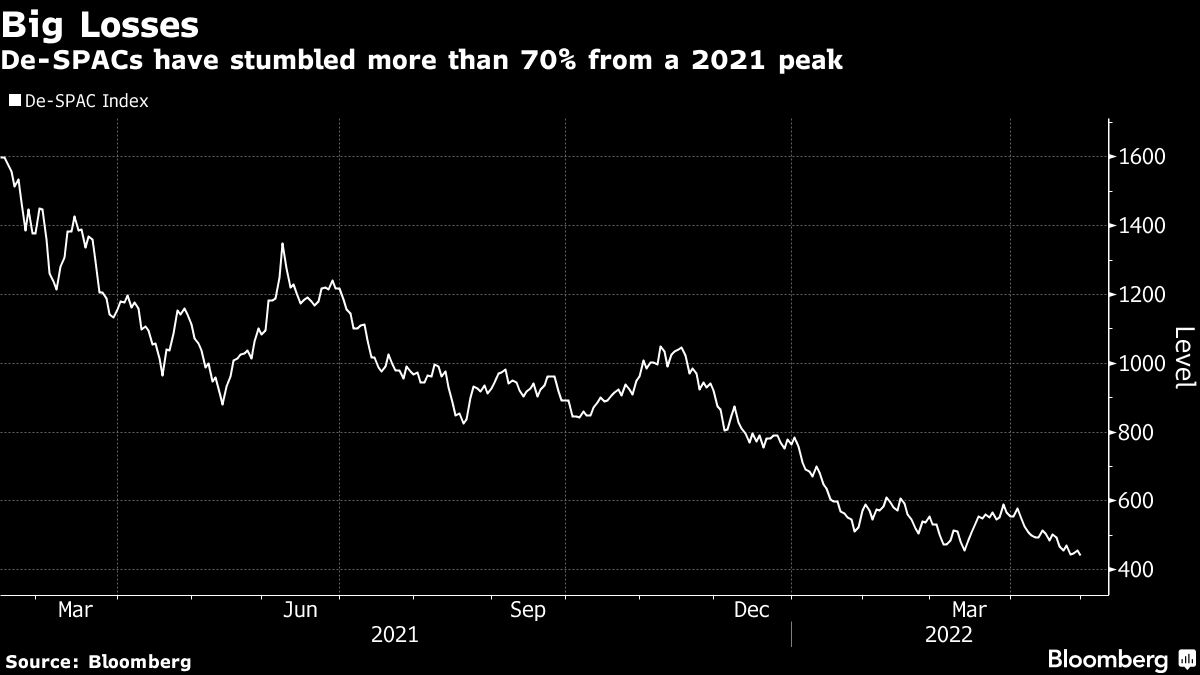
Judging by the 70% beating that former SPACs have taken since they peaked early last year, a lot of investors are leery of blank-check companies -- which is why Enrique Abeyta likes some of them.
Regular readers of WisdomTree blogs know that we are firm believers in both asset class and risk factor diversification when building our Model Portfolios.
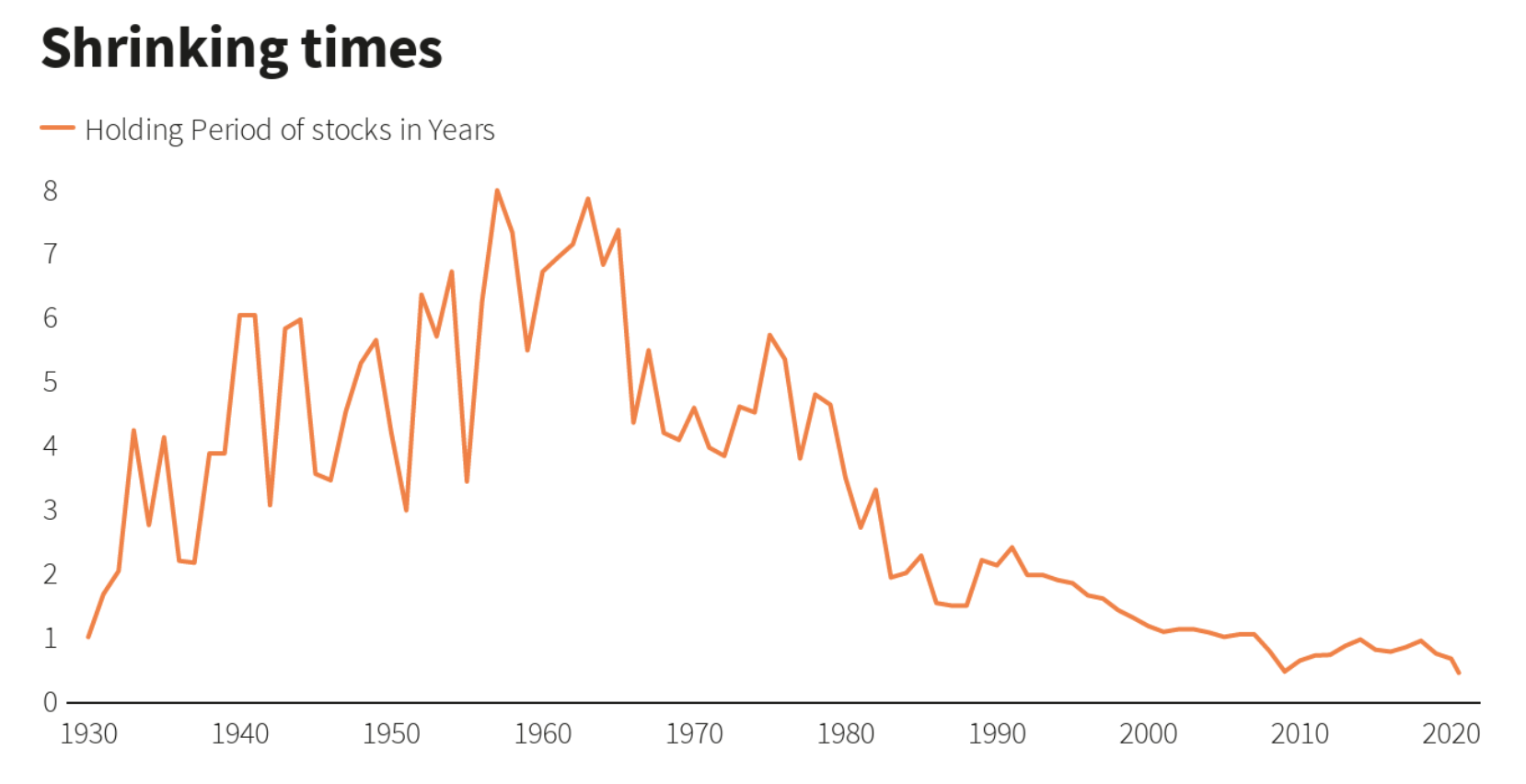
Buying stocks is easy; the hard part is knowing when to sell.
Even though the medium-to-long term US Dollar fundamentals remain unimpressive, due to a combination of large external imbalances, a continuous dependence on foreign investors’ inflows and the weaponisation of the currency, the Dollar became the least bad currency in G4 since the beginning of the Ukraine war
The debt moratoria introduced early in the pandemic provided temporary relief for private borrowers, and may have limited the fallout of the economic disruption.
Investors seeking higher yields and relatively low risk, and are willing to sacrifice liquidity, will find attractive opportunities in interval funds that invest in senior secured, middle-market loans, such as those offered by Cliffwater.
The U.S. stock market is very likely in a bear market that anticipates a recession will start later this year. This means the time is now to shift portfolios from risk-on mode to risk-off before the losses get even worse. But what worked in the past when hedging against a bear market may not work now, given the ever-changing economic dynamics. It’s also important not to fall for some old myths.
If you think it has been painful that the market has been down each of the past four weeks, your nest egg hasn’t seen anything yet.
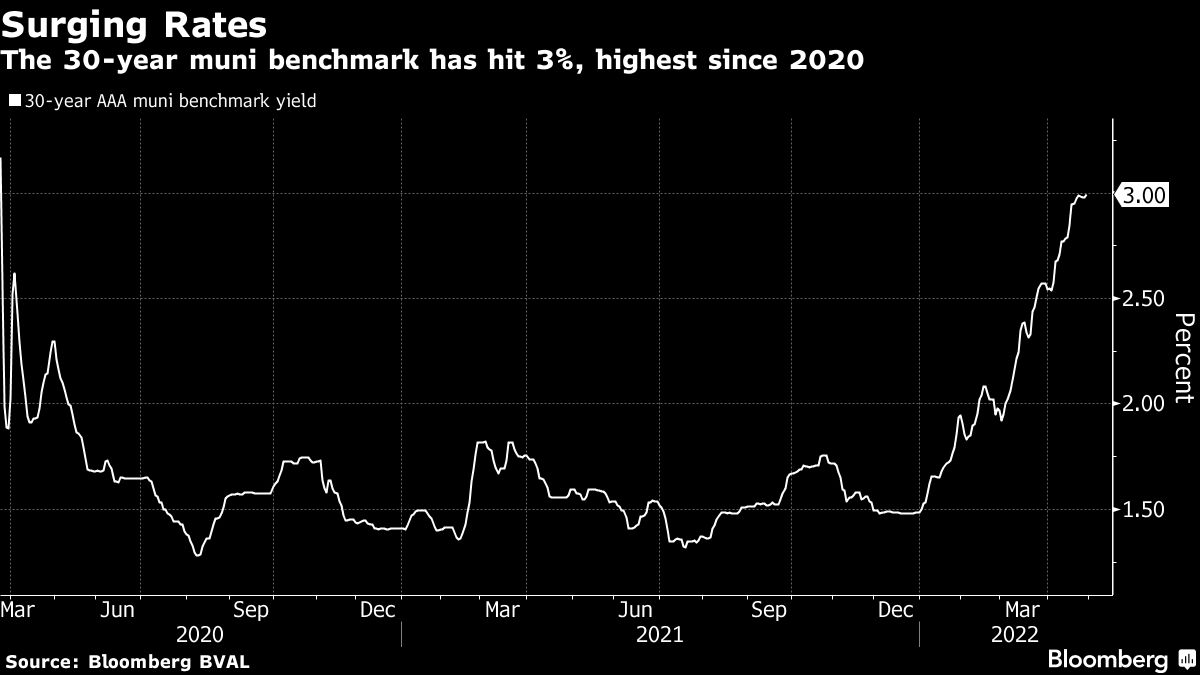
Municipal bonds are heading for their worst start to a year on record, and fund managers say nailing the direction of the $4 trillion market from here likely has little to do with the fiscal health of U.S. states and cities.
The most challenging financial event for investors in the coming decade will be the repricing of securities to valuations that imply adequate long-term returns, following more than a decade of reckless and intentional Fed-induced yield-seeking speculation.
Chief Economist Scott Brown discusses the latest market data.
Imagine that you have joined some friends for a day of fishing. About two miles offshore, you sense that something is wrong. The small, single engine boat’s handling has changed. There seems to be more. Use our premium service to add your company’s logo and send this to clients.
In a market environment of low bond yields and record high equity valuations, it’s time to look beyond simple asset-class diversification. A covered call strategy could provide clients with potential for growth, income and downside protection.
Recession warnings are clearly on the rise. Much of the initial media fervor focuses on the inversion of the yield curve.
The Bank of Canada embarked on a swift tightening path, but secular forces still weigh on the longer-run interest rate outlook.
There is a real fear about the cost of seeing a doctor and how it can impact your finances. Millions of Americans receive surprise medical bills each year. That includes insured individuals, according to research by the Peterson-KFF Health System Tracker. A new federal law, The No Surprises Act, went into effect Jan. 1, 2022, banning most unexpected medical charges.