China’s equity investors will be watching for trading cues from policy priorities and signals about fiscal stimulus at a meeting of the country’s top officials next week.
This week bitcoin prices reached over $60,000 — the highest level since November 2021. Since the launch of spot bitcoin ETFs in early January, demand continues to pile on. So far the nine new spot ETFs (ex-GBTC) have seen over $7 billion in net inflows.
Bitcoin has long been referred to as “digital gold.” In what would likely amount to good news for the cryptocurrency and related spot ETFs launched in January, at least one expert believes bitcoin could eventually wrest market share from the yellow metal.
Recently, retail investors have started chasing small-cap stocks in hopes of both a rate-cutting cycle by the Federal Reserve and avoiding a recession.
One of the hottest products for retail investors the last couple of years is the single-stock option-income exchange-traded fund. While the basic idea is similar to the old and respectable covered-call writing strategy, the modern versions grabbing attention and dollars are supercharged, promising income yields of 100% or more.
The frenzy around AI stocks has blindsided Wall Street forecasters, spurring a race among strategists to keep up with a stock market rally that’s already blowing past their expectations when 2024 began.
The only thing that matters to Alphabet Inc. investors is whether it can get artificial intelligence right.
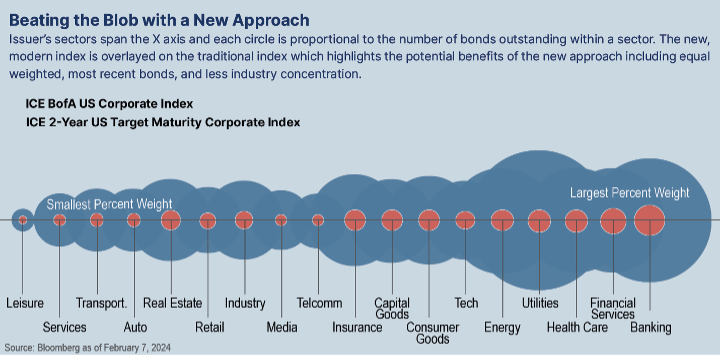
Why the traditional methodology for bond index construction needed a new, investor-focused approach.
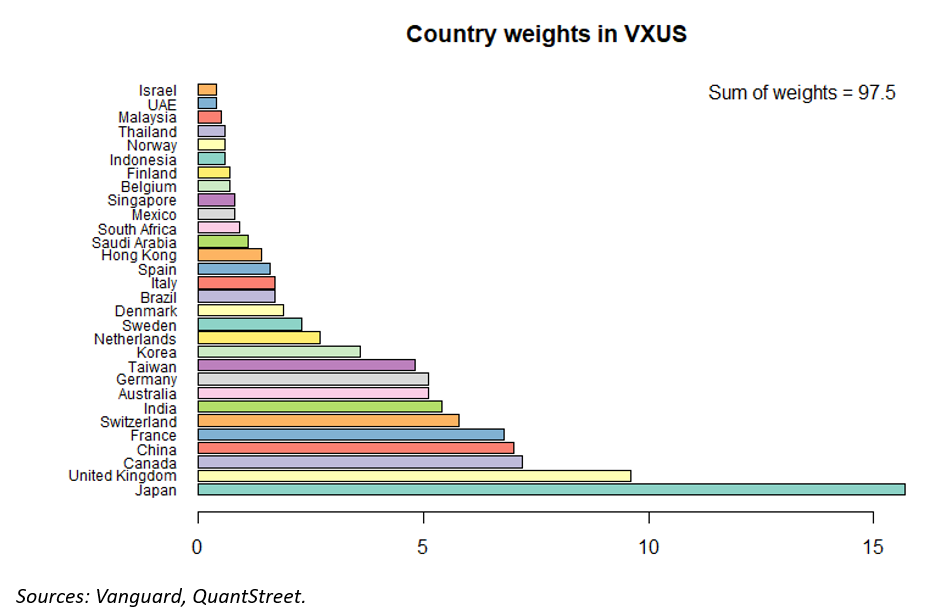
Thanks to artificial intelligence (AI) and investors still holding out hope that rate cuts will happen at some point, global equities are marching higher. That rally could eventually spill over into other assets like international bonds.
The Nasdaq-100 Index (NDX) is higher by 6.7% year to date. That confirms tech stocks remain in strong form. Still, some market observers are concerned valuations in tech and other high-growth sectors are becoming somewhat frothy.
We hope you enjoy the latest Newsletter from Harold Evensky.
Like travel agents, real estate agents will need to offer more value and be more available to those willing to pay. They can also be my friend, so long as they don’t charge too high a commission.
If you need to sell your home in the next few months, I’d get on with it. As we enter the spring selling season, it’s becoming increasingly clear that the period during which sellers had the leverage in the housing market is over.
A major rally in Bitcoin is refueling gains in shares of cryptocurrency-linked mining and trading companies, putting the group back on track to add to last year’s big run.
Adding real assets to a stock and bond portfolio can help boost returns and smooth volatility when inflation runs above 2%.
Despite conventional wisdom, political uncertainty doesn’t necessarily pose acute risks to the healthcare sector.
Dina Ting, Head of Global Index Portfolio Management for Franklin Templeton Exchange-Traded Funds, delves into these positive developments and sheds light on Japan’s expanding economic prospects.
In this article, Russ Koesterich discusses the reason behind the recent resiliency of stocks, despite rising rates.
The next bitcoin halving – the process through which mining of the cryptocurrency becomes more difficult – is about two months away and will officially arrive when 840,000 blocks is reached.
A retreating dollar is exactly what gold needed to put the precious metal back into the investment spotlight. Hotter-than-expected inflation in January pushed the yellow metal below the $2,000 mark. But it has been rising again with geopolitical factors providing tailwinds along with a weaker greenback.
This week, VettaFi hosted a webcast in partnership with Swan Global. The educational focus was on the challenges of achieving sustainable income and the benefits of an options-based strategy.
Join the experts at Defiance ETFs and learn all about how options funds work, and which options funds might make the most sense for your portfolio.
On the lookout for some new ETFs? Active ETFs had a great year in 2023 and are off to a hot start in 2024. The question, then, is how to choose from a growing list of strategies. One powerful heuristic for assessing ETFs — tech analysis — can help.
This week’s column shares some ideas around the importance of a unique learning environment and gives you some insight for your professionals to improve their skills and reach higher levels of excellence.
If your firm wants to create marketing content for LinkedIn, but your advisors cater to different client types, how can your brand effectively speak to each type without isolating others?
In the early months of the COVID-19 pandemic, many people with the means to do so left New York City and New York state. With state finances in particular highly dependent on high earners’ income taxes, this was a worrying development.
Every man, woman, and child on planet Earth must spend about $45 on Apple products yearly to justify its valuation.
Over the past year and counting, money managers have ramped up exposure to a handful of Big Tech companies – swelling market valuations along the way.
What was supposed to be the darling trade of 2024 has unraveled, thanks to the Federal Reserve upending predictions over how fast it would lower interest rates.
Marcus Weyerer, Senior ETF Investment Strategist, EMEA, for Franklin Templeton ETFs, delves into the industrial and consumer applications of the metaverse, the role of AI in enhancing these experiences, and the significant growth potential and investment opportunities this virtual world holds.
The second-largest stock market has captured the interest of investors, supported by stronger, more broad-based earnings, and incentivized by Japan's fiscal and monetary policies.
The S&P 500’s drive toward a record high could have Europe equities following right behind it. As such, traders may want to consider European equities as a latent move if the S&P keeps pushing to higher highs.
There are more than 200 ETF providers in the $8 trillion U.S. ETF market, but I’m intrigued by a recent entrant’s ambitions. In December 2023, Themes ETFs introduced 11 ETFs.
Evaluating your tech stack and contract pricing must be on your agenda as your wealth management firm starts the new year.
There’s more to income ETFs than simply showing a high yield number. Advisors also need to consider tax implications and total return potential.
Options-based income strategies have continued to grow in popularity, but not all options are equal. To set clients up for success, it’s important for advisors to understand the nuances in this growing segment of the ETF market.
The Co-Founders at NEOS Investments are pioneers in the options-based ETF space, and they will be leading a free LiveCast educating investors on options-based income ETF strategies and where they may fit in client portfolios.
Today’s episode will focus on the Human Capital Factor (HCF). This factor applies workplace behavioral science, financial acumen and deep data science to capture the powerful connection between human capital and stock performance. By understanding company culture and intrinsic employee motivation, my guests have transformed these insights into investment strategies. For advisors looking for a way to generate additional alpha in client portfolios, understanding the HCF and how these products fit in a portfolio may lead to better returns and greater client satisfaction levels.
Capital One has grown into the ninth-biggest US bank by assets through the relentless promotion of its credit cards, which provide two-thirds of its revenue.
Not to say Warren Buffett’s folksy observation this weekend on the US oil business is incorrect, but it gets something awfully incorrect...
The world’s biggest Bitcoin ETF has reached an inauspicious milestone: an entire month of consecutive outflows.
Academic work shows that openness, rule of law, and legal protections are associated with investor inflows to global stock markets. Based on such considerations, non-U.S. stocks don't look very good.
BlackRock Inc., which capitalized on a decade-long boom in index investing, said investors should rely more heavily on actively managed strategies.
If you’re losing your mind and plagued by fear of missing out, it might be that you’re best served with some passive investment exposure in your portfolio. Not because it will do well, at least not in our estimation, but so you don’t lose your mind.
Despite rosy forecasts, the US economy faces powerful headwinds that call into question its ability to serve as the world’s main growth driver. These challenges are compounded by domestic and geopolitical uncertainties that have not been reflected in market valuations and economic assessments.
David Dali, Head of Portfolio Strategy, provides his 12-month outlook for global equity markets.
Four years ago this week (2/19 to be exact) the S&P 500 climbed to an all-time high of 3,386 before plunging over -34% as the world economy shutdown due to the pandemic.
Covered call ETFs and strategies remain in focus. The JPMorgan Equity Premium Income ETF (JEPI) gathered $13 billion in 2023, despite rising just 10% in value.
Investors have been basking in the sunlight of a year-end market rally in 2023 that appears to be continuing in 2024 after a slow start to January.
VettaFi’s Head of Research Todd Rosenbluth discussed the Columbia EM Core ex-China ETF (XCEM) on this week’s “ETF of the Week” podcast with Chuck Jaffe of “Money Life.”
There is power and freedom in acknowledging our financial mistakes rather than shaming ourselves for them.
In the first installment of this series, I pledged to unveil a retirement strategy with such merit that it warrants widespread adoption by the investment advisor community. Let's delve into the compelling case for this approach.