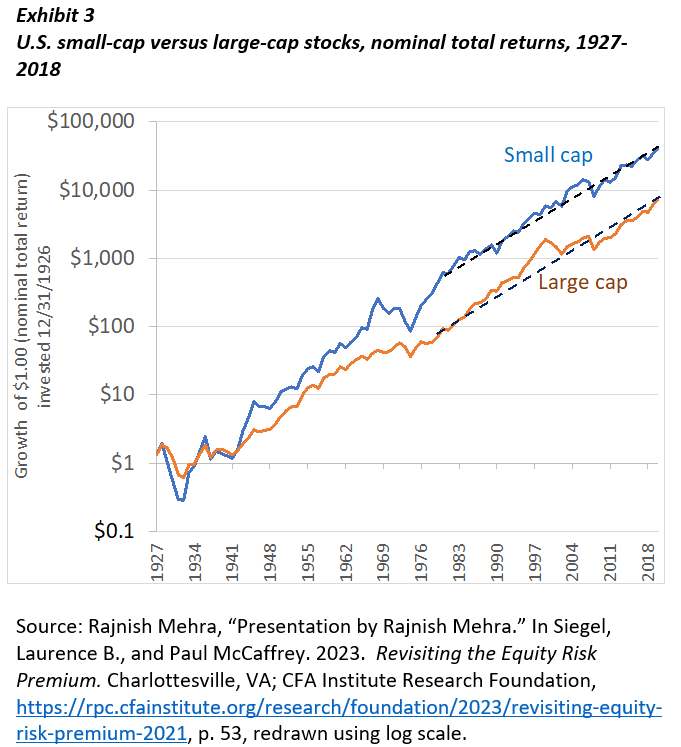
“Compound market returns.” During bullish markets, there is inevitably a regurgitation of this myth that was contrived to extract capital from retail investors and place it in the hands of Wall Street.
In this special mid-year podcast, Rob is joined by MFS Chief Economist Erik Weisman to discuss all things around the economy, including the rate of inflation, probability of recession, and other trends that may affect the financial markets and assets.
The yield on the benchmark 10-year Treasury is up 70 basis points this year, leading many to question the future direction of interest rates. Let’s look at the underlying causes of this and whether those conditions are likely to persist.
We can and are building much taller skyscrapers. But they are impractical money losers because so much floor space is taken up by elevators. A new book explains the interplay between size and scale, and what it means for our economy and investments.
Common aphorisms and assumed truths about stock returns often imply the disappearance of risk over long horizons. Is that accurate?
Investors have shown few signs of panic during a stock market slump that’s pushed the S&P 500 Index into its first losing quarter in a year. But beneath the surface, signs of stress are emerging that go far beyond the just averted US government shutdown.
The third quarter was a story of dashed hopes in emerging markets, with the unraveling of some of the most profitable trades in the asset class.
Last week was all about financial factors, primarily interest rates. But this week was all about the real economy, notably the United Auto Workers (UAW) strike and the pending government shutdown. Indeed, worries about a recession rose on those two risks.
The S&P 500 has fallen almost 3% within the past month, highlighting the volatility that typically hits at the end of the summer. For volatility through the end of 2023, investors may want to consider two active ETFs from American Century.
The commercial real estate sector’s continued challenges could potentially impact US banks. Franklin Templeton Fixed Income’s Shawn Lyons discusses the ongoing commercial real estate crisis and how US banks are safeguarding themselves against these issues.
Resurgent energy prices could contribute to higher for longer monetary policy.
Certain asset classes thrive or lag as economies move through one cycle to the next. Franklin Templeton Institute’s Tony Davidow shares how to analyze different economic indicators and how asset classes perform through economic regime changes.
The Chinese yuan has lost nearly 6% of its value against the U.S. dollar this year, while Shanghai-listed stocks are off about 8% from their 2023 high, set back in May.
U.S. stocks typically post their best returns in the final quarter of the year. Our review of S&P 500 performance since the index’s inception in 1957 found an average Q4 uptick of 4%. (Q1 was next best at an average of 2%.)
Big tech is often cited as the primary catalyst in 2023’s stock market rally. Yet at some point, the laws of market gravity will set in, and what comes up must eventually come down. As 2023 winds down, some market experts foresee pressure ahead for big tech.
We believe a mild U.S. recession is more likely than not in 2024, although a soft-landing scenario cannot be ruled out. A recession is also likely in the UK and eurozone, but appears less likely in Australia.
Wall Street economists are growing more upbeat about US economic growth while acknowledging that it may require interest rates to stay higher for longer, in line with recent projections by the Federal Reserve.
It was the week that bond markets finally seemed to grasp what central bankers have been warning all year: higher interest rates are here to stay.
Rising real interest rates invariably trigger recessions. The residual impact of pandemic related behaviors delayed the impact in this cycle.
The level of concern among retail executives over the resumption of student loan payments run the gamut from brushing it off as a non-event to bracing for a big pullback in spending.
Avocado toast, hard seltzers, and Instagrammable vacations are not the reasons millennials and our Gen Z compatriots have failed to scrimp, save and budget our way into home ownership.
The Fed-induced selloff in technology stocks has traders dusting off their turmoil playbooks. Trouble is, one of the most popular strategies isn’t working: hiding out in Apple Inc.
The Federal Reserve’s hawks have been back on the speaking circuit,and markets are abuzz that rates may have to move higher than previously expected. Someone apparently just took out a big short position premised on the chances that rates markets underestimate the odds of an increase in November.
The Bank of Japan met last night to cap off a week of central bank activity.
Despite the Fed’s aggressive monetary tightening and the regional banking crisis earlier this year, the U.S. economy has been surprisingly resilient. Bond yields continue to rise, with long-term Treasuries at their highest level since October 2007.
Gilt prices have been struggling this past year due to surging inflation and interest-rate increases. David Zahn, Franklin Templeton Fixed Income’s Head of European Fixed Income, shares his outlook for the UK economy and why he thinks now is a good time to consider investing in gilts.
Intermission is over. Today we resume my series on the global cycle theories that, probably not by coincidence, all point to major change unfolding in the next few years. Finishing it may take some time since I keep finding new material.
Anyone who even casually pays attention to the financial media has likely become familiar with the current state of inflation as well as how high interest rates have risen over the past ~2 years.
2023’s market rally continues to center itself on the big tech comeback with certain themes exhibiting strength like artificial intelligence (AI) and cloud computing. While these themes can offer traders short-term opportunities, they can also persist in the long term as growth plays.
We hope you enjoy the latest Newsletter from Harold Evensky.
For all the importance of China’s subpar recovery, the country's woes are notably absent from the plethora of projections and commentary that flow from the Federal Reserve these days. Judging from recent remarks, there's either no problem or nothing sufficiently grave to prod Chair Jay Powell to hint at switching gears. Give it time.
Like any recovering reporter, I like to keep tabs on my old beats, and the marijuana ETF space never disappoints. Or, perhaps more accurately, it never stops disappointing.
The Federal Reserve’s preferred measure of underlying inflation rose at the slowest monthly pace since late 2020, helping to lay the groundwork for policymakers to forgo an interest-rate hike at their next meeting.
The JPMorgan Asset Management money manager at the helm of the largest active exchange-traded fund in the $7.2 trillion industry is coming to market with another equity strategy geared toward investors bracing for a period of uncertainty.
Russia plans to reduce diesel exports from its key western ports to almost nothing next month after the government banned overseas sales to tame surging prices at home.
The post-Covid era seems ripe for a Yogi-ism since economists and policymakers have been so wrong about the path of the economy and inflation. Yes, inflation is finally on a downward trend, but it has proven far stickier than the Federal Reserve and most economists predicted and remains above the Fed’s 2% target.
The strike comes at an inflection point for automotive production.
In our latest Quarterly Letter, Ben Inker and John Pease discuss the new economic regime, how investors can prepare for a recession, and the merits of combining high quality and cheap assets in today’s environment.
Few companies have felt the shock from soaring interest rates as much as those owned by private equity. But thanks to surprisingly resilient earnings and their deep-pocketed owners’ talent for financial engineering most are avoiding disaster.
The US may be heading back into a “vibecession” — a condition in which consumer confidence and other economic “vibes” decline so much that they threaten to become self-fulfilling prophecies and drag the economy down with them.
The imminent US government shutdown that threatens to delay the publication of key economic data will test policymakers’ and investors’ trust in a range of less-regarded third-party indicators.
Fed Chair Jerome Powell’s Sept. 20 remarks represented the first time the Fed leadership has sanctioned the idea that the equilibrium policy rate has risen this year; previously, Powell repeatedly avoided taking a view.
Historically, government shutdowns have not caused a major reaction in the markets. But shutdowns can increase market volatility, and an extended shutdown could have an impact on the overall economy.
Many advisors are finding their clients show little interest these days in how the markets are doing.
A financial crisis, following the 5.50% hike in Fed funds and similar increases in all bond yields, is virtually inevitable.
The Census Bureau has posted its advance report on new orders for durable goods for August. This series dates from 1992 and is not adjusted for either population growth or inflation. Let's review durable goods data with those two adjustments.
A key measure of how much bond investors are compensated for holding long-term debt turned positive for the first time since June 2021, reflecting steep increases in longer-maturity Treasury yields.
So, here’s an idea: Dedicate the revenue collected from the estate tax into a trust fund that finances early childhood education, spanning childcare to preschool.
A US government shutdown would have a cascading economic effect, beginning mildly and deepening over time as millions of workers go without salary, private contractors aren’t paid and consumer uncertainty grows over Washington’s dysfunction.
This stock market rally in the first half of 2023 was built on the back of technology stocks, as investors bet on a resilient US consumer and hype surrounding artificial intelligence to keep the shares soaring.