What do people really mean when they talk about impact investing? Typically they’re referring to investments made with the intention of generating measurable social or environmental benefits in addition to financial return.
In this video, Chuck Carnevale, Co-Founder of FAST Graphs, a.k.a. Mr. Valuation will go over what is the correct discount rate to use to determine NPV of a stock.
Financial stability is much improved since last year's stress.
On this episode of the “ETF of the Week” podcast, VettaFi’s Head of Research Todd Rosenbluth discussed the VanEck Gold Miners ETF (GDX) with Chuck Jaffe of “Money Life.” The pair talked about several topics regarding the fund to give investors a deeper understanding of the ETF overall.
Message to bond underwriters: Some big customers are sizing up your ESG credentials.
Most clients have no idea what retirement failure means to them and how a given failure rate should influence their planning. My guests today will present a planning framework that improves existing models by dynamically adjusting for market performance and longevity.When saving for retirement it’s common for advisors to evaluate progress toward a savings goal and recommend course corrections to stay on track. Making course corrections after retirement means that the retiree must either spend less if investment returns are low or be able to spend more if markets rise.Clients need to understand how investment and longevity risk will affect their lifestyle as they make these adjustments to avoid running out of savings. The best way to understand how these risks might affect their lifestyle is through a visualization of spending paths. Visualizations are a powerful and accurate way to understand how spending more early in retirement, taking greater investment risk, and using an annuity change the course of possible lifestyle paths.
This week is part two of our conversation about alternative investments. As I pointed out last week, this space has evolved into a distinct asset class of its own. I believe investors need to understand the good, the bad, and the ugly aspects of investing in alternatives.
In case you missed it, a $5 trillion tax hike looms over American households and businesses in President Joe Biden’s latest budget proposal, which would include a 25% annual minimum tax on unrealized capital gains for individuals with incomes and assets exceeding $100 million.
Amid higher interest rates and consequently higher yields, investors have piled into cash. My guest today will explain why it’s time to make a move. His position is that cash should be an asset to provide for short-term (less than 12 months) liquidity needs. Beyond that, investors should consider an appropriately diversified portfolio to achieve their financial goals. While short-term performance may work in investors’ favor, he will argue that over the long term, the benefits of being invested outweigh the potential short-term benefits of sitting in cash.
As equity volatility and market uncertainty continue, investors increasingly turn to equity income strategies for opportunity.
With inflation up, economic growth down and two-year Treasury yields testing 5%, Bill Gross sensed the music in markets was fading, and said it was time to get over the likes of the Magnificent Seven.
Amid economic challenges, increased dispersion in high yield bonds suggests opportunities for selective investment choices versus broad sector-based strategies.
A changing rate narrative now leaves advisors weighing the costs and benefits of taking on additional interest rate risk.
If building generational wealth were easy, everyone would do it. In truth, it takes focus, discipline, and proper guidance each step along the way. Perhaps most importantly, your mindset will determine your fate.
In the competitive landscape of the investment advisory industry, retaining top talent is essential for the long-term success and growth of investment advisory firms. To incentivize and reward key employees, investment advisors often turn to equity compensation tools.
What do Americans receive in return for our considerable spending?
Discover the reasons investors diversify their portfolio with alternative investments.
Why should anyone be allocating to investment-grade corporate bonds right now?
The latest National Federation of Independent Business (NFIB) survey was an economic warning that departed widely from more robust governmental reports.
Demand for Treasuries is holding up as the US government floods the market with more than $180 billion of new debt this week, a testament to the appeal of high yields for shorter-term notes.
We believe high-yield munis carry additional risks, but are worth consideration by investors in higher tax brackets who are comfortable taking added risks.
After a strong start to the year, equity investors are assessing whether a range of escalating risks will lead to continued volatility ahead. In this quarter’s Systematic Equity Outlook, we’ll explore macro and micro risks through a systematic lens, and how we’re positioning portfolios to harness alpha opportunities ahead.
With nearly 4.5 million Americans turning 65 in 2024, advisors are navigating four core risks that will impact their portfolios in retirement: longevity, inflation, volatility, and emotions. We will discuss new research by Dr. Wade Pfau, professor at The American College of Financial Services. He did this research on behalf of Equitable to look at how to improve the efficient frontier, enhance risk-adjusted returns and help advisors – and their clients – make the most of their assets through their retirement.The research looks at the role of a registered index linked annuity (RILA) with lifetime income for a portion of a portfolio and the resulting impact on meeting lifetime spending goals, preserving assets and managing volatility as part of an overall retirement plan.
The market has been highly tuned to news from the Fed or developments in artificial intelligence technology to set expectations.
Active ETF strategies have stormed the scene over the past year and are growing at a dizzying pace.
A rally that has seen European bank stocks outpace both US peers and the Nasdaq over the last three years faces a key test in coming days when most of the region’s major lenders report results.
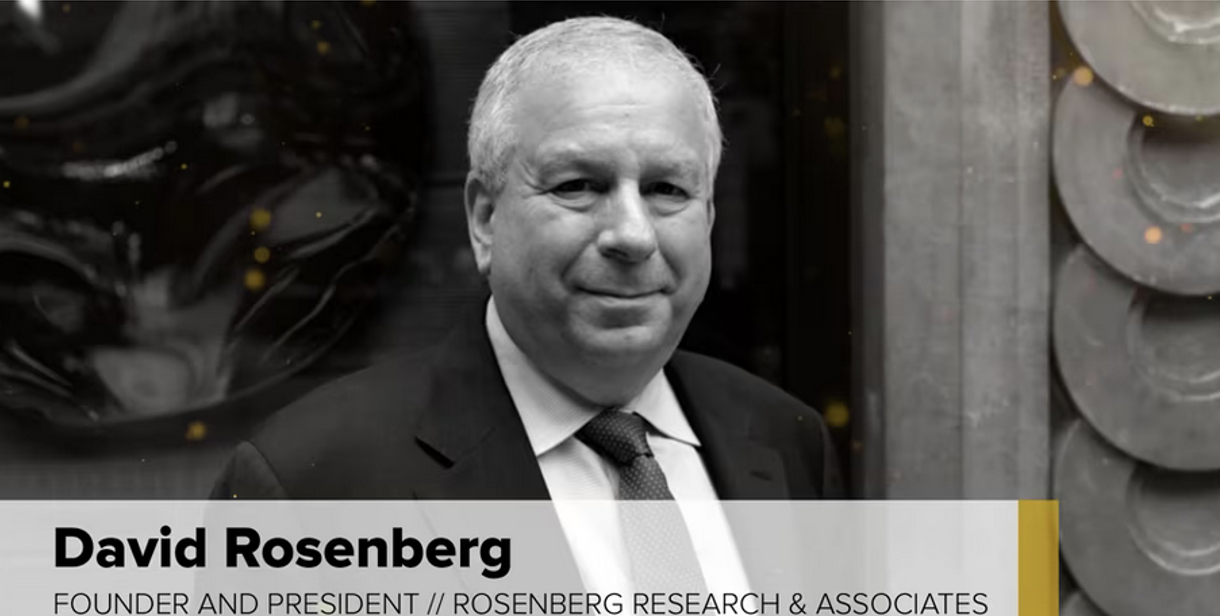
Don’t believe the economic consensus, according to David Rosenberg. A recession is much more likely than a soft landing, and investors should allocate to 10-year Treasury bonds instead of stocks.
The bad news is that most of us will need to work longer. The good news is that, if we do it right, most of us will want to.
Dollar strength resulting from central banks' independent policies on rate cuts is unlikely to be tampered by China's deflation or geopolitics.
Debt distress is rising fast, but restructuring is becoming more complex.
The dynamics of fiscal and monetary policy are now entering a new phase. Due to the emergence of negative Net National Saving (NNS), the law of diminishing returns can no longer fully capture the harmful effect of debt on economic growth.
Even if higher-for-longer interest rates are applying downward pressure on prices, bonds still look enticing.
Timing has never been a crucial undertaking for fixed income allocations dedicated to asset preservation largely because this is a long-term endeavor dedicated to keeping an investor’s wealth intact.
VettaFi’s Saleem Khan dives into their latest behavioral intelligence data, highlighting key investing trends among advisors. Strategas’ Chris Verrone explains their recently launched Macro Momentum ETF (SAMM) and offers perspective on the current macro environment.
Rising interest rates and the fear of giving back stock market gains are pushing pension fund managers to move capital from stocks to bonds.
Large international index funds do not account for geopolitical risk. Corruption has costs, and in this age of conflict with rising tensions in the Middle East, Russia, Ukraine and elsewhere, investors are faced with a daunting landscape while US markets are near highs. Should investors ride the momentum or transition and rotate to sectors that represent greater value and higher forward expected returns? The traditional international funds are attractively valued relative to the US but are fraught with risk. Today we will hear from Julie Cane and Chris Browne from Democracy Investments to discuss democracy as a factor in international investing.
Merger and acquisition (M&A) activity in the investment advisory space has been very active in recent years, and this, along with the increasing age of many firm founders, has prompted more than a few owners to explore the potential sale or merger of their firms.
Imagine you were running for king of the world on a platform of slashing economic growth by 20% forever. You’d be lucky to get your own family to vote for you. And yet humanity insists on running the global economy on fossil fuels that are doing exactly that sort of damage.
When the Federal Reserve flooded the economy with cash during the Covid-19 pandemic it exacerbated a problem for America’s largest banks: What to do with all the extra deposits.
The melding of yield and rate risk mitigation is available in the Vanguard Intermediate-Term Bond ETF (BIV).
What should financial advisors do to attract and retain high-net-worth and affluent investors? I have a one-word answer.
I have indicted the securities industry for spreading “a web of deceptions that have become conventional wisdom.” But a small part of the industry does provide products and services that are beneficial and necessary. That is the subject of this article.
Ongoing planning in retirement involves periodically assessing whether spending may be increased or must be decreased to remain on track.
Senior discounts aren't just about age; they're about a lifetime of work and contributions and a way of giving back to you. They also allow you to stretch your income and enjoy more experiences. You’ve earned the right to enjoy them.
Today, we look at the world of “alternative investing.” I put it in quotes because this was originally a somewhat pejorative term. Back in the 1960s (and maybe before?), brokers sold you stocks and bonds, saying that was how smart people invested
Our outlook on the 11 S&P 500 equity sectors.
The impact of high inflation on individuals’ finances is not something to take lightly, especially in the U.S., because for almost 40 years we have had no experience with such an event and have no clue how to deal with it or how to try to minimize its negative impact.
Educating workers about workplace benefits is vital to employee retention, according to findings from Franklin Templeton’s 2024 “Voice of the American Workplace” survey. Our Jacque Reardon shares findings from the survey related to what employees want—and how employers can meet these needs to benefit both parties.
Inflation concerns are top of mind again, with consumer prices and producer prices rising higher last week.
So far this year, the US equity market has shown remarkable resilience and US inflation has remained sticky. Against this backdrop, a recent survey of our chief investment officers offers analyses and perspectives on key areas, such as Federal Reserve rate cut expectations, geopolitical risks, uncertain corporate earnings and opportunities in different asset classes.