As long as ETFs stay true to their original mindset of solving investor problems, growth is the only path forward. Current product development suggests that’s the most likely case.
Guessing the direction of interest rates is no easier than any other tactical or market timing decision. The yield on the benchmark 10-year Treasury note is just under 3.9%. That is about 100 basis points less than it was a few months ago. Fed policy is uncertain, inflation has not been fully controlled, and fiscal deficits loom as a long-term risk for yields to go higher.
The TCW Group announced that two of its mutual funds have been converted into ETFs, offering focuses on growth and artificial intelligence.
VanEck’s Matthew Sigel discusses the upcoming SEC decision on their spot ether ETF filing, the debut of VanEck’s Bitcoin Trust (HODL), and the investment case for ether and bitcoin. K&L Gates’ Rich Kerr provides a unique legal perspective on the recent multi-share class structure filings, spot ether ETFs, and the UK government potentially granting equivalence to US-domiciled ETFs. VettaFi’s Todd Rosenbluth offers new polling data around the ongoing fixed income conundrum.
As of last week, the total return of the S&P 500 was even with 3-month Treasury bill returns since the valuation peak of January 2022, more than two years ago. In our view, investors continue to “grasp at the suds of yesterday’s bubble,” ignoring extreme valuations, lopsided bullish sentiment, emerging pressure on profit margins, economic conditions at the border of recession...
Over the last two weeks, the bullish sentiment index has reversed from extreme greed to fear. The composite net bullish sentiment index, comprised of professional and retail investors, fell from 38.15 to 9.9 in two weeks.
Bonds investors now balance the potential risks and rewards of taking on longer duration exposures in the current environment.
If you’re not sure what direct indexing means, you’re not alone. Even after the recent growth, direct indexing remains relatively unknown. As our compliance team never fails to remind us, you can’t invest directly in an index. So what exactly is direct indexing?
How momentum and election cycles may shift the impact and timing of seasonal trends.
I had the opportunity this week to speak at the London AIM Summit, where presenters and attendees were cautiously optimistic about the economy.
With yields at current levels, bond funds can lock in longer term yields, offer price appreciation potential and overall serve as a hedge against a possible hard landing. Though elevated cash balances worked during the Fed’s hiking cycle, we believe now is an opportunity for clients to consider adding duration given the potential for a Fed pause.
Our top five picks for events that have the potential to be market moving.
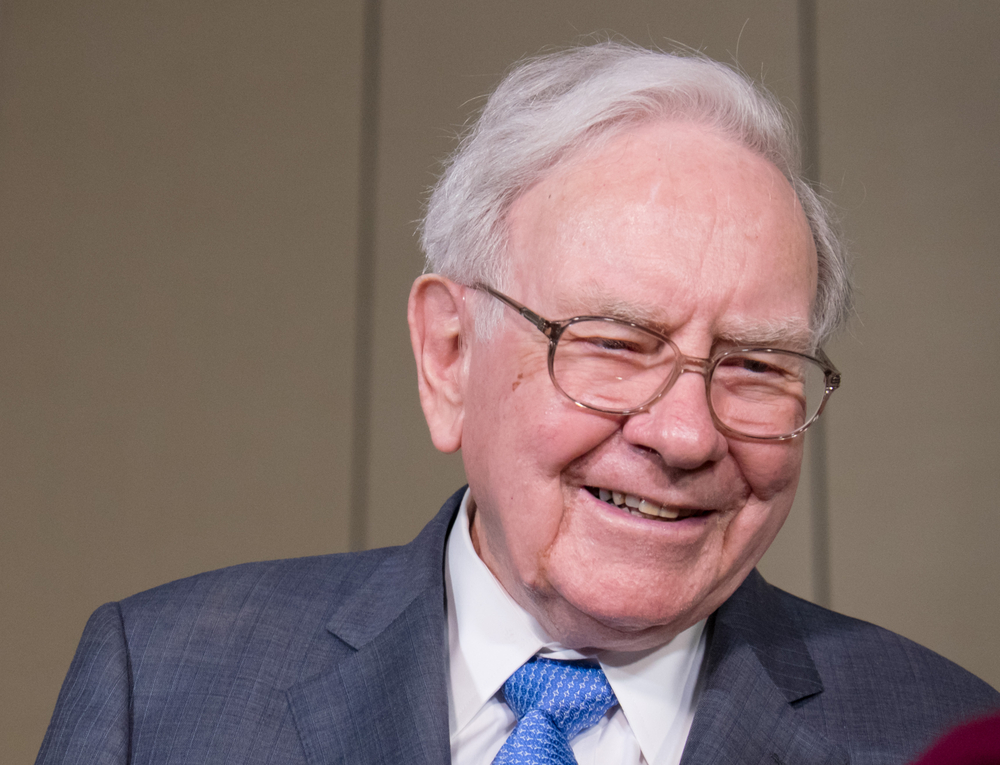
The most interesting thing about 1968-1969 was the agreement about the stock market future between the greatest growth investor at that time, T. Rowe Price, and the greatest value investor of all time, Warren Buffett.
Is this just a correction after a strong bullish advance from November, or is the bull market ending?
We believe high-yield munis carry additional risks, but are worth consideration by investors in higher tax brackets who are comfortable taking added risks.
Interpreting flows into ETFs and mutual funds sometimes feels an awful lot like reading tea leaves, but I love it.
Timing has never been a crucial undertaking for fixed income allocations dedicated to asset preservation largely because this is a long-term endeavor dedicated to keeping an investor’s wealth intact.
With the right tech in place, advisors can access reliable, high-quality models that can be used repeatedly across their book of business.
Today, we look at the world of “alternative investing.” I put it in quotes because this was originally a somewhat pejorative term. Back in the 1960s (and maybe before?), brokers sold you stocks and bonds, saying that was how smart people invested
Just as a GPS navigator analyzes real-time data to recalibrate routes efficiently, active management interprets market conditions to steer portfolios towards investment goals.
Japan has had two big moments in the last month, with the Nikkei 225 equity index breaking above the highs set in 1989, and the Bank of Japan (BoJ) raising interest rates for the first time in 17 years.
We have always maintained it is better to accept what the market has on offer than to stretch for returns. Thanks to the inverted yield curve and our flexible mandate, the current environment is making it easier than ever to be patient while we wait for fat pitches.
VettaFi’s Todd Rosenbluth and Kirsten Chang discuss year-to-date ETF flows, along with tackling the challenges presented by fixed income right now. etf.com’s Kristin Myers previews their upcoming 2024 industry awards ceremony and highlights several hot ETF topics.
While these tax-advantaged accounts are effective tools for meeting future education needs, a 2023 analysis found that overfunding a 529 plan can result in a large tax bill if money remains in the account after the beneficiary has graduated.
With an understanding of reversion to the mean, it is possible to contextualize market volatility for investors in a way that helps them view it more constructively.
The First Eagle Credit Opportunities Fund (FECRX) just reached its three-year anniversary. The fund offers advisors and their clients access to private credit and syndicated loans through an interval fund structure.
Why the current momentum trade, despite stretched valuations, could continue.
April 15 is undoubtedly one day that is not enthusiastically celebrated by most people. It is safe to say that the discomfort around Tax Day likely ranks right up there with your annual physical or renewing your driver’s license.
In the first quarter of 2024, fixed income investors turned to investment-grade corporate bond ETFs.
VettaFi’s Lara Crigger discusses Fidelity’s decision to charge a $100 trading fee on ETFs from issuers who won’t engage in “pay-to-play”. Lara also discusses Cboe’s recent SEC filing which seeks a rule change allowing fund companies to offer an ETF share class of existing mutual funds. Davis Advisors’ Chris Davis goes in-depth on the current stock market environment and the value of active management.
A favorite Mark Twain aphorism states, “It ain’t what you don’t know that gets you into trouble. It’s what you know for sure that just ain’t so.”
The easiest new client to get is the one that you don’t lose. Focusing on client retention is the key to the success of any business – whether you are an RIA or FA with 300 clients, or a mutual fund manager with 300,000 or three million shareholders. What are the lessons learned from past periods of stock and bond market stress applicable to client retention? How can regulators, watching the mutual fund industry and the advisory profession – so important to the national’s retirement savings – benefit from these lessons?
In 1983 Bonnie Tyler's ‘Total Eclipse of the Heart’ rocked the FM airwaves, reaching number 1 on the Billboard chart. My father, who couldn't get enough of the tune and played it over and over.
VettaFi’s Todd Rosenbluth walks through the latest advisor polling data from their recently held Equity Symposium, highlighting several equity ETF categories. Troop’s Felix Tabary explains how the firm is making it easier to build and apply custom proxy voting policies across portfolios. Alpha Architect’s Jess Bost offers her unique framework on model portfolio construction and selecting ETFs.
Implementing the TIPS ladder is clunky, so I challenged the fund industry to simplify and improve with a TIPS ladder Fund. Stone Ridge Asset Management has done just that with its new LifeX Inflation Protected mutual funds.
While most RIA firms employ funds and models when building client portfolios, a handful of wealth management and investment advisory firms utilize single-stock allocations.
Actively managed equity ETFs are gaining traction in 2024. Consider active management on small caps and their ETFs.
Morgan Stanley’s exchange-traded lineup now holds more than $1 billion thanks to the firm’s first-ever mutual-fund conversions.
Based on the valuation measures we find best-correlated with actual subsequent S&P 500 total returns across a century of market cycles, the stock market presently stands at valuation extremes matched only twice in U.S. financial history.
We will explore research concerning passive, covered call income strategies, give an overview of the derivative income category and due diligence considerations, and take a closer look at an ‘active-active’ approach deployed in a new ETF.
In the ever-evolving investment landscape, one thing has persisted for decades: the debate about the superiority of active or passive strategies.
VettaFi’s Lara Crigger parses through first quarter ETF flows, uncovering several interesting stories across stocks, bonds, and alternative assets. Dimensional’s Rob Harvey goes in-depth on the differences between a systematic active approach and traditional indexing.
While investing strategies should be consistent, changes in markets and the economy make some advice more relevant than it was in the past. Here are the top 10 things I’m telling clients.
One topic that does merit advisors and investors of all kinds to stop and learn, however, is the mutual fund to ETF conversion process. With ETFs, especially of the active variety, coming on so strong in the last year, it’s an important process to understand.
Since their inception, exchange traded funds (ETFs) continue to grow their market share and popularity with investors. The tax efficiency for which they are known comes down to three primary mechanisms from which the vehicle wrapper benefits.
Trading volumes for spot bitcoin ETFs have been the talk of the industry. David Mann, our Head of Global ETF Product and Capital Markets, offers his take on how best to evaluate the liquidity of these ETFs via his favorite NFL team.
With interest-rate cuts off the table for now, the US Federal Reserve will focus on a different topic at next week’s policy-making meeting: when and how to slow quantitative tightening, the process of reducing the vast securities portfolio amassed in previous efforts to support economic activity.
Among the larger ETF providers, few have product stability like Vanguard. When changes do occur, that’s worthy of celebration. Last week, some of Vanguard’s fixed income leadership was in New York to help close the stock market at the Nasdaq. VettaFi was honored to join them.
Good managers are drowning the superior performance potential of their best ideas in a sea of bad ones.
Forget the artificial-intelligence frenzy — the most-exciting trade on Wall Street right now might just be betting on boring.