Conference season brings about its own set of volatility catalysts. Portfolio managers and traders must keep their ears out for clues on the state of the broad economy, specific industries, and individual companies.
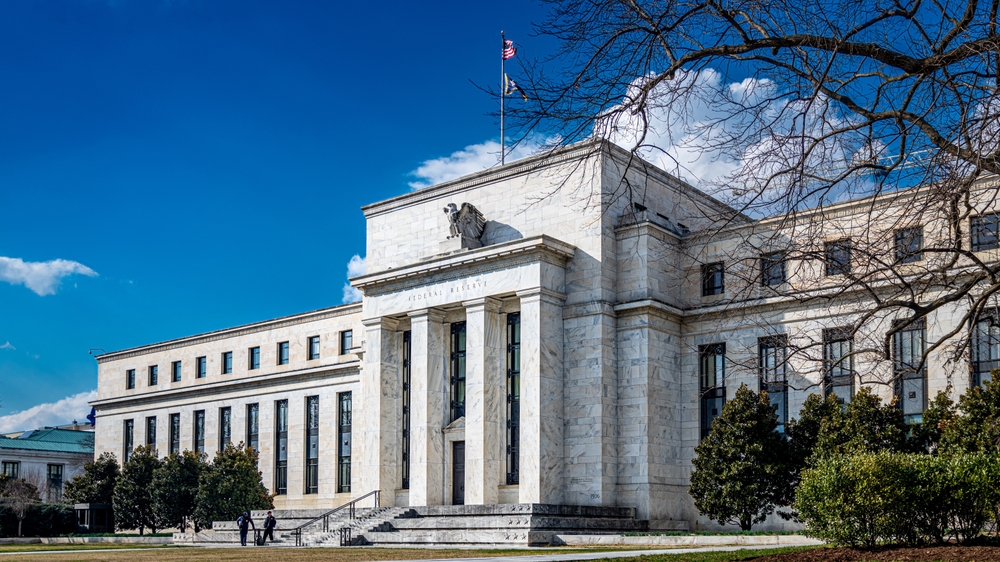
The Fed enacted a 0.50% interest rate cut, the first in the Fed’s historic fight against inflation that’s lasted over two years.
Most American couples say they trust their partner regarding financial matters, but many reveal they aren’t necessarily in full agreement.
As the back-to-school season fills your social media feed with first-day photos and ads for the latest school supplies, it is also a prime opportunity for financial advisors to reconnect with clients about their education savings plans.
Policymakers indicated that more interest rate cuts were likely in coming months.
Doug Drabik discusses fixed income market conditions and offers insight for bond investors.
With the Fed nearing its first interest rate cut since 2020, enthusiasm for fixed income assets is increasing. Enter the ALPS Intermediate Municipal Bond ETF.
The Federal Reserve’s looming rate cuts are fueling a rally in the riskiest corner of the US corporate bond market, but some investors are concerned the party may not last.
Munis cemented their best “summer” since 2010 after another month of strong performance. Some near-term caution is warranted given that September has been historically challenging. Robust issuance ahead of the election should provide opportunities in the primary market.
The $8 trillion mortgage market can trigger big swings across fixed income when the Federal Reserve shifts interest rates, but investors say this time is different.
History suggests Presidential elections are not nearly as important to the financial markets as the media plays them up to be, and a focus on fundamentals rather than political slogans has generally been beneficial. Historical asset class and sector performance shows virtually no consistent performance pattern under Democratic or Republican Presidents.
Panic is never a good investment strategy—nor is greed. Here's how disciplined investing helps navigate through volatile environments.
The August jobs report highlighted a critical reality: the labor market is cooling off. While the headline figures seemed decent, the underlying data reveals clear warning signs that worker demand is slowing.
The yield curve measures the difference between short-term, intermediate-term, and long-term Treasury yields.
Active fixed income ETFs have taken a big leap this year per new research about active ETFs that may draw new investor eyes.
The term “Complexity Curve” refers to the growing intricacies that come with managing the wealth of high-net-worth individuals. As their assets grow, so do the complexities of their financial portfolios. This includes everything from business ownership and large qualified plans to complex estate planning issues.
Christine Benz is Morningstar’s director of personal finance and retirement planning, but she’s written a book that evokes Viktor Frankl as much as Bill Sharpe, aiming to go well beyond the mathematics of saving for, and living in, retirement.
Investors piled money into exchange-traded funds that buy emerging-market bonds on Friday amid optimism that developing-nation debt will get a boost from a highly anticipated Federal Reserve rate cut this week.
The Federal Reserve is widely expected to begin cutting interest rates at its September meeting. Market performance may depend on whether the pace of cuts is fast or slow.
The Federal Reserve (Fed), and markets, overreacted to the slightly higher inflation seen during the first quarter of the year. After that scare, the Fed went from expecting three cuts in the federal funds rate in 2024 to just one cut during its June dot plot release.
How rapidly should the Fed cut rates?
You don’t have to read or listen for long these days before you hear a politician, pundit, or politically-inclined person say: “Government spending causes inflation.”
The longest continuous yield curve inversion has finally come to an end. Or has it? The answer depends on how you measure it.
The time has come! After the most aggressive tightening cycle in modern history, the Fed is ready to turn the page and begin dialing back its policy restraint after the second longest ‘on hold’ period (14 months) in history. Barring any surprises, the Fed should lower interest rates at its meeting next week—the first rate cut in over four years—in the hopes of preserving a soft landing for the economy.
Investors are adding to their fixed income exposure as imminent interest rate cuts create opportunities, according to Emmanuel Roman, chief executive officer of Pacific Investment Management Co.
With tax-loss harvesting season on the horizon, investors may want to consider a pair of tax-conscious, active fixed income ETFs.
The S&P 500 index is a critical benchmark for the U.S. equity market, and its performance often dictates investor sentiment and decision-making. Between November 1, 2022, and September 6, 2024, the S&P 500 experienced a significant rally but not without volatility. Currently, investors have very mixed views about where markets are heading next as concerns of a recession linger or what changes to monetary policy will cause.
In my cycles book I’m reviewing the forecasts of Neil Howe, Peter Turchin, George Friedman, and Ray Dalio. For different historical reasons and patterns, all see a crisis culminating at the end of this decade. Some readers have legitimately pushed back, saying no one knows the future.
As we move into the final stretch of 2024, many investors may be asking themselves: Is it time to give airline stocks another look? According to a new report from Bank of America (BofA), the answer might very well be yes
States enter fiscal 2025 maintaining stable reserves and moderating fixed costs, yet we expect many will need to make modest spending cuts due to exhaustion of federal pandemic aid.
Due to balance sheet concerns, the higher-for-longer interest rate environment has been a significant headwind for the relative performance of U.S. small-cap equities.
Certificates of deposit (CDs) and Treasuries both can offer steady, predictable investment income—but how to decide between them? Here are five factors to help you choose.
How are bull and bear markets defined and how should you approach them as an investor?
Investors are using their massive cash piles to lock in attractive yields in global bond markets, helping to limit losses in the asset class, according to Mohamed El-Erian.
While the pace of Federal Reserve cuts is in question, all roads lead to lower interest rates.
Balanced risks to inflation and employment indicate it’s time for the Fed to normalize interest rates, enhancing a positive backdrop for bonds.
Nvidia’s strong earnings exceeded expectations, but the stock fell as investors recalibrated their expectations given its high valuation.
As we approach the end of 2024, the latest Consumer Price Index (CPI) report from the Bureau of Labor Statistics (BLS) has provided us with critical insights into the health of the U.S. economy, particularly concerning inflation.
Passive fixed income index investing has evolved significantly over the previous decade, offering investors the flexibility to align risk requirements and investment goals. Learn more from our experts.
Recent Fed commentary and economic data have crystallized investor confidence in rate cuts coming in less than a week
All signs point to a tough few months ahead for investors charting the dollar’s path, after the US presidential debate and a key inflation reading left markets anticipating heightened volatility through year-end.
Fed officials must recalibrate their policy stance to ensure the economy stays on solid footing to achieve that elusive soft landing they have been aiming for after their quest to quash inflation.
Regardless of which administration takes power after an election, a balanced portfolio has made strong gains in the years immediately after.
Post-Jackson Hole and now post-jobs report, the markets can settle in for a rate cut at next week’s FOMC meeting.
Determining the age when retirement account owners need to begin taking distributions is key for heirs to understand how to implement the 10-year rule for inherited accounts. Bill Cass explains what beneficiaries need to know.
History typically shows that election years don't produce major volatility swings in the municipal bond market.
Here’s a quote attributed to P. J. O’Rourke, an American author, journalist and political satirist: “There is a simple rule here, a rule of legislation, a rule of business, a rule of life: beyond a certain point, complexity is fraud.”
Banks and shadow banks are meant to exist in separate worlds, but the financial links between them are increasingly seen as a source of potential instability. That’s a problem for banks because the business of forging those ties has lately been among the hottest activities on Wall Street.
US Treasuries rallied ahead of a closely watched inflation reading that could cement bets on the size of the Federal Reserve’s interest-rate cut this month.
Investors may find themselves prognosticating about future rates relative to current rates in an attempt to optimize their portfolio.