Several policy-related risks loom in September and October that may lead to an increase in market volatility. The debt ceiling needs to be raised (likely by mid-October), the government needs to be funded to avoid a shutdown by the end of September...
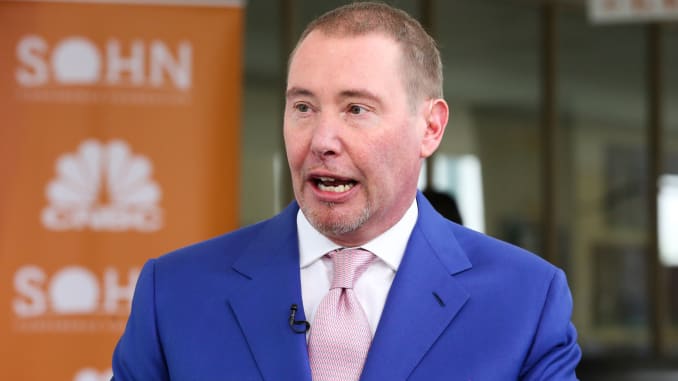
Jeffrey Gundlach’s highest conviction investment idea is that the dollar will head lower over the long term. That will lead to a strong rally in emerging equities, and they will outperform U.S. stocks.
After vaulting up the ranks of the U.S. exchange-traded fund leaderboard, Ark Investment Management is starting to slip.
Real interest rates on Treasuries have been strongly negative throughout 2021. But why do investors keep piling into these negative “real” yielding assets? BlackRock’s systematic investment experts decode the markets to reveal why rates are so disconnected from fundamental values and what it means for your bond portfolio.
With real rates trading below zero right now, many yield-starved investors are being forced into riskier and riskier assets, including high-yield junk bonds. But even these are no longer offering a positive real return, what with inflation at multiyear highs.
How do you choose between corporate and municipal bonds? Both have characteristics that can be useful in your portfolio, depending on your goals and circumstances, but they’re not right for every situation.
In addition to football, this fall will be eventful for our team of monetary policymakers at the Federal Reserve. Quarterbacked by Chairman Powell, the Fed will draft its route to easing its accommodative stance now that the economic recovery has put some points on the scoreboard.
Our high yield corporate credit team has been monitoring how inflation is impacting various market sectors, with an eye on four factors: input cost inflation, pricing power, impact to earnings and repricing vulnerability.
Gold. What’s wrong with it? From spiking inflation, falling real interest rates, and massive money printing, it seems logical that gold, a touted inflation hedge, should be rising. Yet, so far this year, gold has done little.
U.S. equity markets continued to rally in August, with all three major indices setting new record highs during the month. We did see some midmonth volatility, but the Dow Jones Industrial Average gained 1.50 percent, while the S&P 500 experienced a 3.04 percent gain.
So much of life is managing risk. That’s true on a micro, personal-level scale as well as a macro, country-level scale. Crises often can’t be prevented. It’s how you deal with them that makes all the difference.
U.S. Treasuries ended their 4-month streak of positive returns and falling yields in August. Intermediate maturity yields rose more than shorter and longer maturities, as the market began to see through the impact of the Delta variant and focus more on the Federal Reserve’s plan to scale back their bond buying program.
Now that the dollar is near the year’s highs, can the rally continue? We believe it can in the near term, although our longer-term view is more nuanced. Here’s what we see ahead.
We stay tactically overweight European equities with two key events on the horizon: a European Central Bank (ECB) meeting and the German election.
The 10-year Treasury yield finished 2020 at 0.917% and then climbed to 1.765% before topping on March 30. The 30-year Treasury yield rose to 2.505% on March 18 after ending 2020 at 1.646%. In the January 11 Weekly Technical Review (WTR) I noted that Treasury yields had broken out to the upside and that the 10-year Treasury yield would likely climb to 1.75% to 1.95% in 2021. “Treasury yields broke out on January 6 as expectations of more fiscal stimulus and technical selling kicked into gear. At some point in 2021, the 10-year Treasury yield could spike up to 1.75% to 1.95%.”
Uncertainty always exists in financial markets.
Household savings and central bank policies have reduced the need for credit.
The First Eagle Credit Opportunities Fund (FECRX) takes an intensive, research-driven approach to income-oriented opportunities available across the alternative credit spectrum—including both private and public investments—in an effort to deliver current income while providing long-term risk-adjusted returns through a focus on senior-secured assets. I spoke with its managers, Andrew Park and Christian Champ.
Social Security is in worse shape than we thought. The program’s trust fund is now expected to be insolvent by 2033, a year earlier than anticipated. According to the annual report, its finances have been “significantly affected” by the pandemic and 2020 recession, not to mention “rapid population aging.”
Mark Mobius, the legendary emerging markets investor, says that 10% of investors’ portfolios should be in gold in anticipation of currency devaluation as a result of unprecedented stimulus measures.
A properly diversified credit portfolio should have exposure to both high-yield corporate bonds and bank loans.
After several strong quarters for value stocks, the last few months have seen a sharp reversal in favor of growth.
I’m finding that expressing an opinion or telling a joke in public company these days is most dangerous to one’s reputation, not that my past dustup with a Laguna Beach neighbor over Gilligan’s Island or planting a stink bomb going out the door in my ex-wife’s toilet haven’t sealed the deal for me already.
A busy summer on the fiscal front in Washington that’s seen progress on budget and infrastructure legislation could soon give way to another showdown over the U.S. statutory debt ceiling, potentially signaling volatility for investors in the months ahead.
“Pet Rocks” first appeared in the mid-70s as a novelty item. Just recently, digital NFT’s of “pet rocks” sold for over $100,000.
The country sits atop what could be one of the world’s largest reserves of various metals and minerals, including not just gold but also platinum, silver, copper, iron, aluminum and uranium. It’s believed to have so much lithium, an increasingly important metal that’s widely used in battery technology, that Afghanistan could one day be known as the “Saudi Arabia of lithium,” according to a 2010 memo by the U.S. Department of Defense.
Several potentially big storms are brewing. They could be minor annoyances or catastrophic disasters, or anywhere in between. I truly hope they all resolve with minimal fuss. But they may not. They could even combine into a perfect storm of even greater magnitude… so now is the time to prepare.
During a trying time for the world in 1939, Winston Churchill famously described the largest country in the world and soon-to-be second superpower, the Soviet Union, as “a riddle wrapped in a mystery inside an enigma.”
Want to know where the world’s biggest technology stocks are heading? Just watch one of the oldest measures there is: the bond market.
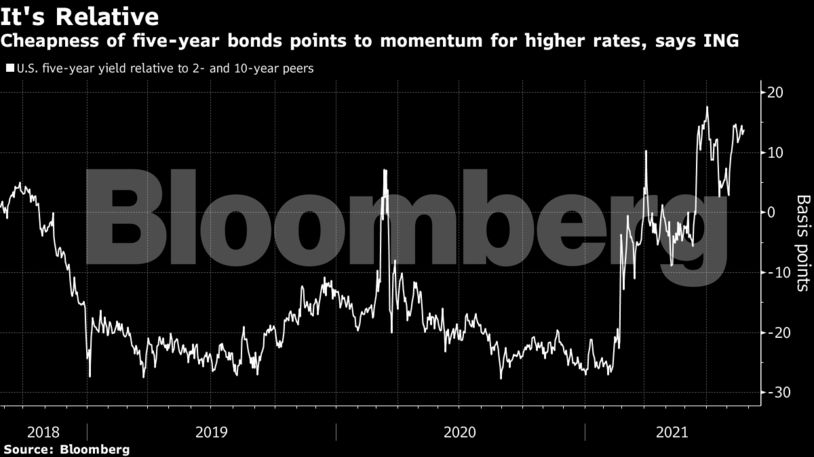
Signs are growing that U.S. Treasury yields may continue to march higher even if Federal Reserve Chair Jerome Powell strikes a balanced tone at Jackson Hole this week.
There are many potential advantages to investing in tax-exempt municipal bonds, but not all advisors are aware of additional strategies and investment vehicles that can help them meet muni-focused client needs.
This year’s annual economic policy symposium in Jackson Hole opens the six months that will likely define the legacy of the Powell Fed’s first term.
There is at least a 50/50 chance that headline CPI inflation will exceed 5% for all of 2021, according to Jeffrey Gundlach.
One theme we have focused on in these letters over the past three years is what a transition into a regime of negative real interest rates looks and feels like, and the long-term consequences such a regime brings for the markets, and for investors.
Just when everyone thought we had COVID-19 whipped, the delta variant came along and US cases inflected higher.
So many headlines right now are instilling FUD in investors’ minds, which stands for Fear, Uncertainty and Doubt—from the Afghanistan news to fears on cryptocurrency and the delta variant disrupting travel plans. But don’t fall for it.
Vaccines have been nothing short of a miracle; however, too many have been opting to not get them, endangering themselves and others, despite overwhelming evidence of the pro versus con.
Ed Perks, CIO of Franklin Templeton Investment Solutions, outlines what factors should likely support economic growth, how he views inflation, why US equities remain attractive, and where income-seeking investors should look for potential opportunities.
The question I get most often is “when is the next bear market?” There are three specific items that tend to predict bear markets and recessions with some accuracy.
The resurgent virus should keep a lid on Treasury Yields.
As equity style winds shift, investors are still debating the merits of growth versus value stocks.
Style boxes and other constructs of the investment industry are meaningless when it comes to portfolio theory, according to financial economist John Cochrane. Instead, investors should focus on cash flows and market equilibrium.
As I discussed in a Frank Talk this week, the Senate just approved a $1 trillion infrastructure bill that’s now the business of the House.
With this video I am presenting 20 A rated or better attractively valued dividend growth stocks with low debt and above-market yields.
My colleague Sam Millette, manager, fixed income, on Commonwealth’s Investment Management and Research team, has helped me put together this month’s Market Risk Update.
The recovery has had its ups and downs, but the economy is moving in the right direction.
As the Federal Reserve transitions from merely talking about tapering its bond holdings to actually tapering, investors may be left wondering what it might mean for the markets and their portfolios.
Although the prospect of the Federal Reserve tapering its bond purchases has unsettled markets in the past, we expect it to be more orderly this time around.
Key drivers behind the recent selloff in SPACs, and the market outlook going forward.
Longer term Treasury yields fell for a fourth consecutive month in July, as concerns around the resurgence of coronavirus weighed on forecasts for continued economic growth. Agency MBS underperformed investment grade corporates and Treasuries. While some inflation metrics set generational highs, and other economic data indicated a continued recovery, investors were focused on the potential impact of viral spread.