The uncertainty around US tariff policy has significantly increased US equity volatility.
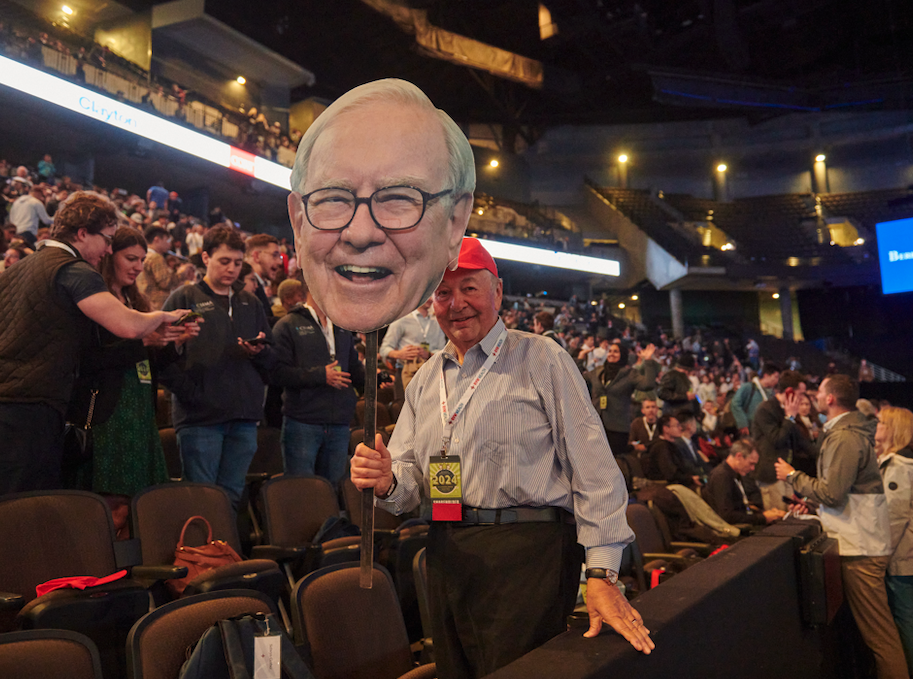
A key valuation metric touted by legendary investor Warren Buffett is signaling that equities are relatively cheap, bolstering the case that the sizzling rebound in US stocks has room to run.
US markets struggled in the first half of April due to tariff-related worries. The second half saw rallies amid policy reversal.
Understanding and integrating resilience into investment strategies is not just prudent, it is critical for navigating the complexities of the current market landscape. In this article, I lay out seven key principles towards building resilient portfolios.
In investing, success is often judged by numbers—returns on investment, percentage gains, and the ability to outperform benchmarks like the S&P 500. However, some investors frequently pursue a peculiar set of “awards” without realizing the pitfalls they embody.
Economic data can be soft or hard. “Soft” data reflects attitudes, expectations, opinions, and feelings. It’s a step removed from the “hard” data reflecting actual events. Soft data is still valuable because future expectations shape the hard data that follows.
US stock futures rose Friday, putting the S&P 500 Index on track to post the longest winning streak in more than 20 years after a government report showed buoyant hiring in April, providing evidence of resilience in an economy beset by trade pressures.
Uncertainty reigned through April and likely will continue to do so, at least in the near term. Markets have reacted, both negatively and positively, to every headline coming out of Washington.
A massive budget bill of tax and spending cuts, as well as a debt ceiling debate loom as Congress returns from its Easter recess.
President Donald Trump’s recent executive order revives many of the SDI’s ambitions, albeit with a modern twist. His January 27 directive launched what he first called an “Iron Dome for America,” later rebranded as the “Golden Dome.”
Unexpected wider and larger-scope tariff announcements have sent tremors through bond and equity markets, resulting in a brisk sell-off that signals investors’ caution.
Five pivotal U.S. economic considerations, including tariffs, monetary policy, fiscal policy, debt overhang, and demographics, are aligning to depress economic growth for the balance of this year and into 2026.
A historic sell-off enhances value, with high yields, strong fundamentals, and ample reserves mitigating policy risks.
As chief investment officer of Yale University for more than three decades, David Swensen redefined institutional investing.
President Trump has been a vocal admirer of China’s Great Wall, built by the country’s emperors to protect their territory from outside aggression. In his first term, he compared his plan to build a border wall with that historic structure.
While gold has offered some protection during stock market downturns by either rising or declining by less than equities, its current high price levels and historical patterns suggest that future returns may be limited.
Inflation risk has been a significant topic of discussion in the mainstream media for the last few years.
In nominal terms, the yellow metal set multiple new all-time highs this week, exceeding $3,300 an ounce for the first time ever on Wednesday. And on an inflation-adjusted basis, gold also notched a new record price, surpassing the longstanding record set in 1980.
The first quarter of 2025 marked a significant departure from the preceding two years, which had been characterized by an improving global economy and correspondingly positive market returns. Market performance in Q1 was dominated by abrupt, short-term policy shifts rather than longer-term economic trends, and tariffs became the foremost concern for market participants.
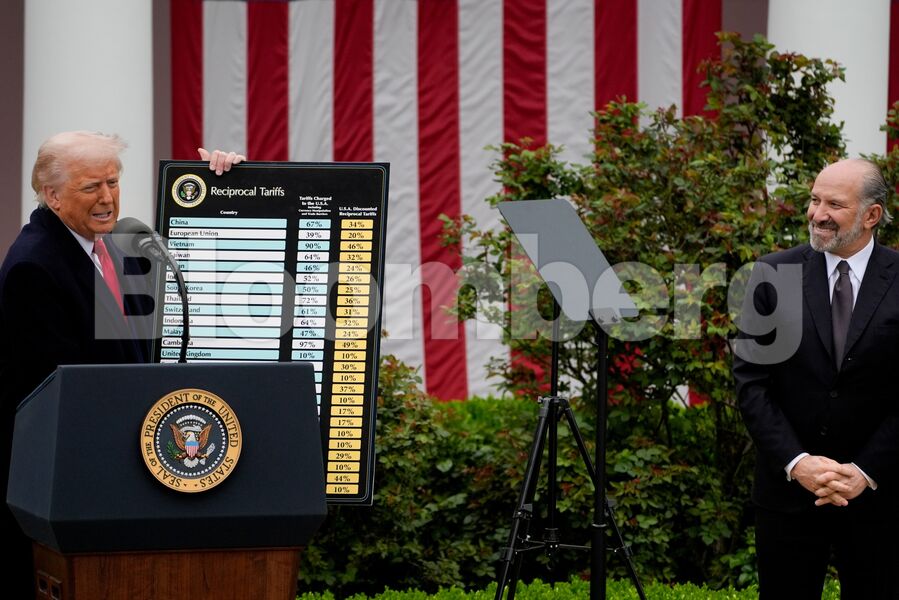
One of the most volatile market weeks in years was sparked by tariff announcements earlier this month. President Donald Trump's 10% universal tariff went into effect on April 5th, followed by his controversial reciprocal tariffs on April 9th.
In this article, we examine everything from the yield curve to CAPE ratios to gain a sense of where we are, and where we might be headed next.
The American consumer is tapped out. The savings buffer is gone, wage growth is declining, and credit costs are rising. Corporate America is already adjusting to this new reality, with companies issuing cautious guidance for 2025.
President Donald Trump pledged he will still apply tariffs to phones, computers and popular consumer electronics, downplaying a weekend exemption as a procedural step in his overall push to remake US trade.
Getting into Donald Trump’s head is no easy task. And to the extent his economic intentions are decipherable and coherent, can Trump impose his economic will on other countries? As tariffs go into place, albeit with a partial pause, that remains to be seen.
On 2 April, the Trump administration announced sweeping tariffs that were more aggressive than many had expected. Then on 9 April, the administration announced a 90-day pause on most of the new country-specific “reciprocal tariffs.”
With the financial markets still wrestling with the tariff announcements from last week, one thing is still certain: uncertainty remains an integral part of the investment landscape.
Members of Congress from both parties were among the many caught off guard by last week's Rose Garden tariff announcement.
Callable bonds make up a large share of the bond market—and introduce one more variable into the bond-investing process.
While the path may have twists and turns, the destination seems clear; higher U.S. tariffs.
Global markets are in freefall in response to President Donald Trump’s universal 10% tariff on all goods being imported into the U.S., with as many as 60 countries facing “reciprocal” tariffs on top of that.
The early days of the Trump administration have brought sweeping tariff announcements. While the situation is fluid, the direction is clear: trade restrictions are likely to increase, with China as a primary target.
By sparing Mexico and Canada from his reciprocal tariffs on Wednesday, US President Donald Trump has kept the pact known as USMCA on life support. That’s no small feat given the animosity shown by the US government toward its neighbors in the past weeks.
The stock market faces severe downside risk ahead, and the U.S. is constrained in the unsystematic monetary and fiscal expansion that both amplified that bubble and fueled record but wholly impermanent corporate profit margins. Meanwhile, the U.S. economy now faces an imminent recession, and if we fail to be vigilant, we, once united Americans, risk losing what is far greater and more valuable than money.
The combination of slowing economic growth and stubborn inflation, combined with uncertainty about U.S. tariff policy, is keeping investors cautious.
To summarize the market action of March of 2025: U.S. stocks (SPX) did poorly, international stocks (especially Europe, VGK) did well in dollar terms, and gold (IAU) did spectacularly well. The main culprit appears to market concerns about the Trump administration’s tariff policies.
The absolute best time to start investing would be the day you turned 18 and could legally open a brokerage account.
Market volatility is likely to rise as investors digest the president's plans.
In recent weeks, market volatility has surged, driven by uncertainty surrounding the growth picture and Washington's economic policy
Since mid-January, a new political regime in Washington has shaken the geopolitical landscape and global markets. In this volatile environment, bonds have performed well, resuming their traditional role as ballast against falling stock prices and attracting strong demand from investors.
Amid a market correction and heightened policy, inflation and growth concerns, valuations are back in the spotlight.
The substantial shift in U.S. trade policy will put a significant dent in growth in major markets.
Longtime Investor Alert readers have often seen me say that government policy is a precursor to change. What this means is that, when policymakers act—whether through subsidies, sanctions, tariffs or regulations—markets can sometimes respond swiftly and dramatically. We’re seeing that play out right now in real time, especially in the copper market.
Long-maturity Treasury yields reached the highest levels in a month Thursday as investors demand compensation for the risk that tariffs will spur US inflation.
As the first quarter comes to a close, there is one word that has become the new go-to term to describe the investment backdrop: uncertainty.
For taxable investors with sizable gains in their brokerage accounts, the decision when to realize that capital gain is intensely personal—depending of course on individual circumstances, while also factoring in market return expectations and the prevailing tax structure.
Despite NVIDIA’s stock flashing a bearish “death cross”—its 50-day moving average slipped below the 200-day moving average for the first time since January 2023—the energy at the conference was electrifying. Every major industry was represented, from health care to defense, signaling that artificial intelligence (AI) is expanding at a white-knuckle clip.
In this week’s edition, we shift our focus to another critical segment of the ABS market: those tied to consumer loans, such as credit cards and auto loans.
Bond investors will look for Federal Reserve Chair Jerome Powell to hit just the right notes in his Wednesday remarks to keep up the momentum behind a rally in the $29 trillion Treasury market.
With market uncertainty abound in today's macro and geopolitical climate, Berkshire Hathaway hasn't been immune to the volatility.
The recent sell-off has certainly sparked concerns with investors but the NYSE advance-decline line is an important technical measure to watch. However, what is it, and why does it matter?