Whenever political questions arise, we always encourage a broader view: politicians don’t control the economy, and policy changes rarely move markets. But the past month has raised serious questions over that assertion.
Emerging markets offer the potential for long-term diversified investment returns but they can endure challenging periods of volatility and uncertainty. Head of Portfolio Strategy David Dali maps out the issues to consider when constructing and managing a portfolio for emerging markets.
Quantitative easing has created serious inflation threats. The only way out is to increase tax receipts and reduce government spending, neither of which is in the Fed’s purview. Otherwise, serious inflation lies ahead, regardless of Fed actions.
This week, and according to many, Federal Reserve (Fed) officials jumped onto the uncertainty bandwagon, along with consumers and businesses, waiting for more policy clarity from the Trump administration – and who could blame them with policies in daily flux?
US economic data are diverging wildly, fueling a debate over whether rising anxiety from President Donald Trump’s trade policies will push a moderating economy into a serious downturn.
The theme among so many writers seems to be “vibe shift.” And indeed, there is a concern the economy is slowing and may even be in a recession.
Despite NVIDIA’s stock flashing a bearish “death cross”—its 50-day moving average slipped below the 200-day moving average for the first time since January 2023—the energy at the conference was electrifying. Every major industry was represented, from health care to defense, signaling that artificial intelligence (AI) is expanding at a white-knuckle clip.
Last week's economic landscape was marked by pockets of resilience amid growing concerns and heightened uncertainty. Retail sales offered a mixed bag.
Investment-grade floating-rate notes prices tend to be more stable than their fixed-rate counterparts, so they may be worth considering during periods of volatility.
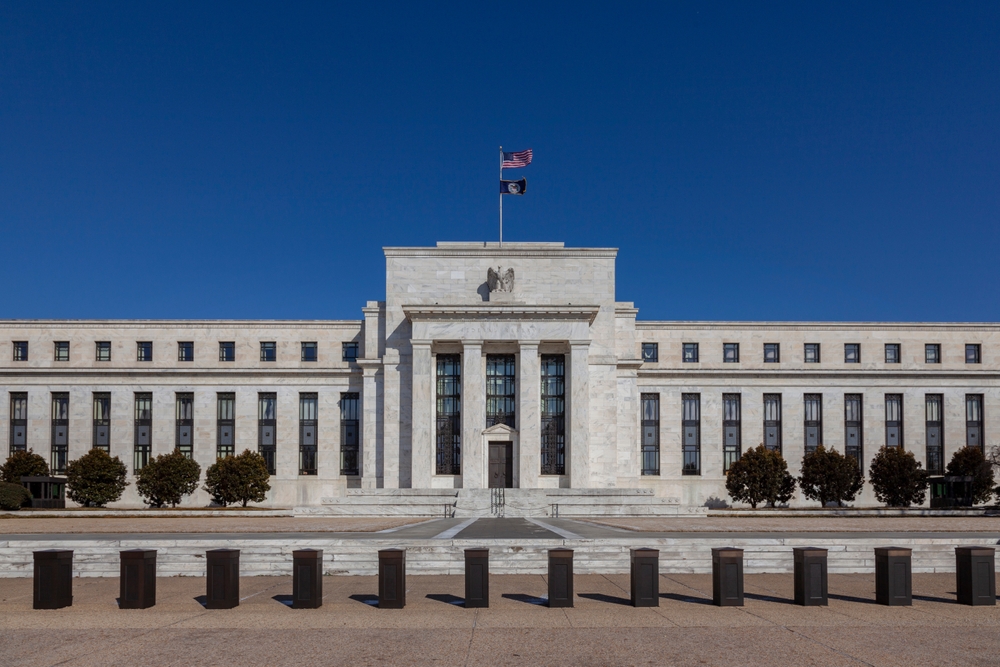
At their March meeting, Federal Reserve officials left the policy rate unchanged at 4.25%–4.5% and signaled further patience on rate cuts as they navigate greater uncertainty about the economic outlook.
The equity market tends to see a correction every 18 months. If it's not a recession-induced bear market, it may be a buying opportunity.
For the second meeting in a row, the Federal Open Market Committee (FOMC) decided to keep rates unchanged, leaving the Fed Funds trading range at 4.25%–4.50%.
On the latest edition of Market Week in Review, Director and Global Head of Solutions Strategy, Van Luu, discussed the latest rate decisions from key central banks. He also talked about fiscal reform in Germany and reviewed recent U.S. market performance.
US Treasuries consolidated gains in a choppy trading session with markets remaining confident that policymakers at the Federal Reserve are still on a path toward lower interest rates.
The Federal Reserve’s decision to leave interest rates unchanged was right — but easy to misinterpret.
The US stock market is on edge. The S&P 500’s recent 10% correction has investors worried, though a highly uncertain policy environment and an unusually top-heavy market obscure just what is spooking stocks.
he central bank made a technical move on the balance sheet, reducing the pace of permitted runoff in its Treasury holdings from $25 to $5 billion per month.
The Fed held the federal funds rate steady and signaled two rate cuts this year, despite expecting inflation to remain elevated.
With only eight trading days left in the first quarter, M&A announcements are set to come in at their lowest level since Q2 2020.
Despite the increase in policy uncertainty, the Federal Reserve held its forecast steady at the March FOMC meeting with two rate cuts projected in 2025.
The Federal Reserve held rates steady today, but downgraded the outlook for economic growth in the year ahead. Policy changes in Washington, looming tariffs, and a cautious consumer have made “uncertainty” the new favorite word in the Fed’s vocabulary.
On the predictable side, the Fed kept policy rates in a range of 4.25%-4.5%, and the rate-setting committee pledged to slow the pace at which it’s allowing securities to roll off its balance sheet.
In the understatement of 2025 thus far, the headlines emanating from Washington, D.C., have been fast and furious. Whether they be tariff-related, involving federal government cuts or geopolitical in nature, there has been a headline for many facets that investors could think of.
Recession fears have risen sharply of late as economic soft data have rolled over, upping the risk that hard data start to catch down.
European equities have started 2025 on a positive note. Several factors could help support the market overcome challenging conditions.
Since our last update of our ‘Three Tactical Rules’ on February 4, equity markets have been under pressure as the S&P 500 has retraced more than 23% of the rally that started October 2023.
Bond investors will look for Federal Reserve Chair Jerome Powell to hit just the right notes in his Wednesday remarks to keep up the momentum behind a rally in the $29 trillion Treasury market.
Two Sessions, or Lianghui, is the popular name for the annual meeting of China’s top legislative and consultative bodies. These gatherings are closely watched by overseas observers as they provide key insight into China’s political landscape, economic priorities and overall policy direction.
As of the end of trading on Thursday, March 13, the S&P 500 closed down 10 percent from its all-time high, marking an official correction. It was the first correction since October 2023—17 months ago.
One of the textbook drivers of alpha is an information edge. Having more information, advanced ways to use that information, and the ability to react to it before anyone else has been a massive advantage throughout the history of markets.
What does a "correction" mean, what's likely to happen next, and what can investors do now?
A time-honored belief holds that inflation is bad for stocks, but recent developments may be challenging this view.
The U.S. housing market has been a critical factor in the broader economic landscape, and its trends have profound implications.
Although annuities can offer a guaranteed income stream in retirement, they come with significant risks and complexities. It's essential to thoroughly understand these products and consider whether they align with your financial goals and risk tolerance.
For years, Federal Reserve meetings have been the main event on Wall Street as the central bank fought to contain runaway inflation.
There’s nothing like a good sale to get people excited—unless that sale happens in the stock market. Instead of celebrating a chance to buy at a discount, investors panic, dump stocks, and brace for economic doom.
Last week’s economic data was plagued by uncertainty. A brief respite in inflation pressures was overshadowed by sentiment concerns.
On the latest edition of Market Week in Review, Director and Senior Investment Strategist Alex Cousley discussed recent developments in the trade war and the impact on markets. He also dug into the latest U.S. economic data and provided an update on investor sentiment.
Keep calm and carry on. Recent weeks have seen financial markets rattled by swirling news headlines, tariff whiplash, and rising economic uncertainty.
Unpredictable U.S. tariff policy has heightened concerns about a potential U.S. economic recession.
This morning’s retail sales report is a bit of relief. The economy, as of the end February, is not in free fall as the control group increase of 1.0% offset the same decline in January. Nevertheless, the underlying concerns that emerged over the last few days cannot be ignored.
One of the biggest challenges investors face today is navigating the most concentrated U.S. stock market in history, where the largest stocks represent a record share of total market value.
Prices can continue to rise, until they don’t. Have we reached the point where they don’t?
Industry luminary Tom Lydon provides his unique perspective on the current ETF landscape. VettaFi’s Cinthia Murphy highlights five ETF categories that might benefit from the recent market turmoil.
Markets have been overwhelmed lately by the administration’s fast-paced and, many times, highly uncertain tariff measures.
Disappointing retail sales last month added to concerns of a pullback in consumer spending in the US, while a pair of business surveys suggested growing caution.
Gen Z is right to have negative feelings about the economy. Not only were its oldest members entering the workforce as the pandemic struck, but those in their early to mid-20s are also now bearing the brunt of a labor market that’s largely been frozen in place for the past two years.
The tendency of stocks to produce all their gains at night, when markets are closed, and systematically lose money during the daylight hours, has baffled researchers for four decades and potentially put retail investors at a disadvantage.
Understanding actual inflation – instead of what the media’s narrative tells you it should be – is critical to your investment planning. It is one thing for a pundit to say this or that, but it is another to look at the actual data for yourself.
Recent economic data has been all over the map. Consumer confidence sank this month to the lowest level since November 2022, yet the labor market remains strong, with historically low unemployment and rising wages.