AQR Capital Management is doubling down on a strategy that seeks to juice returns with leverage for its first new US mutual funds in four years.
One of Europe’s largest pure-play banks, which is controlled by members of Qatar’s ruling family, is expanding a partnership with BlackRock Inc. to bolster its investing services.
Froth in the red-hot private credit marketplace is creating opportunities in the world of public high-yield debt, according to George Gatch, JPMorgan Asset Management’s chief executive officer.
Raymond James Ltd enters into agreement with FNZ to accelerate its digital transformation
How do direct indexing ideas fit into a fixed income portfolio? These two powerful strategies make one compelling combination with potential tax and risk management opportunities.
Newsflow and misperceptions can obscure the drivers of profit growth—especially during a volatile year like 2025.
The recent decline in the dollar relative to other currencies is well within historical norms. Notably, previous declines were much larger without the “fear-mongering” from the “experts of doom.”
VettaFi’s Todd Rosenbluth joins host Nate Geraci to break down the top ETF stories shaping the first half of 2025. Astoria’s Bruce Lavine dives into one of the industry’s hottest topics: 351 Exchanges – what they are and why they matter.
Whether you’re breaking away from a wirehouse and going independent for the first time or looking for a greater degree of balance, there are opportunities for advisors to truly manage their practice the way they choose.
CEFs stand out due to their fixed capital structure, allowing portfolio managers to focus on long-term investment strategies without the need to manage daily inflows and outflows.
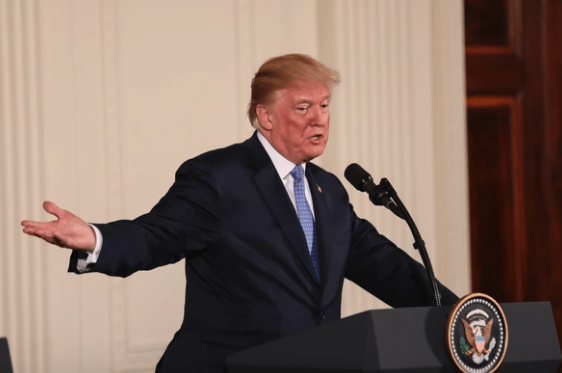
As tensions in the Middle East mounted to start the week, Wall Street strategists had a message for US equities investors: Stay calm and buy into market declines. The call looked prescient on Tuesday after President Donald Trump announced a ceasefire between Israel and Iran.
Now that the Big Tech conference season is behind us, the smart money in Apple Land is saying that Chief Executive Officer Tim Cook should be preparing to open his checkbook for a huge AI deal, so apparent are the company’s shortcomings.
For the fourth meeting in a row, the Federal Open Market Committee (FOMC) decided to keep rates unchanged, leaving the Fed Funds trading range at 4.25%–4.50%.
The U.S. Dollar Index, when measured against a basket of other major currencies, has declined by approximately 10% this year through mid-June and is currently trading at its lowest level in three years.
Like all appetites, the consumer typically reaches some point of appeasement. That could be the case for central bank gold purchases, which have started to show signs of receding. But market experts do not see it faltering anytime soon.
In a new Siemens AG factory that makes large switchboards for data centers in Fort Worth, Texas, artificial intelligence is doing a lot of work.
VettaFi’s Head of Research Todd Rosenbluth discussed the Invesco S&P 500 Momentum ETF (SPMO) on this week’s “ETF of the Week” podcast with Chuck Jaffe of “Money Life.”
Wall Street has a new favorite investor. They’re young, they’re affluent and they’re skeptical that traditional markets can deliver wealth over the long haul. Shaped by financial crises and fueled by tech optimism, this well-heeled class of Millennials and Gen Z are moving their money into the buzzy world of alternative assets.
Fiserv Inc. is lauching its own stablecoin and joining with both traditional and crypto payments firms PayPal Holdings Inc. and Circle Internet Group Inc. to develop products for financial institutions and merchants within the banking technology provider’s ecosystem.
This week the news is about the Israel-Iran conflict. It’s terrifyingly real for those in the crossfire, while we who are safe naturally wonder what it means for us. As investors, we think about the economic and market effects. But are we seeing signal or noise?
Given the uncertainty of future events, global investors seek a “safe haven” for investment dollars. As such, U.S. Treasury Bonds and the U.S. dollar appreciate given their perceived “financial safety.” Last week, global investors were already starting to make that shift with the dollar rising.
Last week's economic data painted a picture of broad cooling across several sectors, with consumers pulling back significantly on spending.
Mid-2025 is approaching, and exchange traded fund demand continues its robust growth. Last year was a landmark year for the ETF industry, with industry net inflows for the first time surpassing $1 trillion and one ETF exceeding $100 billion in net inflows.
The U.S. Federal Reserve left interest rates unchanged in June, as widely expected, but revisions to its economic projections indicate a more uncertain outlook.
At Parametric, our years of experience have taught us that markets can swing up and down quickly and without warning. Since no one can time these swings, we believe it's imperative to seek both loss harvesting and benchmark tracking simultaneously.
On Monday, Tortoise Capital expanded its fund library with the launch of the Tortoise Energy Fund (TNGY). Formerly a mutual fund, the Tortoise Energy Fund is now an ETF available on the New York Stock Exchange.
The president recently expressed his support for a great idea: investing an additional $3 billion in trade schools.
AI is advancing at an astonishing pace and undermining the core businesses of tech giants like Google, Microsoft, and Apple. But it is not only transforming the applications we use; it is also reshaping the very process of software development, threatening to render much of today’s tech sector obsolete.
This is the first in a three-part series outlining why I believe bonds are set to outperform. Here, I focus on the Federal Reserve’s dual mandate, the June 2025 meeting, and why the Fed’s approach is positive for bond investors. Parts 2 and 3 will address valuation, politics, recession risk, and the secular horizon.
How big data, AI and the human element can combine to better pursue consistent alpha.
CEO Ali Dibadj provides an update on the three macro drivers we believe will shape markets in the second half of 2025 and how Janus Henderson is helping clients position for a brighter investment future.
New strategies, shifting flows, and innovative technologies are driving a more dynamic and diversified marketplace in fixed income ETFs.
The overall U.S. equity market has fully recovered from its April lows, landing in an essentially flat position as of 5/31/2025. However, it’s been a wild ride for many investors.
It's important to consider non-hardship 401(k) withdrawals carefully. Our Bill Cass explains why individuals should check plan eligibility and consider asset protection and tax implications.
Equities have been on quite the roller coaster in 2025. Although the tariff situation has driven much of this volatility, we find ourselves in a similar spot to where we began the year.
When planning for future financial needs, take the time to understand the key differences between a 529 plan vs. IUL insurance. Both are valuable tools, but they serve different purposes and offer unique benefits.
CoinShares collated data from the first-quarter SEC 13-F filings to reveal bitcoin ETF trends. While institutional investors decreased their holdings for the first time since spot bitcoin ETFs launched, advisors actually increased their exposure quarter-over-quarter.
When problems arise with colleagues at a firm, it's best to tread carefully and thoughtfully.
As communications become more dynamic and digital interactions more complex, static captures are increasingly out of step with the needs of modern compliance and the expectations of U.S. regulators.
Nvidia Corp. billionaire boss Jensen Huang, clad in his signature leather jacket, has been crisscrossing European capitals and sharing the stage with the likes of Keir Starmer and Emmanuel Macron as he pitches “sovereign” artificial intelligence, a vision of new data centers offering essential compute power within national borders rather than via dominant tech firms from abroad.
Not much seems to faze the stock market these days even as risks abound, from war in the Middle East, to trade tensions, to slowing growth. But Wall Street’s biggest fear arrives today when the Federal Reserve meeting ends and Chair Jerome Powell explains the central bank’s outlook.
US stocks gained on Wednesday with investors looking ahead to the Federal Reserve’s monetary policy decision.
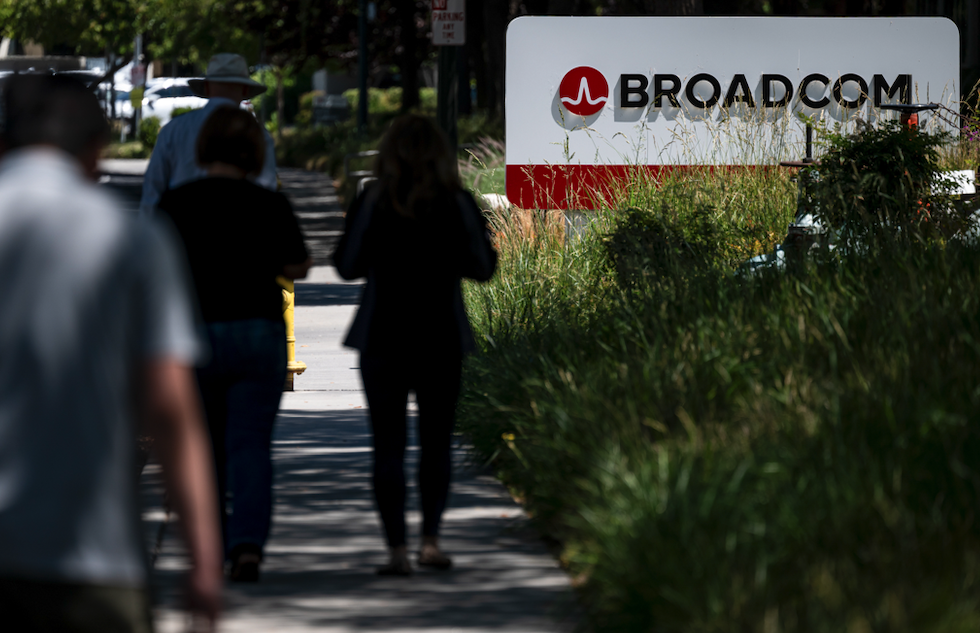
For more than two years, conversations about the biggest, most important technology companies have revolved around the same seven stocks. Now, some on Wall Street are making the case that Broadcom Inc. should be part of that discussion.
Many small deals have done through, including ones from overseas, and an active calendar of corporate shareholder meetings could offer fresh insights into capital plans.
In this article, we’ll explore how crypto index ETFs are structured, how they differ from single-asset products, and how financial professionals can incorporate them into diversified portfolios with clear goals around sizing, suitability, and risk management.
In this video, Chuck Carnevale, co-founder of FAST Graphs, aka Mr. Valuation analyzes Eversource Energy (ES), for Income and Total Return, a New England-based utility known for its consistent earnings and dividend growth.
The question isn’t whether robots will transform global labor markets. It’s how quickly the transformation will unfold. This transformation presents both unprecedented challenges and remarkable opportunities.
The Iran-Israel conflict and equity markets are now in sharp focus. As direct strikes escalated in June 2025, global financial markets responded immediately. Israel’s airstrikes on Iranian nuclear and energy infrastructure triggered retaliatory missile and drone attacks from Iran.
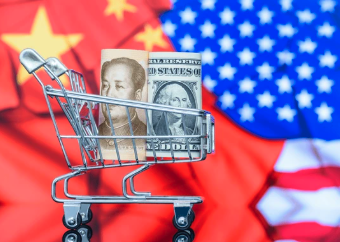
The United States consumes a large share of its GDP; China, not so much. The result is Yin and Yang. On net, China produces and the US consumes.
The draft of the One Big Beautiful Bill Act (OBBBA) runs more than 1,000 pages. Analysis of the legislation has focused primarily on its impact on the U.S. federal deficit: the Congressional Budget Office estimates that passage would add almost $3 trillion to the national debt over the coming decade.