Our biggest concern today is that if the labor market is as weak today as the numbers are showing, what will happen when all the federal government workers start dropping out of the employment numbers at the end of the fiscal year and during the next several quarters.
Bond investors may need to look elsewhere to supplant income lost from falling yields — they may want to try heading overseas. It's not just a weaker dollar that's been diverting attention to international bonds, but U.S. debt itself.
The Federal Reserve may cut rates a couple of times by year-end, but the pace and magnitude of easing in 2026 is unclear. There are still some roadblocks to lower bond yields.
The failures aren’t isolated miscalculations but the predictable result of a flawed framework that policymakers have clung to for decades. Keynesian economics didn’t just “get it wrong” in 2025, but has repeatedly failed to deliver on its promises for over forty years. And the consequences are becoming impossible to ignore.
Treasuries edged higher, extending Friday’s gains, as investors shifted their focus to key readings on inflation due later this week.
Discover how the One Big Beautiful Bill Act (OBBBA) may impact the municipal bond market, and find out which institutions are better positioned to overcome the sweeping policy reforms.
August brought with it a slowing in ETF launches from the summer spree, while inflows continued as investors increasingly bought into bonds.
Packing for a child heading off to college? Don’t forget the legal documents.
Much of the data we see today indicates the economy is fine. Stocks continue making new highs. Consumer spending is shattering records. Unemployment rates remain low. Yet a single anecdote can dispel the illusion that everything is truly fine for the average American.
Unlike Donald Trump, Chinese President Xi Jinping is not known for caring about stock-market returns.
The Dutch have long been famous — at least to pension nerds like me — for their retirement system, which is well-funded and well-managed. Now that reputation is in jeopardy: As it turns out, providing generous, guaranteed pensi
From a revenue perspective, we were also encouraged by sales coming in +2.1% higher than analysts expected, with all 11 sectors showing positive revenue surprises. This also allays our fears that tariff impact might be worse than the analyst community feared.
As emerging markets navigate deglobalization, tariffs and regional conflicts, they are pivoting toward domestic drivers of growth and intra-regional trade
The house of pain continues with small caps, at least on a relative basis. Year-to-date, the S&P 600 index has posted a 3.0% gain, so it's not like money is being burned. But still, even the Bloomberg Aggregate Bond index is up 4.9% YTD and the S&P 500 is up 10.9%.
Late last Friday, the Court of Appeals for the Federal Circuit (CAFC) largely affirmed the Court of International Trade’s (CIT) May ruling blocking President Trump’s tariffs imposed under the International Economic Emergency Powers Act (IEEPA).
This past week, we saw a sweeping change in U.S. trade policy come into effect with the termination of the long-standing “de minimis” exemption on small, imported parcels.
401(k) Day, celebrated annually on the Friday after Labor Day, is more than just a reminder to check your retirement account.
As demand for personalized investing strategies has increased, direct indexing has become one of the fastest-growing types of separately managed accounts (SMAs).
Doug Drabik discusses fixed income market conditions and offers insight for bond investors.
Markets rallied in August as hopes for a September Fed rate cut boosted equities, small caps, and income-oriented fixed income sectors, though risks of inflation and valuation excess remain.
Relations across the English Channel have stabilized.
Nvidia made a splash last week, or maybe an anti-splash, when it reported earnings and stated an intention to buy back $60 billion in stock.
With an eye on mitigating rate risk, short-term bond funds have been the apple of fixed income investors’ eyes the past few years.
Emerging market investing has long been dominated by China’s outsized role. The country once accounted for roughly 30%-40% of many EM indexes.
Municipal bond exchange-traded funds drew more than double the amount of cash this year compared to traditional mutual funds focused on the asset class, highlighting the growing popularity of ETFs as an investment vehicle in the space.
The housing market remains out of sync with the broader economy as affordability is depressed, but an improvement in supply and demand dynamics might be on the horizon.
Earnings results surpassed expectations for the third consecutive quarter, which drove the market's strong August performance.
Here’s how I see it going into a critical data week: the inflation gauges landed precisely on expectations while an ugly July trade gap shaves some growth from Q3, and that combination keeps the Fed on a path to cut 25 basis points at the next meeting.
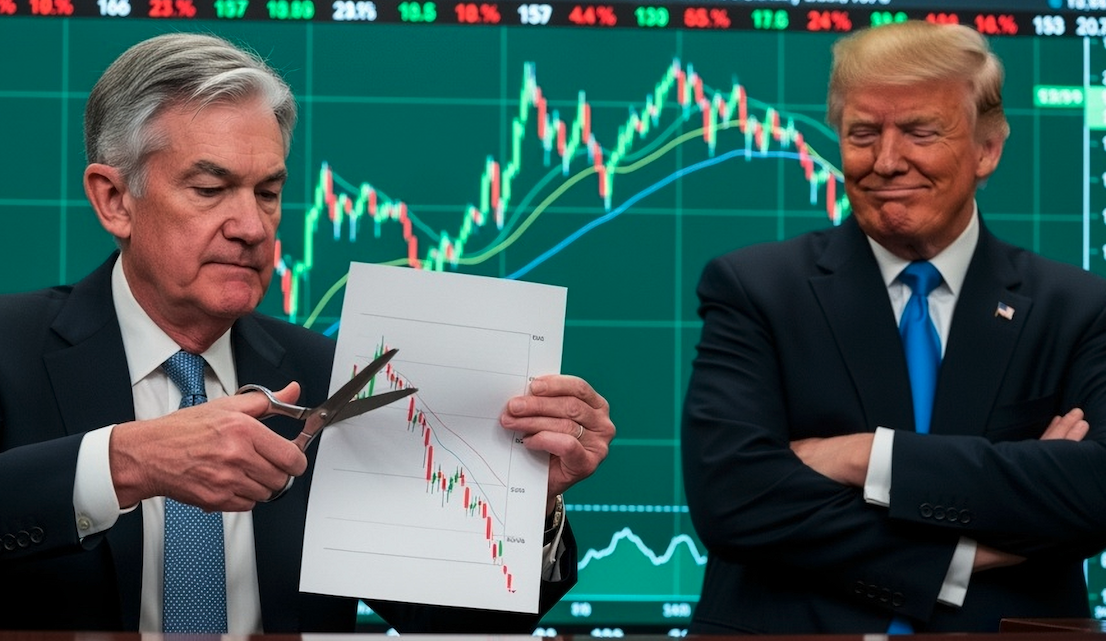
Markets surged late last week after Federal Reserve Chairman Jerome Powell suggested at Jackson Hole that the U.S. central bank may be ready to cut interest rates in September. Traders took it as a green light, while Goldman Sachs, J.P. Morgan, Barclays and others quickly pivoted their forecasts. The CME FedWatch tool now puts the odds of a September cut at nearly 90%.
Credit cards versus stablecoins is one of the less-discussed competitive battles ahead, but it’s one where traditional finance faces the most coherent threat.
For the past two years, we have been warning that the stock market is overvalued. While our capitalized profits model is simple, it is more complex than just looking at price-earnings or price-sales ratios.
Alex Morris, CEO of F/m Investments, highlights the firm’s newly launched Compoundr Series ETFs – the first income ETFs specifically designed to tackle dividend tax drag. He also discusses F/m’s efforts to add a mutual fund share class to its existing ETFs. Roxanna Islam, Head of Sector & Industry Research at VettaFi, explores the “ETFs going Hollywood” phenomenon and sheds light on the latest trends in ETF closures.
Streamlining government spending is a worthy cause in the effort to establish a more sustainable budget. Let’s review the progress of the Department of Government Efficiency (DOGE) and outline some areas for improvement.
Energy prices indicate economic strength, or, in this case, weakness. If the global economy grew strongly, the need for oil consumption would rise, absorbing the current production levels, causing energy prices to rise.
US stocks will continue rallying after four months of gains as Federal Reserve interest rate cuts coincide with robust corporate earnings, according to Morgan Stanley’s Michael Wilson.
US Treasuries were under pressure amid a rout in long-dated European bonds and a surging calendar of corporate debt sales as traders returned from the holiday long weekend.
The US has revoked Taiwan Semiconductor Manufacturing Co.’s authorization to freely ship essential gear to its main Chinese chipmaking base, potentially curtailing its production capabilities at that older-generation facility.
The market’s attention usually seesaws between corporate fundamentals and monetary policy.
As an advisor, you’ve probably been told that overdelivering is the key to winning clients and keeping them loyal. It sounds logical, right? If you go above and beyond, they’ll see your value and stick with you. But overdelivering can backfire.
Curiosity gave birth to philosophy. Ongoing intellectual curiosity is still driving investment success thousands of years later.
Each bank sets its own Beige Book reporting priorities, though prices, jobs and real estate are common themes. The Kansas City Fed, for example, covers nine topics, including community conditions, community and regional banking and agriculture.
In this video, Chuck Carnevale—co-founder of FAST Graphs and known as Mr. Valuation—explains why investors should avoid paying premium prices for stocks, why buying overvalued stocks Is risky – even when the businesses themselves are high quality.
Last week's economic data revealed strong economic growth running up against rising prices and falling confidence.
On this week’s edition of Market Week in Review, Senior Investment Strategist and Head of Canadian Strategy, BeiChen Lin, explained key factors fueling the strong performance in North American stock markets. He also assessed the latest U.S. Federal Reserve (Fed) developments and shared upcoming watchpoints for the U.S. and Canadian labor markets.
The adage “don’t borrow trouble” advises us against distressing over problems yet to occur. But we don’t think it should apply to retirement planning. In fact, digging into what concerns DC plan participants now may help them avoid retirement pitfalls down the road.
Muni & corporate bonds trading activity has been reaching record levels through the first half of 2025 at the Intercontinental Exchange.
VettaFi’s Head of Research Todd Rosenbluth discussed the PIMCO Enhanced Short Maturity Active ETF (MINT) on this week’s “ETF of the Week” podcast with Chuck Jaffe of “Money Life.”
US consumer spending rose in July by the most in four months, indicating resilient demand in the face of stubborn inflation.
Consider coking coal. The high-quality solid fuel used in steelmaking was for many years seen as a jewel in BHP’s crown.
Bill Bengen is an MIT-educated rocket scientist, retired financial advisor, and somewhat unintentional founder of “the 4% rule.” The widely used rule of thumb resulted from a study he did more than 30 years ago. His new book, “A Richer Retirement: Supercharging the 4% Rule to Spend More and Enjoy More” is an update of this study.