Fall is here, making now an ideal time to address your year-end financial goals and begin mapping out new goals for the year ahead. Sequoia’s Special Needs Financial Planning team is a comprehensive financial planning partner, ready to support you on multiple fronts.
There has been a lot of controversy around the Trump administration’s policy toward the Federal Reserve recently. What is less obvious to most investors is what they’re aiming to accomplish. Trump continues to talk about getting rates lower, and this has been echoed in other parts of the administration as well.
Social Security is a key component of a comprehensive retirement income plan. As a result, making the right decisions around claiming benefits is critical for long-term success in retirement. Married couples in particular need to think carefully about how to best access benefits based on their individual needs and circumstances.
In the coming week, several Federal Reserve officials will speak following the recent decision to resume rate cuts.
Portfolio manager Lew Sanders has quietly built a legacy as one of the most influential value investors of the past 50 years.
Despite a weaker end to the month, the equity market “melt-up” successfully navigated what has historically been a tricky month for equities, as represented by the S&P 500 in September (average returns -0.61%), closing out the month (as of September 29) with a handsome gain of over 3%.
On the latest ETF 360, VettaFi’s Cinithia Murphy talked to Reckoner Capital Management’s John Kim. The two discussed CLOs and the Reckoner Leveraged AAA CLO ETF (RAAA).
There are many ways to navigate market uncertainty, and pursue both upside participation and some level of downside protection. Options-based approaches such as the Defined Outcome ETF category loom large here, fit for purpose.
Emerging-market equities extended their winning streak for a fourth day, climbing to the highest level since 2021 as artificial intelligence optimism — fueled by a landmark OpenAI share sale — lifted global sentiment.
Signs of caution are emerging around high-flying tech shares. But that’s just making it cheaper to use options to bet on further gains in the stocks, Bank of America’s derivatives strategists say.
Warren Buffett’s Berkshire Hathaway Inc. reached a deal to buy Occidental Petroleum Corp.’s petrochemical business for about $9.7 billion in cash.
AI technology has the potential to profoundly improve industries and markets, but not without some risks—like valuation and profitability—that investors should be aware of.
Last week, my colleague wrote about Anchoring Bias, a psychological phenomenon that attaches a particular price or specific yield level to a bond.
LPL Research analyzes recent market performance as Fed expectations, strong economic data, government shutdown concerns and more continue to have an impact.
Market sentiment has come a long way since the Tariff Tantrum. Earlier this year, the VIX volatility index shot up into the 60s, a fear level previously seen in such episodes as the October 1987 crash and during 2008’s rolling bank insolvencies.
In this video, Chuck Carnevale, co-founder of FAST Graphs, dives deep into Comcast (CMCSA) to evaluate whether today’s low stock price represents risk or opportunity.
A report that Boeing Co. is planning to build a clean-sheet design single-aisle aircraft to replace the 737, an aircraft platform first created in the 1960s, isn’t a surprise, but it does mark a milestone for the company’s recovery.
Advisors who want to grow a family office business need to make sure they have the expertise and resources to service the far-ranging needs of wealthy families. Some wealthy families are looking for a “one-stop solution.
The key is to stop trying to be everywhere and start showing up where your ideal clients already are.
Venture Global (VG), which went public earlier this year, is a rapidly expanding, low-cost producer of U.S. liquefied natural gas (LNG). Its business centers around liquefaction, which is the process of cooling natural gas into LNG, making it possible to ship overseas.
Partnering with a CDFA can be a practical way to strengthen financial outcomes for clients and reduce the risk of costly oversights to both you and your client.
Here are some key areas of focus as you think about solidifying your current team or preparing to transition and join a new team.
Inflation gave markets exactly what they wanted last week—no surprises.
When it comes to managing risk, OCIO providers can’t afford to overlook history.
Consumption spending surprised to the upside once again in August, something we had already seen from last week’s release of retail and food services sales during the same month.
In what represents a positive trend for investors engaged with ETFs such as the Invesco QQQ Trust (QQQ) and the Invesco NASDAQ 100 ETF (QQQM), the AI adoption conversation continues gaining importance and momentum.
JPMorgan Chase & Co.’s $20 billion debt commitment for the record-breaking buyout of Electronic Arts Inc. is classic leveraged financing, which might seem surprising in a world overrun with private credit.
For elite receivers, it’s not just about making the catch, it’s about what they do next. The same is true for financial advisors who switch broker-dealers. If you are considering a move, ask yourself: Am I just trying to make the catch? Or am I ready to take off down the field?
Over 60% of small cap investors use passive funds, but we strongly believe this is a missed opportunity, as small caps have consistently been one of the most reliable sources of alpha available in the public markets.
While it may seem that way at extremes, momentum tends to exhaust, and reversals or corrections become more probable. The RSI gives us a real-time gauge of when a trend may be vulnerable to a pullback or turn.
The latest read on the US labor market will be out this Friday, October 3, when the Bureau of Labor Statistics releases September nonfarm payrolls, unemployment, average hourly earnings and other metrics.
Always intense, the perennial debate over whether equities are too richly valued has become even more fervent of late.
Though solar is now a boogeyman in the culture wars, the truth is that it is both among the cheapest forms of energy (even without subsidies) and one of the fastest segments of the energy industry to bring additional capacity onto the grid. We believe solar and wind will continue to be an important component of the American energy supply.
To see real results, your content must be relevant to the people you want to reach, consistent enough to build familiarity, and valuable enough to earn trust. Done right, it becomes the foundation of your marketing strategy and a long-term driver of growth.
European stocks were set to wrap up September with the best performance since 2019, as optimism around resilient US economic growth and lower interest rates lifted risk appetite.
JPMorgan Chase & Co. is the latest issuer attempting to fit private credit assets into a retail-friendly exchange-traded fund vehicle.
The Fed's extraordinary stimulus since the pandemic has fueled one of the broadest waves of speculation in history, from expensive equity valuations, historically tight credit spreads, and the ongoing bubble in cryptocurrencies, all pointing to excess liquidity.
JFLX charges a 45 basis point net fee for its investors. The strategy, per its prospectus, is empowered to invest across the debt spectrum. Its managers can shift its active strategy toward markets or sectors as market conditions change.
Back in the day, the arrival of the postman was a big deal. E-mail and texting existed only in the dreams of technologists, so people communicated with one another by writing letters.
Even as rate cuts occupy center stage in the 24-hour financial news cycle, surprise inflation could strike anytime. In the current macro environment, inflation could stem from the constant wildcard of tariff policy.
Get ready each week with high-conviction insights that go beyond media headlines.
From managing exposure to leveraging growth opportunities—core active portfolio managers can unlock the full potential of emerging markets.
Economic data are all over the place. GDP keeps growing in spite of signs of weakness in the labor market. Tariff policy is volatile, immigration has slowed, monetary policy tightened in 2023-24, with the M2 measure of money declining and “real” short-term interest rates consistently higher than at any time since 2010.
Goodbye summer, hello fall! As the sun sets on another season, we’re swapping beach days and backyard barbeques for crisp mornings, vibrant foliage, football weekends, and everything pumpkin spice.
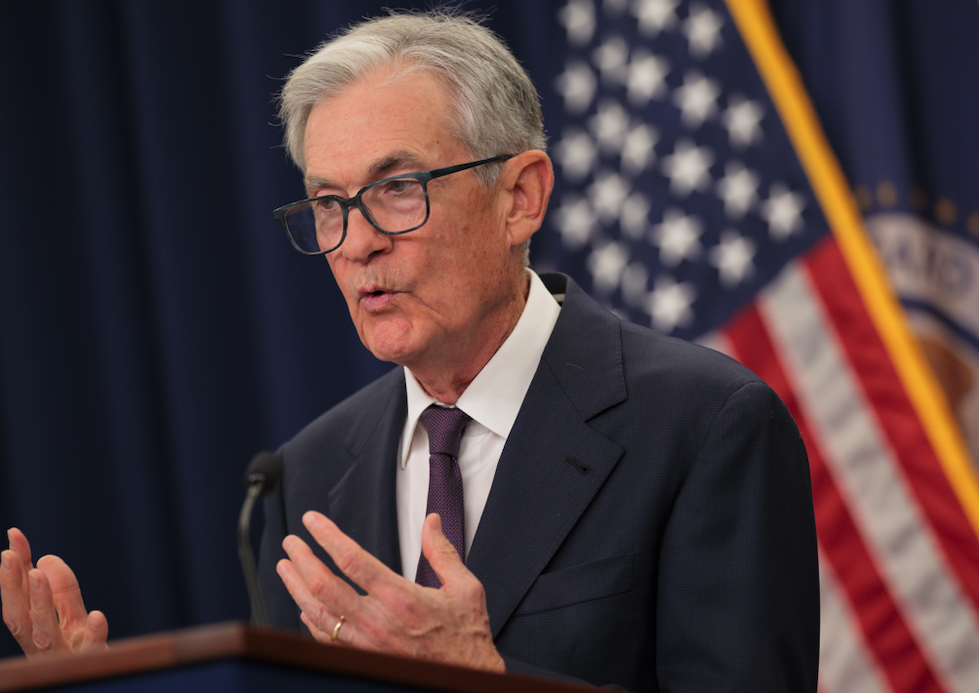
As expected, the Federal Reserve cut its policy rate on Sept. 17 by a quarter of a percentage point. Officials had signaled the move in advance and Chair Jerome Powell explained the reasoning well enough.
My reasons are simple. The debt pile is unfathomably massive, and it’s accelerating. Fiscal imbalances are widening, and monetary policy is being constrained. The Fed can’t raise rates aggressively without bankrupting the government, but it also can’t make deep cuts without tanking the dollar.
VettaFi’s Head of Research Todd Rosenbluth discussed the Fidelity Investment Grade Securitized ETF (FSEC) on this week’s “ETF of the Week” podcast with Chuck Jaffe of “Money Life.”
Financial planners perform a valuable service by discussing with married clients what will happen if the income of one of them disappears upon death. But the focus should be on the adequacy of the remaining income to the spending needs of the survivor — not the change in tax rate from married to single.
Some Wall Street pundits believe that the recent Fed rate cut makes its policy too accommodative, and they also argue that the Fed is creating a “Goldilocks” scenario for the stock market. To better gauge where policy lies on the accommodative to restrictive spectrum, it's critical to compare the policy to current economic growth and inflation rates.
I take Jerome Powell at his word when he says that he and his colleagues at the Federal Reserve are determined to get inflation back to its 2% target.