Over the last few weeks, we have published real-time market commentary as the correction proceeded. The goal was to help investors navigate the more dire outcomes promoted on social media. A largely unexpected outcome was that the S&P 500 outlook changed dramatically in a matter of days.
Dividend-paying stocks offer an effective hedge against inflation—as well as solid long-term return potential in other environments when actively sourced from the right parts of the market.
Over the past year, markets have been shaped by rapid advances in AI, elevated geopolitical tensions – especially involving Iran – and persistent uncertainty around global trade. In environments like this, successful investing rarely comes from chasing headlines or reacting emotionally. It’s about discipline, staying anchored to fundamentals and executing a clear long‑term game plan.
The general field called “credit” has seen massive innovation over the course of my career. An Oaktree colleague asked me about the developments that brought the credit sector to where it is today. I came up with the following list.
The first quarter of the year has offered an early reminder that markets rarely move in straight lines. After the extraordinary enthusiasm that carried investors through 2025, much of it centered on the promise of artificial intelligence, the new year has quickly reintroduced elements of uncertainty.
AI’s rapid growth is driving demand not only for electricity but also for the clean water needed to run its physical infrastructure. As data centers expand, rising water intensity is straining supplies and testing long-term sustainability. In our analysis, these pressures create both risks and opportunities for active investors.
The idea that this would be enough for “new UMG” to almost double the current one’s valuation doesn’t add up at a time when artificial intelligence is creating doubts about the industry’s future. And it’s unlikely on its own to tempt dominant shareholders such as French tycoon Vincent Bollore. The proverbial fat lady has yet to sing.
Learn how advisors can optimize late-start 529 plans using superfunding, SECURE 2.0 Roth rollovers, and multi-scenario modeling.
As AI continues to reduce software development costs, investors need to reconsider what makes a competitive moat durable, particularly for technology companies.
While families have limited control over rising tuition, certain college tuition tax deductions may help ease the overall cost of higher education.
Whatever you end up doing, make sure you are authentic and honest in your approach. Clients see right through a request or ask that you are uncomfortable making. You have to know what you want, find words that are right for you, and proceed accordingly.
Global bonds surged Wednesday on news that the US and Iran had agreed to a ceasefire, pausing a war that roiled markets for weeks by delivering the worst oil shock in years.
European stocks soared the most in a year as investors rushed to buy stocks in the wake of the US and Iran agreeing to a two-week ceasefire in exchange for Tehran reopening the Strait of Hormuz.
If the economic life of AI hardware is shorter than its accounting life, reinvestment needs are higher than reported depreciation suggests. What appears to be capital deepening by hyperscalers is largely capital churn.
As strikes on Iran continue and the Strait of Hormuz remains effectively closed, it’s clearly too early for market watchers to stop thinking about geopolitical risk.
Fresh data on the US labor market and new research from the Federal Reserve suggest that the conventional wisdom around employment growth being sluggish is wrong.
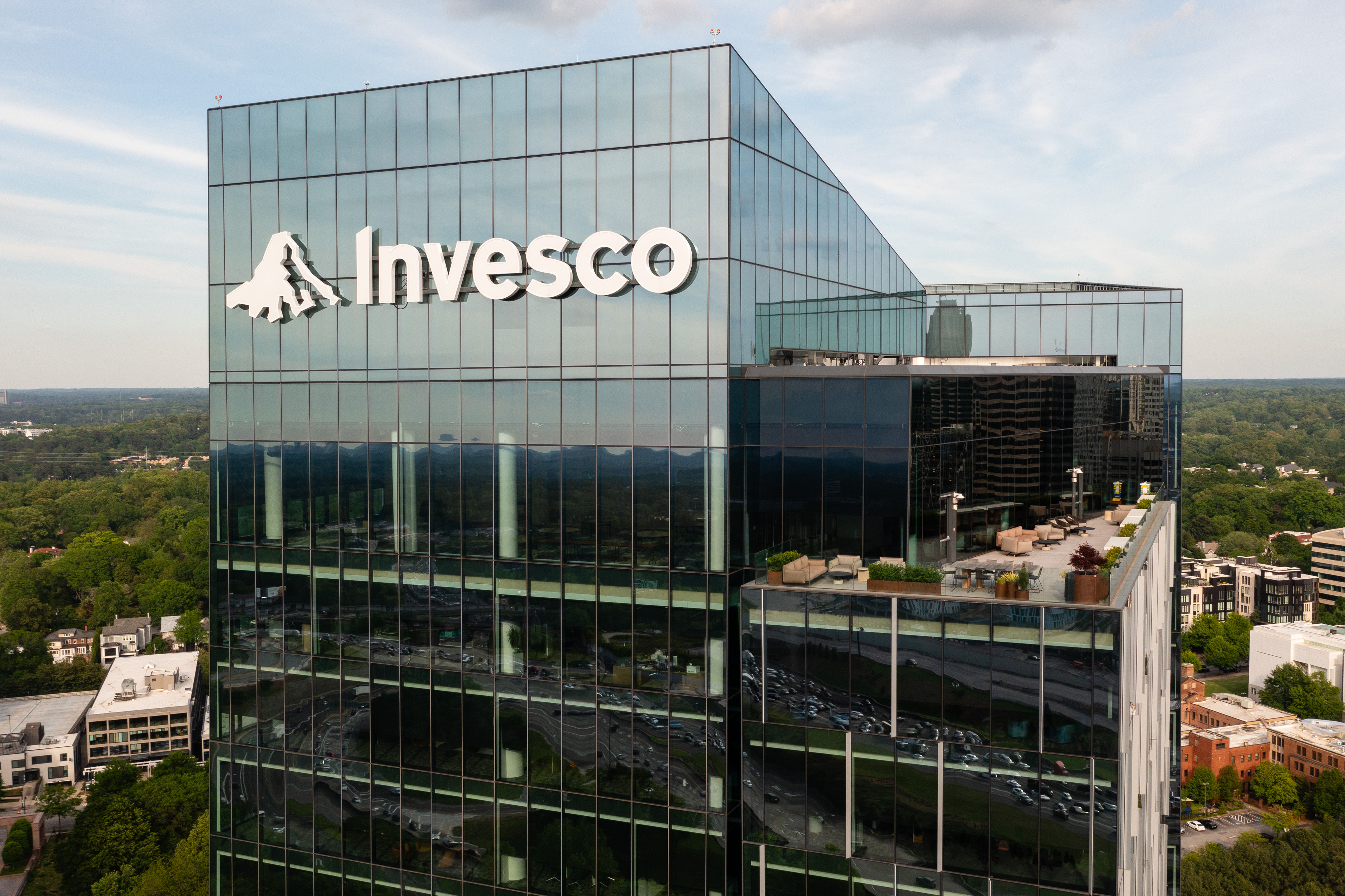
Wall Street’s biggest ETF issuers are circling Invesco Ltd.’s Nasdaq 100 franchise, threatening to end its near-exclusive hold on the index.
Last week, the stock market rally was one of the best performances in nearly a year. The S&P 500 surged 3.4%, the Nasdaq climbed 4.4%, and the bulls declared the correction over. As I have stated before, having watched markets for more than 35 years, I have come to recognize the difference between a relief rally and the end of a corrective cycle.
When investors want to reduce risk, one commonly used tool is beta. For instance, an investor may sell higher-beta stocks and replace them with lower-beta ones to cushion against an expected market decline. Such a strategy is intuitive and widely used; however, it can be greatly flawed.
I have written for years that oil prices act like a tax on the economy, both in the US and globally. It is actually simply the price paid, but the effect on the economy is similar to a tax. If the price goes up, it takes more money from individual consumers that would otherwise be saved or spent somewhere else. Just like taxes.
After more than three decades of watching oil markets upend economies, one pattern keeps repeating: investors learn the wrong lessons from the last shock. The 1973 OPEC embargo taught us that geopolitical disruptions are temporary.
BlackRock Inc. is setting its sights on a corner of the $13.7 trillion US exchange-traded fund industry long controlled by Invesco Ltd: tracking the Nasdaq 100 Index.
Markets often react sharply to geopolitical developments, but just as often, they overreact. Investors today are grappling with heightened global tensions, rising oil prices and uncertainty around central bank policy. The key question is whether these risks meaningfully alter the economic outlook or simply create short-term volatility.
Exchange-traded fund issuers are shutting new products at the fastest pace in years as competition for investor money intensifies.
It has now been over three years since GMO launched our Small Cap Quality Strategy in September 2022. During that period, the world has shifted, and we have navigated unexpected market conditions.
Unilever Plc’s Fernando Fernandez haslucked out by selling the company’s food businesses, including Hellmann’s mayonnaise and Knorr stock cubes, to McCormick & Co. But Fernandez, who’s been chief executive officer for just over a year, shouldn’t squander his good fortune; he needs a clear vision for what comes next.
The fiat currency collapse narrative is one of the most emotionally satisfying arguments in all of financial punditry. It feels intellectually rigorous, draws on genuine history, and speaks to deep and legitimate anxieties about government overreach, monetary recklessness, and the long-term consequences of unlimited debt creation.
Jeff Buchbinder and Adam Turnquist explain why solid earnings, AI investment, and economic resilience underpin stocks, even as oil prices and volatility pressure markets.
Gold has fallen roughly 21 percent from its all-time high of nearly $5,595 reached in late January to approximately $4,430 as of this writing, and the prevailing narrative in markets is that this correction reflects a genuine shift in the metal’s outlook
Get ready each week with high-conviction insights that go beyond media headlines.
Amid geopolitical uncertainty, dispersion across credit markets – rather than a broad risk-off move – has become the dominant investment signal.
To better understand how AI might affect the labor market and, ultimately, the economy, we’ve summarized Citrini’s bleak outlook alongside rebuttals from Citadel Securities and Bianco Research. These summaries provide a useful primer on how labor markets may adjust to the upcoming major technological changes.
For investors, understanding the full anatomy of fixed income is critical, not only to capture attractive risk-adjusted returns in today’s environment but also to appreciate its indispensable role in powering economic growth and financial stability.
I have just spent the last two days with members of our Inner Circle. We visited four technology companies and listened to six other CEOs make presentations here in El Segundo, California. What I want to write about today is a summary of what I’ve seen, which made every single one of our participants extraordinarily optimistic about our future.
Thanks to strong gains in markets over recent years, with many indices at or near record highs, the 60/40 default portfolio has quietly morphed into a bundle of expensive U.S. growth equities and credit exposures offering narrow spreads over Treasuries. In our view, such a portfolio is likely to disappoint investors by delivering low single-digit real returns.
The conflict in the Middle East remained a key driver of market sentiment this week, with rapidly shifting headlines contributing to heightened volatility.
The war in Iran may be showing few signs of easing, but Wall Street strategists are encouraging investors to start buying stocks again.
The dollar is on track for its best month since July as the conflict in the Middle East scrambles Wall Street’s playbook for the world’s dominant reserve currency.
The Iran conflict has changed the paths for inflation and central bank actions.
The multi-asset playing field presents income investors with broad opportunities across asset classes. But investors that rely only on traditional stock dividends and bond interest may be missing out on other attractive income sources.
As portfolios limited to public equities capture a smaller slice of corporate growth, private investments are increasingly finding a place in long-term wealth-building strategies, including 401(k)s.
The U.S. middle market has hit $25 trillion. Discover why Cerulli says the advisor shortage and shifting demographics make early engagement a necessity.
Even as war in the Middle East roiled markets this month, some investors are finding solace in Corporate America’s growth machine, which not only remains intact — but is showing signs of thriving.
The Fed’s decision made sense: don’t change the target for short-term interest rates if we don’t know what the world will look like tomorrow. But investors need to remember a couple of important things. Rate cuts, if they ever come, are less important than the money supply.
The financial advisory space has never been more competitive, or more ripe for transformation. Fee compression, AI encroachment, tightening compliance, and clients with increasingly sophisticated expectations are pushing experienced Advisors to ask a fundamental question: Is it time to make a move?
Industry experts at Exchange 2026 explored why only a quarter of advisors have formal succession planning in place and what it takes to execute well.
While agricultural best practices have moved on to other resources, the Guano Wars teach us that nations are willing to go to great lengths to sustain their crops.
The key swing factor remains oil prices. If the conflict ends within this window, we still expect only limited impacts on our economic and asset‑class outlooks.
With liquidity and credit stress in the private credit market rising, we must consider whether the Fed might once again ignore its mandates to backstop exuberant markets.
Let me lay out the case for what should be the answer. Today we will explore how long this condition could last and what we can do about. I think it will make for interesting letter.