In the race to build the infrastructure that powers artificial intelligence, Alphabet Inc.’s Google has an enviable position: The company has a healthy cloud computing business, makes its own chips, and has struck deals to share them with companies like Anthropic PBC and Meta Platforms Inc.
I think inflation is heading higher. That is going to take a rate cut off the table. Warsh is going to start reducing the balance sheet quickly. And will use the balance sheet contraction as a way to deal with inflation rather than actually raising rates.
Against this challenging macro backdrop, a stark divergence is expected as major retailers report earnings next week. Discounters are projected to perform well, with Walmart (WMT) expected to outpace Target (TGT) by gaining market share from high-income households trading down for groceries, while Target remains more vulnerable due to its heavier mix of discretionary goods.
The stagflation narrative dominating financial social media isn’t completely wrong. That’s what makes it so dangerous. After more than 30 years of managing client portfolios through actual inflationary cycles, not watching them on YouTube, I’ve learned that the most damaging investment advice isn’t built on outright lies.
U.S. inflation and rates remain elevated. Credit markets continue to show resilience. Opportunities are emerging across securitized and high yield assets
First quarter 2026 earnings were stronger than expected and we think that there might be continued strength in the second quarter, unless there is a major macro shift.
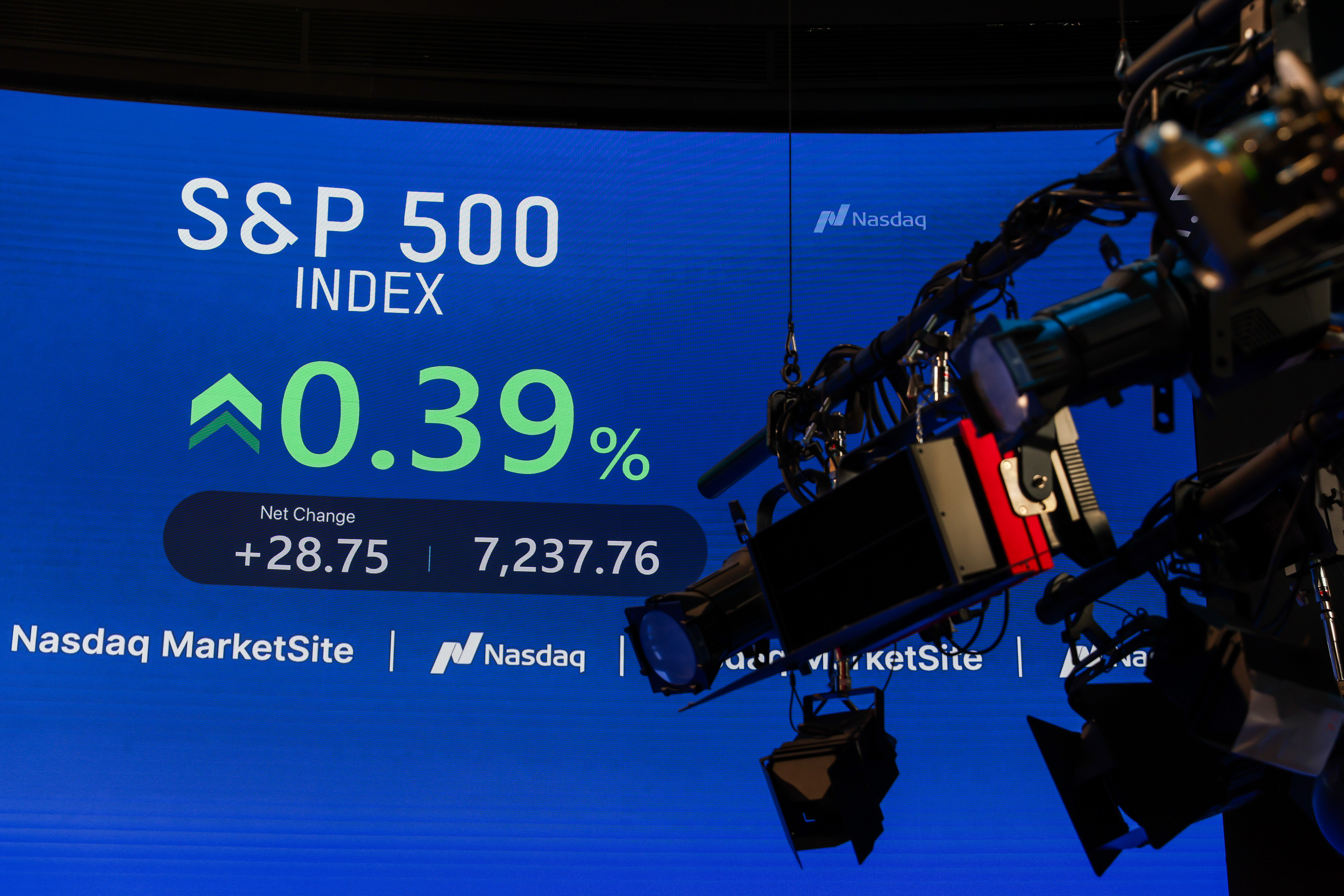
US equities continue to march higher in 2026 despite geopolitical uncertainties, supported by resilient economic data and strong corporate earnings. Much of the market narrative remains focused on mega-cap technology and artificial intelligence (AI).
Yes, this time is different, but not because inflation itself is unprecedented. What has fundamentally changed is the macroeconomic starting point. Unlike the post-Global Financial Crisis period, when persistent disinflation and repeated downside surprises dominated policy decisions, the economy today is operating in a world where structural disinflation is no longer the default backdrop.
In our Q2 Equity Market Outlook, we identified healthcare as one area where artificial intelligence (AI) is having tangible benefits and presenting investors with new expressions of the AI investment theme. While healthcare may glean some luster from an AI halo, the investment case is also one of counterbalance to the AI juggernaut.
Emerging markets bonds and the related ETFs are delivering for investors. Meanwhile, other, supposedly more dependable, less risky corners of the bond market are dithering. Market participants can capitalize on that trend with the VanEck Emerging Markets Bond ETF (EMBX), which is coming off an impressive showing last month.
The U.S. economic landscape in April was defined by a significant rebound in inflation across both consumer and wholesale sectors, complicating the path for future monetary policy.
The United States has not felt the greatest costs of the Iran conflict, but challenges are becoming visible. Energy prices have risen, with limited prospects for relief. Inflation measures are poised to spread to other product and service categories. Inventories that helped to blunt the impact are depleting; supply chain distortions are accumulating.
For many ultra-high-net-worth families, philanthropy is not simply about giving; it is about creating meaningful, lasting impact. A thoughtfully structured family foundation can become a powerful vehicle for aligning wealth with values, supporting communities, and engaging future generations in purposeful stewardship.
With tensions simmering in the Middle East and the global economy feeling the pinch of high energy prices, high-yield bonds might not be on every investor’s radar. In our view, they should be.
David Mann, our Head of Global Exchange-Traded Funds (ETFs) Product and Capital Markets, explains how meatloaf—the dish, not the singer—serves as a perfect example of how his ETF thinking has evolved over the past decade.
ClearBridge Investments: The ongoing energy crisis is pushing global oil inventories, including many critical product inventories, toward all-time lows, and it may be time to position portfolios given the potential for supply shortages to emerge.
Explore how Women in ETFs & CFAOC experts believe AI will supplement, not replace, financial professionals.
America is fast becoming a country with two economies: a stagnant one for men and a growing one for women. So far this year, the US has created more than 165,000 private-sector jobs, and 72% of them went to women. To some extent this reflects a structural change in the economy, as growth is in industries more likely to employ women, such as healthcare.
Rising bond yields curbed traders’ appetite for risky bets early Friday, sending stocks lower following a weeks-long record-setting rally driven by a rush of cash into all things artificial intelligence.
Investors shed government bonds around the world, propelling borrowing costs to multi-year highs from Japan to the US amid intensifying fears that war-driven inflation will force central banks to pursue higher interest rates.
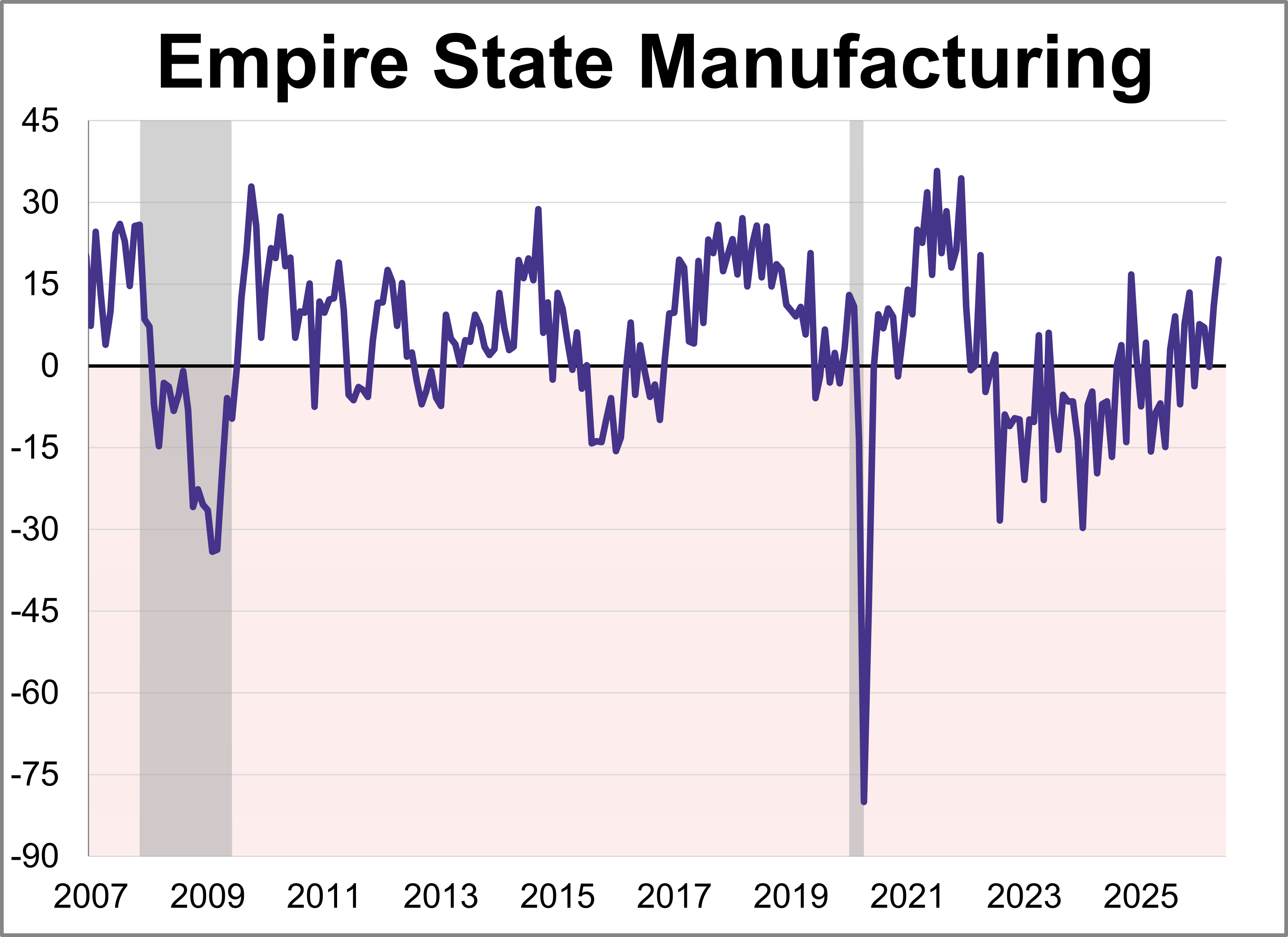
Manufacturing activity grew strongly in New York State, according to the Empire State Manufacturing May survey. The diffusion index for General Business Conditions rose 8.6 points to 19.6, its highest level in over four years.
Elon Musk’s ambitions for artificial intelligence are coming together in a former vacuum-cleaner factory in Memphis, Tennessee.
With stocks near all-time highs, the need for change is hardly obvious. Proponents argue that requiring fewer reports will reduce the time and cost of compliance. Some blame an increase in disclosure demands over the last three decades for a sharp decline in the number of public companies.
AI is surely the zeitgeist at industry conferences across sectors right now. Emerging technology, increased efficiency, and scalability are all talking points. But so too are headcount reductions, reduced tech-sector free cash flow, and growing worries about a 1990s-like bubble.
What were the key takeaways from last month’s numbers? Our corporate bond specialists look back at the market’s performance and provide incisive commentary to help you make sense of what drove the market—and what may be on the horizon for fixed income investors.
Investing in emerging markets (EM) used to be synonymous with getting exposure to China. It’s an ideal notion, given that it’s the second largest economy and thus commands a heavy weight in standard EM benchmarks. Challenging that narrative today is a changing geopolitical landscape, which continues as U.S. president Donald Trump visits China in a high-stakes meeting between the two economic superpowers.
High-growth technology stocks still dominate the investment landscape, fueled by the promise of AI. But recent signs of a broadening market are revealing that more industries beyond just tech are positioned to benefit. We think large-cap value stocks are well-poised for this shift, especially since AI can be both a disruptive and driving force in today’s dynamic market.
There is a big difference between betting on something and investing in meritorious companies with long holding periods. Although we are no longer shareholders of Berkshire Hathaway, Warren Buffett shared some wisdom with everyone recently.
Silver may help efficiently produce hydrogen for use as a power source. Not only is hydrogen clean-burning – leaving only water – but it is easier to store and transport than petroleum-based fuels. Conventional methods of producing hydrogen, such as steam methane reforming (SMR) or water electrolysis, have disadvantages that silver may help to overcome.
Yields for preferred securities have generally risen more than corporate bond and long-term Treasury yields over the past few months, making them more attractive to investors.
Stock markets have been hitting all-time highs and credit spreads remain low, yet higher interest rates and mounting floating-rate debt are straining lower-rated borrowers. This tension is surfacing first in leveraged loans as “quiet defaults” become more common — opening up a dynamic set of opportunities for investors specialized in stressed and distressed assets.
The most attractive conversion opportunities appear when income temporarily drops. Early retirement before Social Security and RMDs begin is the classic window. Sabbaticals, business transition years, the gap after a company sale, years with unusually low K-1 or bonus income. These are all potential openings.
Today, 529 plans offer flexible, tax-advantaged savings beyond traditional college. Recent updates expand their use to K-12 tuition, vocational training and the option to transfer unused funds to a Roth IRA. Our Bill Cass explains the ways to optimize the benefits of 529 savings plans.
Semiconductors and software have largely overshadowed the electrification ETF trade. Paul Baiocchi, head of fund sales and strategy at SS&C ALPS Advisors, says most investors are missing the sectors that actually power the AI buildout.
It’s likely not a bubble. Earnings are high. Prices are high because they anticipate future high earnings growth. The historical record shows that growth rate is achievable.
Investors and advisors often seek private equity, but they are frequently thwarted by liquidity and other issues.
Top RIA executives said Tuesday the industry's growth is still early, with breakaway clients and a talent shortage as key forces.
GraniteShares and VettaFi are bringing together the experts to demystify autocallable and barrier ETFs: how they generate superior income, how barrier levels protect against the downside, and exactly how they fit into a modern income strategy.
Addressing common 529 Savings Plan concerns and how recent legislative updates have broadened the 529 scope.
While US stocks have been going from one record to the next, global asset allocators haven’t quite kept up. And that may keep the market’s upward momentum intact as fund managers try to catch up.
Investors are growing increasingly optimistic about Amazon.com Inc.’s position in artificial intelligence, lighting a fire under the stock and sending the company’s market capitalization soaring toward the rarefied $3 trillion level.
In today’s war-torn market, both are the supplier of last resort. One provides dollars; the other barrels. But that’s where the similarities end. The central bank can print the currency at ease; the drillers cannot.
Ford Motor Co. has finally hit upon an electric strategy that shouldn’t lose money. The key element is that it doesn’t involve vehicles — not for now, anyway.
Apollo Global Management Inc. announced last week that it will soon provide daily pricing for its private credit. It may not sound like a big move, but its decision to lift the veil on these assets could be the most impactful development in financial markets and investing in a long time.
April delivered a constructive backdrop for preferred securities, with the ICE BofA Fixed-Rate Preferred Securities Index rebounding 2.23% and bringing YTD returns back into positive territory at 0.8%.
Artificial intelligence (AI) leadership is no longer a developed-market monopoly. Emerging markets (EM) now have their own AI champions, and productivity gains may follow. For bond investors, we expect the implications to differ by country—driven by industry composition, capital intensity, digital infrastructure and speed to adoption.
Many have drawn the comparison between the current AI buildout with the dotcom period in the late 1990s, when the infrastructure for the internet was built. It’s a sensible comparison to make because of the massive amount of capital deployed to commercialize the buildout of revolutionary and life-changing technology.
Royce Investment Partners: Co-CIO Francis Gannon looks at how recent performance may be subtly announcing a turning point in market leadership.
Typically, an investor’s traditional bond portfolio begins with a cornerstone, or core holding of some sort. From either a strategic or tactical perspective, a core fixed income position provides the investor with some ballast to help anchor any other strategies that may be included.
State revenues are softening, and rainy day fund capacity has declined for the first time since the Great Recession, he wrote in his second quarter outlook report released Wednesday. The end of pandemic-era stimulus programs, slowing tax collections and rising costs are all adding to the weakness.