The next generation may inherit substantial assets. Whether they inherit the health to enjoy them — or the burden of managing preventable family health crises — may matter just as much. Advisors who broaden the definition of legacy planning may be better positioned to protect both.
AI is unlikely to replace wealth managers — at least not in the foreseeable future. But it now has the power to expose the gaps between genuine, client-first investment advice and other approaches in a way the industry has not yet seen.
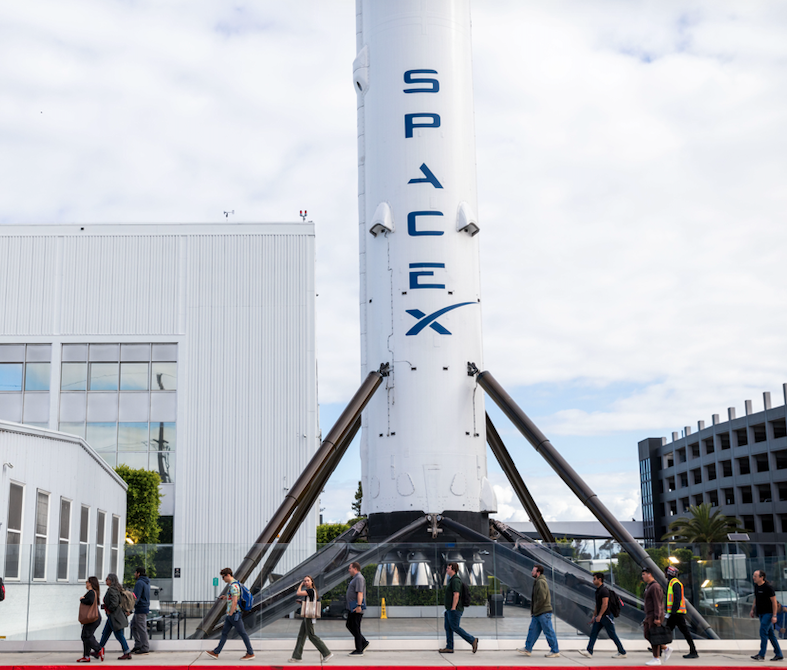
Space has evolved from a niche corner of the stock market into an area that offers the potential for diversity and growth. The euphoria around SpaceX’s market entry is driving fresh investor flows into the sector. Since the news of the offering first became public in early December, smaller space and related stocks have soared.
Turns out, loading up on technology giants isn’t the only route to better returns. Value companies, too, stand a decent chance of trouncing the market — as long as several conditions are met.
For much of the year, chip stocks have been powering the market higher. Now, Nvidia Corp.’s earnings have a chance to confirm that the rally has more room to run — or add another brick to investors’ wall of worry.
Although a lot has changed since our last quarterly, its central theme – dispersion – feels like it’s only become more pronounced. We wrote last time that ‘‘we believe we’re entering a new era of dispersion in the performance of financial assets.’’
Veteran strategist Jeff Currie said the world is in the early stages of a commodity supercycle that may last another decade or more as the artificial intelligence buildout collides with chronic underinvestment in energy and materials capacity.
On Friday, May 15, the 10-year Treasury yield closed at 4.59%, its highest level since February 2025. The 30-year Treasury yield closed near 5.12%, a level last seen in 2007. Those are significant moves because they reflect a repricing of the market’s inflation, growth, and Federal Reserve expectations.
The Texas Permanent School Fund bought more than 29 million shares totaling about $740 million worth of the State Street IG Public & Private Credit ETF, trading under the ticker PRIV, in the first quarter, according to a filing Friday.
Nineteenth-century oil processing plants used simple, column distillation of crude oil to produce kerosene, which was in high demand for lighting lamps. The process also yielded a dangerously flammable byproduct called gasoline which had no obvious use.
Chris Galipeau discusses high-conviction insights that go beyond media headlines.
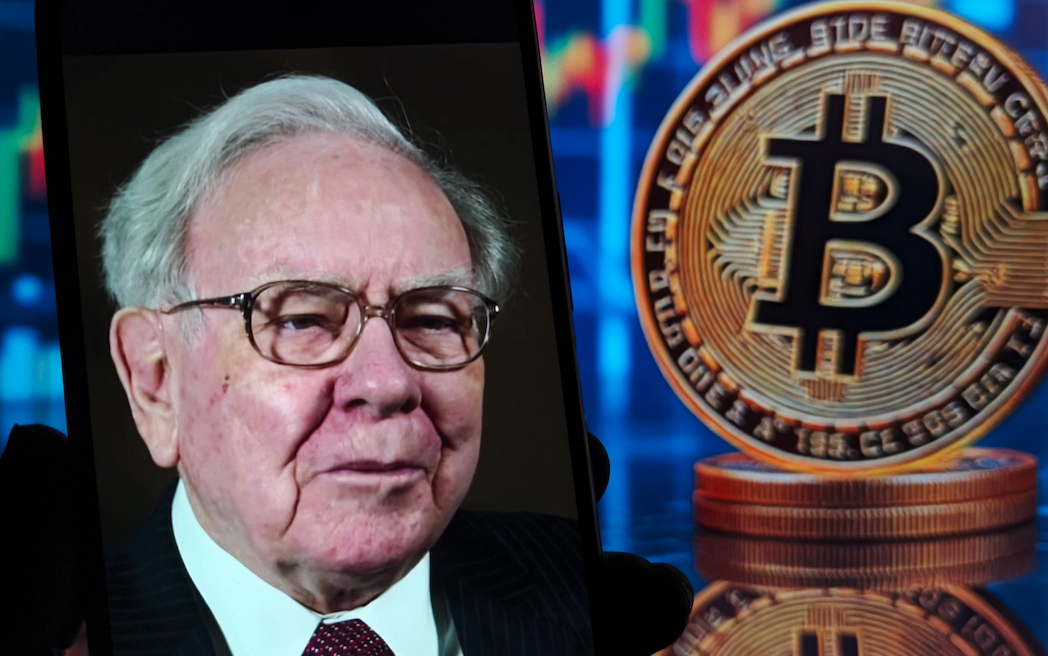
That Buffett cash hoard has also created a lot of speculation, innuendo, and assumptions, which is what I want to walk through in today’s discussion. Primarily, what that cash hoard actually represents, the popular theories explaining it, and what it really costs shareholders to hold.
Markets ended last week under pressure as the optimism that had been building around a potential geopolitical breakthrough faded quickly. The China summit did not deliver the progress that had been hoped for. The Boeing aircraft order was smaller than expected; there was no meaningful movement on Iran; the Taiwan issue was brought forward in a way that unsettled markets; and the hoped-for easing of tensions around the Strait of Hormuz did not materialize.
One thing most people don’t know is that prior to the invention of the Fed, other than during wars, there was almost no inflation. Various sources including the Federal Reserve regional banks show the purchasing power of $1 in 1900 was the same as or higher than it was in 1800.
For shareholders, the upside justifies the gamble. For bondholders, the downside is real and the upside belongs to someone else. That wedge – the classic asset substitution problem – is what credit investors are increasingly pricing, and until the re-leveraging impulse shows signs of reaching a plateau, the divergence across the capital structure is likely here to stay.
Emerging market debt is compelling as a medium‑term structural allocation, particularly for investors seeking to diversify away from concentrated U.S. exposures.
Tax-equivalent yields on high-quality munis are hitting 7% to 9%. Discover how WisdomTree ETFs, WTMU and WTMY, exploit the steep yield curve.
As inflation lingers and market dynamics shift, advisors are rethinking the 60/40 portfolio with managed futures and options income ETFs.
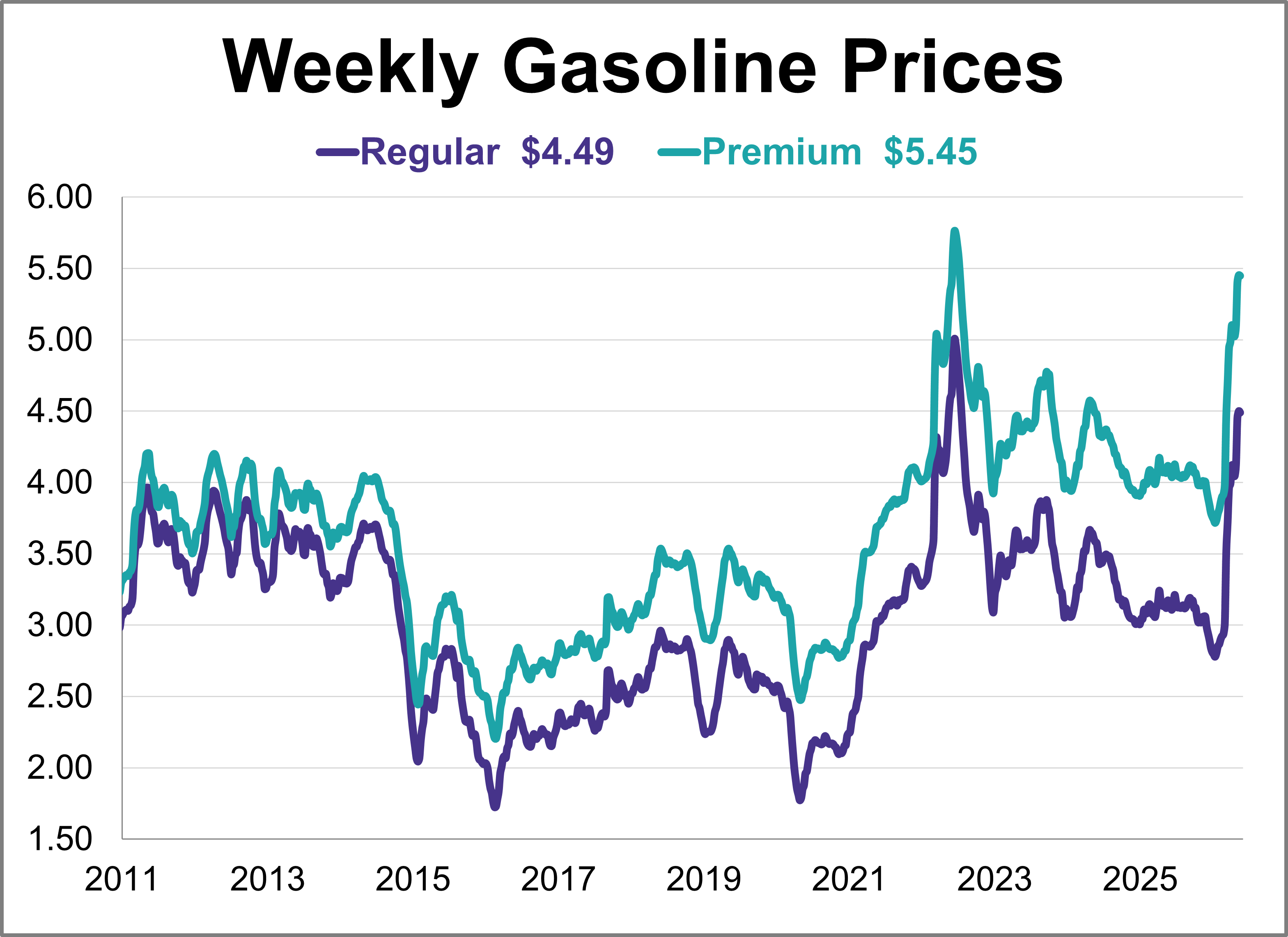
Gas prices were relatively flat this week, remaining at their highest level in nearly four years. As of May 18th, weekly prices were down 1 cent for regular and were unchanged for premium.
Join Dr. Ankur Crawford, Portfolio Manager at Alger, for an in-depth discussion on how she is evaluating the AI cycle, managing volatility, and identifying durable opportunities amid rapid change.
Investors need to understand what they own, how it may perform in different environments, and why it is structured the way it is. When advisors build this education into their work, it gives clients the discipline and expectations they need to stay the course when volatility rears its head.
Student loan debt is a legitimate concern, and the return on a college degree varies enormously by field, institution, and student. The key is to look realistically and specifically at each student’s needs and interests, each family’s finances, and all the sources of funding and support that might be available.
The percentage-of-assets fee is so embedded in advisory economics that most firms treat it as a fixed constant rather than a business decision. It shapes how you staff, how you plan, and how you define the relationship with clients. But the AUM model is neither as old nor as inevitable as it feels.
Bringing family into an advisory firm is not a shortcut. It can add complexity and raise expectations. But when the mission is clear, standards are applied consistently, and systems are strong, involving family can create meaningful long-term stability. That stability, however, depends on fairness.
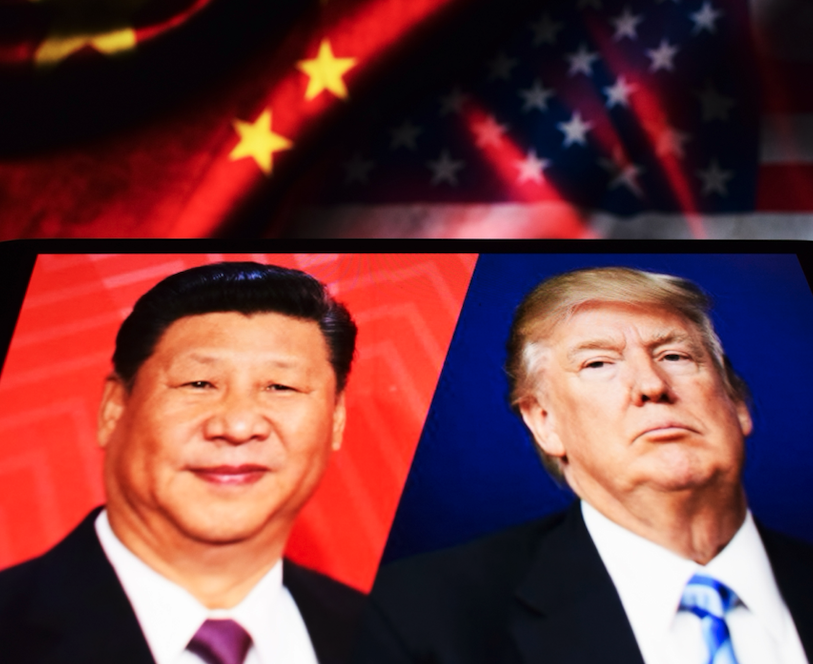
If Donald Trump and Xi Jinping's Beijing summit produces a sustained Sino-American trade truce and a path to reopening the Strait of Hormuz, that will give the world economy something it has lacked for the past year and half: a reduction in tail risks. In a year when so much has gone wrong, that is a welcome prospect.
The 30-year rate increased six basis points to 5.18% on Tuesday, a level last seen on the brink of the global financial crisis in 2007, rising alongside US government yields across maturities.
Investors are pouring money into commodities funds as the US-Iran war stokes inflation, according to Invesco Ltd.
The nothing-burger that came out of the Xi-Trump summit drove home a new reality for global investors. The NACHO trade, which stands for “not a chance Hormuz opens,” is on. Prospects of prolonged inflation have risen, sending global bond yields higher and the US dollar stronger.
Federal Reserve chair Jerome Powell steps down this month after proving himself an exemplary public servant. Compelled to deal with a president intent on telling the central bank what to do, his response was exactly right. Reluctant to confront the White House until he had no choice, he then did so firmly, without needless drama or any trace of ego.
We’ve all been in meetings that “could have been an email,” so why not have a jury trial that could have been an AI prompt?
I’ve long been a student of game theory, the branch of mathematics that studies how rational actors make decisions when their outcomes depend on what everyone else does. It’s a helpful framework for understanding markets and geopolitics, and right now, there’s no better place to apply it than Taiwan.
A frequently asked question in recent weeks is whether the market is simply ignoring the risks stemming from the current geopolitical conflict, especially given the spike in oil prices that has pushed inflation pressures higher.
In this thought provoking presentation, Chuck Carnevale, co founder of FAST Graphs and widely known as “Mr. Valuation,” challenges one of Wall Street’s most accepted investing principles, the traditional 60/40 portfolio split between stocks and bonds. Drawing from decades of investment experience, Chuck explains why he believes blindly allocating large portions of retirement assets to fixed income may actually increase long term financial risk rather than reduce it.
AI has moved from buzzword to business reality. For Advisors and RIAs, the question is no longer whether AI will matter. It’s how fast your practice can use it to remove friction, improve service, and stay focused on the work clients actually value.
The artificial intelligence (AI) evolution moves at breakneck speed. While generative AI is still a significant part of the underlying investment thesis, physical AI is rapidly accruing momentum.
The summit in Beijing between US President Donald Trump and Chinese President Xi Jinping delivered little in the way of diplomatic breakthroughs but bears important cross-asset implications.
As Kevin Warsh takes over as Federal Reserve chair with his own goals, he may face challenges even beyond rate policy, from inflation to independence to a bulbous balance sheet.
Chemistry is a vital component when building an organizational powerhouse. This applies not only to just sports, but also the executive world. In the NBA, the New York Knicks assembled the “Nova Knicks.” This effectively reunited a championship-caliber core of Villanova alumni in Jalen Brunson, Josh Hart, and Mikal Bridges.
Leadership transitions at the Federal Reserve (Fed) are rare. Only seven individuals have served as Fed chair since the 1970s, underscoring how infrequent turnover is at the Fed’s top job. That rarity is why investors pay close attention when a new chair is appointed, especially when the incoming leader brings a different perspective. Kevin Warsh has been a vocal critic of Fed policy and communication in recent years.
Kevin Warsh was confirmed this week as the next Chair of the Federal Reserve’s Board of Governors. As we discussed in a recent article, his transition comes at a delicate time; inflation is rising, and questions about the Fed’s independence are pressing. The honeymoon period will be brief.
Vanguard research suggests that one practical answer may lie in pairing traditional target-date funds with a modest allocation to deferred-income annuities (DIAs).
The sooner the mass of retail private credit managers realize they are zombies and give up the ghost, the sooner we can burn the whole thing to the ground and conjure a better model from the ashes. But there is no time like a crisis to have conversations about how to make the structure work better for everyone in the future!
Semiconductor stocks, along with some computer hardware companies, are the market’s latest AI darlings. Momentum and gamma are driving the outperformance, and, in their wake, a supportive narrative is trying to justify it.
You are undoubtedly seeing in the news that high earners are leaving New York, Los Angeles, and other metro areas. This does not begin to address the magnitude of the problem. There are dozens of cities that are trending towards fiscal collapse. Indeed, taxpayers are leaving.
In this episode of "ETF of the Week," Todd Rosenbluth (Head of Research at VettaFi) joins Chuck Jaffe to dive into the Roundhill Memory ETF (DRAM). Launched in April 2026, this fund has shattered records, amassing over $6 billion in assets in just over a month.
What do “the utilities of retirement” refer to? Buy gas and electric stocks and live off the dividends? No. Not in this article. We’re talking about utility as an economic term of art, meaning reward, pleasure, and satisfaction.
I was in West Texas recently to witness firsthand the emerging practical applications of artificial intelligence. What I saw bolstered my conviction about the technology’s progress and the need to mold it rather than resist the change.
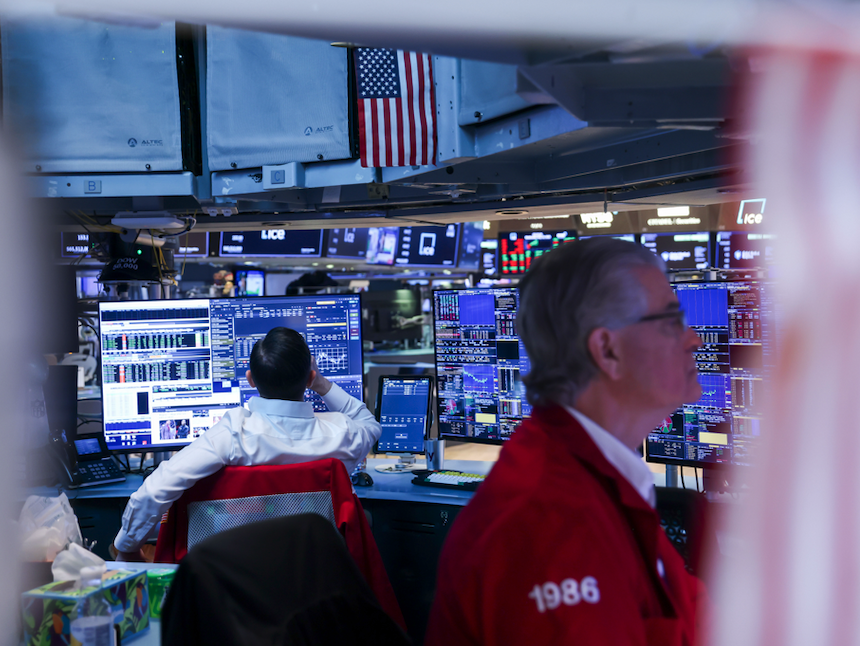
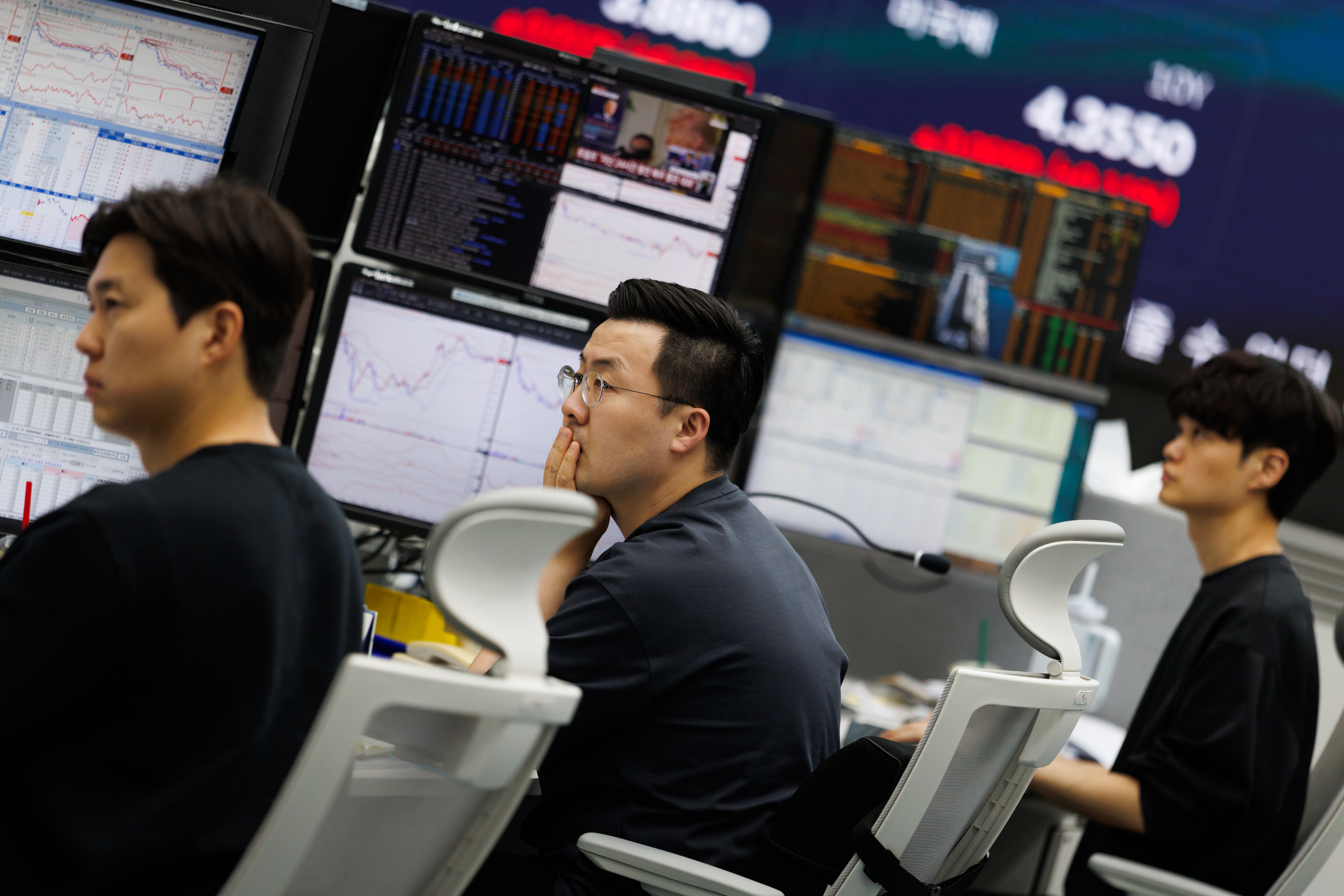
Investors were forced to pay attention Friday, when the most interest-rate sensitive corners of the market saw big plunges in an ugly market selloff. The small-cap Russell 2000 Index dropped 2.4% for the biggest single-day decline since November.
NextEra Energy Inc. agreed to pay about $67 billion in stock for Dominion Energy Inc. in the biggest power acquisition ever, creating a giant utility extending from Florida to the data centers clustered in Virginia.
Yields on US bonds dipped as much as three basis points Monday after Iran’s semi-official Tasnim reported that Washington proposed a temporary waiver on Iran oil sanctions until the final agreement, citing a source close to the negotiation team.