Discounted municipal bonds could expose you to unexpected taxes. Here's what to know before you buy.
US government bonds rallied Friday, adding to their monthly gain, after benign inflation data kept alive predictions that the Federal Reserve will cut interest rates at least once this year.
Cash has a place in portfolios, but bonds are a better choice for locking in yields, boosting return potential and providing diversification benefits. If you still have a pile of cash on the sidelines, there are strong reasons to consider putting some of it back to work in bonds.
Companies going bust, mounting credit card debt, higher mortgage bills.
Predicting Fed rate changes may be an inexact exercise, but understanding how the tools that do track it work can help investors weather uncertain markets.
Global bond investors are coming to terms with the likelihood that interest rates are going to stay high for the foreseeable future.
Since the Global Financial Crisis of 2007-09, fixed income investors have suffered the worst of both worlds. For a dozen years they endured the stingiest of yields on their fixed income holdings.
Market factors are constantly changing and require monitoring, analysis, and flexibility by the investors when it comes to choosing appropriate investments.
Treasuries pared this week’s sharp losses Thursday after inflation gauges in the US first-quarter economic growth data were unexpectedly revised lower.
In spite of the highest Federal Reserve policy rates in two decades, the US economy grew about 2.5% last year, unemployment remains low and stocks are near all-time highs, leading many observers to conclude that the economy must have become less interest-rate sensitive — and probably needs permanently high benchmark rates to prevent overheating.
What exactly is a market bubble, and how can investors recognize one?
The big news in the $20 trillion US property market last week was that, for the first time since the financial crisis, investors suffered losses on top-rated bonds backed by the mortgage on an office building.
I’m fresh off the plane from Las Vegas—and no, I wasn’t hitting the slots, though the city’s Harry Reid International Airport sure hit the jackpot with a record-breaking 57.6 million passengers last year.
European value stocks offer a compelling case for short- and long-term investment opportunities, supported by strong fundamentals, attractive valuations, and favorable market conditions.
Check out this recent insight from T. Rowe Price on the importance of credit quality research in fixed income.
Rather than dive into a vast pool individual bond options, these three ETFs can provide a low-cost and convenient option.
There is no question that Fed policy remains the primary force driving the money and bond markets for the third year in a row.
Markets remain highly responsive to economic data as concerns around Fed policy and high interest rates dominate the second quarter.
Franklin Templeton Fixed Income CIO Sonal Desai discusses why rising investment and persistently loose US fiscal policy are simultaneously pushing in the direction of higher long-term real interest rates.
Some of the biggest names in tech started paying dividends this year. This includes Alphabet (GOOG), Meta Platforms (META), Salesforce (CRM), and Booking Holdings (BKNG).
The Nasdaq-100 Index (NDX) is higher by 11.30% year-to-date. This confirms that large- and mega-cap growth stocks are proving sturdy.
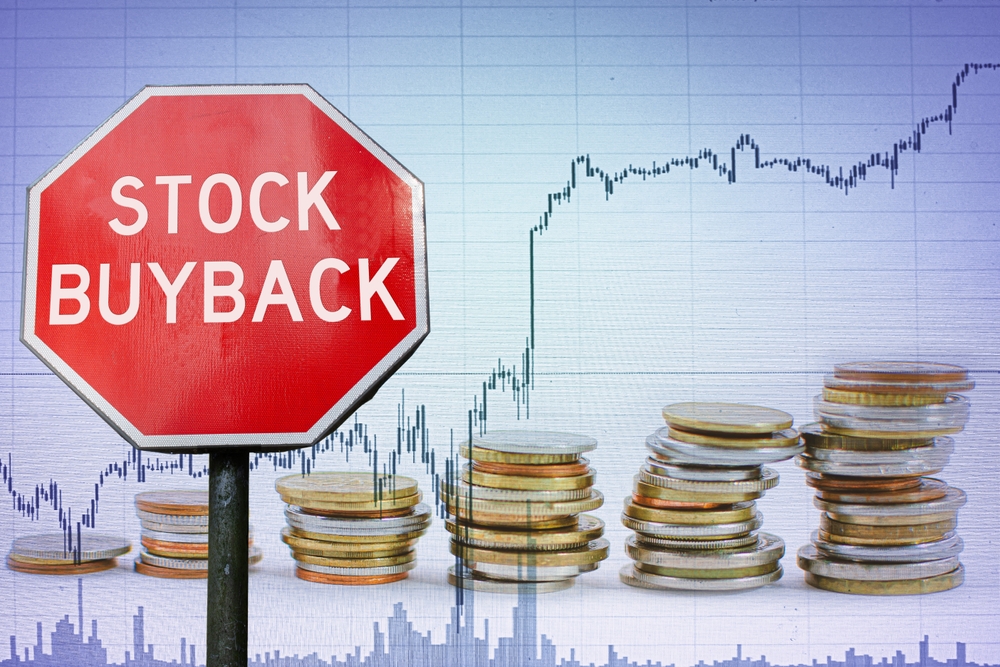
Corporate America is buying back its own shares at a near record pace, despite a new one percent buyback excise tax instituted in 2023. While buybacks are often criticized, they are wonderful for investors – though probably not in the way most people think.
These are only some of the exciting new applications on everyone’s lips at business gatherings these days, where the conversation often veers to artificial intelligence, which has become the latest “new new thing.”
Credit bulls are pointing at a set of metrics to show that high-grade bonds have rarely been this cheap, burnishing the appeal of corporate debt at a time when it’s offering little upside over government securities.
In this article, Russ Koesterich discusses why stocks are proving to be resilient in the face of higher rates and muted expectations for monetary easing.
On the latest edition of Market Week in Review, Director of Investment Strategies, Shailesh Kshatriya, and ESG and Active Ownership Analyst Zoe Warganz discussed the U.S. inflation and retail sales reports from April, as well as the market’s reaction. They also chatted about the improving economic outlook in Europe.
Private capital is increasingly being used to finance consumer spending.
Idanna Appio spent 15 years at the Federal Reserve Bank of New York analysing the history of sovereign debt crises. Now, as a fund manager at the $138 billion First Eagle Investments, she’s reached a conclusion: US Treasury bonds are too risky to hold.
We share some of the highlights from the past year that led to significant improvements in environmental protection, corporate governance, and transparency.
While there is much debate over whether another bear market is imminent, weekly moving average crossovers suggest a different outcome for now. There are many current concerns, from geopolitical risk to still inverted yield curves, slowing economic growth, high interest rates, and inflation. Yet, despite those concerns, markets are flirting with all-time highs.
Inflation data has continued to fuel uncertainty about when the Federal Reserve will begin to cut interest rates. It's a question with global implications.
Recent challenges from higher rates and banking turmoil are well known to investors in preferred securities, but the performance of this asset class relative to other alternatives in fixed income may not be. Here’s why we think preferreds continue to offer attractive total return potential and a tax-advantaged income stream.
While extracting yield is a prime option for bonds exposure, the risk associated with depreciating prices shouldn't put off investors.
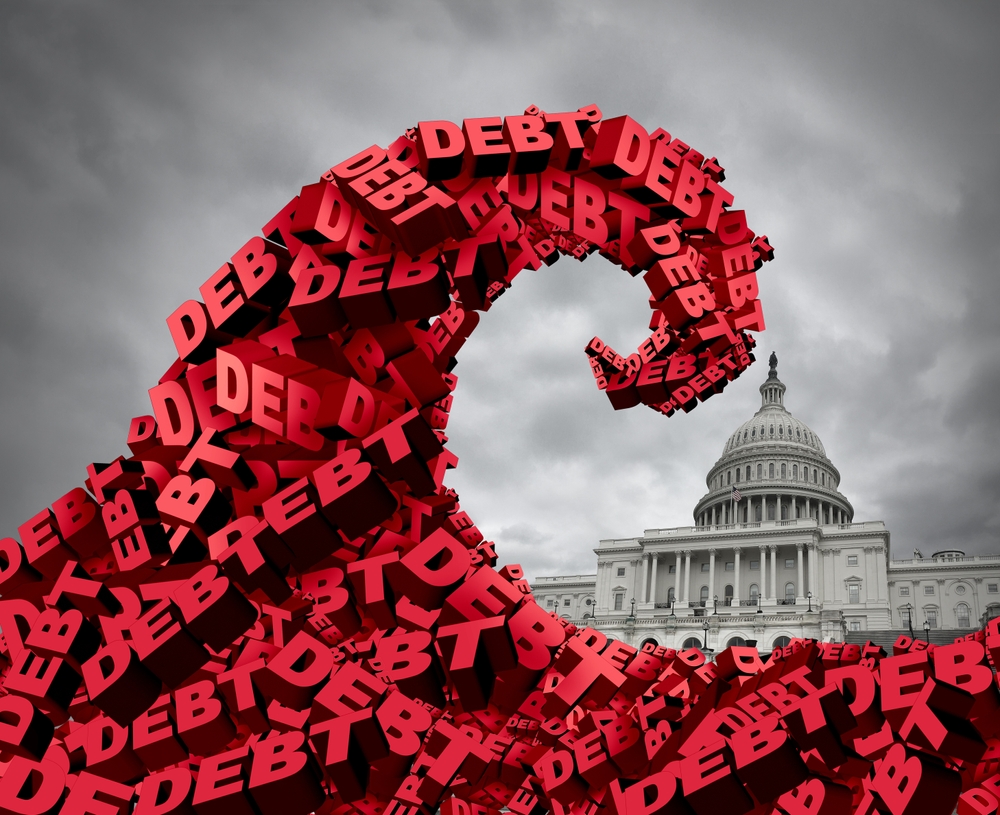
Relative to 18 developed economies since 1870, U.S. leverage is high though not unprecedented. However, unless the recent rise in interest rates reverses, the U.S. will need to cut its debt load.
A global bond rally ignited by signs that inflation in the world’s largest economy is finally slowing once again faces a reality check this week.
Despite the US Federal Reserve’s cautious stance on interest rates and the shifting dynamics of the equity and fixed income markets, Franklin Income Investors CIO Ed Perks believes conditions are favorable for investing in these asset classes.
April’s U.S. inflation report likely offers some comfort to Federal Reserve officials, but rate cuts are unlikely until we see a more substantial deceleration in inflation.
JPMorgan Chase & Co.’s asset management arm has created a new European money market fund focused on public debt, a kind of investment that largely disappeared when interest rates were negative.
In today's financial climate, marked by interest rate and geopolitical uncertainties, infrastructure investment offers financial and strategic opportunities. However, traditionally infrastructure portfolios have been divided into listed and unlisted segments, with investors choosing between one or the other.
We explore how stabilization and growth of global markets may potentially shift preferences toward equities relative to bonds.
The Northern Trust Economics team shares its outlook for U.S. growth, employment, interest rates and inflation.
Managers are increasingly focusing on sectors beyond tech that could benefit from the rise in AI in the short term. These include healthcare and consumer companies, which also have more attractive valuations.
There was white smoke over the Bureau of Labor Statistics, sort of, on Wednesday morning. The key measures of consumer price inflation for April confirmed expectations for a slight decline, and alleviated growing anxiety over a possible reacceleration. Risk assets across the world spent the rest of the day exhaling deeply.
The path to the US’s energy future is becoming obvious. Over time, nuclear will become one of, if not the primary, sources of energy feeding our ever-growing demand for electricity. China and India are far ahead of the US on this, with hundreds of new reactors slated for construction.
A measure of underlying US inflation cooled in April for the first time in six months, a small step in the right direction for Federal Reserve officials looking to start cutting interest rates this year.
Here are the key takeaways from the US CPI report for April released Wednesday.
Our holiday from history has come to an end. I am referring not to world peace but to the zero-interest-rate environment so many people expected would last forever.
With the potential for higher-for-longer yields across countries, we see the global fixed income opportunity set as the most attractive in years.
When it comes to the financial markets, investors have a litany of investment vehicles to choose from. The choices are nearly unlimited, from brokered certificates of deposit to complex derivative instruments.
The finance world can get complicated, especially for the passive or uninterested investor. Let’s face it, some of us are not curious about sports, movies, exercise, reading, or other things while others of us carry a passion for them.