Taxes are a necessary fact of life. Although no one likes paying them, and they divert resources and cause waste, governments need revenue to provide essential (and some not-so-essential) services.
A plan-based benchmark changes the advisor’s role from portfolio reporter to progress partner. Instead of reviewing performance against a market index, the discussion can focus on metrics such as cash flow resilience, adherence to the risk budget, and after-tax outcomes.
As careers advance and income increases, spending often follows suit. This is lifestyle creep: the gradual increase in expenses as your financial life expands.
President Donald Trump has promised to address housing-market dysfunction and a lack of affordability in 2026. While we don’t know what the White House has planned, previous talk has included a (much criticized) suggestion for 50-year mortgages and exhortations to builders to do their duty and build more housing.
Silver was the best-performing commodity last year, up an astounding 145%, but precious metals as a whole delivered solid returns. Gold, silver, platinum and palladium all responded positively to a number of factors, from rising geopolitical tensions to changes to global trade to the accelerating energy transition.
For many high-net-worth investors in Pittsburgh, an Opportunity Zone conversation starts the same way: a large capital gain shows up on a return, perhaps from a business sale, a commercial real estate exit, or a concentrated stock position, and the question becomes how to manage the tax hit without making a rushed investment decision.
Last year, we thought economic growth would slow. Verdict: GDP data say we were wrong, employment data say we were right. Last year we thought the stock market would decline. Verdict: it did in March and April, sharply, but the S&P 500 ended the year with an impressive 16.4% gain. Overall, we’d say our negativity was unwarranted.
From an investment perspective, the financial ramifications operate on two levels — direct and indirect effects. The most direct effect is visible in the distressed debt market. Bonds issued by PDVSA, Venezuela’s state-run oil company, remain in technical default but had already begun a sharp rally in mid-December. Investors, anticipating an increased likelihood of regime change, have now seen that thesis validated.
The defining feature of every bubble is the same: a growing inconsistency between the long-term returns that investors expect in their heads - based on extrapolation of the past, and the long-term returns that properly relate prices to likely future cash flows - based on valuations. Every bubble smuggles the same tragic past into the same tragic future by packaging it with new wrinkles that convince investors that this time is different. Ultimately, they still end the same way.
With 2025 in the books, we take a brief pause to reflect on QuantStreet over the last few years. We started managing our first portfolio in December of 2021. What started out as just an idea has grown into a business serving many clients, both retail and institutional. 2025 was a year of growth for QuantStreet, and we hope to continue to build on this in 2026.
To help our clients and the marketplace navigate this evolving landscape, in the following sections, we’ve identified five key ETF industry themes to watch in 2026. These areas reflect the ongoing growth, innovation, and strategic shifts shaping the ETF industry, and they will be critical in understanding where opportunities and challenges lie in the year ahead.
Now, as we turn the page to 2026, new challenges await: geopolitical tensions, lofty valuations, and an evolving macro backdrop. That’s why we’re excited to unveil our Ten Themes for 2026, inspired by Mission: Impossible, celebrating the 30th anniversary of its first movie this year.
Our 2026 outlook shows fixed income continuing to benefit from elevated rates, while equities still face a narrowing edge over risk-free investments.
Major hedge funds achieved historic returns in 2025 as tariff-driven market volatility created ideal conditions for macro and multi-strategy trading.
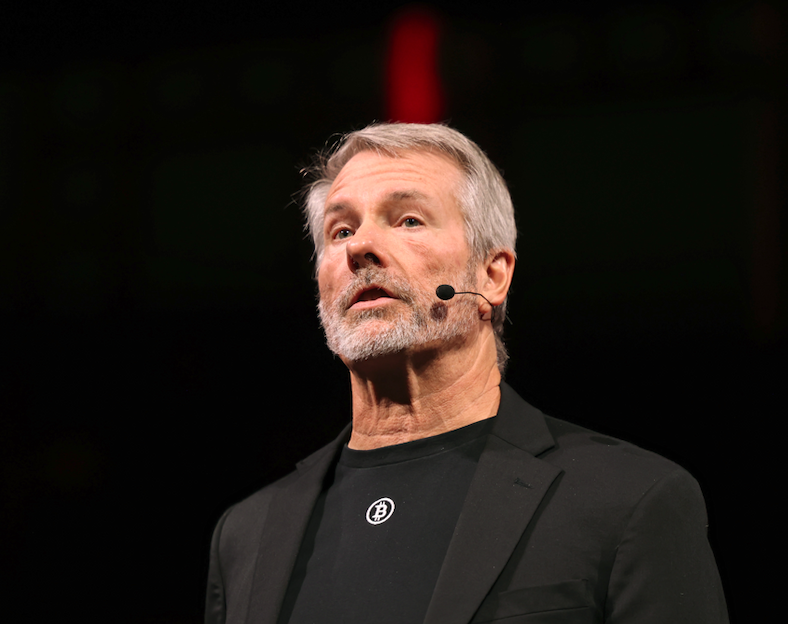
Michael Saylor has long noted that Bitcoin’s volatility “is a feature, not a bug” when pitching his cryptocurrency accumulator Strategy Inc.
Investors and advisors have numerous goals to meet with their portfolios. Some investors full send their portfolios to produce as much capital appreciation as possible. Others, especially those at or near retirement age, look for current income and ballast to steady their financial ships.
Artificial-intelligence-related investment is one of the trends likely to sustain the rise of emerging market equities in 2026, as policy support also contributes to a favorable backdrop.
As we step into 2026, the financial landscape is shifting rapidly—new legislation, evolving markets, changing interest rates, and changing family needs may all shape the choices you make today.
Investors were rationally exuberant in 2025. US consumers remained remarkably resilient, keeping the world's largest economy out of recession. The tariff blizzard waxed and waned, eventually settling at levies still compatible with maintaining global growth, albeit at an anemic level.
RiverFront’s Investment Team is proud to present the summary of our 2026 Outlook, which will be released this Friday, December 19th. In 2025, the tech-heavy US stock market rode a wave of AI awareness and spending.
On this special episode of the “ETF of the Week” podcast, VettaFi’s Head of Research, Todd Rosenbluth, reviewed some of his biggest takeaways for the ETF industry in 2025 with Chuck Jaffe of Money Life.
The U.S. economy appears poised for a measured and confident expansion into 2026 driven by a stabilizing monetary policy, corporate strength, and resilient household income growth. Our outlook suggests a supportive environment for risk assets, particularly domestic equities, while favoring specialized strategies in fixed income.
Franklin Templeton Institute believes tax-free municipal bonds continue to be well positioned in the current market environment.
When it comes to interpreting the economy we put a premium on sobriety. One good piece of economic data doesn’t mean a boom, nor does one bad report mean a bust.
We examine what’s driving gold’s ascent — from central bank reserves to portfolio hedging — and why it can play a strategic role for investors.
As we pass the halfway mark of the 2020s, comparisons now abound between our current decade and the roaring 1920s. F. Scott Fitzgerald best captured the opulence of the Flapper Era in The Great Gatsby, “They were careless people, Tom and Daisy — they smashed up things and creatures and then retreated back into their money or their vast carelessness.”
There is a rising market risk in 2026 that is largely overlooked as we wrap up this year. Optimism about 2026 is running high. Currently, investors are pricing in strong economic growth, robust earnings, and a smooth path of disinflation. Notably, Wall Street estimates suggest a significant acceleration in corporate profits...
Bitcoin’s 30% slide from its all-time high is creating conditions financial advisers say are likely driving more tax-loss harvesting in digital assets than in previous years.
What will 2026 be like? There are reasons to be optimistic, as many were a year ago. Here are five of them.
The “active” in active ETFs simply means there is not an underlying index. This somewhat obvious statement, made last February in my predictions column, was intended to dispel the misconception that active somehow means more risk or more tracking error, which certainly is not the case.
As we get ready to close out 2025, one stand-out trend in the U.S. Treasury (UST) market has been the steepening of the yield curve. The question now is whether this trend will continue into 2026, and if it does, how should investors position their bond portfolios?
Finding ways to effectively diversify a multi-asset portfolio allows investors to maintain their strategic equity allocation while managing risk. We may be entering a period when bonds can, at least in part, start to once again fulfill that function.
2025 was a good year for most fixed income markets but we’re approaching 2026 with caution. All-in yields are still attractive for most markets, but spreads (the additional compensation for owning riskier debt) are low, suggesting investors aren’t getting paid to take on a lot of credit risk right now.
The Santa Claus Rally often grabs headlines because markets tend to deliver solid gains during this short window — or perhaps because it falls during a typically quiet news cycle.
We guess if you say something enough, a lot of people will start to believe it. The current refrain is that the labor market is cold, weak, struggling. A Google search for “labor market” is eye opening. The first five headlines use the words ‘weakened,’ ‘troubling,’ ‘risky,’ ‘slowing,’ and ‘warning signs.’
It’s that time of year when Wall Street polishes up its crystal balls and begins predicting returns for 2026. Since Wall Street never predicts a down year, which would be unwise for fee-based product revenues, these forecasts are often inaccurate and sometimes significantly wrong. Let’s review some previous years.
Challenging the conventional view of gold as a bubble, this analysis explores whether the metal's 109% surge since 2024 signals a permanent paradigm shift rather than a looming crash.
After three strong years in a row, major indexes ended the year seeking direction. While optimism abounds, here are some potential issues that could trip up U.S. stocks.
Cinthia Murphy, Investment Strategist at VettaFi, breaks down new survey data on how financial advisors are thinking about equities, fixed income, and crypto heading into 2026. Brittany Christensen, Head of Business Development at Tidal Financial Group, highlights her top ETF stories to watch in the year ahead.
Preparing for the eventual transition of an RIA practice requires early strategic planning to ensure long-term stability and employee loyalty, regardless of how far off retirement may seem. This guide explores the distinct advantages of internal succession, external sales, and hybrid models, while highlighting key value drivers like organic growth rates and recurring revenue.
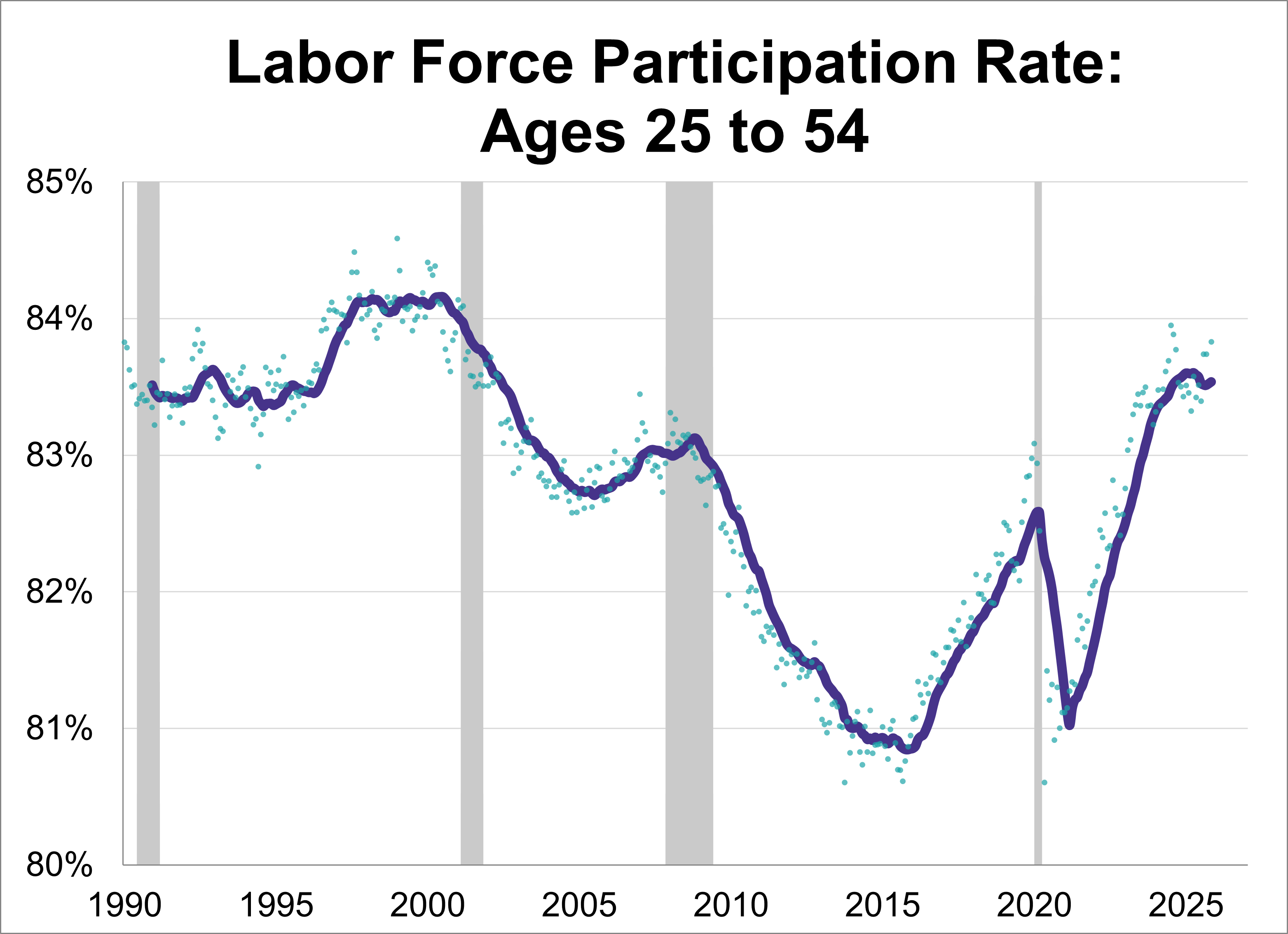
Our monthly workforce recovery analysis has been updated to include the latest employment report for November. The unemployment rate inched up to 4.6%, its highest level since 2021. Additionally, the number of new non-farm jobs (a relatively volatile number subject to extensive revisions) came in at 64,000.
Companies across the US and Europe are preparing to sell a record amount of high-grade bonds in 2026, testing investors’ appetite as yields drift lower.
Before we turn the page on 2025, let’s take a moment to reflect on the key trends that shaped the economy and financial markets this year. Despite heightened policy uncertainty and persistent geopolitical tensions, both proved remarkably resilient.
Portfolio customization and tax management were once reserved for a financial advisor’s wealthiest clients. That era is ending. Tax efficiency and customization are fast becoming core components of wealth management beyond the top income tiers.
As your balance sheet grows, the questions you ask about money tend to change. You move from wondering how to build assets to asking how long they will last, who will manage them after you, and how to keep family relationships steady along the way.
Many people only respond financially to the end-of-season of income changes like job raises, bonuses, and commissions. Carey tapped into something much smarter: letting a single holiday song transform into an evergreen asset that pays her consistently every Christmas. That can apply to your own personal finances as well.
Every situation is a chance to strengthen relationships and align wealth with purpose, but some carry more urgency. The coming tax changes are a prime example, requiring action before year-end. Still, urgency should never overshadow meaningful dialogue. A deadline may start the conversation, but understanding is what sustains it.
While assets under management have grown modestly, the fund’s impressive Sharpe and Information ratios—outperforming the vast majority of its peers—validate the efficacy of its strategic partnership with Apollo.
Over the last couple of years, inflation alarmists such as Paul Tudor Jones, James Grant, and Jeff Gundlach have all said that inflation is returning with force. In different ways, they each stated that they would not own Treasury bonds due to the expectation that inflation would rise as the dollar declined due to the ongoing deficits.
Emerging markets are poised to start 2026 as a favored trade on Wall Street, with money managers betting a multi-year cycle of investment inflows is underway.