A key source of demand for corporate bonds may be fading now that managers of company pension funds have more than enough money on hand to pay their retirees.
US equities continued to climb higher in May, with the S&P 500 Index rising 5.1%. Further de-escalation of geopolitical tension in the Middle East has paved the way for the market’s 19.5% advance from the late-March lows.
Private markets have become integral to modern portfolios, with many investors searching for higher returns and diversification, including from public markets. But recent fund redemptions have reinforced that illiquidity isn’t theoretical, raising questions about the benefits of giving up liquidity. We see several—but investors must understand the trade-offs.
For the dollar-denominated investor weighing how to position for the back half of 2026, last week tightened a thesis we have been building all year.
Reducing equity exposure during periods of elevated risk is not the same as market timing. The financial industry has spend decades blurring that distinction.
Would I be better off waiting for the Fed to make its move on rates before investing?” “Should I wait to increase duration because a blocked Strait of Hormuz could push oil prices higher and push rates even higher?” “Should I invest in bonds gradually to reduce the risk of missing the rate peak?
Rising office delinquencies within commercial mortgage-backed securities (CMBS) reflect genuine pressures from shifting work patterns, higher interest rates, and greater refinancing risk.
Taylor Topoussis and Chris Galipeau discuss high-conviction insights that go beyond media headlines.
LPL Research analyzes stock valuations, finding them fair given growth, rates, inflation, and AI-driven earnings outlook despite risks.
AI is a transformative technology with both near-term and long-term implications for the economy. For investors, while the debt-funded AI buildout has the potential to become a secular driver of risk premia, we believe any such shift would only play out through a multi-year adjustment and would not override the cyclical forces that affect markets.
Every family has a money story. It gets passed down quietly, invisibly, in the way families talk around the dinner table or on long walks together.
May’s 5.3% S&P 500 gain masked a deeply uneven market: technology surged 16% on AI spending momentum while most sectors declined, and a surprise inflation rebound flipped the Fed narrative from cuts to potential hikes.
Join Dan Chung, CFA, CEO at Alger, as he explains how his role as Chief Investment Officer makes him uniquely positioned to see across all of Alger’s product portfolios to identify the “best ideas” for ATFV.
As advisors, our role is not to solve fiscal policy; it is to ensure our clients are positioned to weather the uncertainty that comes from that gap, stay committed to their long-term plans, and not let macroeconomic anxiety drive short-term decisions they will regret.
Individual expertise matters. But in complex situations, making good decisions also depends on your financial professionals sharing information. When you support and expect their collaboration, you are no longer the communication relay.
While the mass affluent market may not be feeling the brunt of inflation woes or the rising cost of living, its financial planning is still being impacted by current economic headwinds.
Investors are about to get a read on the durability of the soaring rally in cybersecurity stocks when two of the industry’s major players report earnings in the coming days.
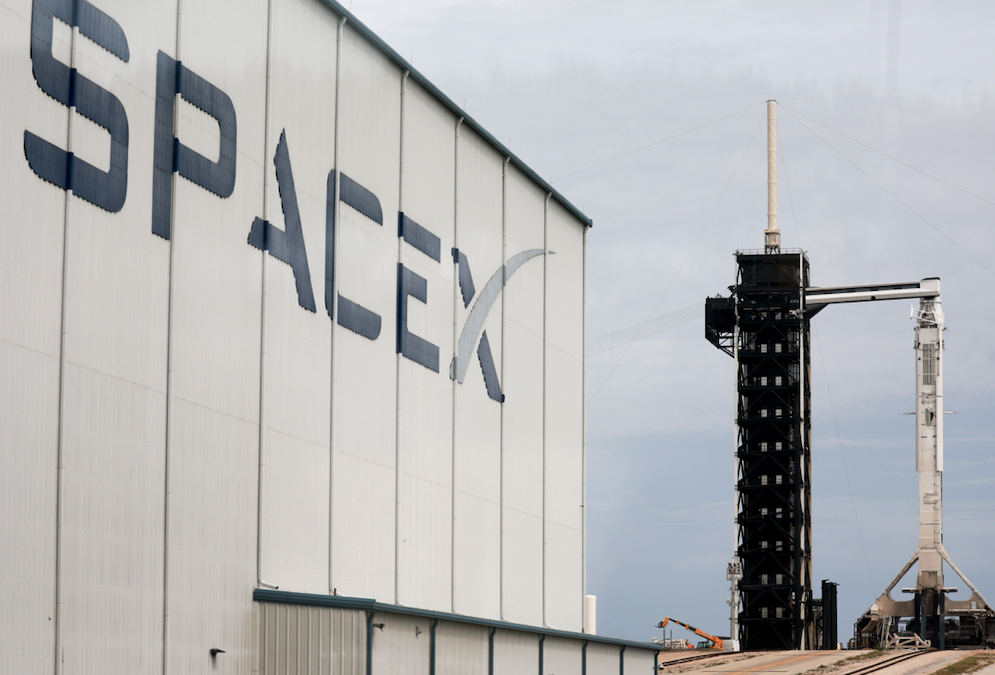
Elon Musk’s SpaceX is negotiating to pay razor-thin fees to Wall Street firms handling its IPO — but banks are still likely to rake in about $500 million from the record-setting market debut.
The announced expansion comes as the US races to provide huge amounts of electricity for AI data centers, with nuclear power emerging as one of the big winners. The Trump administration is pushing to quadruple output from nuclear plants which will require a leap in uranium fuel production to meet the challenge.
Caution has become the most expensive position on Wall Street. A hot inflation reading this week — sending the annual gauge to its highest in about three years — landed alongside fresh strikes in the Persian Gulf and enduring expectations that the Federal Reserve may need to keep policy tight.
Investors are pouring money back into municipal bonds as higher yields and the approaching summer reinvestment season draw cash into the tax-exempt market.
Geopolitical risks are still lingering in the background, but the story lately has been all about earnings. A strong 1Q26 season, paired with a steady drumbeat of upbeat management commentary, has helped push the S&P 500 to 21 record highs this year.
Businesses are racing to build the physical infrastructure that makes AI usable at scale – data centers, the graphics processing unit (GPU) hardware stack, power, and cooling.
The market continues to demonstrate remarkable resilience. Lower oil prices, easing Treasury yields, and the relentless buildout of artificial intelligence infrastructure are still providing a favorable backdrop for risk assets.
If you’re not familiar with the name Leopold Aschenbrenner, you should be. A 24-year-old wunderkind, Aschenbrenner was hired by OpenAI in 2023 to work on the company’s “superalignment” team, essentially trying to figure out how to keep AI systems safe once they become smarter than the people building them.
Economies around the world aren’t just reliant on AI investments for growth. The appreciation of AI stocks has supported spending, which is following “K-shaped” patterns. A significant correction to the valuations of tech leaders would therefore be even more likely to result in recession.
A little more than six months ago there were narratives circulating that national housing prices were in an even bigger bubble than the one twenty years ago and headed for an “inevitable” collapse. Given that national home prices dropped about 27% from peak to bottom in the last housing bust, that would be something to worry about.
The global defense industry continues to move rapidly from legacy, heavy-hardware platforms to agile, unmanned systems. Today, the Trump Administration announced that it’s pursuing funding deals for drone companies in an effort to increase domestic production in today’s defensive landscape.
Vocabulary is a power builder. Every time I use the word “hegemonic” in a conversation, I see my listeners’ eyebrows go up as if to say, “what does this guy know that I don’t?” Then again maybe they’re just signaling that I’m full of more than baked beans.
The ETF landscape includes a wide variety of innovative, intriguing funds that look to meet investor goals. From equities to fixed income, all kinds of strategies offer intriguing spins on areas like income and dividends.
J.P. Morgan Asset Management has expanded its alternative lineup with the launch of the JPMorgan Managed Futures Plus ETF (JPFP) on the Nasdaq. The actively managed fund combines a core U.S. equity allocation with a systematic managed futures strategy spanning equities, bonds, currencies, and commodities.
Join the experts at VettaFi and Exchange Traded Concepts for a 60-minute discussion on the investment opportunities related to the rapid expansion of the world's large and small reactor fleets.
Join the experts at J.P.Morgan and VettaFi for a timely, 30-minute discussion on Monday, June 1, at 12:30 p.m. ET as they discuss the outlook for MLPs, key fundamentals for the space, and expectations for distribution growth.
Closed-end funds may not be a hot topic right now, but they offer a highly compelling means to solve today's macroeconomic woes.
Goldman Sachs announced a partnership with Anthropic in early May, though you probably shouldn’t view it as just a cool innovation story. It is infrastructure in motion. When institutions like Goldman move, pay attention to what problem they believe they are solving.
Are utilities the ultimate hidden growth play? In this video, we break down why the State Street Utilities Select Sector SPDR ETF (XLU) is moving the needle for smart investors. Traditionally known as a boring, defensive sector for dividend income , utilities are experiencing massive new demand driven by the massive energy and electricity needs of Artificial Intelligence (AI) and data centers.
New York City is facing one of the most significant fiscal challenges in recent memory. The NYC Comptroller has projected a $2.2 billion budget shortfall for FY2026, growing to a $10.4 billion gap in FY2027 (Source: New York City Comptroller, January 2026). That is a two-year deficit of roughly $12.6 billion.
For the last eight years, GMO’s Asset Allocation team has held a differentiated view on Japanese equities. Long before Japan re‑entered the global investment narrative, we argued that the country was undergoing slow but durable structural changes aimed at improving corporate governance, growth, and capital efficiency. These reforms were never expected to deliver quick results. Instead, we expected them to compound quietly over time.
The essential feature of a useful alternative asset isn’t that it’s unusual or exotic, but that its returns aren’t tightly linked to the risks that already dominate the portfolio. The value of an alternative asset comes from the way it interacts with the other assets in the portfolio.
Before I recommend what to do, I want to first state what not to do. Don’t invest as if you think you know what long-term inflation will be. Will we return to the double-digit inflation of the late ‘70s and early ‘80s? The answer is: Nobody knows.
The assumption that muni equals tax-free is deeply embedded in how the asset class gets discussed and presented. But for high-net-worth clients in high-tax states, the gap between partially exempt and fully exempt is material enough to be worth a conversation.
It’s not often that investors encounter something truly new in markets. But they will soon when Space Exploration Technologies Corp., OpenAI and Anthropic PBC go public with trillion-dollar valuations, or close to it. No company listed in the US has ever come to market so extravagantly priced — by a long shot.
Mentioning artificial intelligence to the graduating class of 2026 has been sure to get you booed. And why not? Fresh graduates have spent the past few years being told about the wonders of AI and watched seniors struggle to get a toehold in the labor market.
The industry is entering a more customized phase of liability-driven investing, he said. While earlier stages focused on adding duration and raising fixed-income allocations, better-funded plans are now tinkering at the margins to more precisely match their holdings with their obligations.
US stocks headed for a positive open on Monday as traders remained hopeful that Washington and Tehran would strike a peace deal, even amid a rise in oil prices.
Nvidia Corp. is entering the PC market with a new chip aimed at loosening the stranglehold of Intel Corp. technology in that arena and modernizing the machines for the AI era.
Innovation drives productivity growth, which in turn raises the standard of living for a nation's population. Accordingly, we support the theory that AI will benefit the economy and the population. We laid this bullish case out in "The AI Economy: Looking Beyond The Façade Part I."
The dollar is supposed to be dying. We’ve heard that argument for the better part of a decade, and it’s getting louder, not quieter. Dollar dominance isn’t fading. In fact, the events of late April 2026 just delivered the loudest counter-signal in years.
Equities extend gains as earnings and semiconductors lead markets higher. Consumer confidence remains subdued despite economic resilience. Inflation is easing gradually but remains above the Fed’s targey.
Recent Federal Reserve communications have turned more hawkish, reflecting concern that persistent supply-driven price pressures could begin to feed into inflation expectations. But unlike in prior cycles, today’s environment is not defined by supply shocks alone.