The Federal Reserve lowered its policy interest rate by 25 basis points, as widely expected. However, dissenting votes may cloud the path forward.
We see the global economy as undergoing a period of “global rewiring” on a number of fronts—evolving patterns and relationships that we anticipate affecting certain economies and markets for some time to come. Such rewiring could cover relationships between countries or developments within particular regions or economies.
China’s ability to sustain fairly robust economic growth despite a massive property sector downturn is now facing new tests as global trade barriers rise, and domestic demand shows fresh signs of weakness.
Last week’s economic narrative centered around the Federal Reserve's latest rate cut, a decision complicated by the government shutdown and lack of economic data.
Over nearly every meaningful time frame, Bitcoin has dramatically outperformed traditional asset classes. In the last 3 years, it has returned an astonishing 79.2% annualized, compared to 18% for the S&P 500, 24.4% for gold, and just 2.6% for the Bloomberg U.S. Aggregate Bond Index.
Effectively reading the Federal Reserve's Beige Book can help investors spot economic, industry, and consumer trends that could potentially impact investment portfolios.
One of the most fundamental decisions facing fixed-income investors is determining the optimal maturity for their Treasury holdings.
We continue to hold gold across all strategies, viewing it as a strategic asset. Central banks remain steady buyers, underscoring gold’s role as both a store of value and an inflation hedge.
The three themes we laid out will take a few years to play out, if at all. Our portfolio positioning reflects our belief in the economic strength and momentum of the US Tech / AI trade, and we would want to see more policy clarity and earnings confirmation before we make any large shifts into international.
US stocks are hovering near all-time highs, buoyed by the prospect of cooling trade tensions between the US and China as corporate America largely brushes off tariff pressures. But that doesn’t mean that Wall Street professionals will be sleeping easy this Halloween.
Long-dated bonds are looking more attractive as governments and central banks take steps to curb the glut in that segment of the market, according to JPMorgan Asset Management.
Euro-area inflation eased slightly but stayed above 2%, backing the European Central Bank’s decision to keep borrowing costs where they are.
This bull market has been on quite a run. The S&P 500 is up 35% since its April 8, 2025 year-to-date low, and up over 92% since it began on October 12, 2022, excluding dividends.
The Federal Reserve’s October rate cut, to 3.75%–4%, signals a continued “risk management” approach, with December’s policy path tilting toward another cut.
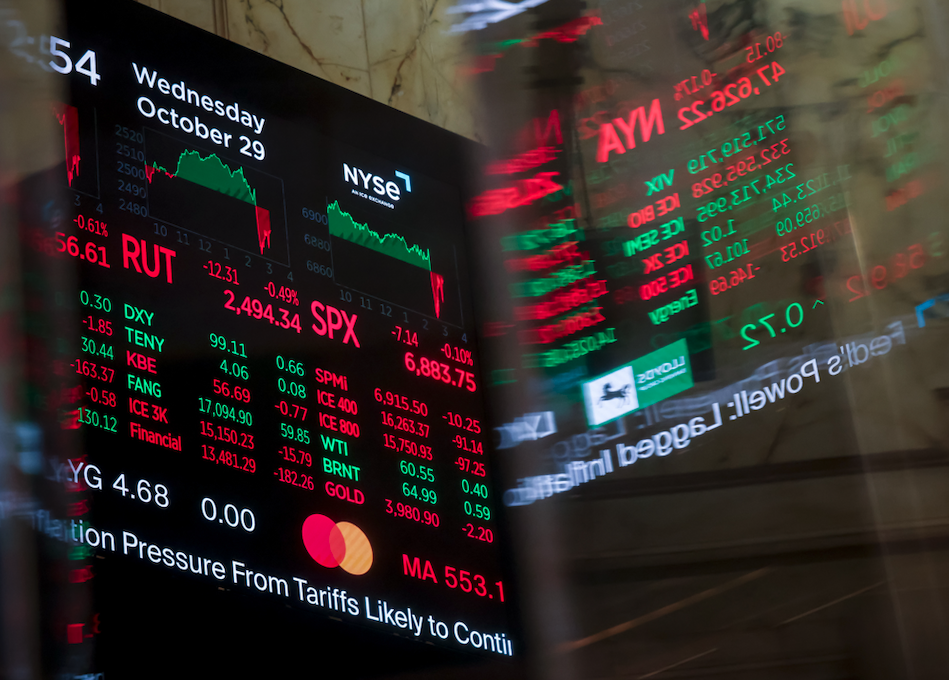
The Federal Reserve on Wednesday announced a widely anticipated 25-basis-point (bp) rate cut, bringing the federal funds target range to 3.75%–4.00%. With markets priced for this move and the Fed operating in a data vacuum due to the U.S. government shutdown, the rate cut and modest statement changes were largely uneventful.
The politics of the government shutdown are about to get trickier. Today is Day 28 of the government shutdown. The Senate will be in session this week, but the House of Representatives remains in recess.
While many lessons have evolved over time, one maxim has never changed for children: look both ways before crossing the street. I reinforced with my children to then look again. We might not see everything on a quick glance, and traffic can change quickly.
The Multi-Sector Credit Team share perspectives on the fixed income market and their quarterly asset allocation ranking. They highlight a timely chart to watch, explore relative value opportunities, and provide insight on their latest asset allocation scores by fixed income sub-sector.
Regulatory changes and productivity gains could push growth to move even faster in the years ahead. But we are also still dealing with the uncomfortable process of moving away from government stimulus and massive deficit spending that have boosted growth numbers in the post-COVID era but were unsustainable.
As widely expected, the U.S. Federal Reserve cut the federal funds rate by 25 basis points for a second time this year. This gives fixed income investors an opportunity to reposition their portfolios with intermediate bonds or reconsider active exposure if they don’t have it already.
Doug Drabik discusses fixed income market conditions and offers insight for bond investors.
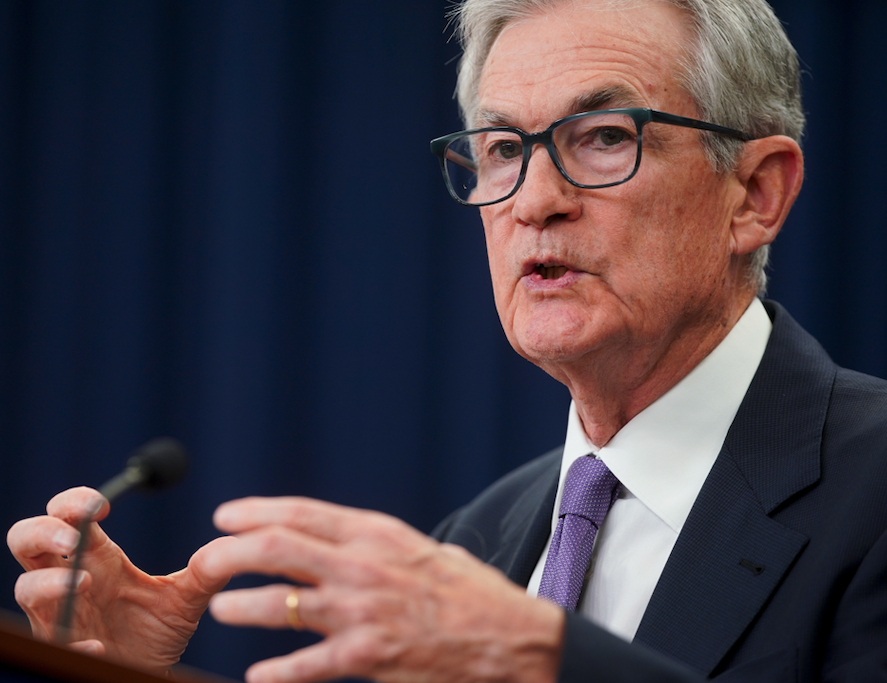
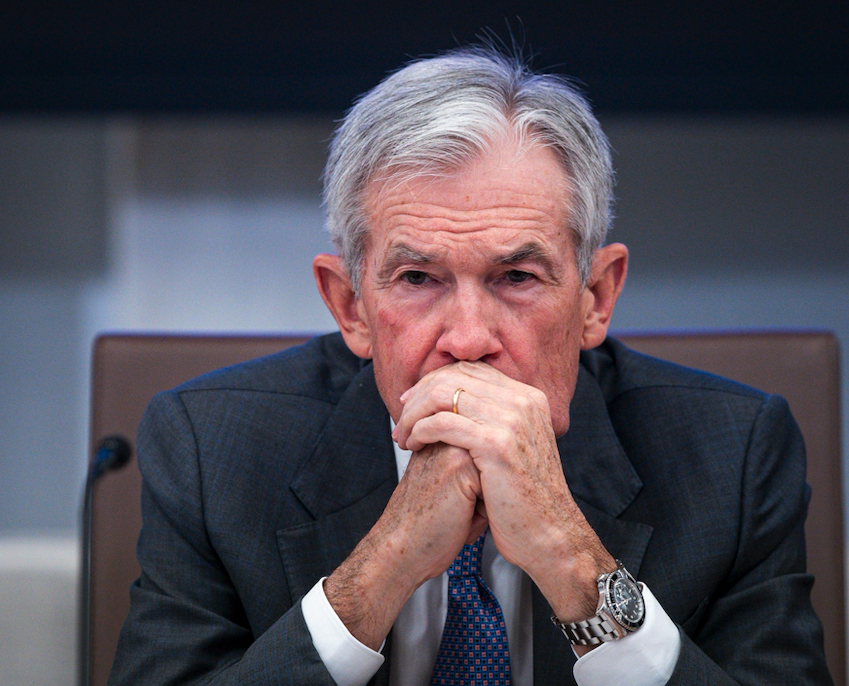
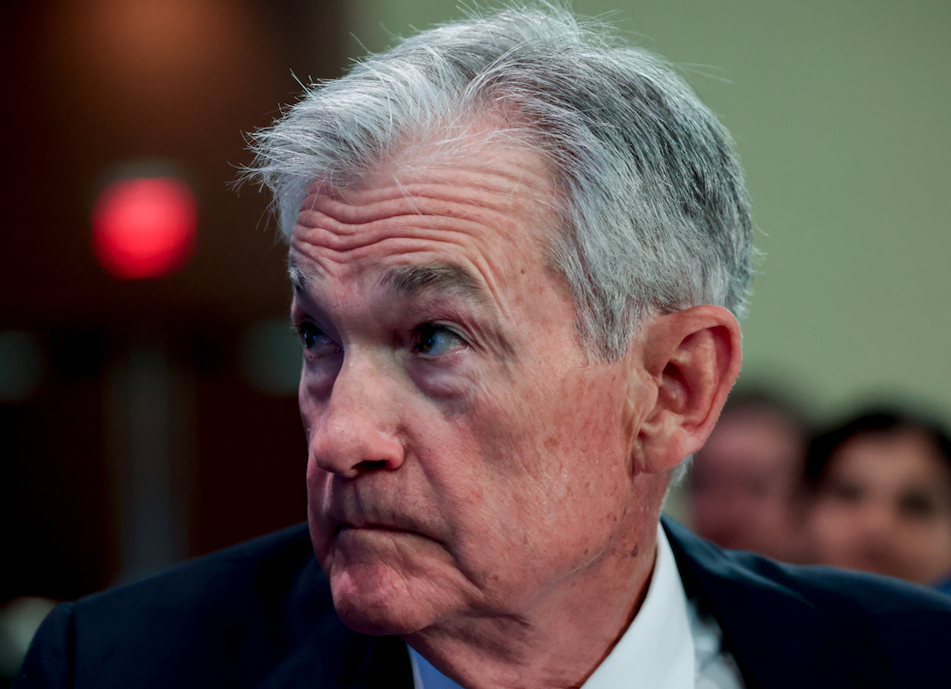
The Powell put is on. The Federal Reserve chairman tried to sound like a hawk, but the central bank’s actions were those of a dove.
Treasuries fell the most in nearly five months after Federal Reserve Chair Jerome Powell cast doubt on a December interest-rate cut, even as a sagging labor market prompted policymakers to bring down borrowing costs Wednesday.
It’s important to remember that QT, at least in the current context, was never really a proactive policy. Rather, it’s the undoing of a policy — quantitative easing — that the Fed used to support markets and the economy during the Covid-19 pandemic.
The headline annual CPI came in at 3 percent, according to BLS data. That was up from 2.9 percent in August and 2.7 percent in July. It was the highest print since January, and up from a low of 2.4 percent in March.
The more things change, the more they stay the same. As widely expected, the Federal Reserve (Fed) cut interest rates by 0.25% at its October Federal Open Market Committee (FOMC) meeting yesterday.
At the very least, whether to cut the policy rate today is a close call for a Fed committed to a 2% goal — a fact that’s sharply at odds with investors’ near-certainty that it will happen.
With the stock market in record-high territory and up about 35% off the April lows, market participants clearly haven’t been too scared lately. But that doesn’t mean there aren’t plenty of things to worry about.
The US Federal Reserve will soon face a crucial decision: What to do with the vast portfolio of securities it has amassed in its efforts to manage the economy?
Think all commodity indexes are created equal? Index design choices made behind the scenes can lead to wildly different—and sometimes disappointing—investment outcomes. Here’s why we think a diversified approach may be a better bet.
Growth investors may be feeling the ground shifting beneath them. Traditional factor analysis shows quality and growth still lagging value—an apparent paradox when global growth itself is strengthening. Yet a closer look at what drives the so-called “value” factor reveals how today’s economic revival is rewarding a different kind of growth.
Chief Economist Eugenio J. Alemán discusses current economic conditions.
Equity bulls are lining up to wager the S&P 500 will surge past 7,000 now that it looks as if a seasonal bout of volatility has passed.
Investors expect the Federal Reserve to cut its policy rate on Oct. 29, and once more by the end of the year. Right now, amid enormous uncertainty about where the economy is headed, the case for cutting is weak. The Fed would be wiser to pause.
Earlier this week, several of my friends texted me in frustration, letting me know that they couldn’t place trades on Coinbase or Robinhood. The culprit wasn’t market volatility or government regulation, but something far more mundane: a cloud outage.
If gold were the perfect hedge for inflation—it isn’t—then gold prices divided by the overall price level would be constant over time. However, real gold prices (adjusted for inflation by dividing by the CPI price level) are currently at multi-decade highs.
The recent high-profile bankruptcies and the timing of their collapse are consistent with this changing macro backdrop, although these cases were also allegedly exacerbated by inconsistencies in collateral accounting and pledges.
Energy and commodities are not flashing red. Oil ticked up from depressed levels amid new sanctions on certain Russian producers, but on a multi-month basis crude is still lower, and the broader Bloomberg-style commodity basket has been roughly flat over six to nine months.
A small part of the federal government took a short break from being shut to make sure the Labor Department could deliver the September Consumer Price Index.
Today, we introduce the Price of Certainty: How much do you need to invest to achieve a particular set of cashflows over time, with varying degrees of certainty?
This article does not discuss the rationale of owning gold as a long-term asset. Instead, it questions the recent jump in gold prices and whether the current levels are fundamentally justified.
The latest inflation data was softer than anticipated and has locked in expectations for a couple of Federal Reserve interest rate cuts to close out 2025. But inflation is far from dead, and the labor market is far from collapsing — policymakers would be wise to proceed cautiously.
The question of the moment in markets is whether we are in an AI bubble, as stocks seem awfully expensive amid hopes that artificial intelligence will transform the economy. But there is another curiosity that is far more concerning: low credit spreads. That suggests a low-risk environment — which describes precisely nothing about this market.
Bold calls to “run to gold, silver, and bitcoin” make for strong headlines, but they oversimplify the reality of modern finance. As we’ve seen, money supply growth is not inherently a sign of debasement but reflects economic expansion. Far from being destructive, government deficits flow directly into private-sector savings and stabilize household balance sheets.
It’s not just the US, China, and Japan that have debt issues. It’s a large portion of the developing countries, and especially Europe. The developed world now has as much debt in terms of GDP as it did during the Napoleonic Wars. And as much or more debt (and growing!) than it did following World War II.
As we move into the final quarter of 2025, I’m cautiously optimistic. The extreme policy uncertainty that plagued the first half has diminished significantly. The Fed is cutting rates but not in panic mode. Corporate earnings remain healthy.
While policy and geopolitical risks persist, we believe many countries are better positioned to absorb trade shocks and attract funding. And with spreads near historical lows but yields still elevated, we believe the asset class continues to offer compelling opportunities—particularly in high-yield and select frontier markets.
U.S.-China frictions continue, highlighting that greater volatility is likely not a bug of the current trade stand-off but a feature of the emerging geopolitical landscape.
Many people see the stock market as a casino, but according to Chuck Carnevale, co-founder of FAST Graphs and “Mr. Valuation,” the truth is far more rational. How does the stock market work? The market isn’t about luck — it’s a mechanism for allocating capital and rewarding disciplined investors who understand value.
While the ongoing government shutdown continues to delay the release of many reports, a key piece of economic data managed to break through last week.