What is the number-one reported factor for a happy and fulfilling retirement?
Economic moats, also called business moats, are competitive advantages that help a company maintain long-term profits and market share over competitors.
New research shows that investors can profit by exploiting “momentum” – the notion that stocks or factors that experienced good performance will continue to do so, and vice versa.
Portfolio manager John Paul Lech explores the defining changes of the last three years. Here he explains how he is navigating the new era of rising interest rates and financial tightening.
So far this year, the ETF industry has witnessed as much sound as fury. While we haven’t seen the record-breaking flows of past years, we have seen plenty of launch and closure activity.
Stock selection in a climate investing strategy takes more than just avoiding companies exposed to global warming risks. The process should intersect with an active search for diverse opportunities among companies helping to fight climate change, but with high-quality business models, too.
With the Fed purposely trying to slow economic growth and a banking crisis in full swing, do the heightened risks argue for accepting the current bond yields and reducing equity exposure?
Any financial advisor can turn their content into a powerful SEO engine without engaging an expensive consultant.
Here’s why I started the Externship and why it matters.
If the Fed pauses, will that revive risk assets? Tom Nelson and Miles Sampson of Franklin Templeton Investment Solutions weigh in on the investment implications of the latest US central bank actions.
Today’s competitive landscape is creating an interesting opportunity for discussions between money managers and their small business owner clients looking to incorporate more technology-centric investments into their portfolios.
Research has shown that investing in IPOs has been a bad deal – you lose money compared to a comparable index fund. But a new paper shows that certain VC-backed IPOs deliver alpha for investors.
Portfolio Manager John Paul Lech explores the defining changes of the last three years and how they have informed his approach to the years ahead.
World economic growth is slowing. That’s so obvious, very few will disagree. I suppose there are people out there predicting imminent 1990s-like expansion, but they are few and far between. If recession begins soon, it will be the most anticipated one in history.
Crowded equity trades and possible policy remediation for US regional banks may bring an end to a trade that’s roiled broader markets but proved lucrative for some short sellers.
Bank stocks have underperformed conservative sectors and the broader S&P 500. Despite the broad risks, there are good banks that can be investment worthy.
Leadership shifts at the sector and style levels warrant some additional caution, as well as a closer look as to what investors are buying when it comes to "growth vs. value."
What would you do with a million-dollar windfall?
VettaFi’s Lara Crigger offers perspective as the smart beta ETF category celebrates its 20-year anniversary. BNY Mellon’s Ben Slavin discusses the future of ETF innovation, including the upcoming expiration of Vanguard’s ETF share class patent. Avantis’ Phil McInnis explains the drivers behind the remarkable growth of their ETF business.
Key Takeaways
Fear of missing out, or “FOMO,” seems to be a common trend with investors. Whether it was GameStop, AMC, Bitcoin, or the FAANGs, the last few years has seen some investors exhibit FOMO as they chase the hottest trends in the market.
India’s ability to attract foreign investment has long been hampered by subpar infrastructure and excessive bureaucracy. But reputations can obscure real change.
With the European Market’s earning season fully upon us, let’s look at expectations for the month ahead. According to our proprietary analytics, the European energy and real estate sectors have experienced the highest level of downward revision to sales of all sectors on both a one- and three-month basis.
Higher bond yields and improved total return potential may offer advisors a compelling opportunity to move cash off the sidelines.
We hope you enjoy the latest NewsLetter from Harold Evensky.
The vast “cash hoard of 2023” has the bullish media salivating about what it means for the future of equities. That cash hoard in money market funds now exceeds $5.2 trillion.
Here’s how we can improve financial planning projections to result in better forecasts, advice and guidance to households.
Despite the overwhelming academic evidence demonstrating the superior, long-term performance of index funds, investors may want to invest in actively managed products. New research shows the importance of choosing low-cost funds.
Tax season isn't the only time advisors should think about how taxes may impact their client portfolios. There are various strategies advisors can use year-round to ensure they are investing in a tax-efficient manner. Helping your clients maximize their after-tax wealth is an important element of the value you provide.
My guest today, Harin de Silva, is one of the leaders of the quantitative investing community and the winner of several Graham Dodd Awards for institutional research. He is a member of the Q Group and a pioneer in factor investing.
Four reasons, the rule of law, liquid financial markets, and economic and military might, all but guarantee the death of the dollar will not occur anytime soon.
Here’s four digital tools to differentiate yourself from the competition and level up your marketing efforts.
It’s believed that to meet this goal, two out of every three passenger vehicles manufactured in the U.S. would need to be electric models.
2023 has already been an eventful year, featuring a banking crisis and more Fed rate hikes. In our view, this is not a “set it and forget it” type of market – investors need to stay vigilant.
After the market selloff in 2022—a period that was particularly hard on growth stocks—we think our companies are attractively priced for the next five years, which is our baseline investment horizon.
PE will remain a factor in the RIA space for years to come, but it’s not for everyone.
Given market uncertainty and the risk of a US recession, is now the time for defensive stocks? Making a case for low-volatility, high-dividend equities with Franklin Templeton Investment Solutions’ Vaneet Chadha and Michael LaBella.
The lack of diversification benefits of government bonds in 2022 was painful for multi-asset investors. The sell-off in US Treasuries in particular was sharp, and we saw correlations versus stocks move well into positive territory.
The stakes are high, and it appears likely that our deeply divided government is headed for another debt-ceiling showdown. Divided governments have typically been good for the markets; however, they often spell trouble when it comes to negotiating fiscal matters.
With higher bond yields, it is instructive to understand what drives interest rates in cash sweeps.
Sustainable investing continues to gain in popularity, with investors worldwide frequently attracted not only by ethical concerns but also by the lure of superior returns. Unfortunately, new research focused on global stocks showed that they did not get what they were sold.
I get many inquiries from bond investors on whether they should buy bills, notes, or bonds based solely on expected Fed policy.
If I did not have bad luck, I would have no luck at all.
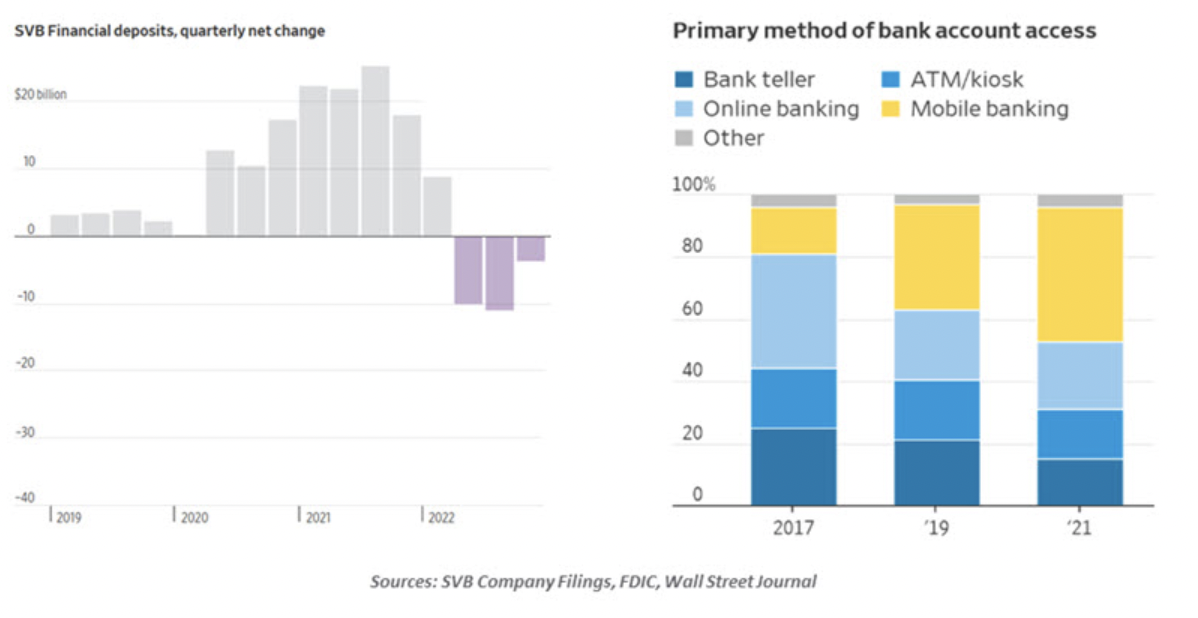
Worries about the health of the overall banking system have led to a drawdown in deposits, with investors yanking nearly $100 billion in deposits from U.S. banks during the week that ended March 15. What’s more, there are fears that the stresses in the banking sector could be the start of the next financial crisis.
Stocks built on overnight gains and Treasury yields inched lower following today's relatively benign February PCE inflation data.
The benchmark S&P 500 Index is wrapping up its second straight quarterly gain, rising 5.50% through Thursday and adding to the 7.08% surge in the final three months of 2022.
The investment landscape is pockmarked by intractable statistics that continue to impose strategic and psychological barriers to the short term potential of portfolio alpha.
In the face of high and persistent inflation, recession risks, and now a looming insolvency crisis in the financial sector, central banks like the US Federal Reserve are facing a trilemma.
There are many marketing initiatives you can implement on your own that that will likely work. Here are some suggestions.