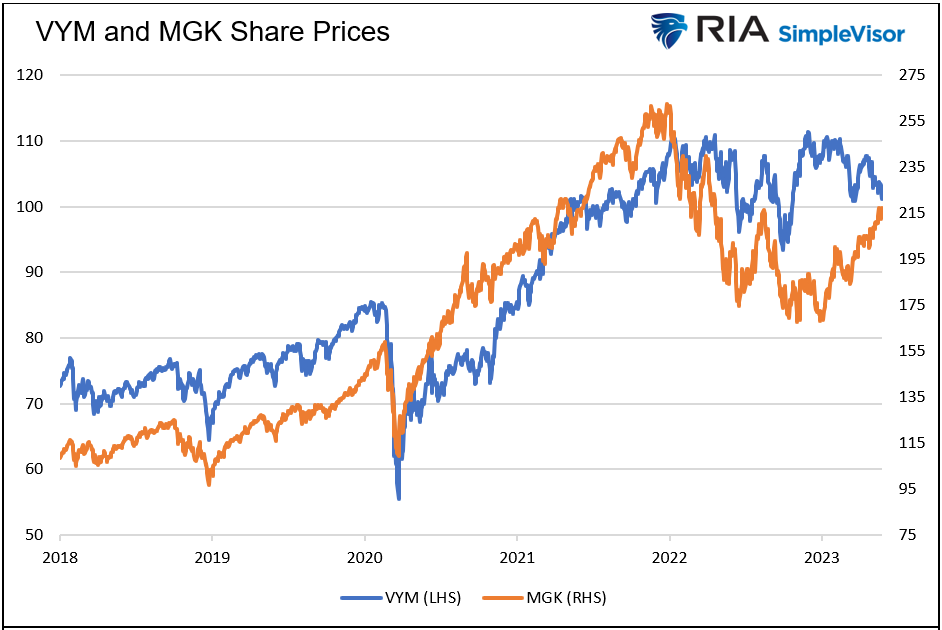
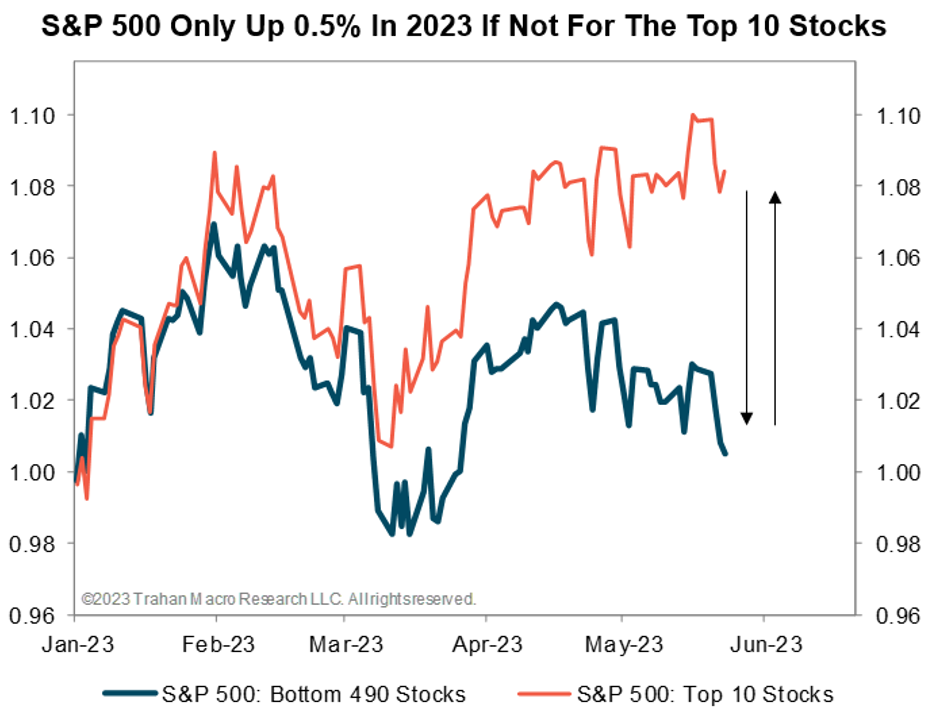
There is a whole world going on beyond the 8 largest stocks, which some people can’t see without a microscope or frankly have no inclination to bother stepping into the lab.
Naturally, the recent banking crises in the US and Europe raise concerns about EM exposure to financial sector risks too. We’ve found that the EM financial sector overall looks strong and resilient—but that several individual EM countries’ banks could be vulnerable.
A year ago, the US Consumer Price Index was rising at an almost 9% annual rate. The Federal Reserve was trying to change that trend with tighter policy. But it wasn’t just the Fed. All of us—businesses, consumers, everyone—responded to the pain.
Our director of Customized Portfolio Solutions and overlay portfolio management, Brian Causey, shares his key takeaways from 20 years of working on overlay solutions.
The sudden influx of capital into the fund could suggest that equal-weight strategies may be back in favor with advisors.
Recruiting talent is a basic ingredient for business success. Companies that are more inclusive in their recruiting will discover better-qualified employees, which can bolster competitive advantages and help deliver better outcomes for investors.
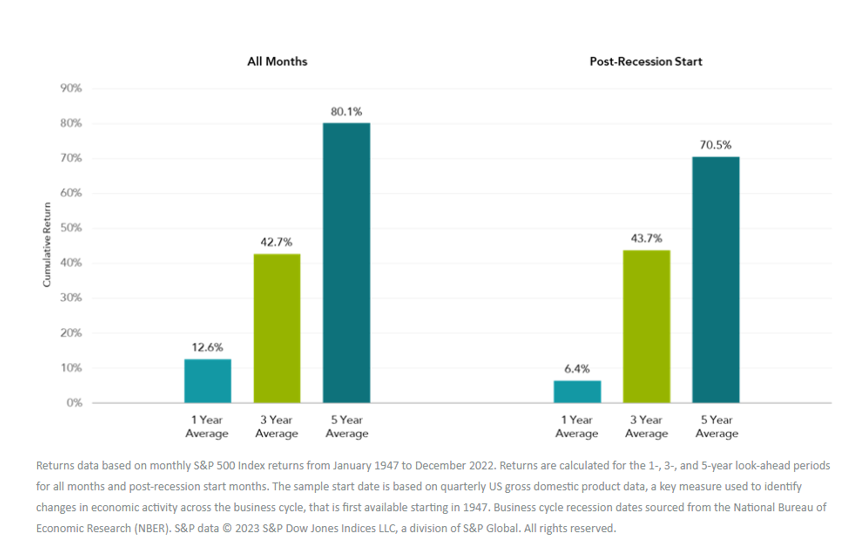
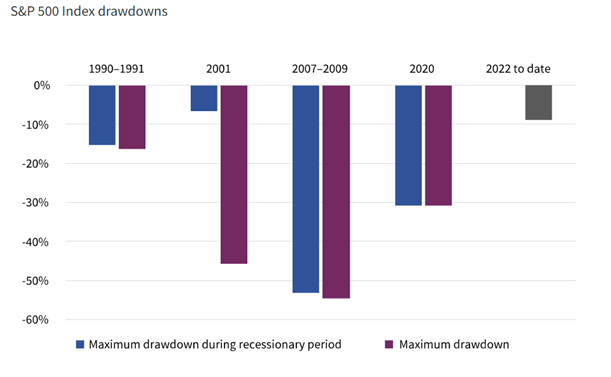
Ignore the “noise” of the market and adhere to your well-thought-out asset-allocation strategy that acknowledges both the virtual certainty of recessions and bear markets while also recognizing that trying to time the market based on economic forecasts is likely to prove counterproductive.
A diligent worker who invests for retirement will effectively lose the value of the dollars they’ve saved if they don’t also make an investment in their health.
The US core consumer price index — which excludes volatile food and energy prices — rose 0.4% in May from a month earlier, extending its streak of moderately bad inflation readings of roughly that size to six. On a three-month annualized basis, core CPI has been around 5% since November.
The Euro Stoxx 50 Index is up about 13% year-to-date. Not a bad return for a region whose largest economy is in recession, and whose second largest is facing one of the worst inflation fights in decades.
I share valuable tools to improve the odds of success using a relative-rotation strategy.
In this article, we will compare the three largest U.S. real estate ETFs by market capitalization: Vanguard Real Estate ETF (VNQ), Schwab US REIT ETF (SCHH), and Real Estate Select Sector SPDR Fund (XLRE).
A broadening out in market performance would help bolster a more sustainable stock rally, but that hinges on increasing clarity for monetary policy, recession risk, and bank stress.
In August 2020, Exxon Mobil Inc., the largest American oil company, was expelled from the Dow Jones Industrial Average, the world’s most famous stock index. It was described at the time as green triumphing over greed.
In several recent blog posts and weekly Bull Bear Reports, we discussed our concern over the narrow breadth of the rally in 2023.
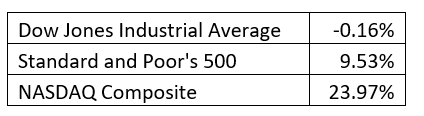
How have U.S. stocks performed this year? The answer is simple, but you’d never know that from looking at the three most often quoted indexes.
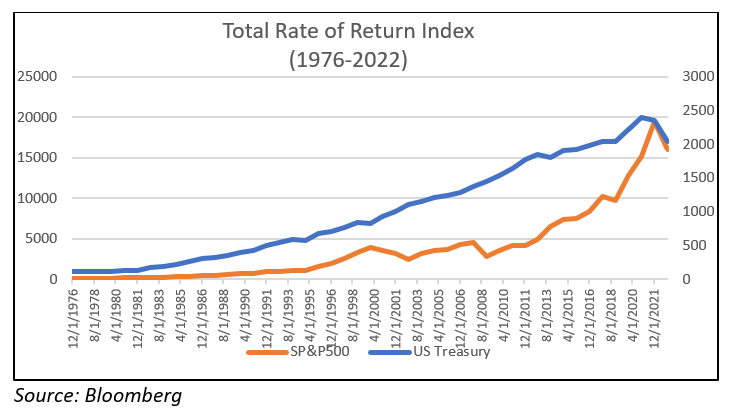
While the 60/40 approach may rapidly become obsolete, the debate over its value has bolstered the teaching of MPT and stressed the benefit of extensive diversification as the most efficient portfolio construction methodology.
Short sellers are informed investors who play a valuable role in keeping market prices efficient – short selling leads to faster price discovery. Fund families that invest systematically have found ways to incorporate the research findings to improve returns.
Despite high volatility in the bond market during the first half of the year, what's surprising is how much didn't change.
The first few years of the 2020s have seen a number of acute economic, financial, and geopolitical disruptions on a worldwide scale, and it will take time for the ultimate consequences of these shocks to be fully felt.
Relative rotation entails shifting among stocks, sectors, and stock factors. The strategy adds significant value to portfolio management if done well.
Zehrid Osmani, Head of Global Long-Term Unconstrained at Martin Currie, discusses the recent positive earnings reports from large U.S. banks and explains why their firm has no plans to invest in the banking sector.
Investors have had a lot to contend with thus far in 2023. Moderating economic growth, persistent inflation, volatile interest rates, falling profits, stress in the banking sector, war in Ukraine, and the debt ceiling debate all combined to weigh on sentiment.
The once-hot Wall Street trades of 2023 are all falling apart, in a fresh blow to market pros blindsided again and again ever since the pandemic broke out.
Doug Drabik discusses fixed-income market conditions and offers insight for bond investors.
The passage of the debt-ceiling deal removes a significant threat to the economy and markets. The focus now shifts back to where it’s been for the past 18 months: inflation, the Fed, and recession risks.
The US debt ceiling negotiations brought considerable volatility to market prices.
As fast as it went up for value managers, it’s coming down. The culprit is the all-consuming craze for artificial intelligence.
A robust implementation strategy and real-world implementation capabilities are both necessary in order to achieve your portfolio’s preferred position.
529 plan benefits abound no matter which type of plan you choose. Read on to get a full understanding of what 529 plans can do for you.
In the five months prior to U.S. recessions dating to the 1920s, the equity Momentum factor was the top performer, with an annualized cumulative excess market return of +6.7%, on average.
Explore the recent developments in artificial intelligence, the implications for industries and our perspective on investment opportunities.
Investors have been loading up on T-bills and money market funds this year, but according to our Total Return team, that is not a sustainable strategy as it exposes investors to both reinvestment risk and inflation while creating an asset/liability mismatch.
Is the debt-ceiling agreement struck between the White House and Republican Party leaders likely to be approved by Congress? Our chief investment strategist explains why we believe the answer is yes.
My advice to prepare for the “big” meeting is this…
The concentration of gains up the cap spectrum isn't itself a precursor to weakness; it's the lack of participation from the "average stock" that warrants some caution.
Some of the most common questions clients ask advisors revolve around retirement:
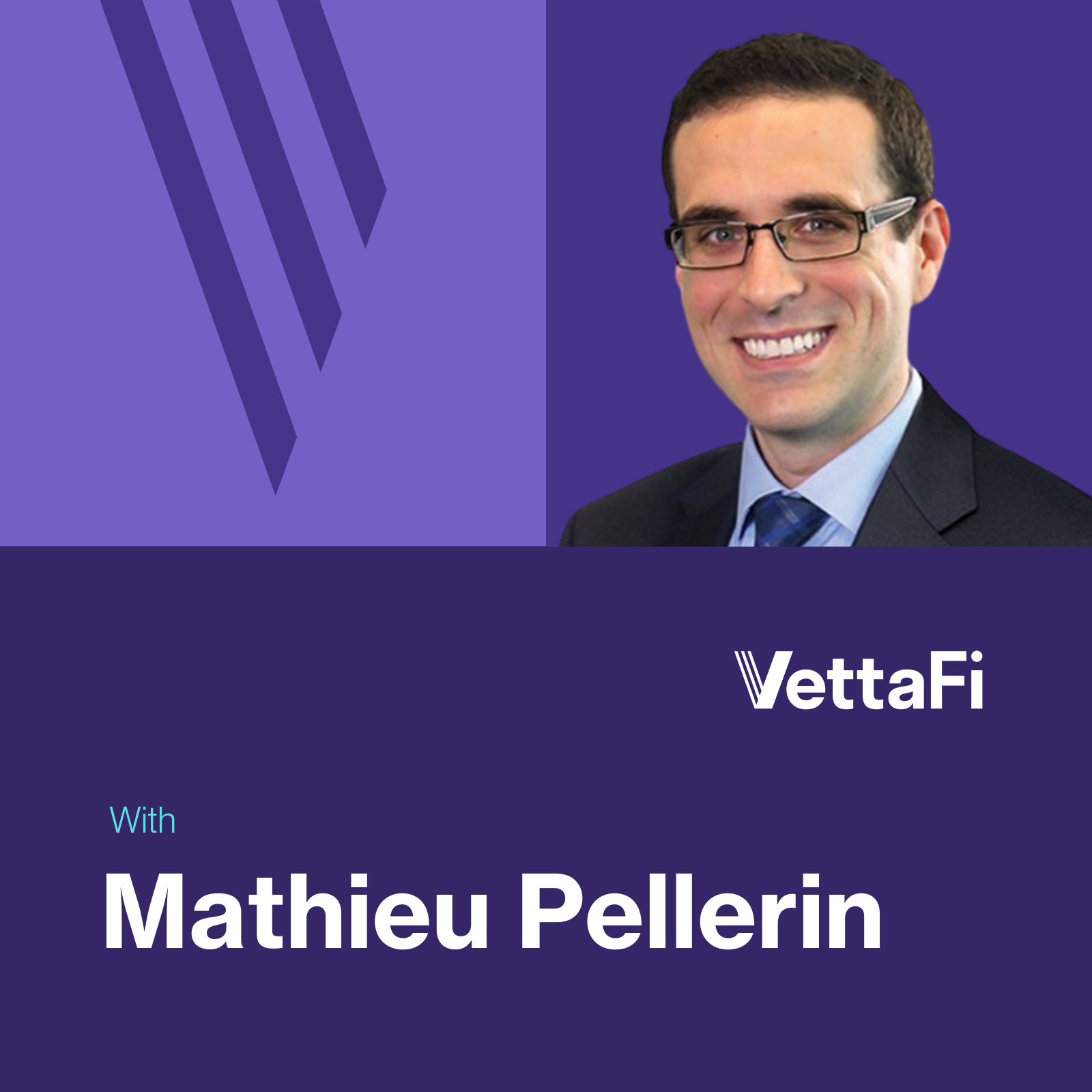
New research from Dimensional addresses these questions. The study found that investors who tilt towards size, value, and profitability in their equity allocation are likely to enter retirement with significantly more assets, sustain their retirement spending longer, and to leave behind larger bequests than with a standard, broad-market-index portfolio. Given the popularity of broad market indexing, the findings have implications for advisors. Joining us to talk about the research is Mathieu Pellerin.
As other nations seek to become less dependent on the U.S. dollar, rumors of the greenback’s potential demise continue to swirl. Can the dollar remain king of the world’s reserve currency?
Like planting seeds, sometimes new investment vehicles take time to take root. David Mann, Franklin Templeton’s Head of Global ETF Product and Capital Markets, draws parallels between gardening and developing and growing new ETFs.
War, inflation, rising rates, banking chaos, and recession are among the challenges facing markets. Investors must balance these shorter-term risks with the long-term return prospects of equities.
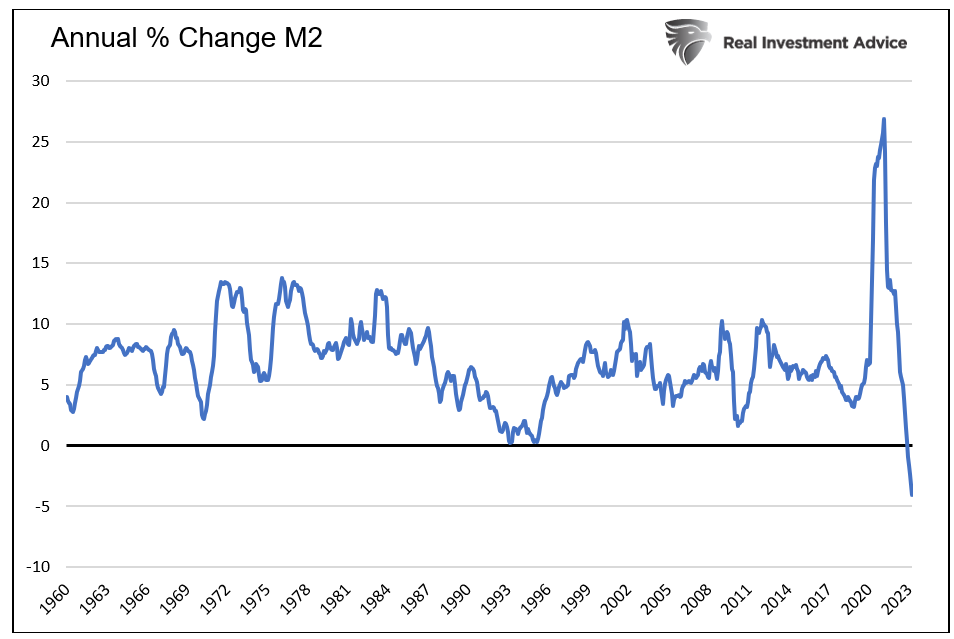
The Fed failed to recognize the danger of its loose monetary policy in 2021. We are seeing its pernicious effect, as the money supply and velocity combined to inflict non-transitory inflation.
A member of Putnam's Fixed Income team since 2007, Onsel Gulbiten analyzes macroeconomic issues, including inflation, interest rates, and policy developments.
Risk-averse investors seeking defensive systematic strategies to reduce left-tail risk should broaden their search beyond low volatility/low beta.
Although attendance was down this year compared to last—mostly because Bitcoin’s price is still off its record high of approximately $69,000, set in November 2021—there was nevertheless an impressive turnout of investors of all ages, industry leaders, policymakers and more.
Factor investing has seen increased popularity in the US. Investors may also want to consider increasing their opportunity set by considering factors abroad.
The Federal Reserve’s latest 0.25% interest-rate hike has likely capped one of its most aggressive policy-tightening cycles in 40 years. And the cumulative 5% policy rate increase in just over a year is now starting to have an effect on rate-sensitive sectors and inflation.
Working with a skilled OCIO provider can help you position your portfolio to benefit from investment opportunities and avoid uncompensated risks.
Alphabet Inc. is back in the game. The artificial intelligence game, that is.
Profit margins have remained elevated in the U.S. for a decade, and in a new white paper, GMO’s James Montier examines why that has been the case, ultimately finding the culprit in fiscal deficits.
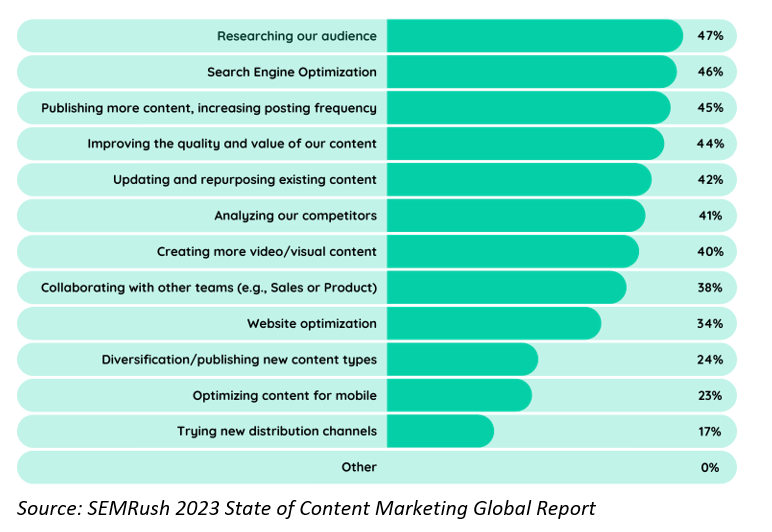
Here are a couple of trends that will dominate as a winning content strategy this year.