I’m a firm believer that your thoughts manifest your future. It’s very hard to make money and be successful when you’re always expecting the worst to happen.
This paper discusses Smith Capital Investor’s mid-year update to its 2019 outlook on key trends including interest rates, the Fed, credit, curves, CEO/CFO behavior, Washington/politics, and active fixed income.
The economic calendar is light but includes some home sales data and the (old news) Q2 GDP first estimates. Fed speakers will be on the sidelines for the pre-meeting quiet period. Earnings reports remain the most important fresh data for both traders and investors.
Pension funding has been an issue in many parts of the world and has certainly been a hot topic in Brazil. President Jair Bolsonaro’s election ignited market optimism on promises to reform pensions to get Brazil’s fiscal house on a firmer footing. The probability of this being delivered has increased considerably after approval of a new pension reform bill in Brazil’s lower Congress. Franklin Templeton Emerging Markets Equity’s Gustavo Stenzel and Marcos Mundim weigh in on what the breakthrough means for the country, and for investors.
The storm clouds are gathering. Someone is likely to get hit. It might be you.
"Medicare for all" or some form of "free" universal health care is certainly an appealing idea. Who among us wouldn’t appreciate someone else paying our medical bills?
Today in my final reply to Ray I sum up my previous letters and describe one possible path for dealing with the deficit and related problems. My idea will be controversial for most people. I am totally open to another, better solution if anybody knows one.
I’m very pleased to say that a satisfactory agreement was reached between HIVE and its strategic partner, Genesis Mining, so that the company can once again return to creating value for its shareholders.
The economic calendar is a big one, featuring the employment situation report on Friday. The rest of the data – ADP employment, auto sales, and the ISM surveys – will be released over 2 ½ days. The US Independence Day celebration on Thursday will provide one type of fireworks.
Advocates of MMT insist that governments can and should print as much money as needed to fund massive public works, guarantee government jobs for the unemployed and much more. This is a recipe for runaway hyperinflation.
Major secular drivers could disrupt the global economy and financial markets over the next three to five years. We share our views on risks and opportunities ahead.
I have held AbbVie (ABBV) since it was originally spun off from Abbott Labs. Moreover, I have been aggressively adding to my position for clients needing current income and dividend growth.
Of all the distinctions that investors might make in the coming few years, one that I expect will serve investors particularly well is the distinction between how the market responds to monetary policy when investors are inclined toward speculation, versus how the market responds when investors are inclined toward risk-aversion.
The last 18 months have been anything but boring, but if you had ignored the market over that time and only recently started paying attention, you may think that little has happened. The running in place analogy is probably better replaced by hiking a mountain.
Senior Fed officials were divided on whether it will be appropriate to lower short-term interest rates by the end of the year, although even those expecting no change felt that the case for easier policy had strengthened.
After breaking out of a five-year trading range this week, gold surged above $1,400 for the first time since 2013 on expectations of a U.S. rate cut. Meanwhile, the global pool of negative-yielding bonds hit a fresh record high $13 trillion.
While “Part One” focused on the amount savings required to sustain whatever level of lifestyle you choose in the future, we also need to discuss the issue of the investing side of the equation.
Ray Dalio has done us all a service by pointing out some rarely mentioned elephants in the room (some tinged with pink). We discuss various parts but seldom the entire creature. By that, I mean the rapidly growing potential for “progressive” control of both Congress and the White House.
The eurozone economy has experienced a sharp slowdown since the second half of 2018 in a reversal from the mini-boom enjoyed in 2017.
The economic calendar is normal, highlighting housing data, leading indicators, and the FOMC decision. The pundit conversation remains all about the Fed, but a new angle is getting more attention. The talking heads will not raise the question explicitly – sticking to personal ideas of what the Fed should be doing.
While the federal funds futures market is pricing in some chance (about 24%) of a rate cut this week, the Federal Open Market Committee is widely expected to leave rates steady.
Billionaire investor Paul Tudor Jones, founder of and hedge fund manager at Tudor Investment Corp., said this week that geopolitical disruptions have made gold his favorite trade for the next 12 to 24 months.
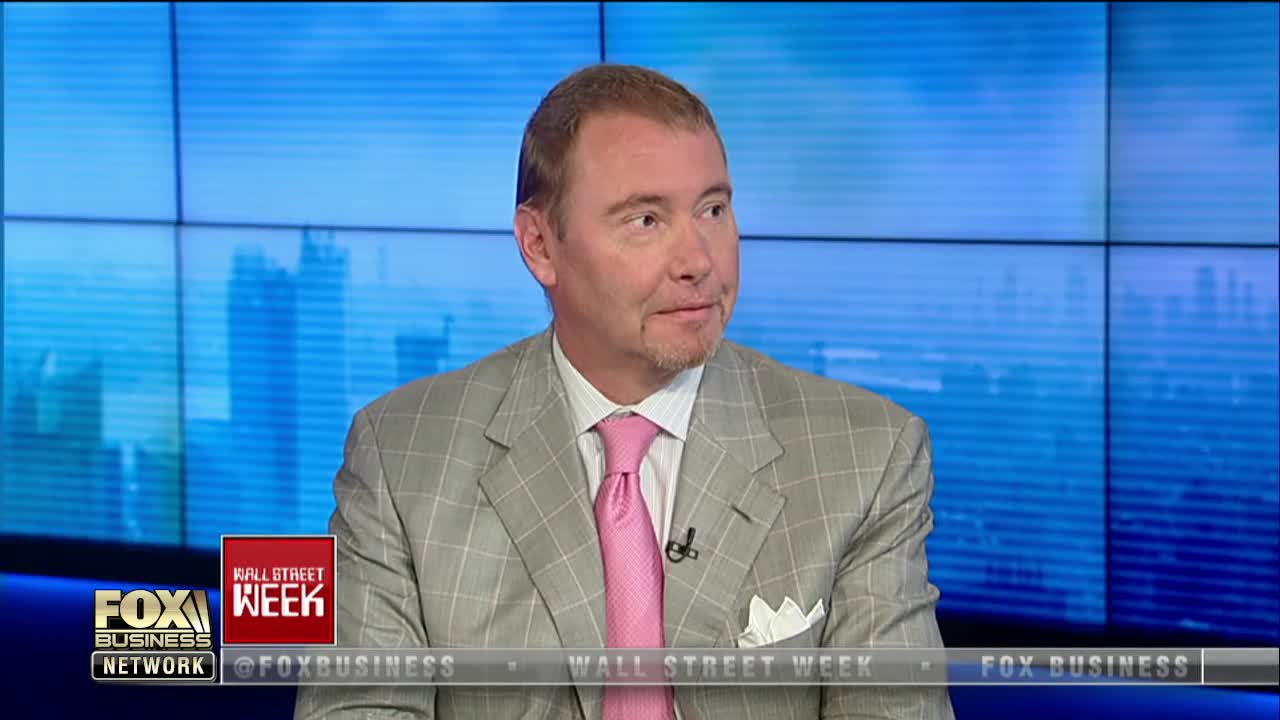
Although polls show Joe Biden leading his nearest competitor by more than 15 percentage points, Jeffrey Gundlach says he will not be the Democratic nominee for the 2020 presidential election.
In good times, we often see the notion "this time it's different" work its way into the marketplace as investors seek to rationalize higher asset prices and continued upward movement. Today this sentiment is expressed in contexts ranging from questioning the prospect of a recession altogether to supporting the high valuations of tech companies despite their current profitless state. In his latest memo, Howard Marks discusses the outlook for nine such theories. It would truly have to be different this time around for them to hold.
I am often asked whether the underperformance of U.S. value stocks over the last decade is a result of overcrowding. We can address that issue by examining the spreads in valuations of growth and value stocks. If overcrowding has occurred, we should see a dramatic narrowing in valuations.
The trade war has taken a harsher turn, threatening to further dampen economic growth. We expect the Fed to respond with sizable rate cuts, but the timing and amounts are more speculative than normal. Why? Economic data haven’t yet taken a major downward turn, and there’s uncertainty over how the Fed will react.
While there may be a heightened sense of fear in the headlines, there is no reason to sound the alarm.
Americans’ trust in institutions, from the federal government to the news media, has been deteriorating for decades. But I continue to have great faith in gold as a store of value during times of economic and geopolitical uncertainty.
China and Mexico thought they made progress toward U.S. trade deals. No longer.
While many savvy economists should have seen this coming, as late as October of last year, almost no one in the financial world thought that the Fed would so easily abandon its long-held bias without a gale force recession blowing them off course. But, in reality, all it took was a light breeze to force a 180-degree turnaround.
3 reasons why we believe private markets are an attractive alternative.
Today, we’ll look at last week’s second estimate of 1Q Gross Domestic Product. While the report showed the economy still growing by just over 3%, some of the internals of the report are troubling and suggest the economy will slow significantly just ahead.
As I watched this year’s Berkshire Hathaway Annual Meeting, one thing struck me. There was sheer enthusiasm around the annual shareholder meeting for anything tech-oriented. Yes, it was disclosed that Berkshire had taken a position in Amazon that Friday, but it goes deeper.
The expectation of a global rebound in the second half of 2019 was predicated on a positive resolution in the trade talks between the U.S. and China and the U.S. and the European Union. With a burst of stimulus from the Peoples Bank of China and Chinese fiscal stimulus since last summer, the global economy was beginning to show signs of improvement.
It doesn’t take much of a market downturn these days for investors to pull in their bullish horns; but more may be needed for market stabilization.
Why do economies collapse into recession in ways that seem so difficult to predict? Why do financial markets collapse into free-fall with timing that’s so loosely related to market valuations? Much of the reason is that complex systems usually aren’t linear.
Part 2 in a series focusing on different types of alternative investments.
May’s “flash” index of U.S. manufacturers registered a sharp decline to 50.6. This is only a preliminary reading, but if it turns out to be accurate, it would mark the slowest growth in the domestic manufacturing industry since September 2009
UK Prime Minister Theresa May has finally confirmed the date she intends to resign, after enduring growing criticism from members of her own party. According to David Zahn, our Head of European Fixed Income, this development significantly increases the chances of the United Kingdom crashing out of the European Union (EU) without a deal. He expects a likely negative market response, but argues there may be opportunities for shrewd active managers.
Like Japan, the US will see yet more quantitative easing and extraordinarily low interest rates, along with annual federal deficits of $2 trillion and higher. Alternatives like restructuring the tax code and balancing the budget will be nowhere in sight.
Trade tensions will likely continue to contribute to increase volatility and the longer it drags on, the bigger hit to economic growth, consumer/business confidence and the stock market. Our neutral stance around U.S. equities suggests keeping allocations no higher than longer-term strategic targets, with a large cap bias; using volatility for rebalancing opportunities. For those investors who don’t have broad international exposure, now may be a good time to consider areas that may feel less impact from the U.S.-China trade dispute.
UK Prime Minister Theresa May has finally confirmed the date she intends to resign as UK Prime Minister, after enduring growing criticism from members of her own party.
Tariffs have had a negative impact on the U.S. economy, but a relatively limited one to date. Pain is obviously felt more in some areas than others, but the cumulative impact is growing and a continued escalation in trade tensions would further dampen growth.
The economic calendar is one of the lightest, and a long holiday weekend impends. How will this news vacuum be filled? Probably with celebrity news, following the latest tweets, analyzing any new Democrats running for President, and interviews with B-level guests.
The suppression of the gold price is not just a conspiracy theory. It’s a well-documented phenomenon, with real actors and real ramifications. The best people to speak to about this subject are the folks at the Gold Anti-Trust Action Committee.
Market updates from across the region.
A collapse in the corporate bond market could rival the sub-prime debacle a decade ago, according to Jeffrey Gundlach.