Geopolitical developments in the Middle East drove market attention this week, with reports of energy infrastructure being targeted leading to sharp moves in oil and gas prices.
In February, market sentiment was shaped by escalating US-Iran geopolitical tensions and sector-specific selloffs driven by concerns about AI’s potential disruption to existing business models.
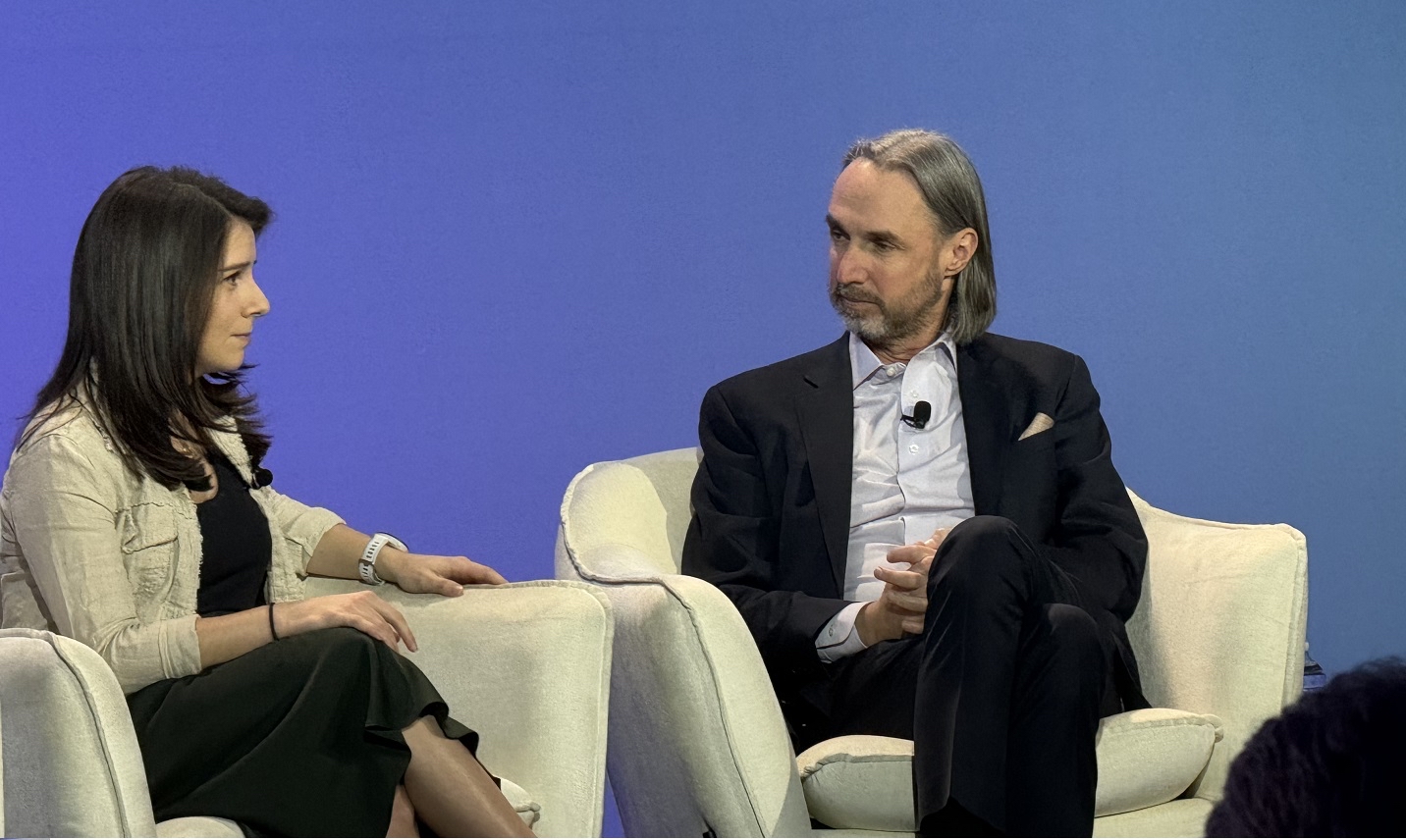
Jeffrey Sherman of DoubleLine provided a candid assessment of the Federal Reserve's current trajectory and fixed income at Exchange.
Muni bonds have been a strong performer so far in 2026, benefitting from an important transition to the ETF wrapper from mutual funds.
“Smoke on the Water, Fire in the Sky,” the iconic Deep Purple refrain, endures because it captures a familiar dynamic: threats appear on the horizon before the heat arrives.
A properly functioning Strait of Hormuz holds the keys to clarity around the growth, inflation, and market shock that has stemmed from the war in the Middle East.
The Federal Reserve held the policy rate steady in March at 3.5%–3.75%, a widely expected outcome as policymakers navigated an unusually complex macro backdrop.
Economic dislocations create opportunities. While many market watchers are seriously concerned about the microshifts in markets and stocks, others may see the opportunities that emerge when oil prices spike.
Nate Geraci hosted a live ETF Prime episode from the Exchange conference in Las Vegas. The panel featured discussions on active ETFs and industry trends with Dimensional’s Wes Krill, and a roundtable of experts.
The federal funds rate will remain 3.5% to 3.75%. The 'dot plot' still projects a single rate cut this year, and the Fed sees slightly stronger economic growth and inflation.
JPMorgan Asset Management is issuing its first Taiwan-focused wealth management product in more than a decade, joining global rivals rushing into one of Asia’s hottest exchange-traded funds markets.
The FOMC held the fed funds rate at 3.50%–3.75% for a second straight meeting as policymakers weigh slowing growth, persistent inflation, with core PCE at 3.1%, and geopolitical uncertainty from the Middle East.
China’s underappreciated equity market and energy resilience amid current geopolitical tensions warrants consideration, according to Franklin Templeton ETFs’ Dina Ting. In this article, she discusses the different factors that underpin her views.
Royce Investment Partners: Co-CIO Francis Gannon discusses how US small caps remain market leaders even as volatility and uncertainty are on the rise.
The European Union has unveiled a red-tape-cutting plan dubbed “EU Inc.” to boost the emergence of companies that could compete on the world stage with US and Chinese rivals.
In this commentary, I’m not going to try to predict any outcomes or long-term effects but rather want to cover how markets have reacted so far and highlight some opportunities that have been created.
As has been the case from day one when the first airstrikes began, the key factor in assessing economic and market impact is the duration of the effective Strait of Hormuz closure and resulting effects on prices of energy and other commodities. Prediction markets are split on whether the conflict ends by the end of May.
In this month’s Allocation Views, healthy earnings growth is disguising a bifurcation that has resulted in particularly challenging earnings expectations for large-cap growth stocks in 2026.
For decades, the 60/40 portfolio was the gold standard for balanced investing. However, as correlations between stocks and bonds fluctuate and traditional safe havens face new pressures, advisors are looking toward alternatives to increase portfolio efficiency.
Individuals who haven’t yet taken the plunge into full-time entrepreneurial pursuits, are often surprised by the onslaught of new costs they’ll be responsible for when making the transition from W-2 salaried employee to self-employed, one advisor shares.
Every financial crisis has a moment — usually identified only in retrospect — when an obscure product intended to mitigate risk spreads through what author Rick Bookstaber called “tightly coupled” interconnections to cause widespread damage.
The word 'equilibrium' is an invitation to recognize that nothing exists by itself, alone. Subject and object are two sides of the same coin – their interaction is a single phenomenon. That perspective can offer a great deal of insight about economics, financial markets, speculative bubbles, passive investing, and nearly everything in existence.
Iran-related geopolitical risk has boosted stock volatility, especially in sectors like Energy. Uncertainty remains high and there are a range of scenarios for how this conflict could be resolved and how it might affect economic conditions and markets.
When geopolitical tensions flare up, the natural assumption is that gold should immediately surge. War breaks out, markets panic… and the metal rallies as investors rush to safety.
Skyrocketing oil prices were accompanied by mixed inflation readings last week. The headline Consumer Price Index (CPI) inflation rate held steady in February at 2.4 percent annually, while core CPI, which excludes more volatile food and energy costs, rose a modest 0.22 percent for the month.
Despite less reliance on oil, higher oil prices will add pressure to inflation. If energy costs stay elevated, inflation could rise again, potentially delaying interest rate cuts from the Federal Reserve (Fed). Geopolitical uncertainty remains a risk. Conflicts in the Middle East could disrupt supply chains and increase price volatility in key commodities like oil.
In the aftermath of the first Internet stock-market bubble of the late 1990s the economy went into a relatively shallow recession starting in 2001. That recession was precipitated by a tight monetary policy, with the Federal Reserve setting short-term interest rates consistently above the pace of nominal GDP growth (real GDP growth plus inflation).;
There has been so much data released in the past week it’s hard to know where to begin. Much of the data is inconclusive or not helpful, but it is not as bad as many click-bait pundits suggest as they take each data point and extrapolate it into the future.
The private equity (PE) business is huge. When I say huge, I mean $4.4 trillion huge. However, as we warned then, the risks have come home to roost. The private equity and private credit industry is heading into a gut-wrenching period of consolidation.
For years it was a punch line. Now the Laffer Curve — which purports to show that tax cuts can increase revenue — is making a kind of comeback.
Spending on data center projects in the US has exploded, surpassing offices for the first time at the end of last year. It’s a trend Matt Kunz saw early on when Meta Platforms Inc. built a computing hub outside Columbus, Ohio.
After a decade defined by narrow, largely intangible businesses driving growth, markets appear to be entering a new phase shaped by physical buildout across AI infrastructure, defense, energy, and supply chains.
As advisors explore 2026 ETF Trends, Exchange presented a session covering top-of-mind stories. The session featured members from Women in ETFs, that inlcuded J.P. Morgan’s Julie Abbett, American Century Investments’ Cleo Chang, Fidelity Investments’ Lubna Lundy, and moderator Roxanna Islam from VettaFi, who unpacked the state of ETF markets in 2026.
Corporate pension sponsors don’t enjoy unwelcome surprises, particularly those that create financial strain. Many experienced significant financial stress following the Global Financial Crisis and the prolonged decline in interest rates that followed.
The market has shifted quickly from concerns about artificial intelligence (AI) disruption to rising geopolitical risks tied to the conflict in Iran. Headlines continue to drive market movements as investors wait for greater clarity on the timing of a U.S. exit strategy.
For families with loved ones who have special needs, tomorrow often arrives sooner than expected. Many families instinctively plan for today: therapies, education, medical care, and navigating government benefits.
A surprise 92k decline in February nonfarm payrolls and a rise in the unemployment rate to 4.4% signal some labor market softening, though stronger ISM manufacturing and services readings and still-low jobless claims suggest the broader U.S. growth backdrop remains intact.
The worsening energy shock from the Iran War has raised risks of a more severe crisis. It may resolve quickly, but the longer it persists, the larger the possible economic damage. Asia and Europe are most vulnerable.
One of my most longstanding and controversial opinions is that the move from defined-benefit pensions to defined-contribution pensions was a success. It’s an especially unpopular view amid stories of retirees who fall through the cracks and a grim market that is pruning many retirement accounts, if not retirement dreams.
Volatility in US Treasuries jumped to a nine-month high as the Iran war fanned inflation concerns and upended traders’ expectations on the Federal Reserve’s policy path.
In this article, Russ Koesterich notes the year-to-date strength of both cyclical and defensive stocks, a pairing that seems too strange to last.
For the second time in less than a year, the United States is engaged in military conflict in the Middle East. And once again, investors must assess how escalating tensions could affect markets.
A healthy mix of income and growth potential may yield a more effective equity allocation.
As the capital expenditure (capex) race for compute continues, we thought that it would be worthwhile to briefly outline the current state of play facing the well-publicized data center buildout. To understand why so much capex is needed to support artificial intelligence (AI), we must first understand how data centers are built and operated.
Investing is an exercise in decision making under uncertainty. No single signal—no matter how intuitive or well supported by history—captures the full complexity of markets.
The OBBBA expands Section 1202 benefits, allowing certain C-corp business owners to exclude significant capital gains. This complex provision requires specific holding periods and asset tests, making professional guidance essential to maximizing these tax savings.
Volatility spiked as investors questioned the Federal Reserve's next move, adding to existing concerns about private credit markets. Here's why investors shouldn't overreact.
State Street Investment Management is continuing its push into the intersection of public and private credit with the launch of a new ETF.
The military conflict in Iran and the Middle East is curtailing the global flow of oil and natural gas. This adds notable pressure to energy prices and the near-term inflation outlook, while also raising questions about countries’ reliance on energy imports and their economic resilience.
In this second installment of our series, Chuck Carnevale, co-founder of FAST Graphs and widely known as Mr. Valuation, takes a deeper dive into the S&P 500 to demonstrate how investors can uncover potential opportunities within an otherwise expensive market.