Dimensional’s new ETFs are good news for investors but raise issues for advisors.
Interest expense is a large and growing issue for both the economy and stock market, which reinforces why investors should stay up in quality amid interest-rate-driven headwinds.
Trust is no longer created from your level of knowledge or expertise.
A run of shrinking quarterly profits may finally end soon, but it's probably not time to break out the champagne just yet.
In a year in which active strategies have done so well via allocator interest, as well as with their own returns, an active ETF could make a very good addition.
The High Yield Bond category is up 5.9% through September, ranking it among the best performers in the fixed income space. Payden & Rygel’s Jordan Lopez and Nick Burns outline three factors contributing to the market’s strength.
With artificial intelligence, systematic investing is entering a new era of disciplined decision-making. Yet, firms face many snags. Rigorous implementation requires collaboration among skillful investment, technology, and quantitative capabilities.
While a goals-based approach divides a retiree’s liabilities (future spending goals/needs) and assets into separate pieces with separate mandates, it can be useful to see how they all stack together.
Most investors are aware of certain taxes on their investments, such as on dividends, interest and capital gains. But those are just the tip of the iceberg.
However, $22 billion moved into fundamentally weighted equity index ETFs, while dividend and momentum ETFs had outflows. This is sizable and warrants some added attention.
A liquidity gap is growing as banks curtail specialty lending, providing specialty finance investors opportunities for potential better risk-adjusted returns than we’ve seen since the GFC.
The latest Underlying Inflation Gauge full data set for September is 2.9%, down 0.1% from last month, while the prices-only measure is 2.2%, down 0.2% from last month. Current Headline CPI is now 3.7% and Core CPI is 4.2%.
When it comes to international trade and investment, AI will create some obvious winners and losers. It’s the second-order effects that may prove more interesting.
The quarter started off strong enough in July but gave up ground in both August and September. The total return of the S&P 500 was down 3.27% for the quarter.
One and three hundred years before the enormity of the present dilemma began to dawn on the Federal Reserve, a similar moment arrived within the stone walls of the Banque Royale. You may recall the scene we visited last year.
As the Federal Reserve signals it will keep interest rates higher for longer, the market appears to be reflecting the uncertainty about the path of policy going forward.
Advisor Perspectives has announced its Venerated Voices™ awards for commentaries published in Q3 2023.
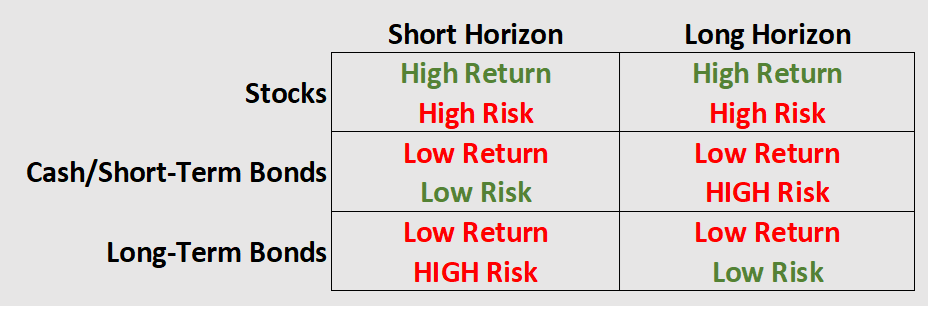
In investing, you can have a safe present or future value, but not both!
Risks remain tilted to the downside. Uncertainty about the strength and speed of monetary policy transmission and the persistence of inflation are key concerns. The adverse effects of higher interest rates could prove stronger than predicted, and greater inflation persistence would require additional policy tightening that might expose financial vulnerabilities.
Rising rates and inflation acted as a wrecking ball to investment portfolios in 2022. U.S. equities and investment-grade fixed income witnessed double-digit declines, leaving investors scrambling for protection.
Executive search firms are anticipating an uptick in resignations as the average tenure of America’s top finance chiefs grows to the longest of any sector, and those who may have delayed leaving to provide stability through the Covid-19 pandemic look to exit.
More than two years and over 500 basis points later, the Federal Reserve (the “Fed”) has executed one of its most aggressive monetary policy moves in decades, bringing the Federal Funds rate (the rate that banks charge each other to borrow or lend excess reserves overnight) to a current target range of 5.25%-5.5%.
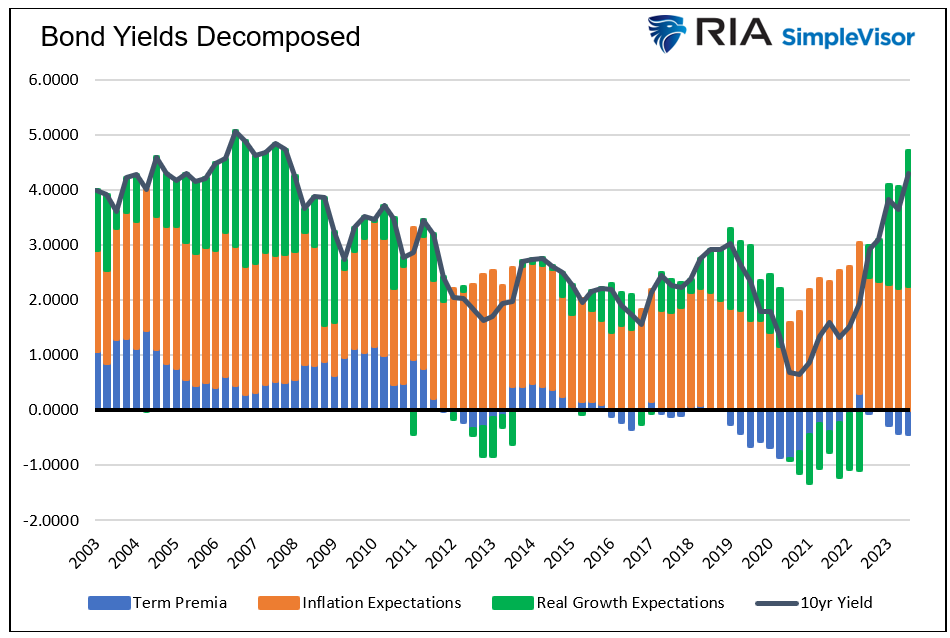
For the last 40 years, interest rates have gone pretty much one way: down. In the last 18 months, however, rates have crept up, and many are worried they will stay high.
The world turns. New people are born and eventually move off the couch and into something resembling employment. And thus new generations of nonsense about “solved” topics are produced.
One of the most frustrating things I encounter in working with prospects for our advisory firm is the lack of response.
Gold and silver prices slid lower to close out the third quarter. Entering trading for the fourth quarter, the metals are back, once again, in the middle of the range where they have languished for more than three years.
Energy and information technology are the two sectors most top of mind for investors, according to polling at VettaFi’s recent Equity Symposium.
Downside equity market volatility can be unsettling, but it is important to put the pullback in perspective and identify the drivers of the negative market reaction. First and foremost, the equity market was due for a modest pullback.
With negligible incremental risk, a RAFI Global Index hypothetically outperformed a Cap-Weighted Global Index by 40 bps per annum and a Cap-Weighted Global Value Index by 2.2% from 2007 to 2022—a 16-year period covering the long value rout and its aftermath.
We believe a mild U.S. recession is more likely than not in 2024, although a soft-landing scenario cannot be ruled out. A recession is also likely in the UK and eurozone, but appears less likely in Australia.
Amid the debate over student loans — President Joe Biden’s administration tried and failed to forgive some of the debt, which starts accruing interest this month after a three-year pause — a crucial question has often been overlooked: Who benefits the most from student loans? It’s not necessarily the students.
2023’s market rally continues to center itself on the big tech comeback with certain themes exhibiting strength like artificial intelligence (AI) and cloud computing. While these themes can offer traders short-term opportunities, they can also persist in the long term as growth plays.
Quarterly commentary giving an overview of the markets and the importance of having and implementing a strategy when investing in the markets.
Small-cap stocks and related exchange traded funds are taking a back seat to large-cap counterparts this year. The Russell 2000 Index has shed almost 5% over the past month. However, some market observers remain constructive on smaller stocks.
In our latest Quarterly Letter, Ben Inker and John Pease discuss the new economic regime, how investors can prepare for a recession, and the merits of combining high quality and cheap assets in today’s environment.
The imminent US government shutdown that threatens to delay the publication of key economic data will test policymakers’ and investors’ trust in a range of less-regarded third-party indicators.
Fed Chair Jerome Powell’s Sept. 20 remarks represented the first time the Fed leadership has sanctioned the idea that the equilibrium policy rate has risen this year; previously, Powell repeatedly avoided taking a view.
The MOVEit breach affected the clients of every wealth manager in America.
You’re not there to make friends. You’re there to create trust by diagnosing their issues.
Deride the tactics of car salespeople all you wish, but their primary sales tool shows just how much brokers pay their employers.
In many ways, 2023 continues to be the mirror image of 2022, with the most volatile assets being some of the best performers for much of the year.
The Northern Trust Economics team shares its outlook for major markets in the months ahead.
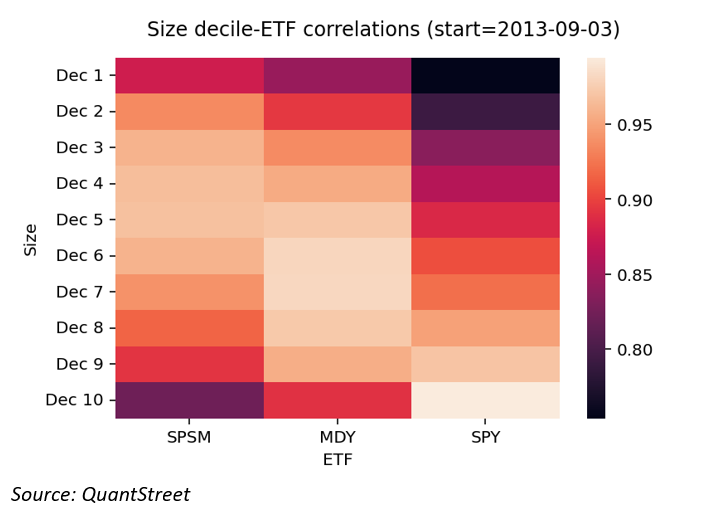
Investors think about companies as being either large or small. In between those extremes are midcaps. Based on historical performance and fundamentals, midcaps should command more attention.
By applying artificial intelligence and Chat GPT to statements made by active fund managers, researchers have found that their underperformance can be partly explained by overconfidence that led to, among other things, excessive risk taking.
Some seven weeks ago, hedge fund investor Bill Ackman laid out his rationale for shorting long-term US bonds, and I took exception.
US small-cap and industrial stocks are dropping, typically signals of a recession, but in a year where equities have already beaten expectations some investors are dismissing the moves as little more than noise — for now.
While our Washington Policy analyst believes there is a path to a resolution to avoid a government shutdown ahead of the looming September 30 deadline, the rhetoric out of Washington suggests otherwise.
The Federal Reserve weighs the data while investors wonder: Is the rate-hike cycle over?
Labor strikes aren’t cheap. Equipment sits idle. Supply chains get gummed up. Workers lose wages, shareholders lose profits, governments lose tax revenue. All these effects can have an adverse impact on economic growth, employment and inflation.
Can the economy grow 2.0% to 2.5% faster per year over the next 10 years than the last 30 years? I don't think so.