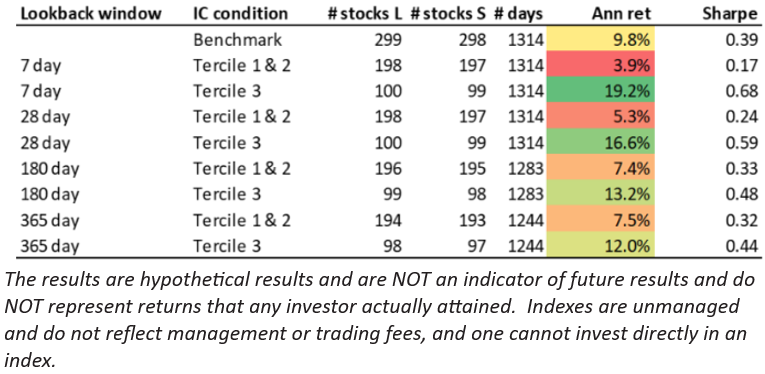
Picking the “right” stock is akin to betting on a game; not only must one pick the right team (beta), but also by how much (alpha).
The run-off election looks tight in Argentina, where I’m attending a Young Presidents’ Organization (YPO) event in Buenos Aires.
Year-to-date, technology has outperformed the broader market largely given the prevalence of low leverage, high profitability and consistent earnings across many names in the mega-cap tech space.
In our 2024 outlook, bonds emerge as a standout asset class, offering strong prospects, resilience, diversification, and attractive valuations compared with equities.
Third-quarter earnings announcements have almost come and gone, with yesterday being the last big burst of companies. Some key firms have yet to announce, like Nvidia and Walmart, but everything I’m seeing says it surpassed expectations.
Like some advances earlier this year, the market's current surge hasn't been defined by strong breadth underneath the surface—which will be key for a sustained, durable advance.
Treasury yields have dropped as weak economic data suggests the Federal Reserve may begin cutting the federal funds rate target earlier than previously expected.
A China ‘Recovery’: How important is the loss of confidence within China itself?
The third quarter was a more favorable environment for active managers in U.S. Large and Small Caps, Japan, Australia, and Canada equities, while being more challenging for Global, Global ex-U.S., Emerging Markets, Europe, UK and Long/Short managers.
New investors are overwhelmingly choosing ETFs as their investment vehicle of choice. Between June 13 and June 28, Charles Schwab conducted a comprehensive survey of 2,200 investors for its 2023 ETFs and Beyond Study.
The bond market giveth and the bond market taketh away. The S&P 500 Index closed in the red Thursday, blowing its widely-hyped chance at a nine-day winning streak, which would have been its best run since 2004.
Moody’s Investors Service recently released a report bluntly entitled, “Private equity exposure increases credit risk for universities with limited wealth.”
The direction of interest rates was the biggest factor moving markets in the third quarter. Sentiment on technology stocks appeared to shift. Money market assets reach historic high, but returns lag stock market.
In this period of higher interest rates, the quest to capture alpha and mitigate risk in corporate credit requires a more refined approach.
I’ll share some important insights gleaned from many decades of working in the advisory profession and being both an insider and an outsider.
Following a strong first half of 2023, third-quarter returns were more challenged across almost all asset classes. One outlier was high-yield debt, which often serves as a way to de-risk equity exposures when stocks are under pressure.
Financial markets have changed dramatically since balanced portfolios were introduced to investors decades ago. As markets evolve and grow more complex, active management plays a greater role in the success of these strategies, which offer a mix of 60% equities and 40% fixed income.
The so-called dividend aristocrats have an impressive track record. But much of that outperformance can be attributed to its exposure to certain factors.
What’s the most important price in the global economy? The price of oil? The price of semiconductors? The price of a Big Mac? More important than any of these is the price of money. For more than three decades it was falling.
The S&P 500’s pitch is simple. Own it and get exposure to the biggest of the big among US firms. Lately, it’s gotten harder to maintain that point of distinction.
While bond prices are generally down, the income they provide is up, providing potential opportunities for fixed income investors.
In Q3, the strongest performance among factors was seen in developed ex-U.S. large cap and small cap and U.S. small cap, where Value outperformed by 4.9%, 3.3% and 3.3%, respectively. The weakest performance among factors was in U.S. small cap, where the Size factor underperformed by -2.4%.
Higher macro and market volatility, along with greater dispersion, creates a favorable environment for active trading, according to K2 Advisors. Get the team’s latest hedge-fund strategy outlook.
Investment taxes can have a real impact on a portfolio. Investors should be aware of four key tax realities they currently face. Without a plan to manage these taxes, investors may find their ability to retire comfortably could be compromised.
Companies with healthy balance sheets are some of the best performing stocks this year, and their shares could keep rising, according to Piper Sandler & Co. strategists led by Michael Kantrowitz.
The Fed kept rates unchanged at today’s meeting, but whether they are done with rate hikes or simply at a pause is yet to be determined.
In smart beta, we find that factor returns—net of changes in valuation levels—are much lower than recent performance suggests. In fact, many of the most popular new factors (some 458 at last count) have succeeded solely because they have become more expensive.
Less than a third of Gen Z feels financially secure while just more than half feels “very or extremely worried about not having enough money,” according to a recent study by consulting firm EY. “Welcome, the water’s warm!” says every American millennial.
Harness the power of neuroscience and psychology to help your clients reach their long-term planning goals.
A Federal Reserve pause, seasonal tailwinds, an earnings-led rally. Many of the reasons that got Wall Street strategists increasingly bullish coming into the end of the year now look like wishful thinking.
The financial world’s computer-loving crowd is preparing for the dawn of a new AI-powered era — but that doesn’t mean they’re ready to fully embrace the technology just yet.
New research found that the stocks of companies that have invested heavily – especially if that was not financed through organic growth – underperformed an appropriate benchmark.
If you believe that an easy solution to improve lower-class standards of living is to raise the minimum wage, or you are curious about what university presidents spend their time on, Angus Deaton’s new book provide insightful answers to those and many more questions that, taken together, challenge the relevance of modern economics and the capitalism it supports.
VettaFi’s vice chairman Tom Lydon discussed the RiverFront Strategic Income Fund (RIGS)on this week’s “ETF of the Week” podcast with Chuck Jaffe of “Money Life.”t
While environmental, social, and governance criticism remains elevated (and loud) and interest rates are affecting the performance of the related equities and exchange traded funds, ESG-committed investors can find relief on multiple fronts.
Despite progress on bringing down inflation from mid-2022 highs, data from online job postings suggests that wage pressures may be reaccelerating. Beneath the surface, growing divergence in wage gains across occupation categories may be adding a layer of complexity to the outlook for labor markets.
You won’t find this term in any serious economics textbook, but the only clinical way to describe the US housing market is bananas. Affordability is at record lows and mortgage rates are the highest since 2000.
There are reasons to be cautious in many markets, but low volatility and high/sustainable dividend stocks can help mitigate risk while providing income and equity exposure. The Franklin Templeton Investment Solutions Team weighs in.
Investments in alternative energy have become unattractive due to higher interest rates, not changes in government policies, adoption or pricing of green technologies.
Bloomberg's James Seyffart offers the latest on the spot bitcoin ETF race and also discusses ether futures ETFs, spot ether ETFs, and crypto equity ETFs. VettaFi's Todd Rosenbluth highlights Vanguard's ETF success and covers a range of other topics including recent launches from Morgan Stanley and iShares.
Wild swings in the “world’s safest asset” are once again acting as a driver for volatility across global markets.
U.S. equities have ruled the roost for the better part of the last decade, but another region may emerge as the leader if the business cycle changes.
Using a new database that isolates the activity of retail investors, new research documents their poor performance
Restrictive monetary conditions, from higher yields and tighter lending conditions, are the Fed’s “Waterloo.”
We have been looking at big historical/economic/political cycles for the past two months.
Active ETFs have gained in popularity in recent years. However, some pundits have prematurely taken out their shovels for some funds. Even as these products show signs of vitality.
As investors face continued macroeconomic and market uncertainty, evolving the 60/40 portfolio of stocks and bonds to include alternative investments may help build portfolio resiliency.
Japanese profits have benefited from the prolonged deleveraging of Japan Inc. The reduction in debt coupled with exceptionally low interest rates has allowed cash flow to impact the bottom line.
The US Federal Reserve’s efforts to quell inflation have sent long-term interest rates to their highest level in a generation, putting a lot of stress on banks, companies and anyone looking to finance a new home.
According to Gary Gensler, chair of the SEC, a market crash caused by artificial intelligence is “nearly unavoidable.” Like many other regulators, he has called for new regulations on AI to prevent such dire scenarios.