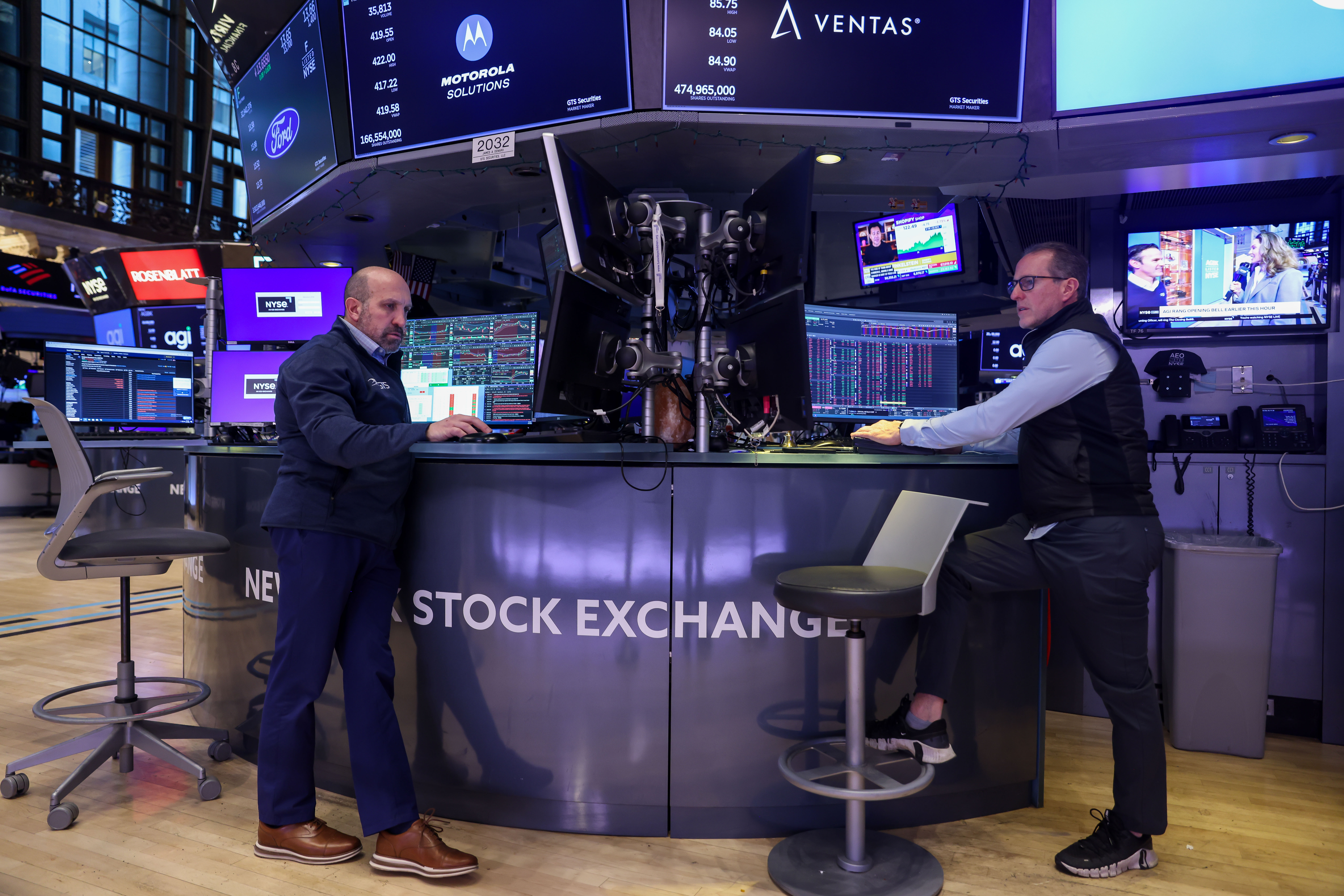
The threat to software-backed businesses from artificial intelligence should prompt investors to shift focus from technology to companies that toil in the physical world, like miners, power producers and industrial firms, according to Ulrike Hoffmann-Burchardi, global head of equities and chief investment officer for the Americas at UBS Wealth Management.
As the artificial intelligence (AI) transformation unfolds, Portfolio Managers Denny Fish, John Lloyd, and John Kerschner share their views on equity valuations, identifying the next wave of winners, and the impact on fixed income markets as companies aggressively raise capital to finance the AI boom.
The playing field presents broad opportunities for income investors today, with income and growth potential across asset classes. But an effective defense is also critical in capturing that potential. When it comes to the tools of the trade, we think broader is better.
Money – everybody wants it, but few actually have it. As shown in recent financial statistics, the “wealth gap” in America continues to grow between the “haves” and the “have-nots.”
Stripped to its essentials, finance is a race against time. What lies ahead of us is unknown, and the vast industry of banking and finance has developed to manage the risks that come with making commitments now that depend on an uncertain future.
Routine physical checkups are an important component of healthcare. A doctor can identify potential problems and coach the patient toward making healthier choices.
LPL Research’s Strategic Asset Allocation (SAA) sits at the center of our portfolio construction process because it defines how we expect diversified portfolios to generate more stable long‑term outcomes across shifting market environments. The SAA is the long‑term plan for how major asset classes work together in a portfolio.
The breadth of opportunities in 2026 is unlike anything we’ve seen since 2010. While markets remain fixated on crypto, AI, and speculation, leadership is already shifting toward more fundamentally strong, under-owned regions of the world.
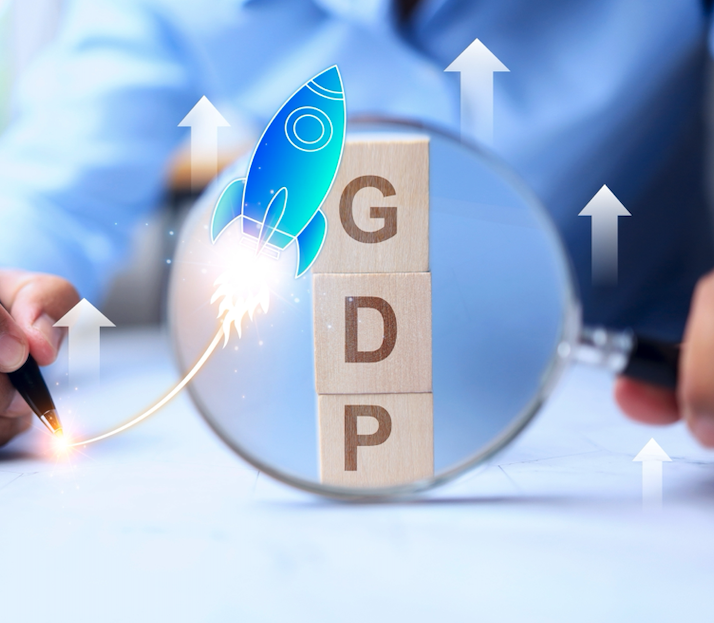
Fourth-quarter GDP came in at 1.4%, a sharp markdown from early estimates that were inflated by a temporary collapse in the trade deficit.
The captains of artificial intelligence are an impatient lot. There’s good reason for the existence of the Silicon Valley cliché “move fast and break things.” They are certainly moving fast on the buildout of AI infrastructure, rolling out eye-popping spending budgets to buy computer chips and construct data centers to house them.
Get ready each week with high-conviction insights that go beyond media headlines.
As we expected, the Supreme Court struck down most of the new tariffs President Trump had imposed since taking office thirteen months ago.
Given the divergence between the calm market surface and the volatility of its underlying stocks' returns, let's get a better grip on the market’s undercurrent and decipher what it may be trying to tell us.
The central theme of 2025 was the disconnect between market sentiment and economic reality. The year began with widespread apprehension regarding aggressive tariffs and forecasts of a recession.
“China is dumping US Treasuries to get out of the dollar.” This claim has been circulating the mainstream feeds lately, with the narrative that the “end of the dollar is near,” or “the US will lose its funding base,” and “bond yields will surge.” But are those claims valid? Such is what we will explore in more detail.
Is inflation rising or falling? Is unemployment solid or are there significant issues? Given the massive revisions of labor data, how can we base decisions on employment numbers? And what happens when the various collected data conflicts with themselves?
Investment strategy is never easy, but we have started this year with a remarkable confluence of shifting factors: technological, economic and geopolitical. Understanding how they will play out and interact becomes crucial to asset allocation.
While the Court did not explicitly order refunds to be paid — instead sending that decision to the lower courts — by some estimates this decision opens the door to potentially as much as $175 billion in tariff reimbursements to U.S. importers.
In recent editions of Macro Signposts, we’ve emphasized how U.S. policy changes coinciding with the emergence of a new general-purpose technology (AI) may be accelerating adoption and diffusion of that technology – while also driving economic adjustments.
The U.S. economy sent conflicting signals last week as a sharp deceleration in growth collided with unexpectedly stubborn inflation.
In a 6-3 decision, the highest court in the U.S. ruled that President Trump lacks the legal authority to impose sweeping tariffs. But the administration has a Plan B in place.
In a 6-3 decision on Friday, the U.S. Supreme Court struck down most of the tariffs implemented by the administration last year. Markets initially showed little reaction to the announcement, with U.S. equities rising by 0.3% while yields on the 10-year Treasury inched up by 2 basis points.
It’s been a busy start to the midterm election year in Washington, marked by a second government shutdown, rising geopolitical tensions - including Iran and Venezuela – and continued uncertainty around tariffs.
Today, the Supreme Court stripped away the Trump Administration's power to impose sweeping tariffs through emergency authority—but the battle over US trade policy is far from over.
Municipal bonds have posted strong performance so far this year, despite a news cycle that has many investors questioning the path forward.
It’s a short week for traders and portfolio managers, but a long one for those dissecting macro data points. FOMC Minutes hits before a slew of mid-tier economic updates on Thursday. Friday morning could be the big reveal, with growth and inflation numbers followed by bellwether business and consumer surveys.
There are two sides to the current stock market. One side, ignorance avoidance, requires us to know where the money is. The other side, stock selection, is to know where the money is going.
The rising dispersion in returns and relatively low correlation among S&P 500 stocks has become increasingly apparent on the CBOE S&P 500 Dispersion Index and the CBOE Three-Month Implied Correlation Index.
US equities rose Wednesday as a batch of reports confirming the strength of the American economy and a number of developments at the Big Tech giants reignited Wall Street’s excitement for the group.
All three major stock indices finished in the red last week as AI disruption fears continued to grow. The S&P 500, an index of large US companies, returned -1.3 percent for the week, making the index flat year to date.
This week’s economic releases have once again underscored the policy dynamics we outlined in our January outlook. President Trump faces a high-stakes midterm election in November, and the incentives are clear: deliver visible growth, moderating inflation, and lower borrowing costs to strengthen the administration’s hand with voters.
If you’re grading the economy based on real GDP, it looks pretty good; if grading based on jobs, not so much.
An early departure by Christine Lagarde could narrow the field of candidates vying to succeed her as European Central Bank president.
Four months ago, digital assets underwent what I believe was the most consequential liquidation event in their history. On October 10, 2025, over $19 billion in leveraged positions were wiped out within hours. Bitcoin plummeted from roughly $122,000 to $105,000. More than 1.6 million trader accounts were liquidated.
Browsing real-estate listings is a popular hobby. Home data portals provide hours of free entertainment. Some listings feature bizarre or ostentatious decoration; some are time capsules, preserving a bygone era. Most entries share one shocking feature: the price.
Last week delivered exactly what the market needed on the economic data front: confirmation that inflation continues to cool while the labor market remains firmly intact. The CPI came in softer than expected, finally reflecting the long-awaited deceleration in rental costs.
Stripping out more volatile food and energy prices, core CPI prices rose 0.3 percent month on month. The annual core CPI dropped from 2.6 percent in December to 2.5 percent, the lowest reading since April 2021.
The performance of digital assets in recent months, especially bitcoin, has been testing investor conviction in both the category’s near-term growth potential as well as bitcoin’s standing as a gold-like store of value and a key character in the debasement trade story.
Early last year, the drama around tariffs dominated news headlines, market predictions, and interactions between the U.S. and our allies. Yet for most Americans, daily life went on with little obvious impact on prices for goods. At least not right away.
Since the beginning of the year, we have discussed the “reflation trade” and its impact on specific market sectors. This past weekend’s newsletter also showed some of these more extreme returns in various market sectors since the beginning of the yea
Fourth-quarter earnings results have been generally solid so far, albeit a bit weaker relative to prior quarters when it comes to beat rates and price reactions. On the international front, weakening global ties may lead to economic disruption and lasting investment implications. Meanwhile, bond market volatility has remained low despite economic and policy uncertainty.
Treasuries rose on Tuesday as investors bet on the Federal Reserve cutting interest rates at least twice this year and jitters over global technology shares boosted demand for safer assets.
Volatility was once again the theme in US markets last week as a profound alpha rotation reshapes Wall Street. Investors continued to flee mega-cap tech, software stocks, and anything considered an AI loser, in favor of more cyclical sectors such as energy, materials and industrials.
A weaker dollar, renewed commodity strength, and rising sensitivity around AI valuations are reshaping market leadership. Paul Vella breaks down what’s fueling gold and emerging markets, why SaaS cracks matter, and how disciplined diversification is helping investors navigate policy and earnings uncertainty.
Diversification seeks to help manage risk, smooth portfolio outcomes, and improve the likelihood that clients stay invested and on track toward their long-term goals.
The U.S. economy began 2026 with a display of unexpected resilience in the labor market and cooling inflation.
Despite having little expertise when it comes to the subject of happiness, I’m fascinated by the subject of money and happiness. In this article, I discuss my own failed experience, review research on money and happiness, and offer my hypothesis on investing and happiness.
At their most recent meeting, the Federal Reserve and Chair Powell told us that the risks of weakening labor and higher inflation had declined. It painted a nice picture of a soft landing, but wasn’t a recipe for immediate rate cuts.
The historic election victory in Japan for the ruling Liberal Democratic Party has granted Prime Minister Sanae Takaichi the strongest mandate in the country’s postwar era and raised hopes of a shift toward growth-oriented policy.
While occasional bouts of volatility are likely, we expect the fixed income markets to provide ballast for portfolios and are likely to deliver solid returns in 2026.