Wendy Li spent 20 years working with large endowments and foundations before founding Ivy Invest. In the latest Alternative Allocations, she discusses how institutions approach illiquid investments, the importance of manager selection, and where she sees opportunities in today's private markets.
With those simple words, Jerome Powell departed his final press conference as Federal Reserve Chair. Powell’s eight years at the helm have been anything but simple, however. A review of his tenure includes some hits, some misses, and some important lessons in leadership.
Innovation drives portfolio growth, but how can investors access it while limiting concentration risk – or paying for red-hot valuations? Most investors are already significantly exposed to megacap tech names, but there are plenty more tech players out there that can deliver for investors.
Early detection, I believe, is one of the smartest investments you can make, whether we’re talking about your portfolio or your health.
LPL Research explores how a potential Warsh-led Fed could reshape policy, Treasury markets, and volatility amid rising deficits and shifting demand.
Munis may have struggled a bit in March, but the long-term environment for these bonds remains full of potential.
Explore the new 529 rules, including Roth IRA rollovers, the grandparent loophole, and higher K-12 limits.
For business owners, your company is more than an asset; it’s your livelihood, your legacy, and often your largest source of wealth. Yet too many owners delay succession planning until it’s urgent, limiting options and potentially eroding value. A well-structured exit isn’t a last-minute decision; it’s a multi-year strategy.
A look at the highlights for the year to date via four charts, including updates about diversification, economic indicators and the national debt.
Gold bugs often claim that when more dollars are in circulation, each dollar buys less; prices rise, and gold, as a store of value, helps protect purchasing power from that decline. As a result, they believe that a rising money supply, in and of itself, is inherently inflationary.
In my former life as a mutual fund analyst, T. Rowe Price was always a staple of my research. Back then, the focus was on their fundamentally focused active mutual fund lineup. However, in the last 15 years, the investment world — and my own research focus — has moved toward ETFs. I watched with strong interest as this Baltimore-based firm brought its active management expertise into the ETF world in 2020.
Copper headed toward its highest close ever — and other metals advanced — as traders shrugged off the apparent deadlock between the US and Iran to join a broader rally for risk assets.
Retail traders largely sat out a record-setting advance in chip stocks in April. Now they’re diving in just as worries mount that the group’s rally may be losing steam.
Cerebras Systems Inc. increased the size of its initial public offering, now seeking to raise as much as $4.8 billion, as demand for the artificial intelligence chipmaker and data center operator’s shares continues to build
The travel and leisure space remains a bright spot, with Marriott posting a robust earnings beat driven by a 12% increase in gross revenue and strong global booking trends. Airbnb also had a strong showing, topping revenue forecasts and raising its full-year outlook as global travel momentum drove a 19% increase in gross booking value.
With 82% of market cap having reported, the S&P 500 is on track for 27% year-over-year earnings per share (EPS) growth, the strongest since 4Q21. More than 84% have beaten earnings estimates − the most since 1Q21 − while earnings revisions are up 12%, the fastest pace in four years.
Ironically, the story I want to discuss today involves two companies we do not own and never have owned. Though they are household names, and this transaction is one of the most significant acquisitions in business history.
Putting money directly into Trump accounts is fundamentally different: It goes directly to the beneficiaries. Whether it will be more effective at improving prosperity or reducing populist anger is unclear. The public/nonprofit model can be better targeted and address specific societal needs, such as hunger or education.
In this month’s Allocation Views, the Middle East conflict and its impact on the global economy in 2026 continue to be the chief concern for asset allocation, as inflationary pressures challenge central bank policy.
Emerging markets have grown more resilient, according to the Templeton Global Macro team, and the Iran-driven oil shock is a fresh test. Impacts will likely diverge between oil importers and exporters and vary widely within each group.
What to do? Does one capitulate and chase the bubble at the highest valuations in history? Does one wring their hands at the prospect of a bubble that might only go higher and higher forever without end? My hope is that this month’s comment will offer both perspective and confidence that it is not necessary to chase current extremes, nor to be anxious even about the possibility of steeper ones.
DoubleLine Capital’s Jeffrey Gundlach is repositioning some of his funds for the extreme scenario that the US government could choose to restructure its debt in response to a potential future recession.
US stocks were on track for a record closing high, buoyed by semiconductor stocks, strong monthly payrolls figures and a US-Iran ceasefire that appeared intact even with overnight clashes near the Strait of Hormuz.
After years of U.S. equity dominance, conditions were shifting coming into 2026. Earnings growth outside the U.S. had begun to converge, wide valuation gaps narrowed modestly, and investor interest in international equities was rebuilding. While the Iran war injected uncertainty and temporarily dampened enthusiasm for non‑U.S. stocks, the underlying setup remains intact.
The April FOMC meeting’s four dissents and resistance to maintaining an easing bias signal a higher bar for rate cuts under incoming Chair Warsh, suggesting investors may favor Treasury floating-rate strategies to navigate a prolonged “higher-for-longer” environment.
Opening a 529 plan is a tax-advantaged way to set aside money for college. The money you contribute can grow tax-deferred and qualified withdrawals are tax-free.
Something unusual is happening with U.S. inflation data. While the core Consumer Price Index (CPI) has looked relatively cool recently, core Personal Consumption Expenditures (PCE) inflation has risen sharply.
Advisor clients have myriad goals and needs for their portfolios — but this year, delivering on them has gotten more complicated. Events in the Middle East will likely spur inflation for the rest of 2026.
Retirement is a challenge for countless investors and their advisors. A new report from Goldman Sachs has more.
Exchange-traded funds can be the source of liquidity that retail investors need after ramping up exposure to private assets, BlackRock Inc. executives wrote in a report.
As equity markets transition into 2026, large cap equity portfolio managers share a surprisingly consistent framework — paired with sharp disagreements on where risk and opportunity sit. A survey of large growth, value, and blend managers reveals a market shifting away from simple narratives toward selectivity, fundamentals, and manager skill.
S&P 500 first quarter 2026 earnings are tracking at nearly 28% year-over-year, with rising profit margins suggesting the strong run could persist.
While the Middle East war takes on the lion’s share of headlines, and rightfully so, there has been another development in bond-land that has gone relatively unnoticed. Indeed, one concern that crops up in the U.S. Treasury (UST) market is the potential for higher budget deficits from the already lofty current reading.
The generational divide is a part of the human condition – and the investor condition. It’s not just that one group has more experience than the other, or that one is more eager to make its own way, but that both groups can learn totally different lessons from the same event.
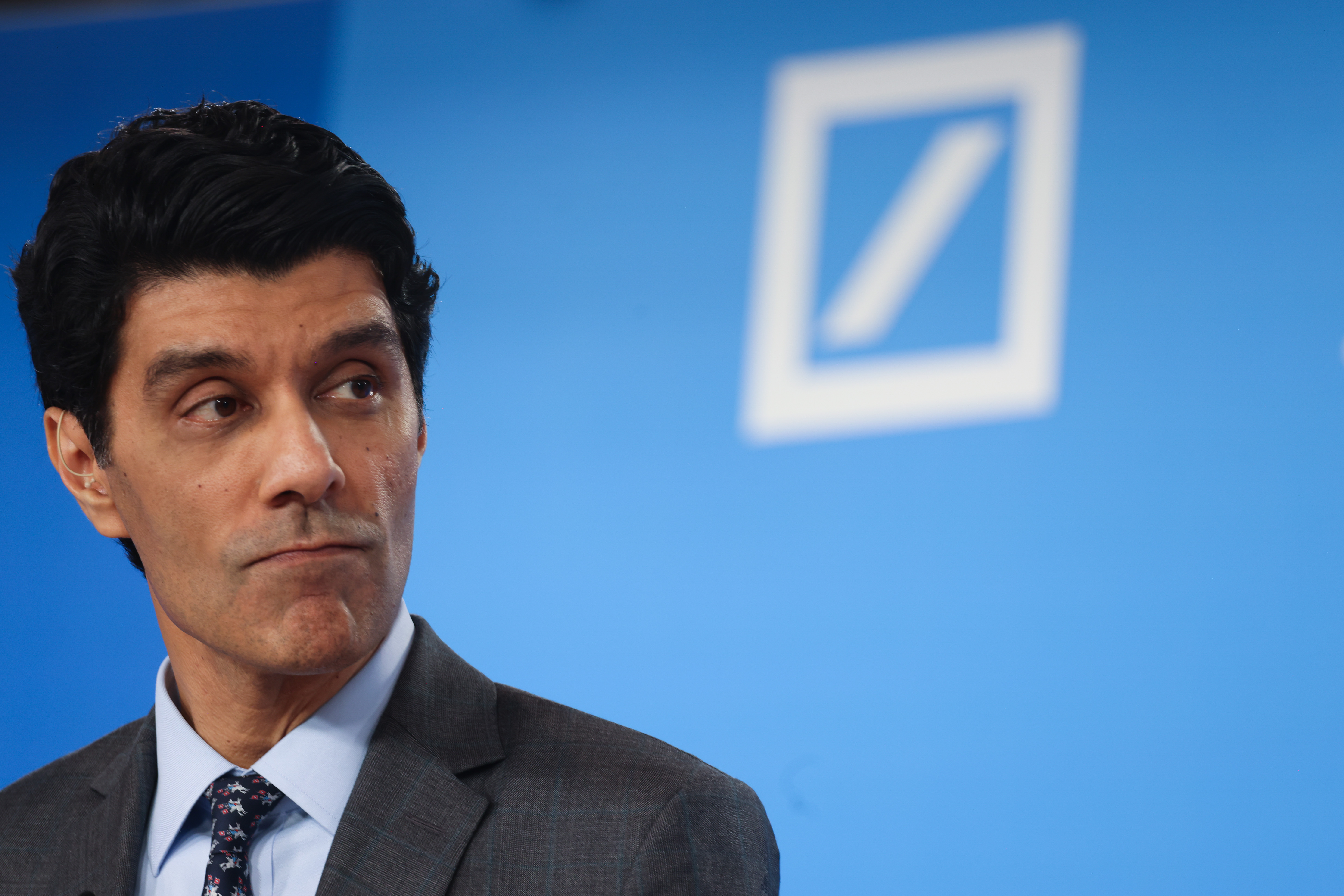
Sometimes small changes speak loudly. Deutsche Bank AG’s new chief financial officer, Raja Akram, put the German lender’s consumer and asset management businesses before its corporate and investment banking units in his first earnings presentation last week.
ClearBridge Investments suggests investors could use volatility as an opportunity to deploy capital, while modestly favoring the stronger earnings revisions and more reasonable valuations available in non-US equities.
It’s Shareholder Meeting Month on Wall Street. With the bulk of the Q1 earnings season now in the rearview mirror, investors turn their attention to Annual General Meetings (AGMs) held by some of the most important multinational corporations.
In a recent Market Outlook Symposium we hosted at VettaFi, we learned that 2026 has marked the return of fixed income as a strong contributor to an investor’s total return. We also learned that the biggest theme in fixed income investing this year is dispersion. Where you are putting your money to work matters.
Gen Z is coming of age in a world very different from that of their parents. Advisors who want to connect with this cohort need be conscious, not only of Gen Z’s biases and unique perspectives, but also of their own preconceptions and tendencies.
The S&P 500 hit a fresh record high last week. The median stock in the index is sitting 13% below its 52-week peak. That divergence is not a footnote or a curiosity.
Listening is a skill that can be taught, can be learned, and can be practiced. If a client doesn’t think their advisor is really listening to them, they might take that opportunity to find another advisor who does.
Investors are piling into municipal bonds at the fastest rate in five years, drawn by attractive yields and the promise of a safe harbor from recent market volatility.
Utilizing a portfolio of individual bonds can provide benefits that are difficult to reproduce via other fixed income investment vehicles. The portfolio can be completely customized to the specifications of an investor, providing a solution that aligns long-term financial goals with personal preferences. Product choice, issuer selection, cash flow, maturity, tax considerations, and credit quality, can all be customized.
LPL Research examines overlooked tech growth, assessing strong earnings, AI skepticism, and valuation opportunities for investors.
Deglobalization supports diversification: Reversing global trade reduces economic productivity, but the resulting decoupling of international markets increases the protective value of geographic diversification.
Despite continued geopolitical gridlock that has kept the Strait of Hormuz largely closed—and pushed West Texas Intermediate crude oil above $100 last week for the first time since the April 8 ceasefire announcement—U.S. equities continued to climb.
Thus far 2026 has been a roller coaster year for fixed income markets. The 10-year Treasury, the benchmark rate for the bond market, saw its yield trade as low as 3.94% and as high as 4.43%.
A persistent oil shock implies higher inflation and weaker growth, but risk assets appear unfazed, with equities and credit spread performance diverging from the caution implied by government bonds.
Affordability is a major problem that is finally getting the attention it needs. As important is directing that attention at the root cause of America’s cost-of-living crisis: inadequate wages.
Advisors are rethinking strategy in 2026, as geopolitics, AI adoption, and downside risk reshape market expectations and investment decisions.