By at least one metric in the $9.5 trillion foreign-exchange markets, demand for the dollar is ebbing amid the tenuous ceasefire between the US and Iran.
The first quarter of the year has offered an early reminder that markets rarely move in straight lines. After the extraordinary enthusiasm that carried investors through 2025, much of it centered on the promise of artificial intelligence, the new year has quickly reintroduced elements of uncertainty.
U.S. headline employment rebounded strongly in March, posting the largest monthly gain since late 2024. The jobs rebound, which was broad-based across industries, was a welcome sign after February’s data showed a sharp decline not usually seen outside of recessions.
Energy-driven inflation and geopolitical risk increase the likelihood of higher-for-longer interest rates, which listed infrastructure has several mechanisms for passing through to earnings.
The famed economist John Maynard Keynes said almost a century ago that “markets can remain irrational longer than you can remain solvent.” He was referring to the unpredictable nature of investor sentiment: an amorphous, hard-to-define concept that nonetheless plays a major role across various asset classes.
While Wall Street obsesses over the Magnificent Seven, a handful of under-the-radar forces may shape the next leg of this market, for better and for worse.
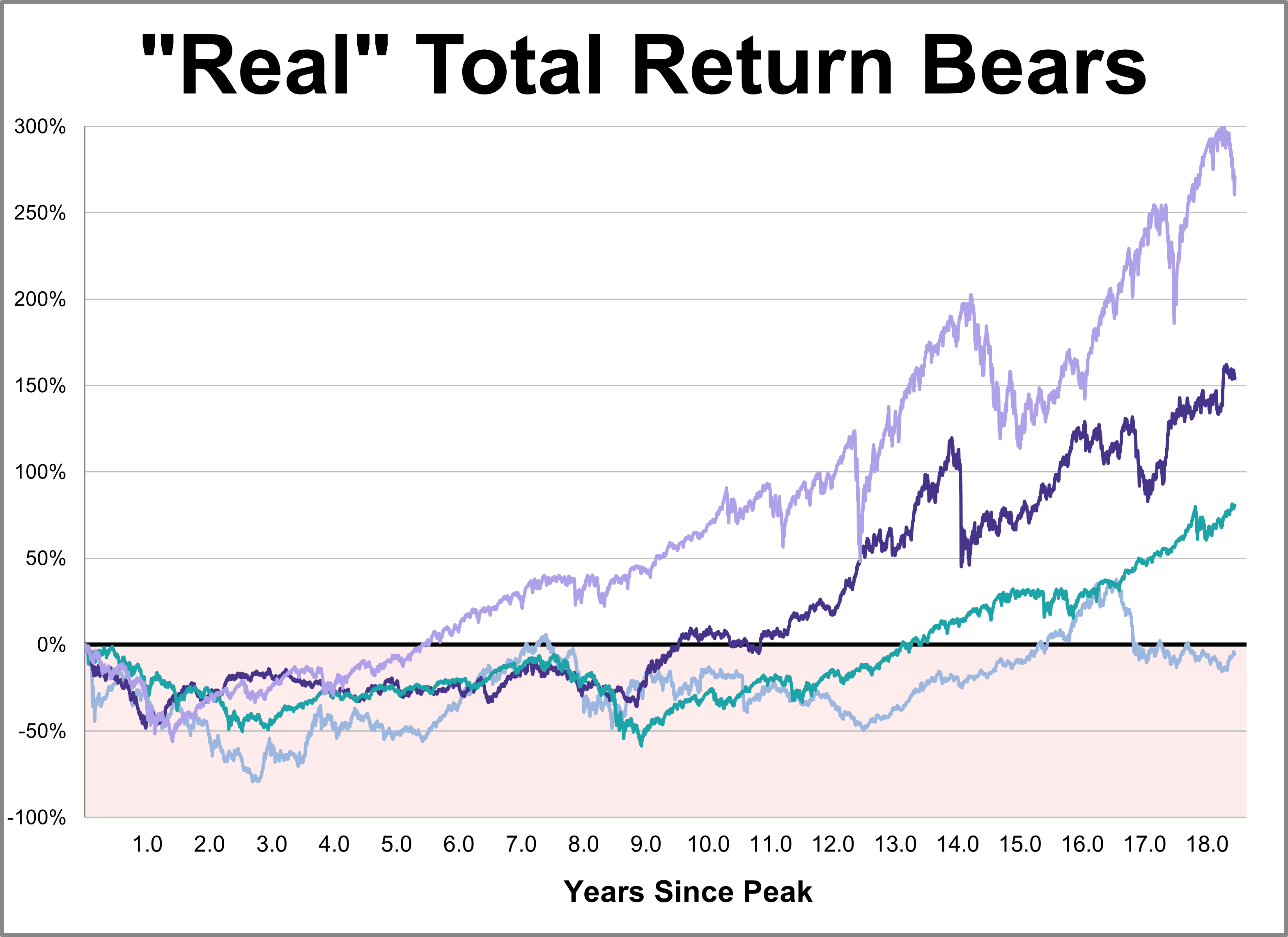
While every market downturn is unique, history offers a crucial lens for understanding recovery. This chart series provides a comprehensive overlay of the Four Bad Bears in U.S. history since the 1929 peak, comparing their recovery paths through the S&P 500's close on March 31, 2026.
Discover how abrdn’s K-1 free ETF outpaced gold and the S&P 500 in March 2026 by providing broad, tax-efficient commodities exposure.
Global equities declined during a volatile first quarter as the war in Iran roiled energy markets and fueled inflation fears that destabilized the economic growth outlook. Mounting geopolitical hazards add to existing worries around concentrated equity markets and the potential for AI to disrupt businesses.
Gambling is rising in popularity, blurring lines between betting vs. investing. Misunderstanding the key differences can endanger financial security.
Given the combined weight of these markets within EM portfolios, Templeton Global Investments believe incremental improvements in capital discipline could have a meaningful impact on aggregate index-level earnings quality.
Geopolitical conflict involving Iran disrupted energy markets, driving oil and the dollar higher while stocks, bonds, and gold fell. Despite volatility, economic signals are mixed but stabilizing, especially in manufacturing. Muhlenkamp outperformed markets, increased cash and international exposure, while remaining cautious amid inflation, policy uncertainty, and ongoing war risks.
A geopolitical shock in the Middle East sent oil prices surging more than +70% in Q1, erasing all expected Fed rate cuts and testing how well-diversified portfolios actually were. For many investors, the answer was: considerably better than the S&P 500’s -4.3% return suggests.
Global bonds surged Wednesday on news that the US and Iran had agreed to a ceasefire, pausing a war that roiled markets for weeks by delivering the worst oil shock in years.
European stocks soared the most in a year as investors rushed to buy stocks in the wake of the US and Iran agreeing to a two-week ceasefire in exchange for Tehran reopening the Strait of Hormuz.
At Exchange 2026, key thought leaders from firms across the country gathered in Las Vegas to share their ideas for navigating today’s macroeconomic uncertainty and the future of ETFs.
Despite West Texas Intermediate crude climbing to $111.54, U.S. stocks ended last week higher for the first time since February 20.
Fixed income markets have faced a challenging stretch following the escalation of conflict in the Middle East. Sharply rising oil prices and renewed inflation concerns have pushed US Treasury yields higher, and municipal bonds have moved in tandem.
Across corporate lending markets, some investments are easier to trade and exit than others – differences that deserve particular attention today.
As strikes on Iran continue and the Strait of Hormuz remains effectively closed, it’s clearly too early for market watchers to stop thinking about geopolitical risk.
Fresh data on the US labor market and new research from the Federal Reserve suggest that the conventional wisdom around employment growth being sluggish is wrong.
Developments in the Middle East continue to be, without a doubt, taking center stage for the financial markets. However, it’s important to keep tabs on the U.S. macro-outlook, especially the labor market and inflation aspects.
Last week, the stock market rally was one of the best performances in nearly a year. The S&P 500 surged 3.4%, the Nasdaq climbed 4.4%, and the bulls declared the correction over. As I have stated before, having watched markets for more than 35 years, I have come to recognize the difference between a relief rally and the end of a corrective cycle.
Since the U.S. and Israel launched strikes on Iran on February 28, jet fuel prices in the U.S. have more than doubled. According to data from the Energy Information Administration (EIA), the year-to-date percent change in U.S. jet fuel prices stood above 120% as of the end of March.
The economy continues to show resilience, and the March jobs report reinforced that view. Payroll growth came in stronger than expected, prior months were not meaningfully revised away, and the unemployment rate edged lower. Wage growth eased, but the broader message was clear: the labor market remains too firm to support any near-term case for Fed easing.
The US-Iran conflict has altered Iran’s regional influence and, more broadly, has many other consequences. It pressures government relations as well as global and financial market trading.
With the conclusion of a volatile first quarter in 2026, the Amplify Energy & Natural Resources Covered Call ETF (NDIV) demonstrated the resilience of its underlying index (VettaFi Energy and Natural Resources Covered Call Index).
It was a rough first quarter for the Broadleaf Growth Equity Portfolio and the markets in general as investors tried to identify market leadership buffeted by AI spending concerns, talk of escalating private credit market risks, and ultimately, the emergence of War in Iran.
With oil prices spiking and inflation concerns remaining elevated, many investors are looking for ways to diversify beyond the S&P 500. This week, Chuck Jaffe and Todd Rosenbluth, dive into the FlexShares Morningstar Global Upstream Natural Resources Index Fund (GUNR).
Breakeven real rates can inform us how much of a total return portfolio’s realized risk premium would be required merely to catch up to the benefits of delayed claiming, arguably an inefficient use of the equity risk premium.
I have written for years that oil prices act like a tax on the economy, both in the US and globally. It is actually simply the price paid, but the effect on the economy is similar to a tax. If the price goes up, it takes more money from individual consumers that would otherwise be saved or spent somewhere else. Just like taxes.
After more than three decades of watching oil markets upend economies, one pattern keeps repeating: investors learn the wrong lessons from the last shock. The 1973 OPEC embargo taught us that geopolitical disruptions are temporary.
The war in Iran has been costly, in a number of ways. First and foremost, the humanitarian consequences have been substantial: the price paid by those in harm’s way is immeasurable.
Bond traders kicked off the week betting that the Federal Reserve will keep interest rates on hold for the coming year, with the Treasuries market holding steady ahead of President Donald Trump’s extended deadline for Iran to reopen the Strait of Hormuz.
Markets often react sharply to geopolitical developments, but just as often, they overreact. Investors today are grappling with heightened global tensions, rising oil prices and uncertainty around central bank policy. The key question is whether these risks meaningfully alter the economic outlook or simply create short-term volatility.
March 2026 ETFs: Investors pivot to safety with $29B in short-term bonds and a record $5B in Energy as Tech faced a Q1 recalibration.
A look at ETF flows for the month of March suggests caution is back in vogue. Fixed income ETFs showed serious muscle in the asset gathering race last month, capturing nearly 45% of net creations.
Rising demand for critical microelectronics, bolstered by AI capex and defense spending, is driving semiconductor prices higher and posing upside risks to global goods inflation.
The stock market is looking past the sharp interest rate hikes priced by Europe’s bond market, risking losses for investors backing the wrong outcome.
Oil prices are the key transmission channel, and how far they rise and how long they remain elevated could shape the outlook for growth, inflation and policy, with implications for bond markets.
Systematic equity investing is a way to invest in the stock market using clear rules and data, rather than guesswork or hunches. Instead of trying to pick stocks based on trends or headlines, this approach uses research, data, and technology to systematically identify opportunities across global markets.
DoubleLine continues to fortify its presence in the ETF market, adding a new active fixed income solution designed for today’s complex interest rate environment. The DoubleLine Ultrashort Income ETF (DLUX) launched on NYSE Arca on April 1, marking the latest expansion of the firm’s rapidly growing ETF lineup.
All eyes were turned toward the Middle East throughout the month of March, with the US and Israel’s ongoing conflict with Iran causing energy prices to surge. The closure of the Strait of Hormuz, alongside damage to energy infrastructure across the gulf region, caused crude to rise above $100 a barrel for the first time since 2022.
The fiat currency collapse narrative is one of the most emotionally satisfying arguments in all of financial punditry. It feels intellectually rigorous, draws on genuine history, and speaks to deep and legitimate anxieties about government overreach, monetary recklessness, and the long-term consequences of unlimited debt creation.
In a recent episode of the Money Metals podcast, host Mike Maharrey sat down with renowned precious metals analyst Jeff Clark to unpack the sharp pullback in gold prices and the dominant narratives driving market sentiment.
The weight of evidence suggests that the current equity market decline should be viewed as a short-term pullback within an ongoing, longer-term bull market. However, we are watching indicators closely for changes in global economic/market health. Below are five charts we will be paying special attention to in Q2.
Stocks started the week on an upbeat note as the administration delayed a deadline to strike Iranian energy plants by five days, also announcing that the U.S. and Iran were in negotiations to end the conflict.
The US economy grew a pedestrian 2.0% last year and the Atlanta Fed’s GDP Now is currently projecting real GDP growth at a 2.0% annual rate in the first quarter. If anything, we think there is more downside risk than up to the first quarter projection.
Given the rise in the 10-year Treasury yield and oil prices, the case for near-term Fed cuts has weakened materially. That is the key message from this market.
Even if the US economy continues outperforming its peers, it will not necessarily remain insulated from the Iran war’s adverse spillovers. Already, higher energy and borrowing costs are exacerbating the affordability pressures many Americans face, creating downside risks for jobs, consumption, and growth.