US stocks rallied Friday after Iran said it would open the Strait of Hormuz following the truce between Israel and Lebanon, promising to ease an oil shock that has shadowed the global economic outlook ever since President Donald Trump started the war seven weeks ago.
While recent market performance reflects optimism over potential geopolitical de-escalation, underlying economic data reveals a complex landscape of intensifying price pressures and cooling growth. This article examines the major economic news from the week of April 6-10th, 2026.
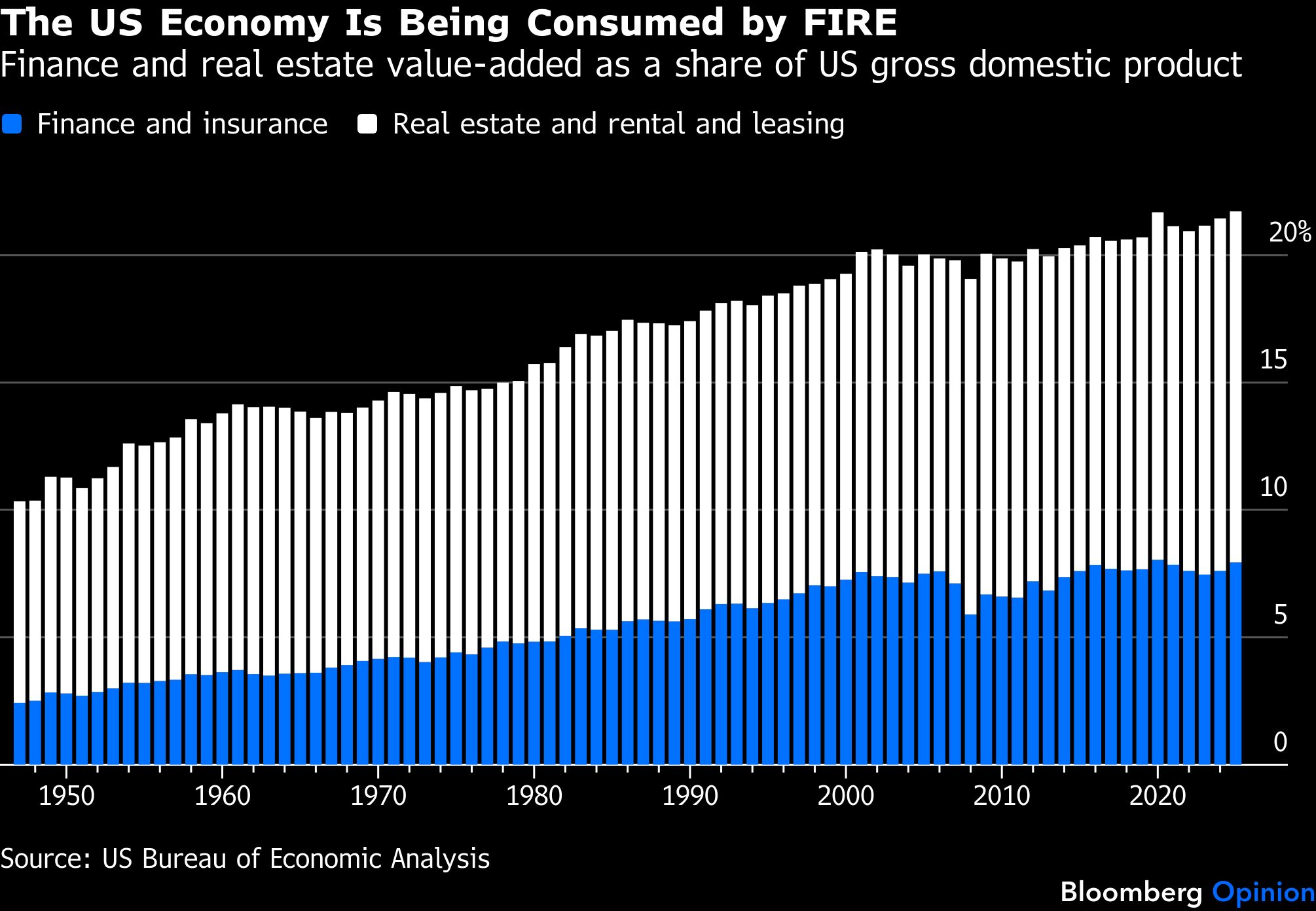
During and immediately after the financial crisis of 2008, there was much talk and academic research about the rapid growth of the US financial sector over the preceding decades and whether that was good or bad.
The backlash against globalization, the slow death of the Washington Consensus, and the rapid rise of AI are fueling volatility that, if left unchecked, will lead to lower growth, higher inflation, and greater inequality. To move the economy onto a better path requires, first and foremost, abandoning our faith in outdated ideas.
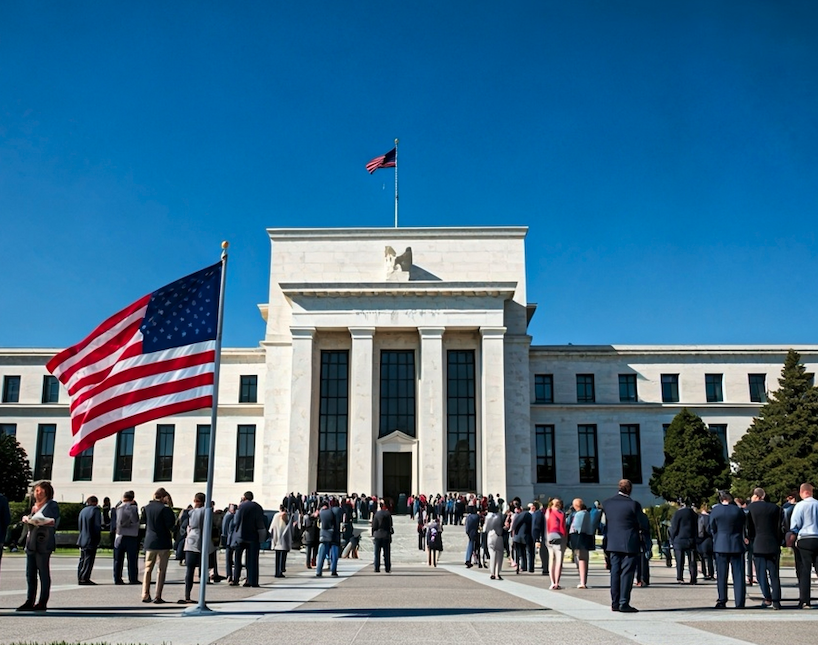
Late last year, the Federal Reserve ended its latest quantitative tightening (QT) program: the process by which it shrinks its balance sheet by selling securities or letting them mature without reinvestment.
Asia and emerging markets experienced extreme volatility in the first quarter of 2026 as markets surged in the first two months, supported by strong demand for artificial intelligence (AI) and an easing of the global monetary environment.
The Middle East war has replaced tariff-driven inflation concerns with fears of rising energy prices feeding through the economy. On Friday, the Bureau of Labor Statistics (BLS) released its March CPI report, when markets received their first ‘official’ glimpse of how the surge in energy prices has begun to impact the U.S. inflation setting.
As private credit managers mount a spirited defense of their industry to discourage investors from fleeing, they’ve found at least one persuasive argument for why much of the cash they lent to software firms at the start of the decade shouldn’t be at risk.
Rising oil prices and the historically inflationary aspects of war have changed expectations for Federal Reserve interest rate policy and have pulled Treasury yields higher.
In an investment world marked by ongoing macro uncertainty, more investors are seeking alternative strategies to navigate murky markets. One of the funds capturing this shift is the Fidelity Managed Futures ETF (FFUT). That fund secured the award for Best New Alternatives ETF in the 2026 ETF.com Awards.
Despite a confluence of economic shocks in the first quarter, markets have held up remarkably well, but cracks appear to be forming beneath the surface.
The US dollar's obituary has been written many times—with increasing frequency over the past year. Each time we get a fresh round of analyses declaring that de-dollarization is accelerating, the world is reorganizing its financial architecture around alternatives and the greenback's reign is drawing to a close.
The escalating conflict in the Middle East — especially the closure of the Strait of the Hormuz — had an adverse effect on many investment strategies in March, and gold was no exception. The spot gold price closed out March at $4,668.06.
The first quarter was defined by overlapping macro shocks and a violent shift in market leadership, punctuated by the war in Iran and the closure of the Strait of Hormuz. As capital surged into physical assets such as energy, materials, and defense, software and other digital businesses faced a historic repricing.
The war in the Middle East has brought about an elevated uncertainty quotient when examining the U.S. macro backdrop. The resultant rise in energy prices is being looked at as both a potential ‘tax on the economy’ as well as a catalyst for a near-term elevation in inflation.
Active management is gaining traction as investors navigate a market paradox where high valuations meet geopolitical uncertainty, according to Chris Davis, chairman and portfolio manager at Davis Advisors.
With the US-Iran war demonstrating not just how captive the world economy remains to fossil fuels, but also how easily energy can be weaponized, whether to drill at home is becoming an even more pressing question for some countries.
The S&P 500 Index is on track to close at its first record since January, as traders bid up stocks amid optimism over the ceasefire between the US and Iran and robust corporate fundamentals.
Outside of energy commodities, capital markets posted a downbeat March as cross-asset volatility spiked in response to the outbreak of hostilities in the Mideast, and kicked off April in similar, choppy fashion before posting a swift bounce following last Wednesday’s two-week ceasefire agreement.
While infrastructure companies are not immune to a potential economic slowdown, they may provide a longer-term investment opportunity amid an uncertain macroeconomic backdrop.
Yield curves exist for many products and can be interrelated, yet they also carry distinctive characteristics. Normally, long-term rates are higher than short-term rates because investors demand a higher return for lending money over longer periods. This arrangement would create an upward-sloping curve much like the Treasury curves displayed to the right.
In a year that started with volatility, direct indexing had ample opportunity to take advantage of loss harvesting opportunities.
Treasuries traded steadily after a reading of US wholesale prices last month rose less than anticipated, affirming wagers that the Federal Reserve will cut interest rates at least once this year even as the broader inflationary outlook remains murky amid the war in Iran.
Economic conditions are set to be even rockier in 2026, as the US-Israel war with Iran has set inflation on a continued upward trajectory and further rankled markets. Even if there were a de-escalation in the conflict, a domino effect has begun.
The gap between what advisors are doing and what's now possible in tax-aware portfolio management has never been wider. The tools have outpaced the practice. Here's where I see advisors falling short, and what to do about it.
Once upon a time, not so long ago, about a third of all American workers had a gold-plated pension: When they retired, someone paid them nearly their full salary for the rest of their lives. They didn’t have to worry about the market, or inflation, or running out of money.
The market remains remarkably resilient, but I have expressed a more cautious outlook in the near term as rising oil prices and a renewed pickup in money growth complicate the inflation outlook.
The Middle East ceasefire sparked a relief rally last week as markets dialed back the risk of a deep, drawn‑out oil supply shock. Stocks have already erased much of the post-conflict drop. Bonds haven’t gotten the memo: Yields are still elevated, keeping a bit of extra term premium on the table.
Investor anxieties surrounding negotiations between the U.S. and Iran paused a rally on Friday, initially sparked by roughly in-line inflation data and the announcement of a two-week ceasefire on Tuesday night.
The question that is increasingly on everyone’s mind is simple: Is this time different? The answer will hinge squarely on what happens to core inflation, specifically the core Consumer Price Index and the core PCE price index.
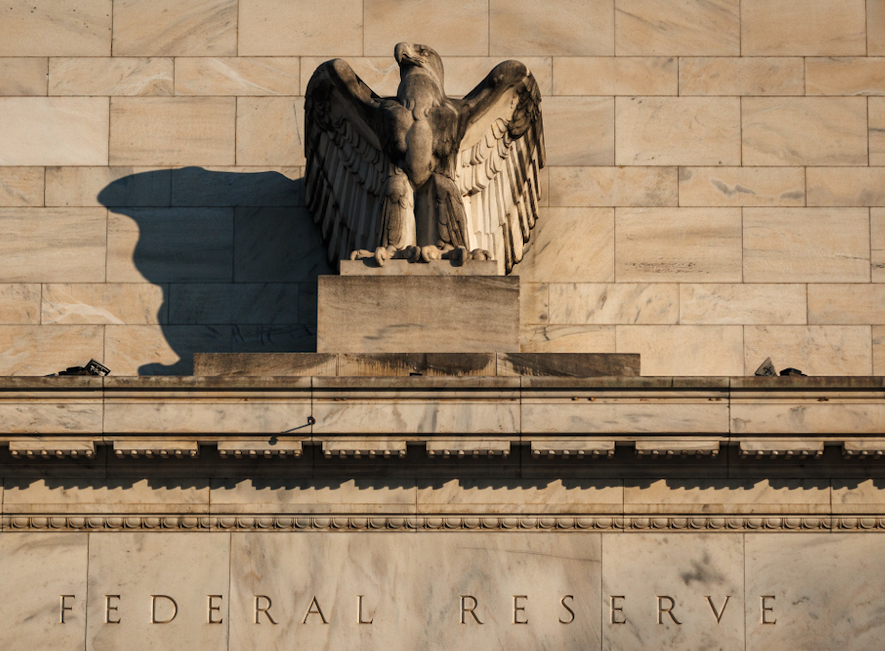
If you expect Kevin Warsh to quickly take the helm at the Fed and start cutting rates, you need to adjust your expectations.
Michael Bell of Meketa Capital joins the Alternative Allocations podcast to explore why infrastructure investing is shifting from an institutional-only play to a foundational piece of the modern portfolio and what that means for today's market participants.
Over the last few weeks, we have published real-time market commentary as the correction proceeded. The goal was to help investors navigate the more dire outcomes promoted on social media. A largely unexpected outcome was that the S&P 500 outlook changed dramatically in a matter of days.
While artificial intelligence is unlikely to replace financial advisors, it can certainly enhance both the quality and the productivity of advisors who embrace it. I agree that AI will boost productivity, but I wanted to put it through the test now to see how accurate and insightful it was. To do so, I gave Anthropic’s Claude a spin.
Inflation fears are not new, but the current path is beyond alarming. The U.S. is spending its way into a rampant inflation catastrophe. That is why gold and commodities are being bid up in price and will likely continue to be bid up.
It goes without explaining at this point, that advisors and investors are keeping an extremely close eye on the trajectory of the Federal Reserve’s ongoing fight against inflation. As of now, the battle certainly seems far from over. Fortunately, tools such as bond ladder ETFs can help portfolios maintain their course and mitigate the brunt of inflation.
That article digs into the plumbing behind oil shocks and recession, and exposes why, over the years, I’ve learned to distrust the loudest voices in the room.
Dividend-paying stocks offer an effective hedge against inflation—as well as solid long-term return potential in other environments when actively sourced from the right parts of the market.
Ever since the pandemic – when surging housing demand collided with a decade of underbuilding – housing affordability has become an increasingly important political issue and a larger focus for policymakers.
Today, I freely confess that I don’t have that 2007 certitude. I can certainly see a crisis coming in our future, but the timing, severity, and circumstances around it are cloudy at best. I can make an argument for numerous outcomes.
Over the past year, markets have been shaped by rapid advances in AI, elevated geopolitical tensions – especially involving Iran – and persistent uncertainty around global trade. In environments like this, successful investing rarely comes from chasing headlines or reacting emotionally. It’s about discipline, staying anchored to fundamentals and executing a clear long‑term game plan.
During Exchange 2026, experts and thought leaders from firms across the country gathered. They shared different approaches and ideas for tackling the market’s biggest challenges.
A ceasefire in the Middle East is the latest twist for investors who have grown increasingly reactive to each new headline. Volatility has surged: prior to the ceasefire, the VIX had roughly doubled this year and averaged 25 in March—about 67% above year-end levels—underscoring just how uncertain the path forward has been.
While recent market performance reflects optimism over potential geopolitical de-escalation, underlying economic data reveals a complex landscape of intensifying price pressures and cooling growth.
Franklin Templeton Institute examines the evolution of private credit, its risk/return characteristics, and why commercial real estate debt represents a viable alternative to traditional fixed income options.
In environments of geopolitical stress, diversification* is tested, and investors may need to think more wholistically about the assets included in their portfolio.
The general field called “credit” has seen massive innovation over the course of my career. An Oaktree colleague asked me about the developments that brought the credit sector to where it is today. I came up with the following list.
The traditional 60/40 portfolio is undergoing a structural renovation, but the fixed income sleeve is proving difficult to stabilize.
Bond traders held onto wagers that the Federal Reserve will lower interest rates once this year after data confirmed that US inflation quickened in March as the Iran war led to higher gasoline prices.
US equity futures stalled after a seven-day rally as investors weighed whether a fragile truce between Washington and Tehran can hold, and oil headed for its biggest weekly loss in nine months.