At the end of April, U.S.-listed ETFs gathered approximately $360 billion of new money.
The world’s biggest exchange-traded fund just got its biggest endorsement yet.
Apple Inc. received at least two downgrades on Friday, following quarterly results that reinforced concerns over tariffs and its growth potential.
In this article, Russ Koesterich discusses the ongoing uncertainty around tariffs and how investors can protect their portfolios against the potential for an environment of prolonged and heighted volatility.
The US economy’s contraction last quarter was something of a head fake, driven by a surge in imports as businesses tried to front-run tariffs.
Famous gold skeptic Warren Buffett is right about the dangers of inflation when it comes to non-producing assets, but he’s never been a fan of gold. Monetary Metals has transformed gold into a productive asset by generating a yield on gold, paid in gold, proving Buffett wrong about gold and giving investors new ways to own this timeless asset.
Even in normal times, managing an investment program is a challenging job. But when you add on tariffs and trade wars, it's bound to lead to some sleepless nights. Learn how an OCIO firm can provide relief.
Morgan Stanley is launching a private equity fund for its widest audience yet — investors wielding a few million dollars — as asset managers help broader masses into the once-exclusive realm.
Think of the drafting process like investing—scouts meticulously rank players based on their strength, speed, flexibility, and mental acuity, much like we analyze the economy and financial markets to shape our outlook. The true value of these players might take years to unfold...
Small-caps have suffered in early 2025, but increased market breadth could support a recovery.
The Fed’s in a bind. Policy uncertainty is high. And tariffs are likely to hit the U.S. economy with a “stagflation-lite” impulse in coming quarters—weaker growth and higher prices.
President Donald Trump’s recent executive order revives many of the SDI’s ambitions, albeit with a modern twist. His January 27 directive launched what he first called an “Iron Dome for America,” later rebranded as the “Golden Dome.”
We have good and bad news for investors who want to know whether the stock market will soar, stall, or plummet. First, the good news. This article presents a market path for what lies ahead. Unfortunately, the “right” path lies among three likely scenarios.
Emerging-market stocks rose for a second day, with the benchmark gauge heading for a three-week high amid optimism over corporate earnings.
Private equity firms are scouring for investment opportunities in European defense, chasing the once shunned sector in an effort to benefit from a historic switch to military expansion in the region.
Are you a “speculator” or an “investor”? This is an essential question that every individual deploying capital into the financial markets must answer. The reason is that how you answer that question determines how you should behave during market cycles.
I don’t believe the current level of tariffs will be maintained. I think most of them will be walked back, and the country will adapt to, say, a 10% tariff here and there. The Chinese (and a few other countries) tariffs are different in that they will have a more significant impact.
There's a tectonic shift unfolding in global finance—subtle in appearance, but profound in implication. The traditional signposts of market anxiety—stocks, bonds, even crypto—are being bypassed in favor of something far older: gold.
The US is running a substantial net trade deficit with the European Union (EU). Europe has a surplus—but with more exports at risk, it also has the weaker position in a potential trade conflict.
Google parent Alphabet Inc. reported first-quarter revenue and profit that exceeded analysts’ expectations, buoyed by continued strength in its search advertising business.
A raft of reciprocal tariffs between China and the US could bruise China’s export revenues in the short term. But its domestically focused economic engine and shrinking dependency on US trade should minimize fallout in the long run.
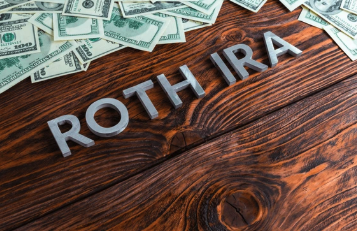
Many retirees hold substantial assets in traditional IRAs and taxable brokerage accounts. When planning for retirement income and considering your legacy, Roth IRA conversions can be a strategic way to reduce your tax burden and maximize the wealth you pass on to your heirs.
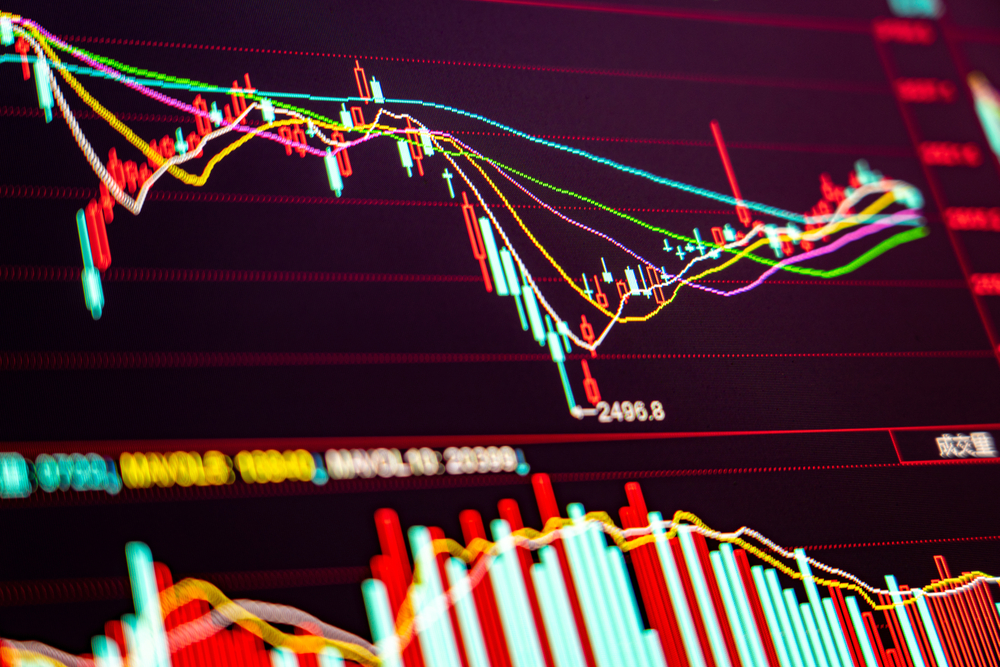
Risk-assets struggled amidst extremely volatile price action as investors weighed the probabilities of tariffs hitting profits and valuations.
How our open platform of best-of-breed managers allows us to distill complexity in the face of market turbulence by tapping into their collective intelligence.
It’s quite easy to do bad deals in asset management. Option one, overpay for a private capital business in the aggressive dash for growth. Option two, defensively merge your existing fund manager with a regional peer and botch the integration as you try to make savings.
Rising tariffs and the weakening dollar are casting a shadow on companies’ profit guidance this earnings season, with more damage seen unfolding over the coming quarters.
President Trump has been a vocal admirer of China’s Great Wall, built by the country’s emperors to protect their territory from outside aggression. In his first term, he compared his plan to build a border wall with that historic structure.
Chief Investment Officer Larry Adam notes with volatility on the rise, maintaining a long-term view is key.
Kestra Private Wealth Services (Kestra PWS), a registered investment adviser subsidiary of Kestra Financial, Inc., today announced it has welcomed Turas Wealth Partners (Turas), a wealth management firm led by father-son duo John and Shea Marmion, to its platform.
In financial markets, few technical patterns generate as much attention and anxiety as the death cross.
Stock markets have been rattled by trade war tensions and economic uncertainty driven by US tariff policies. Yet history suggests that equities have usually performed well in the aftermath of peak market volatility.
Andrew Leigh is a very good storyteller, making “How Economics Explains the World” an easy and fun read. In the hands of someone unfamiliar with basic economic reasoning, it might lead them to pursue economics further. Even if you’re farther along in your economic education, we almost always benefit from relearning things we already know, but in a new light.
A global trade war can’t possibly be good news for a city-state whose exports and imports add up to more than 300% of its gross domestic product. Yet there are good reasons to believe that real estate in Singapore may offer a sanctuary to investors fleeing extreme anxiety.
Eitelman began by assessing the health of the U.S. economy through hard and soft data. He explained that hard data refers to measures of actual spending and economic activity, while soft data refers to how companies and consumers respond to surveys.
In general, European countries have infused so much socialism and regulation into their economies that their economic growth has lagged behind the U.S. As a result, their GDP per capita is a third lower than in the U.S.
On this episode of the “ETF of the Week” podcast, VettaFi’s Head of Research, Todd Rosenbluth, discussed the SPDR S&P Dividend ETF (SDY) with Chuck Jaffe of Money Life. The pair discussed several topics related to the fund to give investors a deeper understanding of the ETF overall.
Inflation risk has been a significant topic of discussion in the mainstream media for the last few years.
In nominal terms, the yellow metal set multiple new all-time highs this week, exceeding $3,300 an ounce for the first time ever on Wednesday. And on an inflation-adjusted basis, gold also notched a new record price, surpassing the longstanding record set in 1980.
Talk of a recession is everywhere. The case is simple: Liberation Day delivered the biggest increase in tariffs in a century. Consumer prices will rise. Purchasing power will decline. Recession…right?
In this week’s installment of “Three on Thursday,” let’s explore some of the dynamics surrounding the United States dollar. In an era of inflation, massive debt, large deficits, and threats of tariffs, there are persistent rumors circulating that the dollar is at risk of losing its reserve currency status.
Audiences worldwide turn to Netflix for escapism. Wall Street is doing the same.
In this article, we examine everything from the yield curve to CAPE ratios to gain a sense of where we are, and where we might be headed next.
As homeowner insurance rates rise, advisors share ways individuals can create a financial safety net should catastrophe impact their homes.
It’s always an honor for me to both attend and speak at the Barron’s conference. In thinking about this column, I am recalling many of the amazing presentations, great insights and fabulous speakers I heard.
Unlike traditional methods that rely on selling assets, crypto lending 2.0 enables investors to borrow against their bitcoin, unlocking liquidity while preserving the upside potential.
Some of the reasons, but not the only ones, why our trade deficits are so large is because government expenditures are too high and/or we are not collecting enough taxes.
We think it’s important for the Fed to move gradually. The US dollar has weakened lately, and, as a result, there is little case for a drastic loosening of monetary policy. The Fed could let up somewhat on bank regulations and capital requirements, which would help the struggling bond market.
If Trump is successful in ending — or at least significantly changing — the current global economic structure, the economy and geopolitics will change dramatically. Initially, this will be highly challenging from an investment perspective.
You probably noticed we are having one of those “weeks when decades happen.” Notice also, however, that we are still here. Your investments and businesses may be bruised but you’re still in the game.