Treasury 10-year yields rose above 4.5% for the first time since 2007 as a more hawkish Federal Reserve adds to concern the bonds face a toxic mix of large US fiscal deficits and persistent inflation.
Capital Group portfolio manager Steve Watson discusses how he learned early in his career to get comfortable with market downturns, the circumstances that launched him on a professional life in Asia and Europe, and the importance of avoiding emotional overreactions to stock markets.
The European Central Bank is likely at or very near its peak policy rate, but we don’t expect rate cuts in the near term.
Now, is it an oversimplification to say that the upgrade to GDP growth is just down to Taylor Swift and Beyoncé? It is, to a degree, no matter how popular they are—and they are very popular indeed.
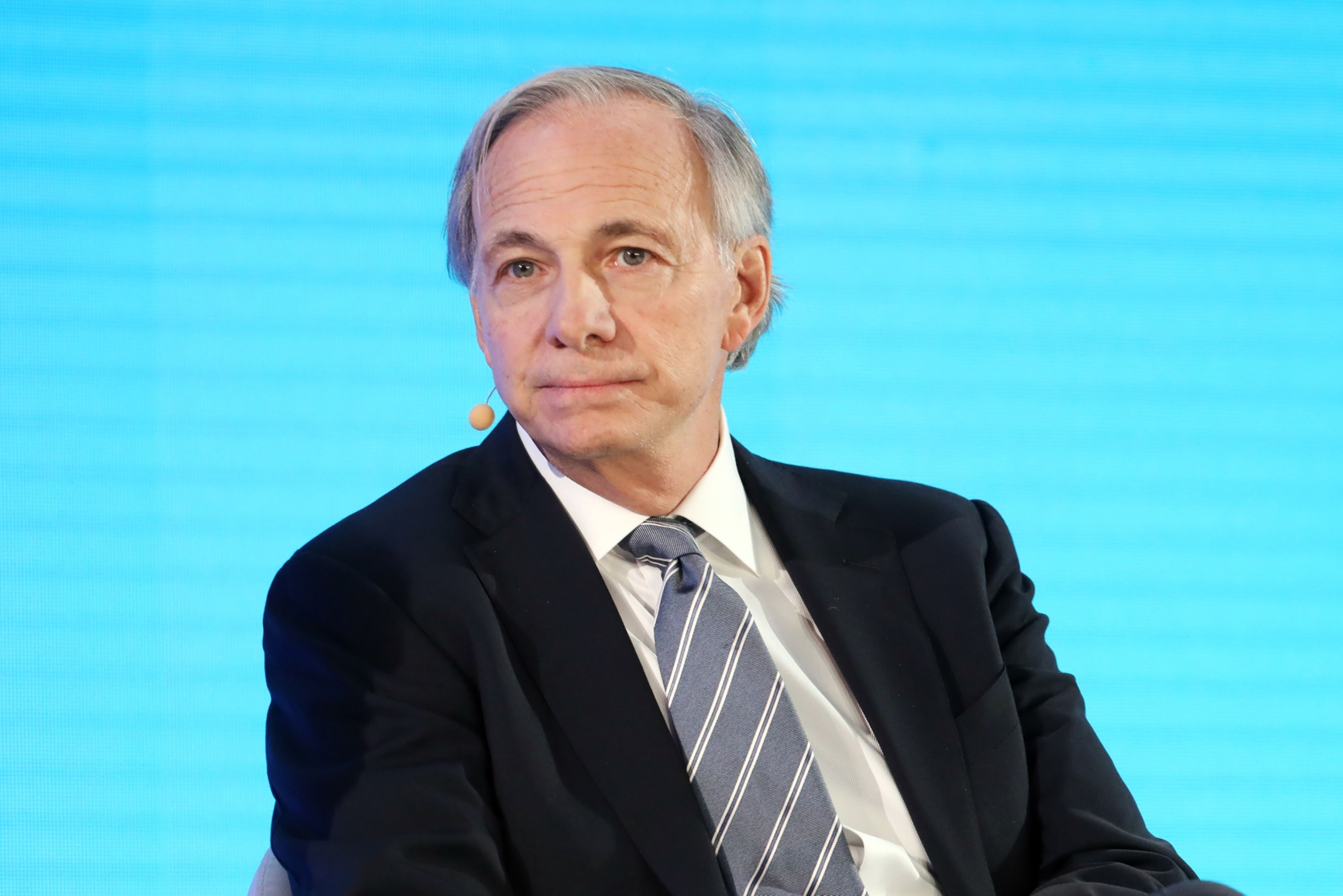
Bridgewater Associates LP founder Ray Dalio said he doesn’t want to own bonds and prefers cash, highlighting difficulties investors face as global central banks try to manage inflation.
From the dense Amazon jungle to wide stretches of Malaysian palm oil plantations, agricultural practices have been stripping the world of vital forests for decades.
PIMCO’s Global Advisory Board discusses economic and geopolitical factors shaping the long-term global outlook.
Concern over China’s sputtering economy has created a “dramatic shift” in investors’ equity allocation — a rush toward the US and an exodus from emerging markets, Bank of America’s latest global fund manager survey showed.
The U.S. dollar has dropped to its lowest level against other currencies in 15 months. In this environment, a wide range of assets stand to profit, not least of which is the AI-infused U.S. technology sector. However, no space stands more ready to benefit from this environment than emerging markets..
In the final part of our series on global supply chains, portfolio managers Inbok Song and Sherwood Zhang look at the companies that are reconfiguring their networks and portfolio manager Vivek Tanneeru gives his assessment on the investment opportunities.
A hard landing in China would rattle Asian economies.
Traders in the $325 billion industry for emerging-market exchange-traded funds are shifting cash toward strategies that focus on brighter spots in the developing world as China’s economy stumbles.
Even though past performance doesn’t guarantee future results, investors should prepare for continued market volatility this month.
Launches of emerging-market equity funds that exclude China have already reached a record annual high in 2023, as investor concerns grow over weak returns as well as the risks of investing in the nation.
Surging oil prices are set to power the next leg of the dollar rally, as the US economy benefits from its rise as an energy exporter.
As soft-landing calls engulf Wall Street, traders are betting that a market calm will endure across investing strategies — despite the latest selloff in US stocks and bonds.
In the second part of our series on global supply chains, portfolio managers Inbok Song and Peeyush Mittal examine the regions and countries that may benefit from industries and companies shifting operations.
Communications should be planned and thoughtful. Rarely – if ever – should a serious message be delivered without warning.
Market making in digital tokens used to be a font of outsized profitability. The picture today is very different as costs jump and investors avoid a crypto sector scarred by a $2 trillion rout.
Stocks are up 18.7% year-to-date, which is good news for portfolios and 401(k)s, but did you know that most of the heavy lifting has been done by a very small number of S&P 500 stocks?
For years now, stock traders have been getting so rich betting big companies will get even bigger that they’ve forgotten what a bubble looks like. They’re going to find out thanks to Nvidia Corp.
A steady stream of news helped drain enthusiasm from the equities markets through most of August, snapping a five-month growth streak at a time of the year known for cool market performance despite the swelter of its dog days.
In China’s current economic travails, US and other Group of Seven nations increasingly see evidence of deep-seated structural problems that ultimately will strengthen the West’s hand against a weakening geopolitical competitor.
In the first installment of our three-part series on global supply chains, Portfolio Managers Peeyush Mittal and Inbok Song discuss why and where trading networks and manufacturing hubs are changing and how it’s impacting the international investment landscape.
Today we continue our study of the historical cycles suggesting a major crisis is in our near-term (5‒8 years) future. We don’t know the precise timing or nature of the crisis, but the patterns indicate one is coming and could be severe.
Federal Reserve Chair Jerome Powell signaled the US central bank is prepared to raise interest rates further if needed and keep borrowing costs high until inflation is on a convincing path toward the Fed’s 2% target.
If this is what a bad year for the dollar looks like, I'll take it. Widespread predictions of a significant retreat after a bumper 2022 haven't come to pass.
An abstract interest-rate metric is dominating discussions across trading desks ahead of the Jackson Hole symposium, with investors wondering if Federal Reserve Chair Jerome Powell will weigh in, and bracing for further declines in US Treasuries if he does.
The prospect of global interest rates remaining higher for longer is tipping the case for many investors to switch into bonds from stocks.
As the demand for faster, smaller, and more efficient electronic devices grows, so does the need for advanced semiconductor manufacturing techniques. Traditional methods have their limitations, and ASML’s mission revolves around transcending these boundaries.
The role of the human psychological cycle in driving stock and bond prices is well understood and pre-dates behavioural economics. There are elements that suggest we may be going through another period of ‘irrational exuberance’ as several long-term investors seem stuck in the mindset that ‘There Is No Alternative’ (TINA) to US equities.
Whereas the U.S. is investing in new airport infrastructure and modernizing facilities to meet ambitious climate goals, European airports are choosing to combat emissions by restricting the number of flights.
At the height of the pandemic recession, a prominent economist proclaimed that the dollar would plunge 35% and lose its status as the reserve currency. Why was he so wrong?
With so much uncertainty remaining around the Fed’s rate cycle and the potential for recession, many investors are beginning to look toward international equity markets for the means to build income. Yields continue to look attractive for international dividend ETFs, in particular.
U.S. corporate earnings have stagnated for a year, but Q2 beat a low bar. Expectations of improving margins look rosy. We stay selective in equities.
Since World War II, the US Dollar (USD) has served as the world’s preeminent ‘reserve currency’ – the means of exchange for most of the rest of the world to do business.
The old playbook of selling emerging-market bonds when Treasury yields spike is being upended by the positive dynamics favoring developing-nation debt.
Andy Rothman provides his assessment of the Biden Administration’s executive order on certain investments in China.
David Dali, Head of Portfolio Strategy, provides his 12-month outlook for global equity markets.
Inflation concerns are threatening to keep US Treasury yields higher for longer, worsening a slide in Asia stocks as investors sell chip shares after their recent rally.
We see emerging markets better withstanding volatility and benefiting as supply chains rewire. We switch our EM debt preference to hard currency from local.
Bulging sales of US Treasuries are about to deliver a major test of investor demand and determine whether a selloff has room to run, as the market braces for the biggest round of refunding auctions since last year.
Alphabet Inc., the umbrella organization encompassing Google, is a global conglomerate that has revolutionized the world by organizing information and making it universally accessible and beneficial.
The mood is rapidly souring in the world’s bond market, raising the stakes for Friday’s much-anticipated US monthly jobs data.
The unexpected downgrade of US government debt sent shockwaves across the economic and political landscapes. In financial markets, the move was met with what amounts to a shrug.
Energy/oil may have possibly broken out of a range in the low $70s (Brent Crude), which suggests we may have seen a bottom in energy sentiments/stock prices.
Is it vogue to be pessimistic about China’s economy? Andy Rothman explores.
Record-breaking heat waves dominate the news headlines, with 2023 shaping up to be one of, if not the hottest year on record. Extreme temperatures are shattering records across the U.S., Europe and in parts of Asia – not just on land, but also in the sea.
In a quarter filled with talk of potential Treasury default and the second largest bank failure in U.S. history, markets chose to look forward. This was a quarter of AI captivating markets.
Believe it or not, Emerging Markets (EM) local currency bonds have been outperforming global fixed income asset classes for the past 18-months.