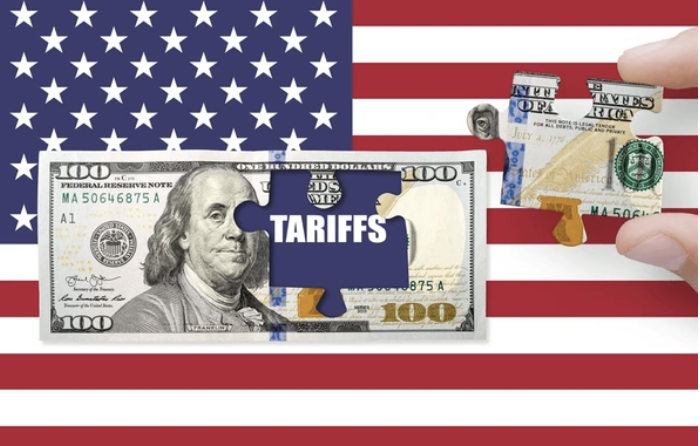
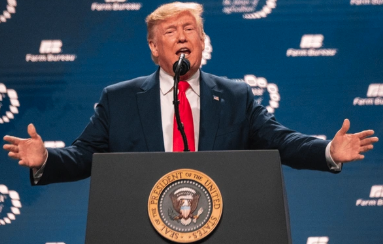
U.S. customs duties topped $100 billion for the first time ever in a single year this month. That number is even more remarkable when you consider that most of President Donald Trump’s new tariffs haven’t even taken full effect yet.
Although investing in in-state municipal bonds may have tax advantages, there can be good reasons to buy out-of-state munis.
Few are as candid and historically accurate as hedge fund manager Kyle Bass when identifying structural breaks in the global economy. In a recent interview, Bass painted a grim but telling picture of China’s economic condition, warning.
Unfortunately, the lush financial terrain we enjoyed from 2008 to 2022 was more like artificial turf. It wears out, gets ugly holes, and eventually needs replacement. But how to replace it without causing other problems? That turns out to be a real problem.
Investors enjoyed broad gains across major asset classes in the first half of this year, but they endured considerable market swings to earn those returns.
Will he or won’t he? That’s the question on investors’ minds as tensions rise between President Trump and Fed Chair Jerome Powell.
Last week's economic data presented a picture of consumer resilience emerging alongside the continued challenge of rising inflation.
DWS, through its lineup of Xtrackers ETFs, has a 20-year history of delivering unique investment solutions featuring competitive expense ratios.
The second quarter featured a trade war, armed conflicts in the Middle East and Europe, and continued turmoil in Washington, yet markets continued to rally, likely due to an elevated money supply and an increase in passive investing.
June was a month of stabilization and subtle strength for preferreds.
Three themes are worth emphasizing as we reach the midpoint of 2025: tariffs, interest rates, and global diversification. We emphasize these themes even amid recent heightened geopolitical tensions.
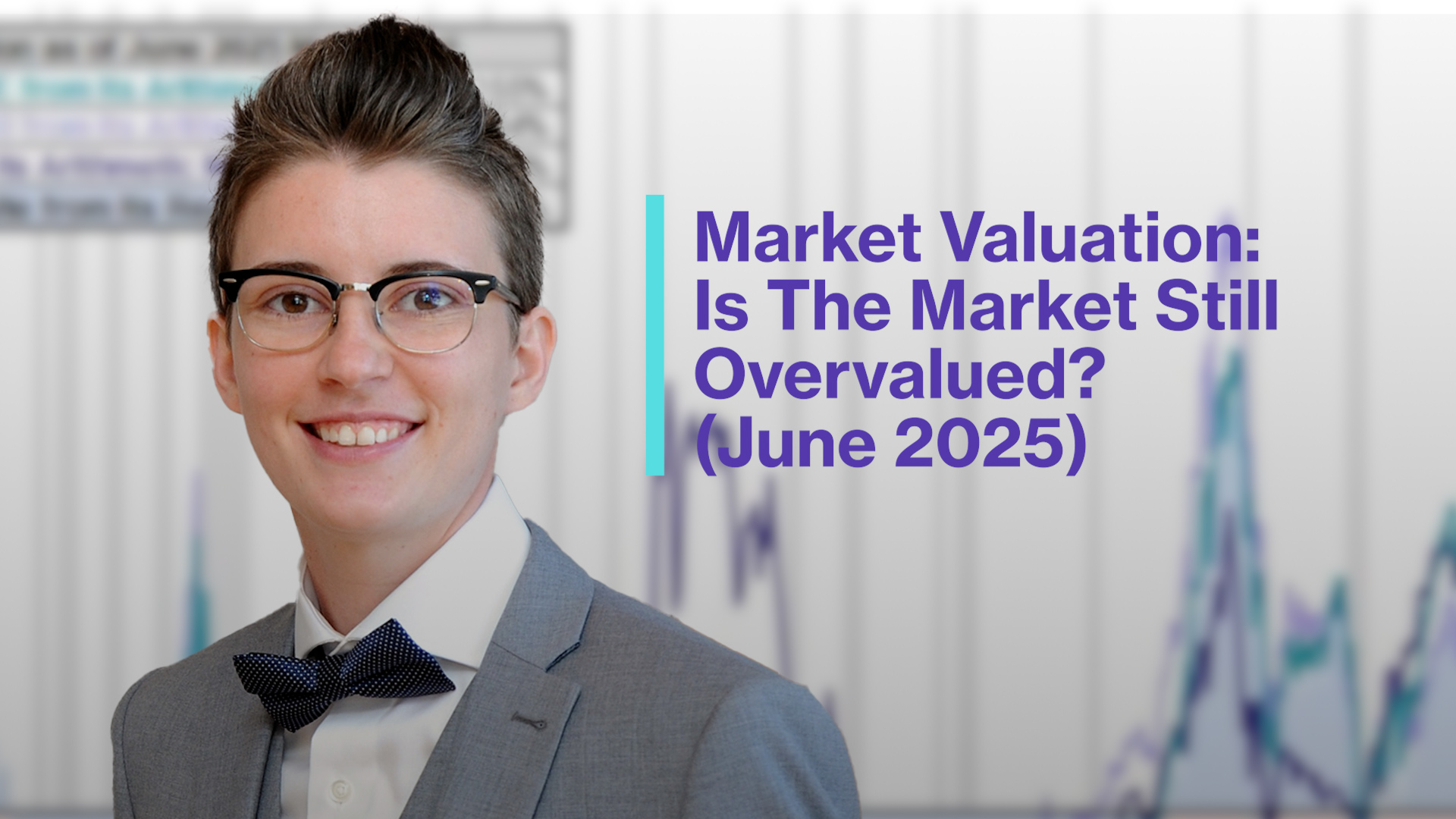
Market valuation indicators are used by investors and analysts to gauge whether markets are overvalued, undervalued, or fairly valued relative to historical norms. This video examines four market valuation indicators to assess the current market's valuation with data through June 2025.
Low volatility exchange traded funds are a compelling solution for those looking to dampen risk while staying invested.
For many years, the pension plan has often been a drag on a corporation’s financial positions. Now that’s generally no longer the case, and it’s time to consider what’s next.
High yield bonds have historically delivered attractive long-term returns, and since the Great Financial Crisis they have also become higher quality, as weaker borrowers have departed the sector for the private credit and leveraged loan markets.
Drew O’Neil discusses fixed income market conditions and offers insight for bond investors.
We continue to believe we are seeing a rare opportunity in EM local debt, and our conviction has been strengthened by the Trump administration’s trade and economic policies, which suggest continued dollar weakness and relative strength for EM local currencies.
It is easy to invest when markets are rallying, but it can be tough for investors to stay in their seats when markets inevitably decline again.
Bond investors worried about rising fiscal deficits are turning to an unusual haven: emerging markets.
Fixed income benchmarks have two fundamental flaws. First, their exposures prioritize the needs of borrowers rather than investors. Second, they tend to expose investors to the biggest risks at the worst times.
The resilient job market has supported stock gains, but Washington policy has been a primary market driver so far this year.
As investors try to determine the policy direction of the Trump administration, there is good reason to believe there will be a lot of back and forth.
There’s a connection between our willingness to let the debt problem fester and investors throwing their money into a wildly overvalued stock market. In both cases, we’ve grown way too comfortable with uncertainty.
ClearBridge Investments believes tariffs remain the key risk to corporate profits in the second half of the year and is less concerned about geopolitical events or the outlook for fiscal and monetary policy.
Now that we're more than halfway through 2025, let's take a look at the top 10 most-read charts so far for the year.
Banks from Wells Fargo & Co. to smaller Japanese lenders are flocking to top-rated collateralized loan obligation deals, pushing up secondary prices for buyout debt.
A full three months since President Trump’s “Liberation Day” tariff announcements sparked panic in financial markets, macro developments have been benign. The passage of the Big Beautiful Bill has brought clarity on the fiscal outlook, but uncertainty on trade negotiations remains. Franklin Templeton Fixed Income CIO Sonal Desai explains what this means for investors going forward.
Advisor Perspectives had a strong mix of pieces in the top 10 articles for views on its leaderboard for the month of June.
Compelling bond yields and diverging equity returns offer building blocks for effective strategies.
As we reach the midpoint of 2025, we reflect on the notably volatile trajectory of bond yields so far this year, considering the potential opportunity for tax-aware fixed income investors to harvest losses.
After mid-level performance in Q1, financials sector earnings are seen slowing in Q2, according to analysts, though favorable signs like the yield curve could help margins.
We are in a period of market greed right now, even if you haven’t noticed it.
Franklin Mutual Series shares its mid-year outlook, focusing on corporate fundamentals as a catalyst to unlock value in the midst of ongoing market volatility.
The Treasury market rallied after an auction of 10-year notes drew strong demand, easing concerns that investors will balk at financing swelling US deficits.
Liberation Day seems like a lifetime ago. But the 90-day pause is almost over, and—thus far—there are few deals that have been consummated.
At the recent 2025 Morningstar Investment Conference, CEO Kunal Kapoor highlighted a growing trend that is reshaping the investment landscape.
Futures traders have been unwinding some large bullish bets on Treasury bonds, adding to the recent upward pressure on US yields after a surprisingly strong jobs report last week.
Are interest rates too high? A lot of people think they are, and a growing chorus of voices is calling on Federal Reserve Chairman Jerome Powell to cut rates.
Elevated interest rates and market uncertainty make for an interesting tandem regarding getting core bond exposure. When considering yield, reinforcing a portfolio to absorb market shocks, or both, consider this active option from Vanguard: the Vanguard Core-Plus Bond ETF (VPLS).
The headline employment figure came in stronger than expected and better than feared following the weak ADP report, but the details were far from a blockbuster.
If you’ve been following the mainstream financial media lately, you might think the airline industry is in crisis. From headlines about tariffs and labor costs to geopolitical tensions and delays at Newark Airport, it sounds like air travel should be tanking.
We upgrade equities to neutral from underweight as falling interest rates and improving economic conditions in emerging markets offset uncertainty over US tariff policies.
It was a positive quarter for emerging markets equities.
This year, so far, the world has been riddled with geopolitical news, resonating in widespread unrest, yet seemingly yielding less impact on financial markets.
On this episode of the “ETF of the Week” podcast, VettaFi’s Head of Research Todd Rosenbluth discussed the ALPS Sector Dividend Dogs ETF (SDOG) with Chuck Jaffe of Money Life. The pair discussed several topics related to the fund to give investors a deeper understanding of the ETF overall.
Last week, the U.S. labor market took center stage, delivering conflicting signals. The S&P 500 reached many record highs during the shortened trading week.
Tariffs have been the dominant theme in economic policy this year. While President Trump has long held protectionist views, his administration’s approach to international commerce has been more belligerent than was seen in his first term.
The bull market is alive and well, even amid widespread talk of the “death of U.S. exceptionalism.
Investors looking for cash flow from commercial real estate may want to check out the debt side.
After a tumultuous few months, June of 2025 saw a strong rally which took global markets to (or close to) new highs. The rally was broad-based, with international and U.S. markets all up strongly.