My column yesterday outlined six categories of winners and losers spawned by the current disruptive global economic environment as it transfers incomes and assets. Here are five more that result from the repricing of goods and assets.
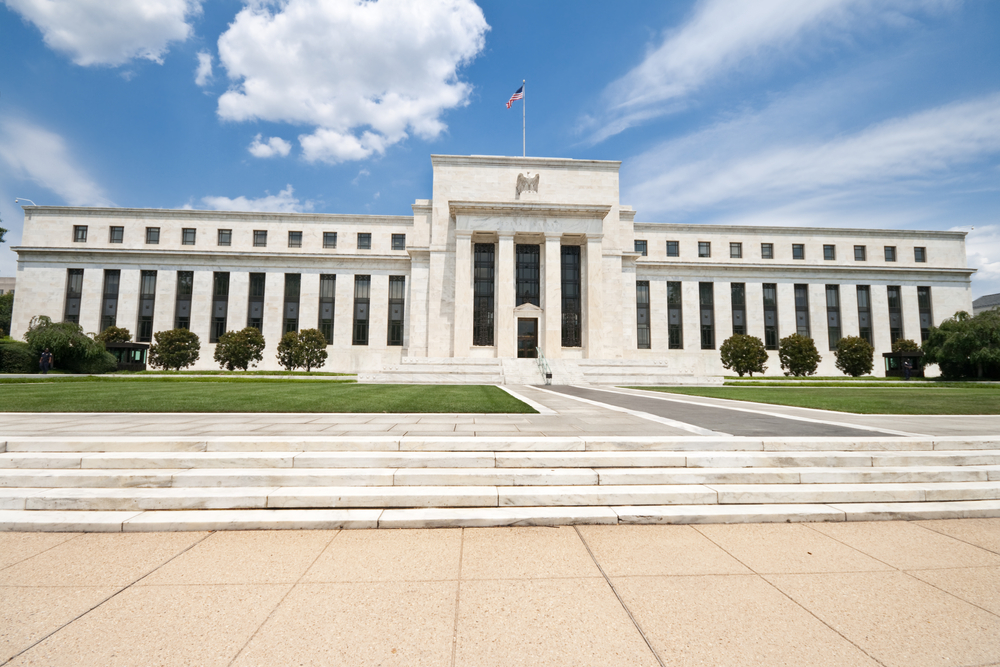
The Federal Reserve should raise interest rates to the neutral range as quickly as possible and can move above that should price pressures persist, Richmond Fed President Thomas Barkin said.
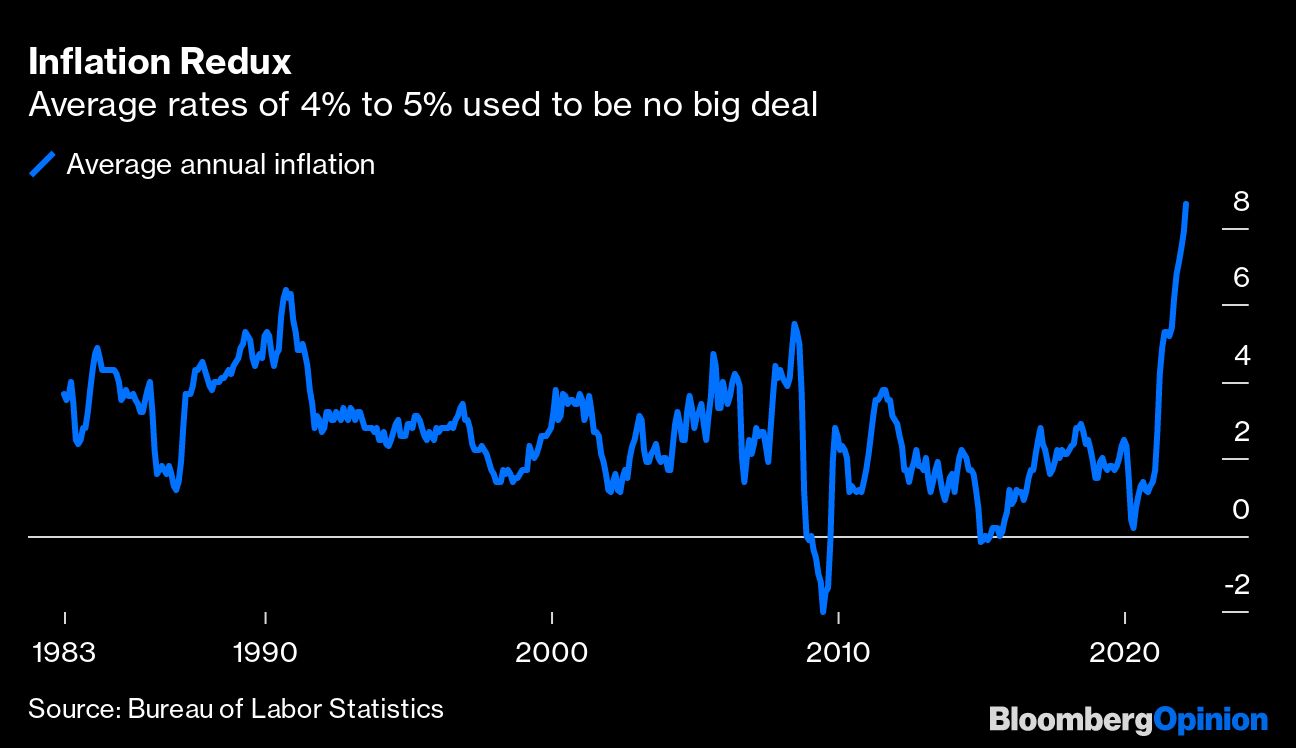
Now that inflation is back, it's not going away anytime soon. The Federal Reserve expects it to fall below 3% next year and eventually go back to 2%. But there are reasons to think that’s far too optimistic. We are living in a new world. Even after things get back to normal that could mean inflation averages 4% or even 5% for the foreseeable future.
It’s the next big market call that could enrich traders across Wall Street: The raging global energy crisis and ever-more hawkish central banks knock key economies into 1970s-style stagflation. It’s a long shot for now, but anxiety is building among money managers that this market scenario -- out-of-control inflation just as growth slumps -- will eventually come to pass, especially in Europe.
Prices paid to U.S. producers jumped in March from a year ago by the most in records back to 2010, topping all estimates and underscoring persistent early-stage inflationary pressures that risk feeding through to consumers.
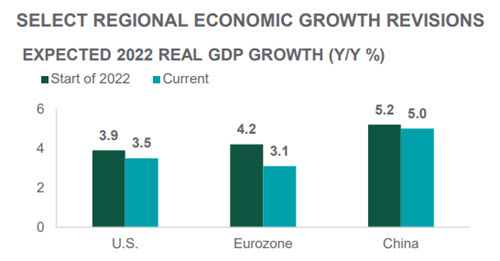
The Fed is tightening into a growth slowdown
It’s not just interest rate changes that affect the markets, changes in the Fed balance sheet can also be a source of negative returns to equity and bond markets.
Covid-19, global supply-chain disruptions, frictions in reopening economies worldwide and now Russia’s invasion of Ukraine are spawning many winners and losers in economies, financial markets and political structures. Six of them are driven by transfers of incomes and assets. Five more are fundamentally the result of repricing goods and assets that I’ll cover in a separate column.
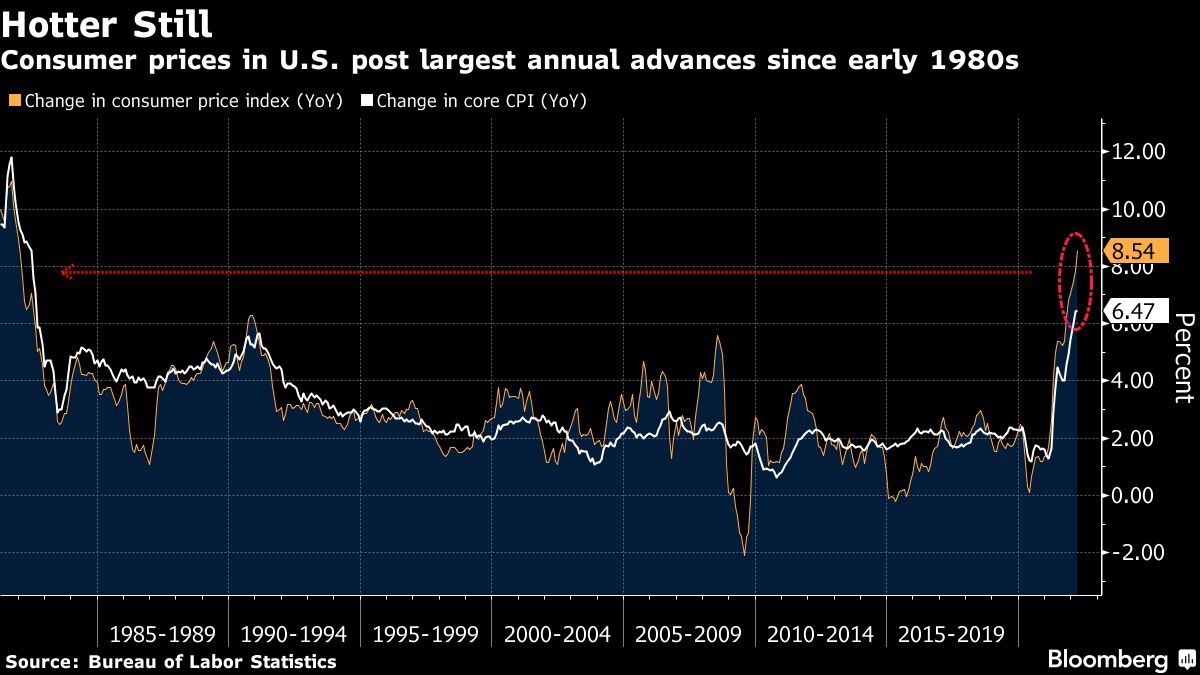
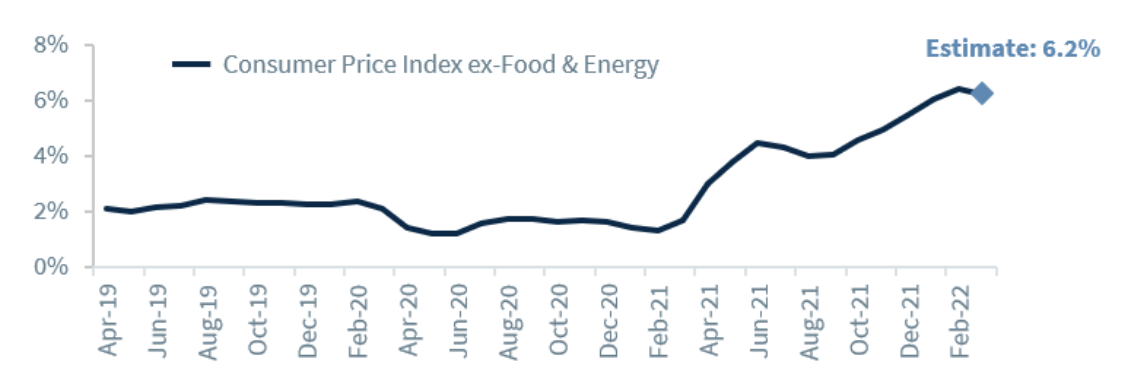
The consumer price index increased 8.5% from a year earlier following a 7.9% annual gain in February, Labor Department data showed Tuesday. The widely followed inflation gauge rose 1.2% from a month earlier, the biggest gain since 2005. Gasoline costs drove half of the monthly increase.
There is a genre of investment research that continuously predicts economic disaster that I call “macro doom.” It has become very popular. It seems that everyone is an expert in macroeconomics today, and they’re all predicting a bust of some kind.
Review the latest Weekly Headings by CIO Larry Adam.
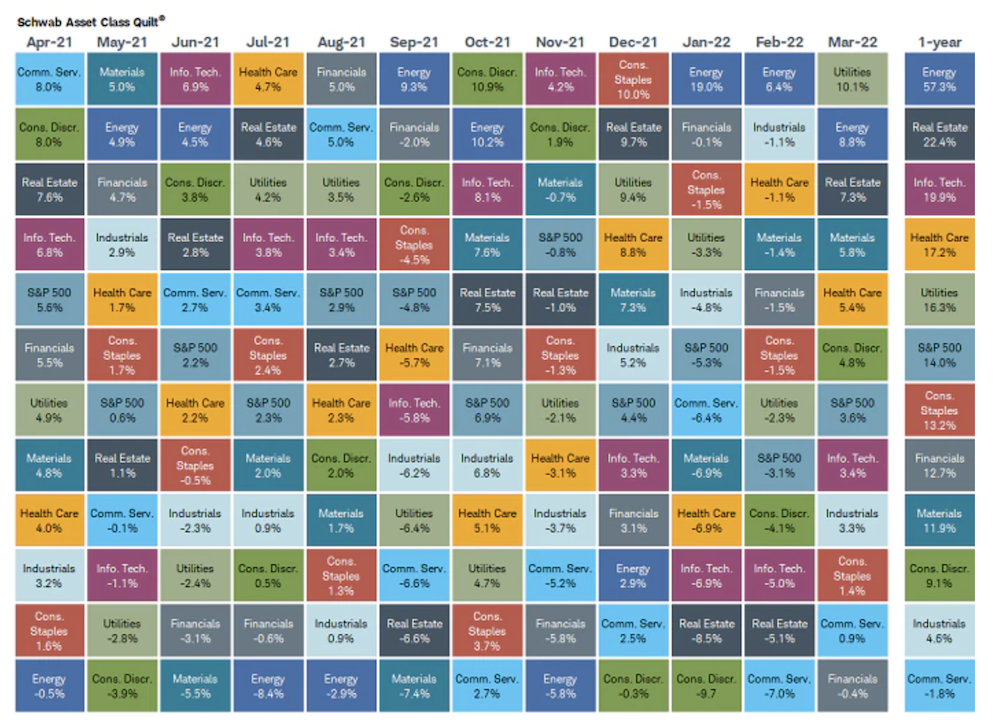
There was a little March Madness on Wall Street.
When interest rates go up, many analysts start to worry about recessions.
The Russian invasion of Ukraine has added pressure to the inflationary cycle that began in late 2020.
Markets rebounded in March, but it was not enough to offset earlier losses in January and February.
George Milling-Stanley, Chief Gold Strategist at State Street Global Advisors, discusses the current gold market environment as well as several reasons why investors can remain optimistic about gold’s outlook moving forward.
Did Goldman Sachs destroy a persistent myth about investing in stocks? Sam Ro recently suggested such was the case for the “sacred CAPE ratio.”
Antti Ilmanen’s Investing Amid Low Expected Returns updates his 2011 Expected Returns, a volume considered by many the definitive work on the subject.
Rising rates are a direct shot at your bond portfolio. But there's a real opportunity to address your equities and position them optimally for a rising rate environment.
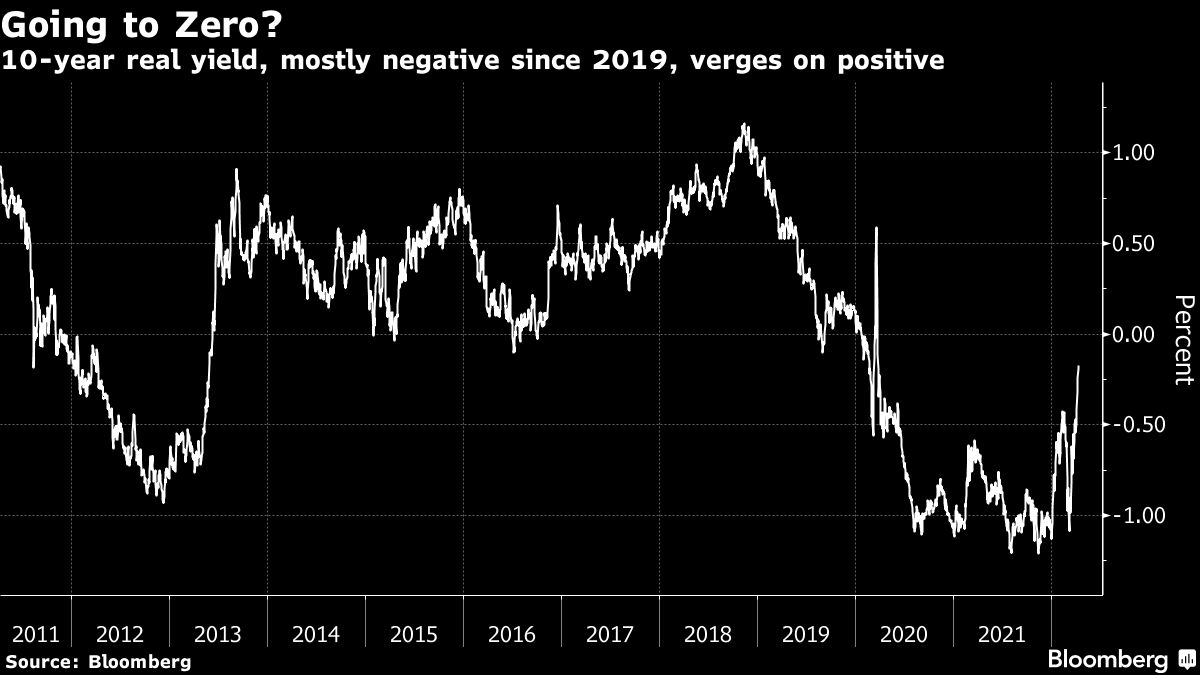
While all Treasury yields have climbed this year as the Fed began what’s expected to be an aggressive series of rate increases aimed throttling high inflation, in the past two weeks the baton has been passed to inflation-protected notes and bonds. Their yields are termed “real” because they represent the rates investors will accept as long as they are paired with extra payments to offset inflation.
The search for havens from the worst inflation in four decades feels like it’s about to get a lot more real. The bad news is that the task isn’t looking at all easy or straightforward, at least for individual investors whose choices are confined to the standard asset classes and who rely on a traditional 60-40 portfolio mix of equities and bonds to weather the ups and downs of market cycles.
Most Americans say the most important problem facing the country is inflation — and President Joe Biden just made it worse. His administration announced last week it would extend yet again the emergency suspension of student loan repayments, even as his frenemies on the left are urging a program of complete forgiveness of all student debt.
The last three years have been so relentlessly dismal — a global pandemic followed by the invasion of Ukraine — that it is tempting to idealize the old days. Just as the survivors of World War I looked back on the Edwardian era as one long country house weekend (“Stands the church clock at ten to three? And is there honey still for tea?”), so we observers of Ukraine’s agonies may think of the pre-Wuhan world as one of peace and prosperity. Yet in fact it was an era of sustained disappointment punctuated by the occasional crisis.
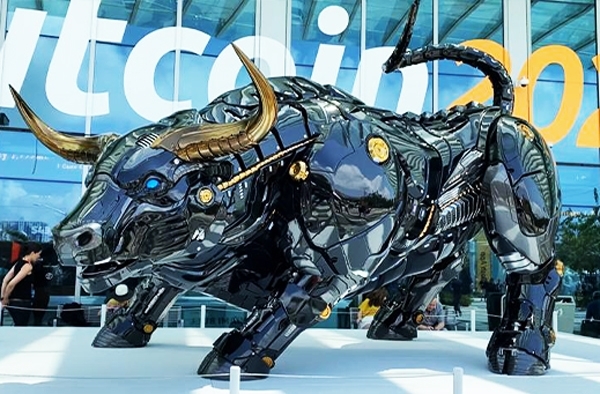
An estimated 30,000 people attended this week’s Bitcoin 2022 conference in Miami, which is rapidly becoming a major global crypto-finance hub.
Today we’ll consider the risks to my stagflation forecast. Note that’s different from the risks of my forecast, should it prove accurate. I’ve described those already but it’s important to ask how I might be wrong.
As dangerous as it is to simply extrapolate past returns into future expectations, an even bigger mistake is planning a financial future based on nominal gross returns, forgetting about how large bite expenses, taxes, and inflation will take from the bottom line. Use our premium membership service to forward this article to clients with your logo.
For a confluence of reasons ranging from COVID to property sector problems, China has been experiencing slower growth. Many cross-asset relationships suggest that a devaluation in China could help spur growth.
With inflation and growth pressures in abundance, consider TIPS.
A “soft landing” scenario is not so straightforward in the current context. We have emphasized companies that we believe have pricing power because of the mission-critical or value-add nature of their products and services.
With the US Federal Reserve (Fed) and other central banks going down the path of increasing policy rates, it seemed a good time to look at market impacts over the last 40 years or so.
Given that (1) investors have benefitted from a market environment that reliably produced a source of positive returns from a 60/40 mix, and (2) we’ve just completed the best period for that mix in nearly 70 years of tracking, why would an investor want to consider a change?
Putin's invasion reminds us that we live in a finite world in which resource prices tend to rise.
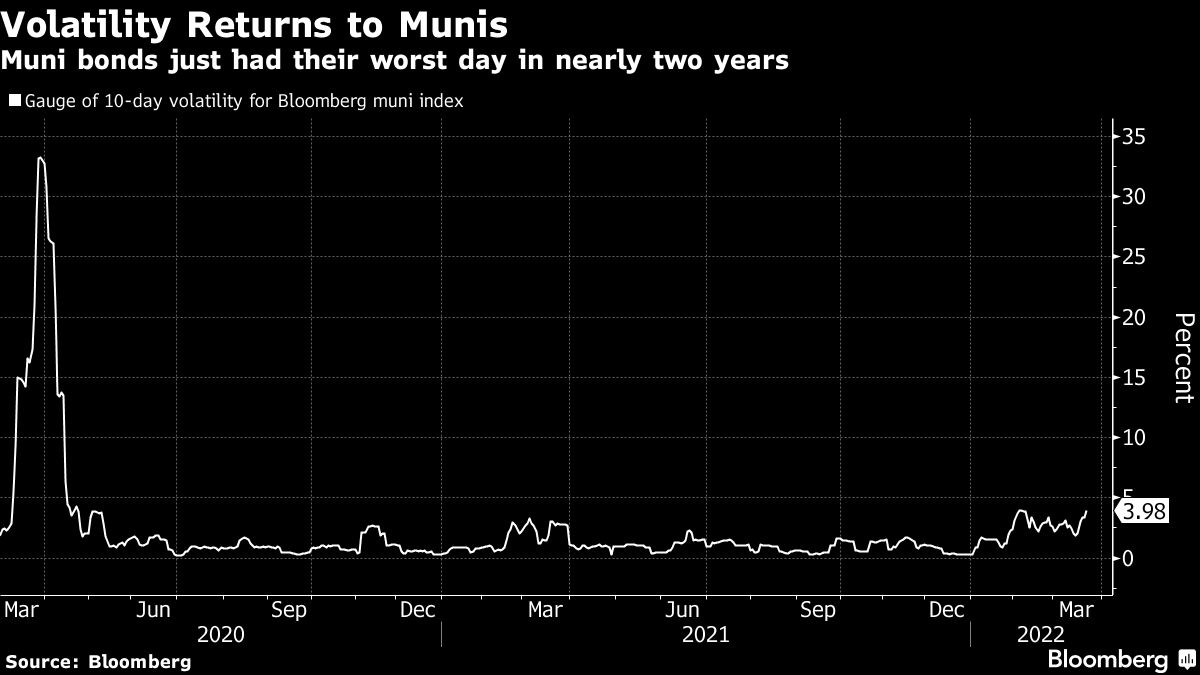
The $4 trillion state and local-debt market just logged its most volatile 10-day period since the early 2020 selloff, according to data compiled by Bloomberg. Benchmark yields rose as much as 11 basis points on Tuesday, driving the market to its worst day of performance since April 2020. AAA yields rose as much as 2 basis points as of 4 p.m. on Wednesday.
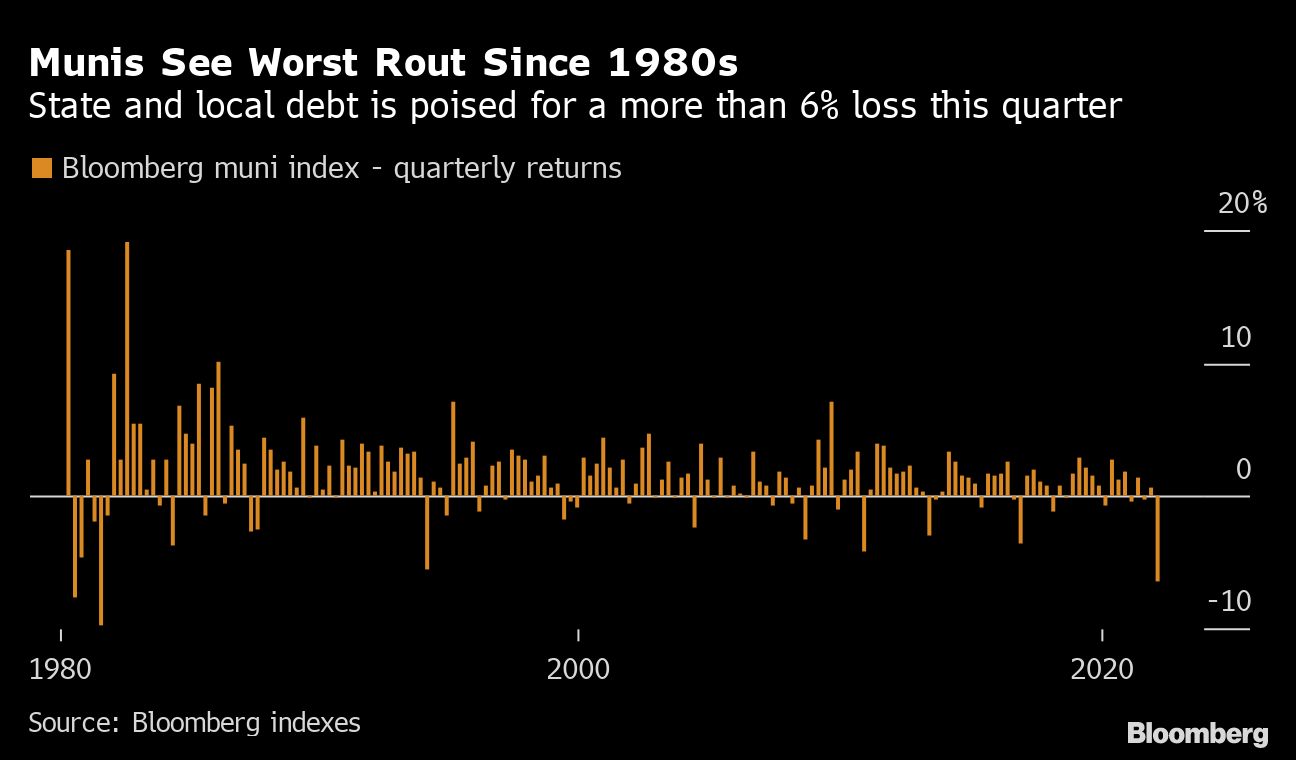
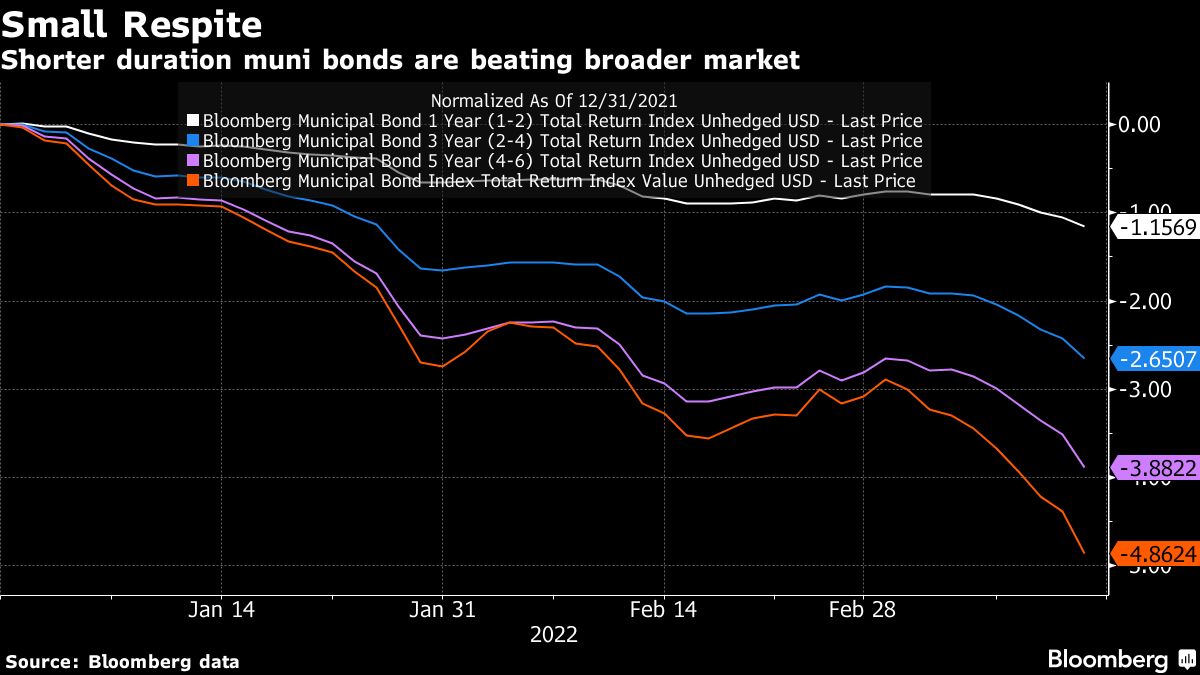
The municipal-bond market is ending its worst quarter in about 40 years with a 6.4% loss, a dramatic pullback for an asset class that investors favor for its stability. The loss so far this year is in line with bonds globally as central banks increase interest rates to combat the fastest inflation in decades. The municipal market is still underperforming U.S. Treasuries, heightening investor concern.
Europeans enduring an unseasonal April cold snap may be forgiven for thinking winter is back. But for the natural gas market, summer has arrived. April 1 marked the start of a new year in the energy calendar, moving the focus to injecting enough gas into storage during the coming low-demand months in preparation for next winter. It’s a race Europe cannot afford to lose, but one it will struggle to win following Russia’s invasion of Ukraine.
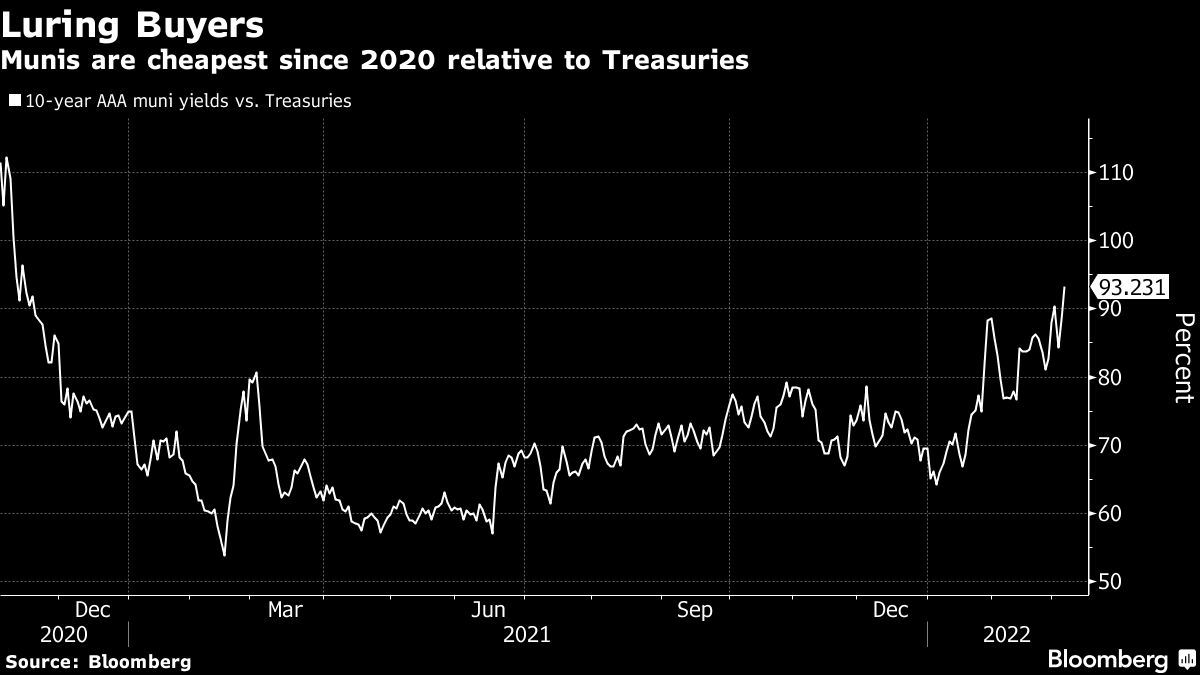
It’s been a bleak stretch in the $4 trillion municipal-bond market, with returns slumping, retail investors dumping bonds and volatility giving issuers pause. But some portfolio managers are jumping into the fray.
The muni market has posted a loss of 4.9% this year, with the 10-year benchmark yield hitting the highest mark since the pandemic-induced tumult of March 2020. But some market participants are seeking relief at the shorter end of the curve.
As we have noted in this space in the past, there is a lot of the world that cannot be captured by the most elegant and detailed of spreadsheets.
The Bluetooth logo is a bind rune merging the Younger Futhark runes(Hagall) (ᚼ) and (Bjarkan) (ᛒ), Harald’s initials.
John Vail, Chief Global Strategist at Nikko Asset Management, discusses Nikko AM’s Global Investment Committee views on current global market drivers as well as expectations for the markets moving forward.
We saw a bit of a bounce in stock markets in March, but not enough to recover from a terrible first quarter.
…war is an old habit of thought, an old frame of mind, an old political technique.
Watch replays for CE credit. We recap the webinars presented at our Market Outlook Summit.
The first quarter of 2022 brought violence that rocked communities – and markets – internationally. We look at what aftershocks may still be yet to come.
Diverse opportunities in Global Convertibles, as well as structural features, provide tailwinds to counter rising rates and equity volatility. In rising rate environments, convertibles have historically done quite well relative to longer-duration traditional fixed income investments.
Get insight into the current macroeconomic environment and its implications for the markets in an insightful panel discussion featuring Maria Giraldo, Strategist and Matt Bush, Economist from Guggenheim Investments’ Macroeconomic and Investment Research Team. This informative session will explore how Guggenheim sees the inflation outlook, where Federal Reserve policy is heading, and how investors should be positioned in this environment. Thoughts on the crisis in Ukraine and outlook for a post pandemic environment will also be given.
There is no shortage of headwinds facing both the market and the economy: the tragic Russian invasion of Ukraine and attendant commodity/energy crisis; the Federal Reserve's transition from accommodative to tighter monetary policy; and increased chatter of a recession on the horizon; among others.
Geopolitical risks, rising rates, and inflation are key risks facing clients today. Common hedges work until they don’t, and as of late, have not delivered the results clients are expecting.
One of the primary duties of the Federal Reserve is to foster economic conditions that achieve price stability.
Last month, the Federal Reserve kicked off a campaign to increase interest rates to bring down the highest inflation the U.S. has experienced since the 1980s. Critics contend the Fed still isn’t doing enough, and the central bank seems to agree. Several high-ranking Fed officials, including Chair Jerome Powell, have said in recent days that interest rates may need to rise faster, and possibly higher, than initially planned.