Lufthansa’s blockbuster report is just the latest signal that commercial aviation, one of the hardest-hit industries during the pandemic, may be ready to make a landing again in investors’ portfolios.
Today’s inflationary market landscape is fraught with risks for investors. Despite these circumstances, Scott Welch and Kevin Flanagan outline how bond investors can generate yield.
It’s a time-honored tale. A new force enters the market — quantitative easing, leveraged ETFs, high-frequency trading — and a cottage industry on Wall Street is born devoted to exposing the risks it supposedly poses for investors.
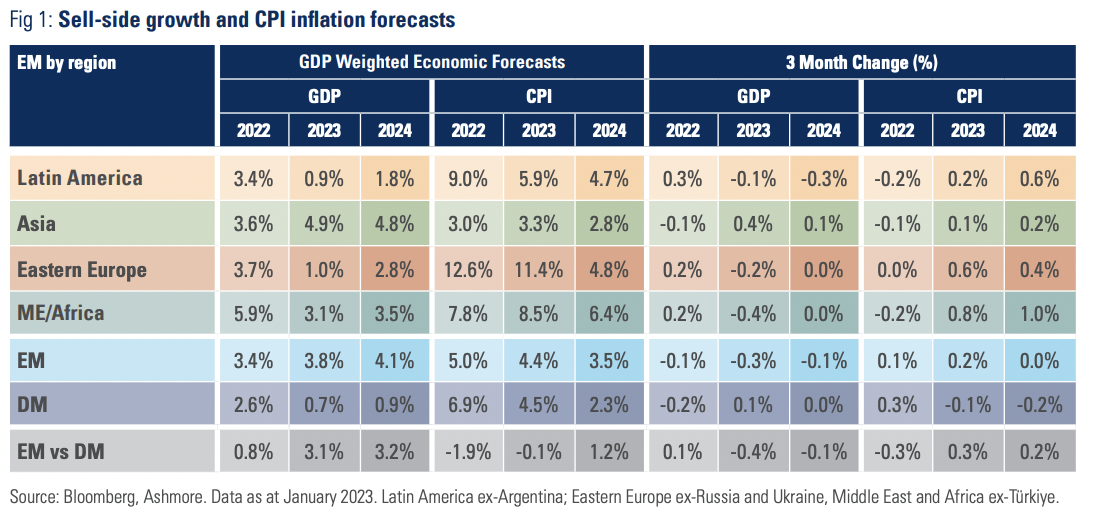
Economic growth and inflation have surprised to the upside so far in 2023, not only thanks to the reopening of the Chinese economy, but also due to the resilience of the labour markets.
A recent Wall Street Journal article discussed how retail traders that made millions during the pandemic trading the market are now mostly wiped out.
In the finance industry, the word “compliance” garners a negative connotation. Indeed, it conjures images of being paddled by a schoolteacher.
We just finished up our annual report on the $20 billion club, and we've concluded that 2022 was a weird year for pension plans.
Markets this month were unable to build upon January's momentum following speculation that the central bank will continue with interest rate hikes.
As fourth-quarter earnings rolled in with mixed results, the stock market opened the year in rally mode.
Whether you’re a lover or loather of Jim Cramer — and on both Wall Street and Main Street, there are plenty of each — you’re now able to express that view via the magic of ETFs.
China has pledged to invest an additional $1.9 billion in the country’s biggest maker of memory chips, a deal that may herald a renewed influx of government capital into an industry hemmed in by US sanctions.
The US Supreme Court’s conservative majority cast doubt on President Joe Biden’s plan to slash the student debt of more than 40 million people, imperiling one of his signature initiatives in a high-stakes showdown over presidential power.
OpenAI is making its ChatGPT tool available to companies to incorporate into their own apps as it seeks commercial uses for the wildly popular chatbot.
Making the case for international value investing—thoughts from Templeton Global Equity Group on why now’s the time to consider expanding one’s investment horizons.
Balancing the needs of your clients with the needs of your advisory business is challenging, but it’s essential to maintaining growth and scale. My guests today will discuss how to navigate the challenges advisors face through phases of growth by identifying opportunities to increase value, drive growth, and boost your firm’s performance. From client segmentation to succession planning to other key issues, my guests will identify the key decisions advisors must make to build a sustainable, successful business.
AssetMark is a turnkey asset management platform for financial advisors specifically tailored to help investors achieve their life goals. It supports more than $80 billion in client assets.
The stock market’s resurgent enthusiasm for Tesla Inc. is poised for a test Wednesday when Elon Musk unveils his latest and much-hyped “master plan” for the electric-vehicle maker.
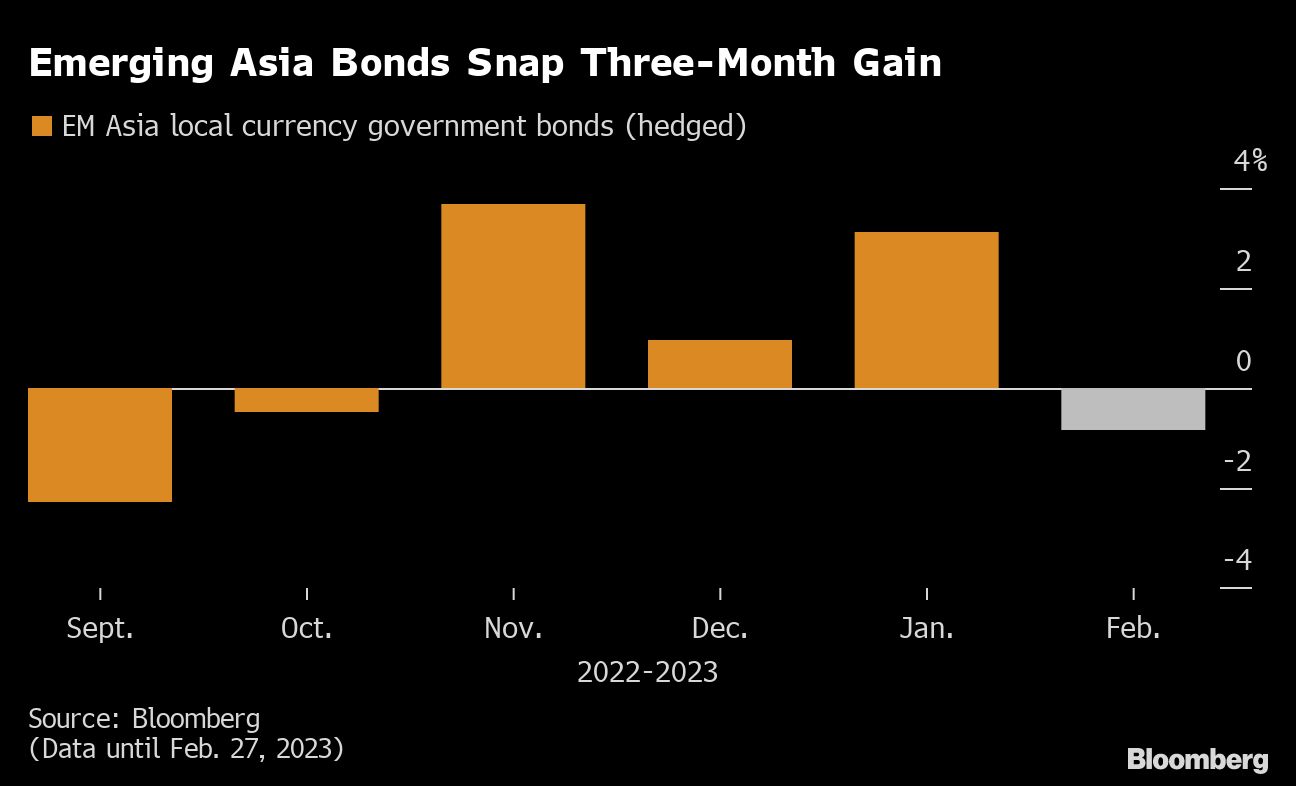
In just one month, emerging Asian assets have gone from a buy to sell. And all signs point to continued caution as March draws near.
If you’re a wealth manager looking to purchase CRM software, consider a few essential items to set yourself up for seamless integration and tech stack success.
Turbulent equity markets and lofty bond yields has cash back in high demand.
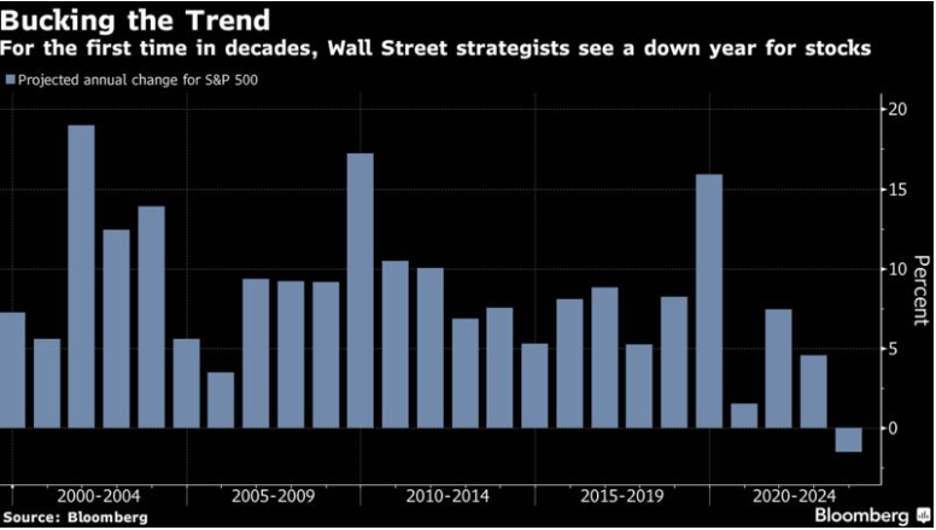
For the first time in decades, Wall Street strategists are collectively pessimistic about the stock market over the coming year.
VettaFi’s Todd Rosenbluth offers his take on five key ETF stories Nate is tracking right now. Morgan Stanley’s Tony Rochte discusses their recent ETF entrance and what comes next. VanEck’s David Schassler explains why inflation is here to stay and spotlights two potential inflation-fighting ETFs.
Here are the top three trends that will affect ETFs in 2023.
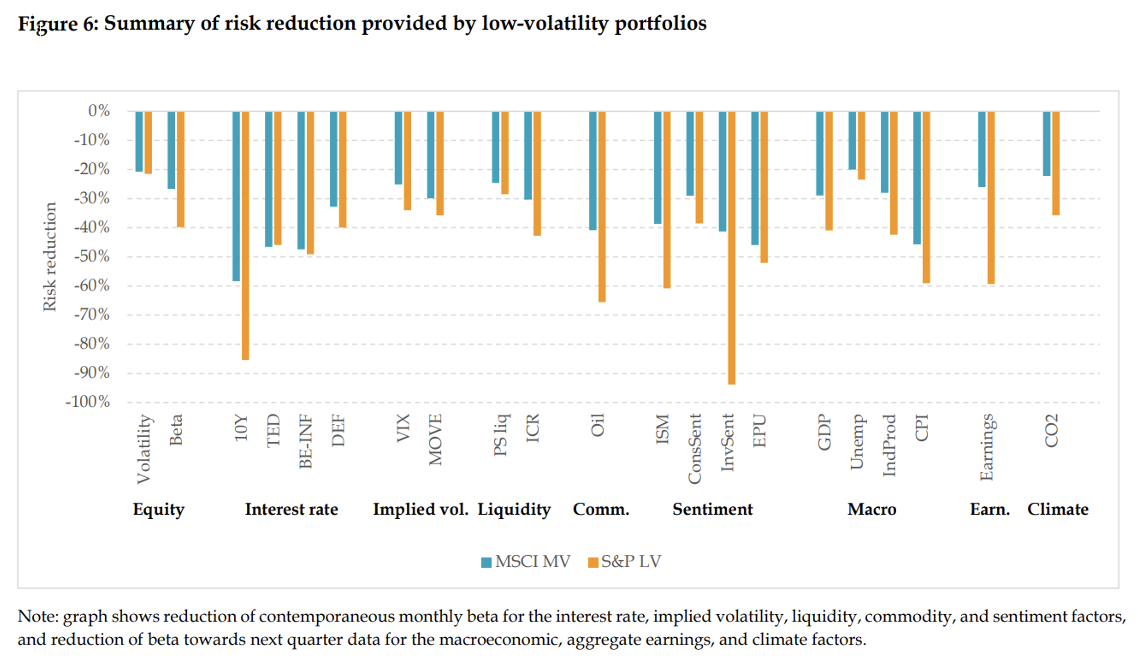
Low-volatility strategies are often cited as an anomaly offering higher returns without a corresponding increase in risk. But the so-called low-volatility factor is well explained by other factors, and new research shows it does not reduce exposure to “systemic,” broad-economic risks.
Economically speaking, bullish bets are mounting on a “no landing” scenario, which suggests the economy will avoid a recession entirely.
Stock-market believers are looking past the roughest stretch in months for US equities and clinging to bets on a rally in the back half of the year once the Federal Reserve stops hiking interest rates.
The asset management unit of JPMorgan Chase & Co. has wiped its ESG portfolios clean of their exposure to the Adani empire.
Research from Vanguard suggests that investing in commodities is the most powerful way to hedge against unexpected inflation.
Last year, 2022, was very challenging for equities, particularly for growth-equity investing. Today, we’ll be discussing the style headwinds investors faced last year and the outlook for high-quality, large-cap growth investing in 2023. The William Blair Large Cap Growth fund (LCGFX) focuses on growing companies in growing industries – what its team calls structurally advantaged companies – whose long-term growth they believe will persist in a variety of economic environments.
Close to 90% of the world’s central banks are at some point in the process of creating their own digital currency. Are you ready?
Markets are unpredictable, which is one of many reasons it is difficult to consistently deliver alpha over long periods. In their latest commentary, our small cap growth team explains why their approach to managing the trade-off between risk and reward gives them the opportunity to outperform across market cycles.
As President Joe Biden’s administration prepares to accept requests for $39 billion in funding to jumpstart US production of microchips, his commerce chief emphasized the program’s focus is strengthening national security rather than boosting struggling chipmakers.
Many investors believe that gold is a safe long-term investment that can be used to hedge against risk. But should you include this precious metal in your retirement portfolio?
A gold IRA is one way to diversify your retirement portfolio. It can protect your savings from plummeting in the event of a stock market crash or high inflation.
In a dark future for humans on Wall Street, banks fire traders en masse as artificial intelligence models like ChatGPT take over bond and commodities markets that were once too tough to automate.
In February 2017, Cathie Wood went on Bloomberg Television to make her case that the $10 trillion global mobility market would be severely disrupted by electric vehicles and networks of autonomous taxis.
The credit cycle lies at the heart of our financial system.
Professional speculators aren’t convinced that the worst is over for one risky corner of the stock market despite a rousing new-year rally.
January’s Consumer Price Index (CPI) released this week by the Bureau of Labor Statistics moderated to 6.4% on an annual basis, down from December’s 6.5% and well below its peak of 9.1% in June 2022.
Leveraged properly, AI technology can serve as a partner instead of an adversary.
Janus Henderson Group Plc’s new boss has a plan to revive the struggling money manager, whose clients have yanked about $130 billion since 2017.
Bond markets are pricing in additional Federal Reserve interest rate hikes, acknowledging the central bank’s emphatic resolve to tame inflation despite the likely trade-offs.
The rally in Chinese artificial intelligence stocks is showing further signs of cooling amid media reports of authorities banning access to OpenAI’s ChatGPT service.
Billions of dollars are accumulating in Moscow beyond the reach of its foreign owners.
MPW’s dividend is safe.
Gold investors are betting the Fed will continue to be negligent with its monetary policy.
Passively managed equity funds are on the cusp of marking a milestone that’s been more than a decade in the making: Globally, net assets in such products are about to exceed those of their actively managed counterparts, according to Societe Generale.
The world of exchange-traded funds — still synonymous with passive investing — is turning into a battleground for Wall Street’s biggest players as they compete for a slice of the active-management industry.
Global bonds are poised to erase all of the gains they made in their best start to a year on record.
The economics behind the “super OSJ” brokerage model are unsustainable. Those firms are destined to transition to RIAs.
I have no idea how AI will impact the advisory profession. However, I’m confident it will fundamentally change almost every aspect of what you do and how you do it.