Since early April, U.S. stocks have rallied sharply despite an ongoing war, rising inflation fueled by soaring oil prices (near $100/barrel), higher bond yields (up 0.6 to 0.7 percentage points), and frothy valuations (21 times projected earnings vs. a historical average of 17 times for the S&P 500 Index).
The ETF industry has exploded in popularity in recent years. Old mutual fund heavy firms have increasingly leaned into the space, while new shops have proliferated, adding all kinds of new ETFs for investors to consider. That has benefitted investors and advisors immensely.
California continues to demonstrate fiscal resilience, supported by strong liquidity balances and the absence of projected cash‑flow borrowing through FY 2026–27. However, Medicaid cost pressures, a progressive tax structure highly sensitive to equity market swings, and constitutional spending constraints remain key differentiators between California and other large states.
This persistent growth highlights how central low-cost core index products remain to advisor and retail portfolios alike. Even as asset managers roll out specialized strategies, capital continues to flow within broad-market beta.
A tidal wave of conversions has siphoned an unprecedented amount of capital out of mutual funds and into the ETF wrapper. Last year’s record 60 mutual-fund-to-ETF conversions in 2025 across 31 firms pushed total converted assets past $260 billion, and the past five years have now seen a grand total of 203 conversions.
Treasuries rallied back to be little-changed on the day, erasing earlier declines spurred by higher oil prices, after a key US inflation gauge rose less than expected.
Shares of retailers spanning Kohl’s Corp. to Best Buy Co. and Dollar Tree Inc. rose on Thursday amid optimism that shoppers are still spending when they see what they want at the right price.
An abundance of cash in US funding markets appears to be driven by deeper structural shifts that are unlocking billions of dollars in balance-sheet capacity at the biggest banks, Wall Street strategists say.
Coverage of prediction platform Polymarket has recently converged on a single statistic, delivered with the cadence of a verdict: Most users lose money. The top 1% of accounts capture roughly three-quarters of the gains, while most traders since 2022 are underwater.
Bankers are preparing to sell a jumbo debt package to support the $110 billion acquisition of Warner Bros. Discovery Inc. It’s a risky deal and comes at a moment when the bond markets have been wobbling.
The push for international equities diversification continues amid shifting global macroeconomic conditions. These days, investors have more options when it comes to international exposure. Given the current market uncertainty, they may want to put quality at the forefront of their decision-making process.
Goldman Sachs Asset Management (GSAM) made a big announcement this week, touting $100 billion in total ETF AUM. The milestone comes following the firm’s recent acquisition of Innovator ETFs adding several notable funds to the firm’s overall roster.
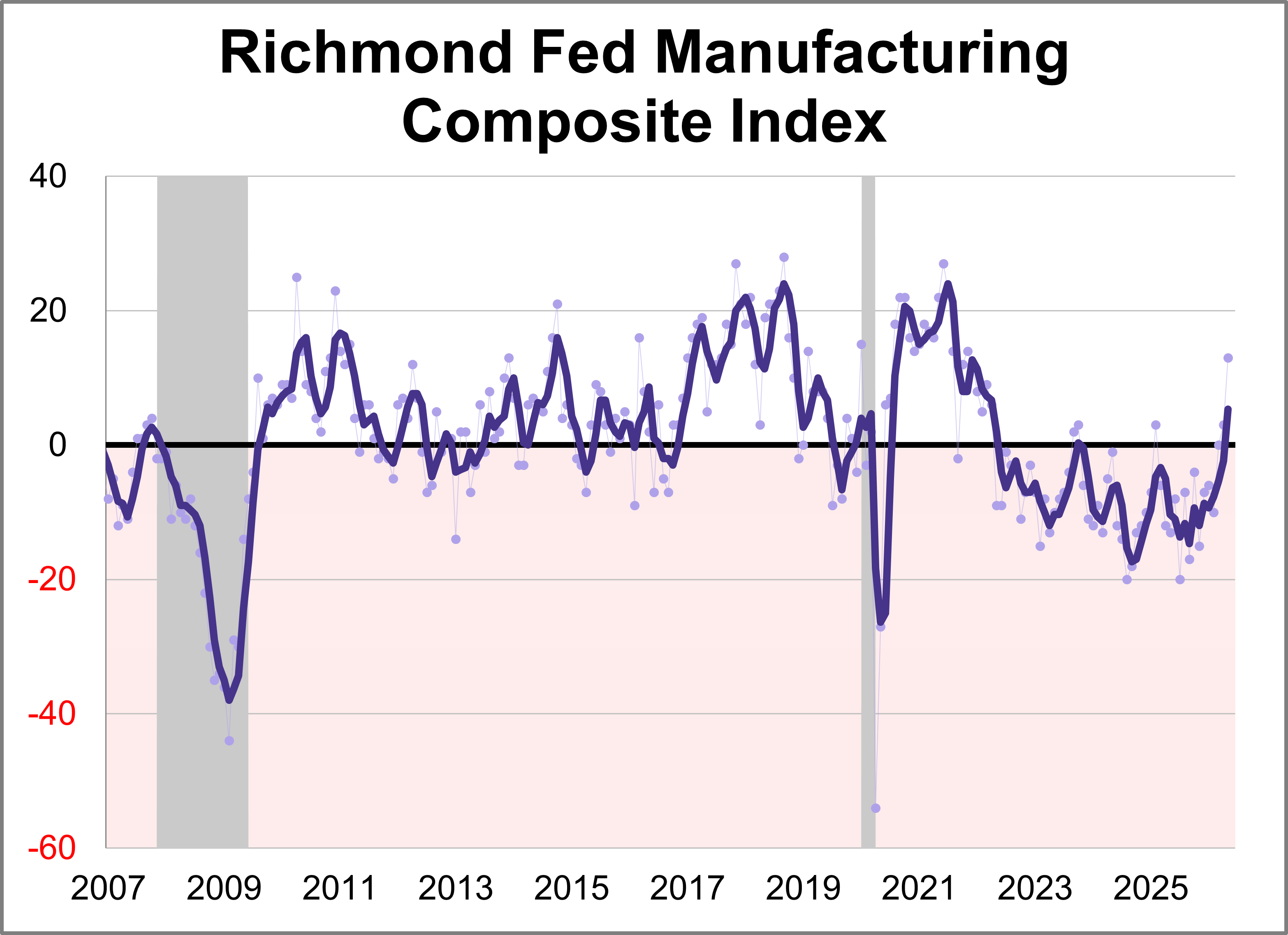
Fifth district manufacturing activity increased in May according to the most recent survey from the Federal Reserve Bank of Richmond. The composite manufacturing index rose ten points points to 13, marking the highest level in nearly five years. This month's reading was above the forecast of 4.
Join the experts at Reckoner for an educational webcast exploring the CLO space and how to navigate it.
Fast-tracking mega IPOs into major indexes and the case for active preferred ETFs were both on the agenda for this week’s ETF Prime. Host Nate Geraci welcomed Rich Lee, head of program trading and execution strategy at Baird, and Douglas Baker, portfolio manager and head of preferred securities at Nuveen.
Private credit is more inherently complex than the traditional bond market. In comparison, private credit information comes at a deficit. That’s because private credit loans are essentially bespoke agreements between a lender and a private borrower.
The breakneck surge in memory-chip stocks is intensifying, sending the market capitalizations of SK Hynix Inc. and Micron Technology Inc. above $1 trillion for the first time, as investors bet the AI boom will lead to a sustained revaluation of the industry.
Almost two-thirds of fund managers permit some level of “nuclear exposure,” with 34% allowing investments in nuclear weaponry, according to Jefferies Financial Group Inc.’s fourth-annual ESG and defense survey.
Despite the move lower late last week, U.S. Treasury yields are still holding well above recent lows and close to highs not seen in more than a year. By contrast, risk assets are firmly bid: U.S. equities have been routinely touching new historical highs, and credit spreads over Treasuries remain tight.
Gold has dropped more than 11 percent from its all-time high of just over $5,102 an ounce in January, and selling pressure continues to dominate the market. A well-established mainstream narrative is driving the bearish sentiment.
Despite these higher costs, a projected 45 million Americans are expected to travel at least 50 miles from home this weekend, setting a new record. Close to 40 million will drive while some 3.7 million will fly.
Despite headwinds from rising oil prices, fundamentals have remained strong. The S&P 500 has notched 18 record highs year to date and, more importantly, surpassed our prior target of 7,250. Following a standout 1Q earnings season, we are raising our 2026 earnings per share (EPS) estimate to $326 from $300.
On May 26, 1896, Charles Dow calculated a simple arithmetic average of 12 industrial stocks and arrived at a closing value of 40.94. Now, exactly 130 years later, that same benchmark has crossed the historic 50,000 threshold.
New AdvizorPro data shows RIAs broadened their ETF lineups in Q1 2026, leaning into real assets, active managers, and defense strategies.
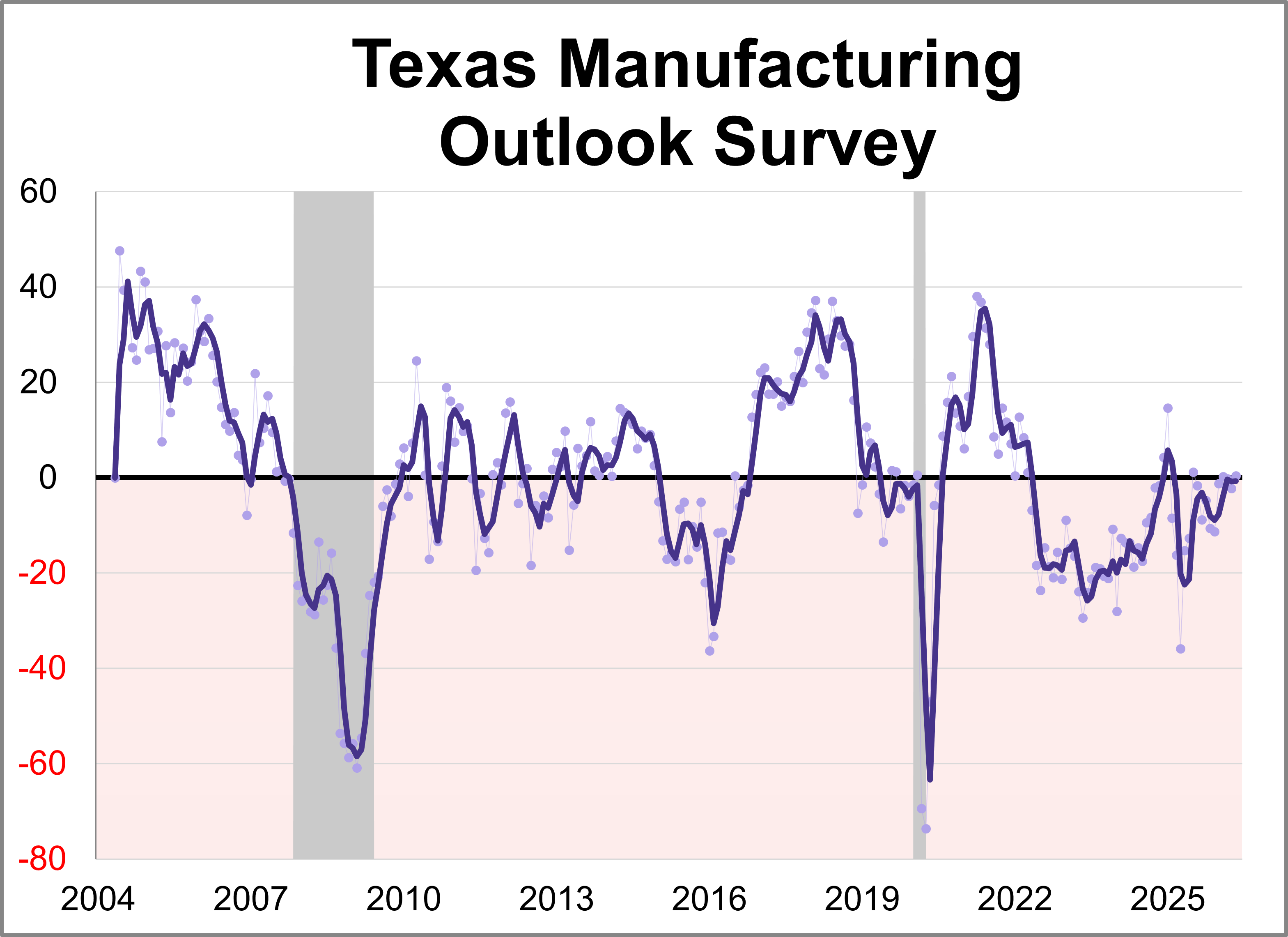
The Dallas Fed released its Texas Manufacturing Outlook Survey (TMOS) for May. The general business activity index rose 2.7 points to 0.4, indicating slower growth of manufacturing activity and stable business conditions perceptions.
As Kevin Warsh takes the helm at the Federal Reserve, bond investors are betting he’ll prioritize the central bank’s inflation-fighting credibility over President Donald Trump’s push for lower interest rates.
I’ve lost count of the praise heaped on US hedge funds for their “historic performance” in April on artificial intelligence-related bets and alleged foresight of a ceasefire in the Iran war.
As more individuals turn to non-traditional financial advice — offered through social media, artificial intelligence, or other online services and platforms — advisors will be tasked with fostering a greater sense of trust with the public.
Last Friday closed with the 10-year Treasury yield at 4.60%, a one-year high, and the doom commentary about rising interest rates was waiting before the bell even rang. Hyperinflation. Bond market breakdown. Paradigm shift. A 1981 fair-value retest.
Artificial intelligence (AI) might be the talk of the town these days, but quantum computing is the quiet thunder rumbling in the background. It just got much louder with the U.S. White House commiting to roll out a massive $2 billion funding package distributed across nine quantum computing companies.
Now, that prospect feels much farther off. Indeed, as government debt grows and macroeconomic pressures and inflation reemerge, investors face a complicated rate environment. Dividends can provide a solution.
There is currently a stark contrast between everyday consumer confidence and financial market behavior. On one hand, persistent inflation and elevated living costs have driven consumer sentiment to historic lows. On the other hand, financial market participants are exhibiting aggressive risk appetite, with margin debt surging to an all-time high record on the heels of major equity market gains.
Rare earth elements are critical to global defense systems, electrification, data centers, and the future of artificial intelligence. How can investors hedge against geopolitical risks and tariffs? In this episode of ETF of the Week, host Chuck Jaffe sits down with Todd Rosenbluth, to break down Sprott Rare Earths Ex-China ETF (Ticker: REXC). Discover why this specialized materials fund might be in the perfect position to complement your equity portfolio and safeguard your supply chain investments.
In this second quarter update, Western Asset believes global fixed-income markets face a more complex backdrop as geopolitics, rapid AI adoption and private credit scrutiny intersect.
Chasing performance by deviating from a benchmark has long been the hallmark of active managers. But it may be time for a rethink. Our research suggests that investors allocating to core equities should consider refreshing the criteria they use to identify portfolio managers that can consistently beat their benchmarks.
For private equity firms, capital flexibility is prized today. Merger-and-acquisition (M&A) activity has cooled, while commodity prices and artificial intelligence (AI)-driven disruption have heated up, creating uncertainty for investors. This makes it more challenging to sell portfolio companies, so private equity firms are holding investments longer. As a result, many firms are turning to net asset value (NAV) loans for capital needs.
By moving beyond benchmark constraints, active portfolios can access off-the-run bonds, specific securitized tranches, and maturity buckets with superior risk-reward profiles. They also have the flexibility to adjust positioning throughout the market cycle — reallocating across sectors, ratings, and issuers as conditions evolve to capture opportunities and mitigate drawdowns.
I still don’t think the Fed is close to a rate hike, but for the upcoming June FOMC meeting, a shift in the language of the policy statement from an easing bias to one of a ‘balanced’ outlook seems to be the most likely scenario. However, the fed funds futures market has now fully priced in a rate hike for March 2027, a remarkable shift from its pre-war status of discounting almost three rate cuts for the same timeframe.
Industry discussions on Janus Henderson’s ETF lineup are typically centered around its fixed income funds given the firm’s history in this asset class. However, the issuer also has equity ETFs that are garnering attention, which include a fund that’s close to crossing the $1 billion assets under management (AUM) threshold: the Janus Henderson Small-Mid Cap Growth Alpha ETF (JSMD).
There is a growing risk of economic overheating in the US as the artificial intelligence boom expands beyond semiconductors and spills into the broader economy — never mind the tame wage growth and house prices that would typically point in the opposite direction.
College costs continue to rise, and for many families, education is one of the most meaningful investments they will make. Preparing for those expenses often requires planning years, sometimes decades, in advance.
Nvidia is now a textbook fit for quality-focused indexes in ETFs given its strong underlying business fundamentals. The company has become the smartest kid in the quality classroom, scoring exceptionally high on metrics like high return on equity (ROE), strong return on invested capital (ROIC), stable earnings growth, and low balance sheet leverage.
Recently, Matthew Bartolini, global head of research strategists at State Street Investment Management, sat down with VettaFi to discuss where inflation stands, opportunities within portfolio construction, and much more.
Concerned about overfunding your 529 plan? Discover the strategic flexibility of modern 529 accounts. From tax-free Roth IRA transfers to building a multi-generational educational legacy, learn how to maximize your unused education savings for long-term wealth building.
Vanguard’s Total World Stock ETF (ticker VT) is an elegant product: a single fund that gives you cap-weighted exposure to the entire global equity market. For investors who want simplicity, it’s hard to beat. But is simplicity costing you money?
Global bond yields are reaching frightening levels due to the continued war in Iran and the effective closure of the Strait of Hormuz. Continued high oil prices and the threat of reverberating inflation are causing investors to demand higher yields on government bonds.
Hedge funds have been selling the scorching rally in US semiconductor stocks to book profits, while keeping their overall exposure to the AI theme, according to traders at Goldman Sachs Group Inc.
Equities advanced in April, but hedges remain few and far between, as traditional risk mitigants like bonds and gold continue to show a correlation with stocks.
Even if armchair investors are fleeing private credit or panicking that their unlisted shares in Anthropic PBC are now invalid, the long-term trend is clear: Public markets keep losing ground to private funds.
Sustainable investing in fixed income has come of age. Against a backdrop of heightened geopolitical tensions, persistent economic and trade uncertainty, sustainable fixed income continued to demonstrate its appeal in 2025.